Loading page, please wait…
What is the UN Charter? - UPSC International Relations
What is What is the UN Charter? in UPSC International Relations?
What is the UN Charter? is a key topic under International Relations for UPSC Civil Services Examination. Key points include: The UN Charter was signed on June 26, 1945, in San Francisco, and came into force on October 24, 1945.. It is the foundational, legally binding treaty of the United Nations, setting its purposes and principles.. India is a founding member of the UN and ratified the Charter on October 30, 1945.. Understanding this topic is essential for both UPSC Prelims and Mains preparation.
Why is What is the UN Charter? important for UPSC exam?
What is the UN Charter? is a Easy-level topic in UPSC International Relations. It is tested in both Prelims (factual MCQs) and Mains (analytical answer writing). Previous year UPSC questions have frequently covered aspects of What is the UN Charter?, making it essential for comprehensive IAS preparation.
How to prepare What is the UN Charter? for UPSC?
To prepare What is the UN Charter? for UPSC: (1) Study the comprehensive notes covering all key concepts on Vaidra. (2) Practice previous year questions on this topic. (3) Connect it with current affairs using daily updates. (4) Revise using key takeaways and mind maps available for International Relations. (5) Write practice answers linking What is the UN Charter? to related GS Paper topics.
Key takeaways of What is the UN Charter? for UPSC
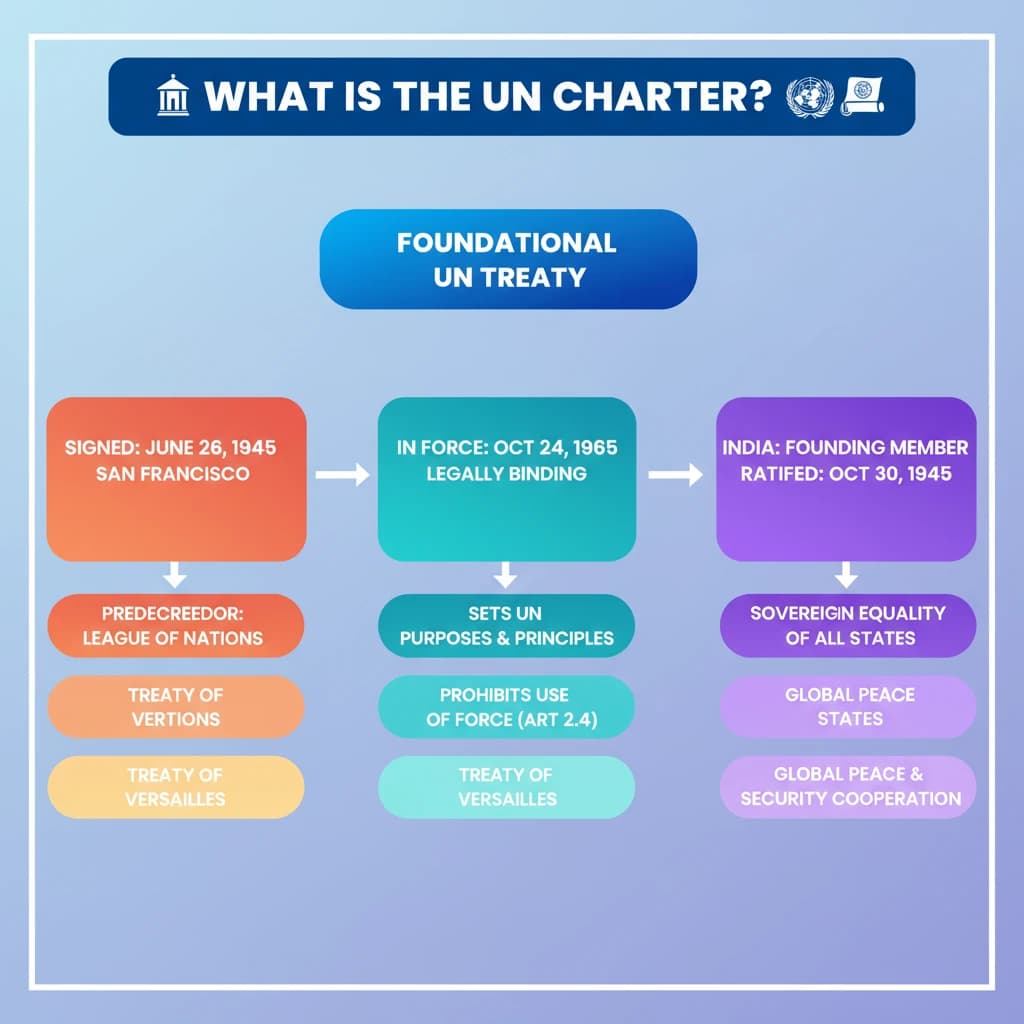
- The UN Charter was signed on June 26, 1945, in San Francisco, and came into force on October 24, 1945.
- It is the foundational, legally binding treaty of the United Nations, setting its purposes and principles.
- India is a founding member of the UN and ratified the Charter on October 30, 1945.
- The League of Nations, established after World War I under the Treaty of Versailles, was its direct predecessor.
- Key principles include the sovereign equality of all states and the prohibition on the use of force in international relations.
- The Charter has been amended three times (1963, 1965, 1973) to adapt to changing global realities and UN membership.
- Its significance lies in maintaining international peace and security, providing humanitarian assistance, protecting human rights, and upholding international law for over 75 years.
What is the UN Charter?
Easy⏱️ 8 min read
international relations
📖 Introduction
Origin and Adoption of the UN Charter
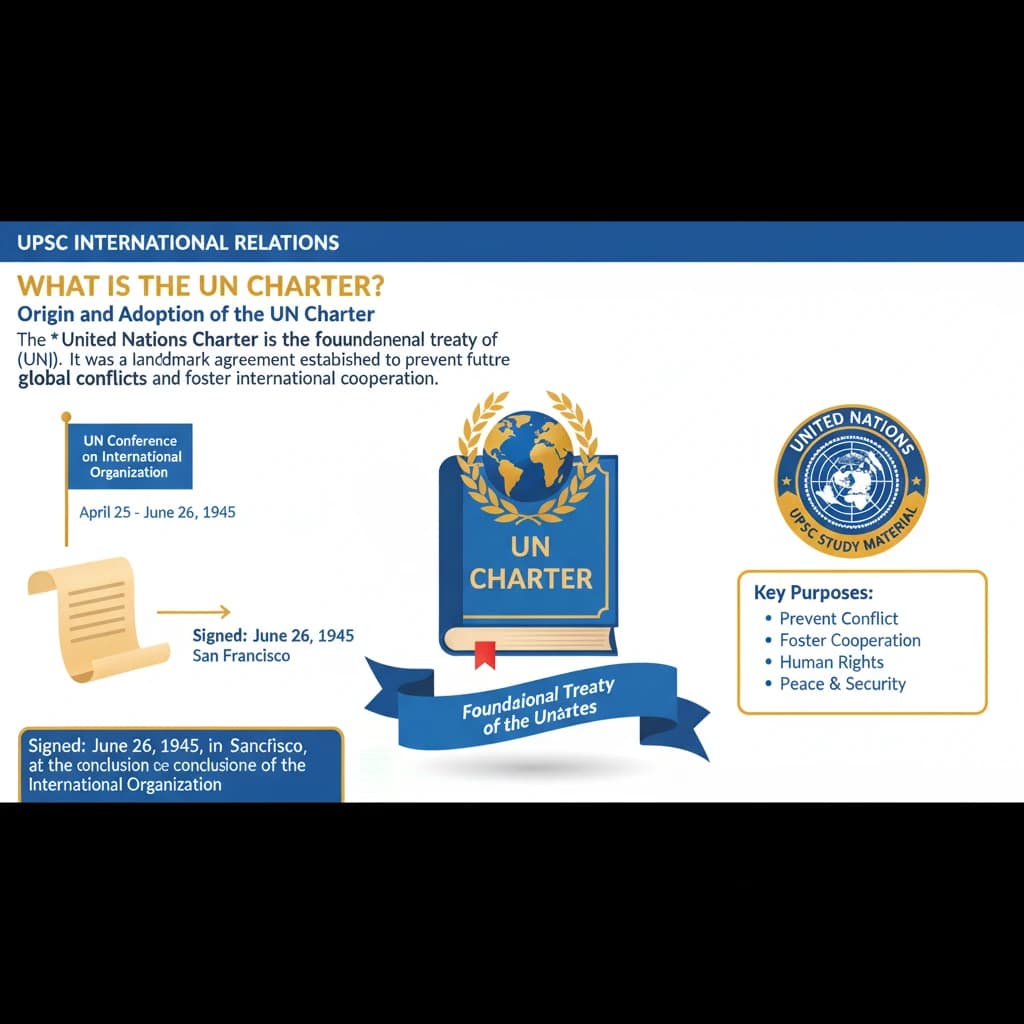
The United Nations Charter is the foundational treaty of the United Nations (UN). It was a landmark agreement established to prevent future global conflicts and foster international cooperation.
Signed: June 26, 1945, in San Francisco, at the conclusion of the UN Conference on International Organization.
Came into Force: October 24, 1945. This date is now celebrated annually as United Nations Day.
India played a significant role as one of the founding members of the United Nations. India officially ratified the UN Charter on October 30, 1945, shortly after its entry into force, demonstrating its early commitment to multilateralism.
Predecessor: The League of Nations
The concept of a global organization for peace emerged after devastating world wars. The immediate predecessor to the UN was the League of Nations, established after the first global conflict.
- Established: 1919, following the end of World War I.
- Foundation: Under the provisions of the Treaty of Versailles.
- Primary Objective: To “promote international cooperation and to achieve peace and security.”
The experiences and shortcomings of the League of Nations, particularly its inability to prevent World War II, heavily influenced the structure and principles embedded within the UN Charter, aiming for a more robust and effective international body.
Core Nature and Principles of the UN Charter
The UN Charter serves as the fundamental constitutional document for the entire United Nations system. It delineates the rights and obligations of member states and guides their conduct on the international stage.
The Charter is a binding instrument of international law. All UN Member States are legally obligated to adhere to its principles and provisions, making it a cornerstone of global governance.
It lays down the bedrock principles that govern modern international relations. These principles are crucial for fostering a stable and cooperative global environment and preventing conflicts.
- Equal Rights of All Countries: Emphasizes the sovereign equality of all member states, regardless of their size or economic power.
- Ban on Using Force: Prohibits the threat or use of force against the territorial integrity or political independence of any state, except in self-defense or under UN Security Council authorization.
Amendments to the Charter
Despite its foundational status, the UN Charter is not immutable. It has undergone several amendments to adapt to changing global realities and the expanding membership of the organization, ensuring its continued relevance.
The Charter has been amended three times since its initial incorporation:
- 1963: Amendments to Articles 23, 27, and 61, primarily concerning the enlargement of the Security Council and Economic and Social Council (ECOSOC).
- 1965: Further amendment to Article 109, regarding the review conference.
- 1973: Amendment to Article 61, concerning the enlargement of the Economic and Social Council (ECOSOC) once more.
Significance and Role of the UN Charter
For over 75 years, the UN Charter has been instrumental in shaping global governance and promoting collective action on critical international issues, demonstrating its enduring impact.
The UN, guided by its Charter, focuses on several core pillars to achieve its overarching goals of peace, development, and human rights:
- Maintaining International Peace and Security: Through diplomatic efforts, peacekeeping missions, and sanctions.
- Providing Humanitarian Assistance: Responding to crises, conflicts, and natural disasters worldwide.
- Protecting Human Rights: Upholding universal human rights and fundamental freedoms for all individuals.
- Upholding International Law: Promoting justice and respect for obligations arising from treaties and other sources of international law.
Understanding the UN Charter's principles is vital for UPSC aspirants, especially for questions related to International Relations (GS Paper 2), global governance, and India's foreign policy. It forms the basis for many contemporary international debates.
💡 Key Takeaways
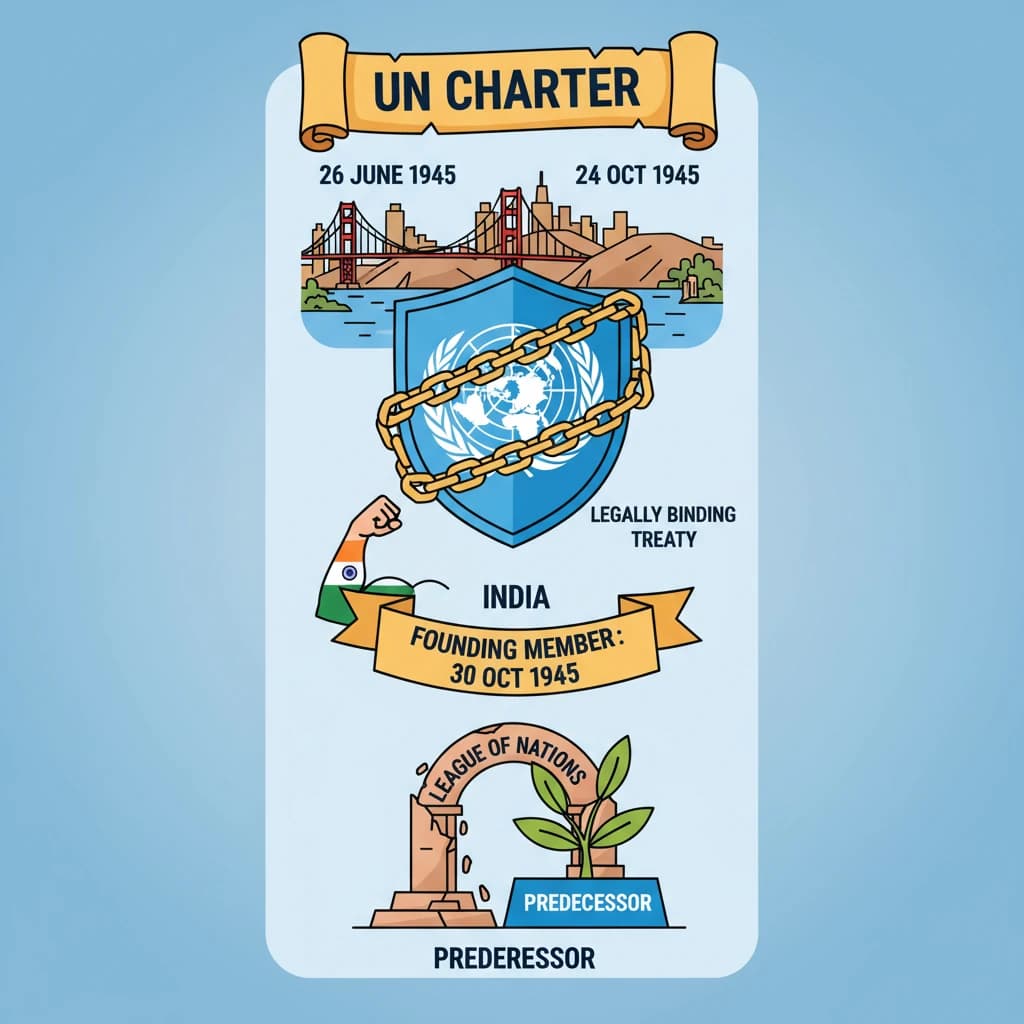
- •The UN Charter was signed on June 26, 1945, in San Francisco, and came into force on October 24, 1945.
- •It is the foundational, legally binding treaty of the United Nations, setting its purposes and principles.
- •India is a founding member of the UN and ratified the Charter on October 30, 1945.
- •The League of Nations, established after World War I under the Treaty of Versailles, was its direct predecessor.
- •Key principles include the sovereign equality of all states and the prohibition on the use of force in international relations.
- •The Charter has been amended three times (1963, 1965, 1973) to adapt to changing global realities and UN membership.
- •Its significance lies in maintaining international peace and security, providing humanitarian assistance, protecting human rights, and upholding international law for over 75 years.
🧠 Memory Techniques
98% Verified Content
📚 Reference Sources
•Official United Nations Website (un.org) - Charter of the United Nations