Loading page, please wait…
Why are Germany and India Important for Each Other? - UPSC International Relations
What is Why are Germany and India Important for Each Other? in UPSC International Relations?
Why are Germany and India Important for Each Other? is a key topic under International Relations for UPSC Civil Services Examination. Key points include: Germany is India's largest European trading partner.. Germany is the 7th largest FDI source for India, with over $13 billion invested (Apr 2000-Sep 2021).. Germany seeks to diversify its economic dependency from China, viewing India as a key Asian partner.. Understanding this topic is essential for both UPSC Prelims and Mains preparation.
Why is Why are Germany and India Important for Each Other? important for UPSC exam?
Why are Germany and India Important for Each Other? is a Medium-level topic in UPSC International Relations. It is tested in both Prelims (factual MCQs) and Mains (analytical answer writing). Previous year UPSC questions have frequently covered aspects of Why are Germany and India Important for Each Other?, making it essential for comprehensive IAS preparation.
How to prepare Why are Germany and India Important for Each Other? for UPSC?
To prepare Why are Germany and India Important for Each Other? for UPSC: (1) Study the comprehensive notes covering all key concepts on Vaidra. (2) Practice previous year questions on this topic. (3) Connect it with current affairs using daily updates. (4) Revise using key takeaways and mind maps available for International Relations. (5) Write practice answers linking Why are Germany and India Important for Each Other? to related GS Paper topics.
Key takeaways of Why are Germany and India Important for Each Other? for UPSC
- Germany is India's largest European trading partner.
- Germany is the 7th largest FDI source for India, with over $13 billion invested (Apr 2000-Sep 2021).
- Germany seeks to diversify its economic dependency from China, viewing India as a key Asian partner.
- Bilateral trade between India and Germany amounted to $21.76 billion in FY 2020-21.
- The partnership is crucial for economic resilience, strategic alignment, and addressing global challenges.
Why are Germany and India Important for Each Other?
Medium⏱️ 7 min read
international relations
📖 Introduction
Overview of India-Germany Strategic Partnership
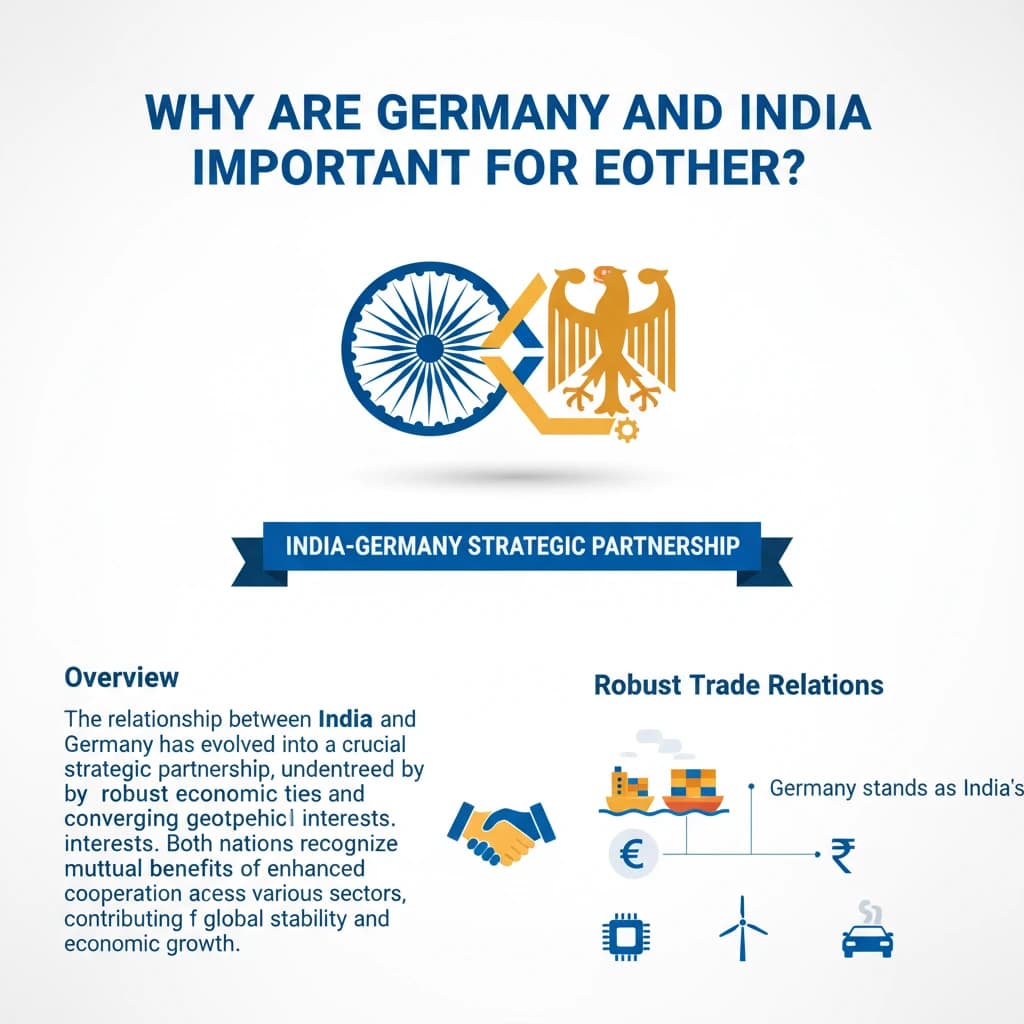
The relationship between India and Germany has evolved into a crucial strategic partnership, underpinned by robust economic ties and converging geopolitical interests.
Both nations recognize the mutual benefits of enhanced cooperation across various sectors, contributing to global stability and economic growth.
Robust Trade Relations
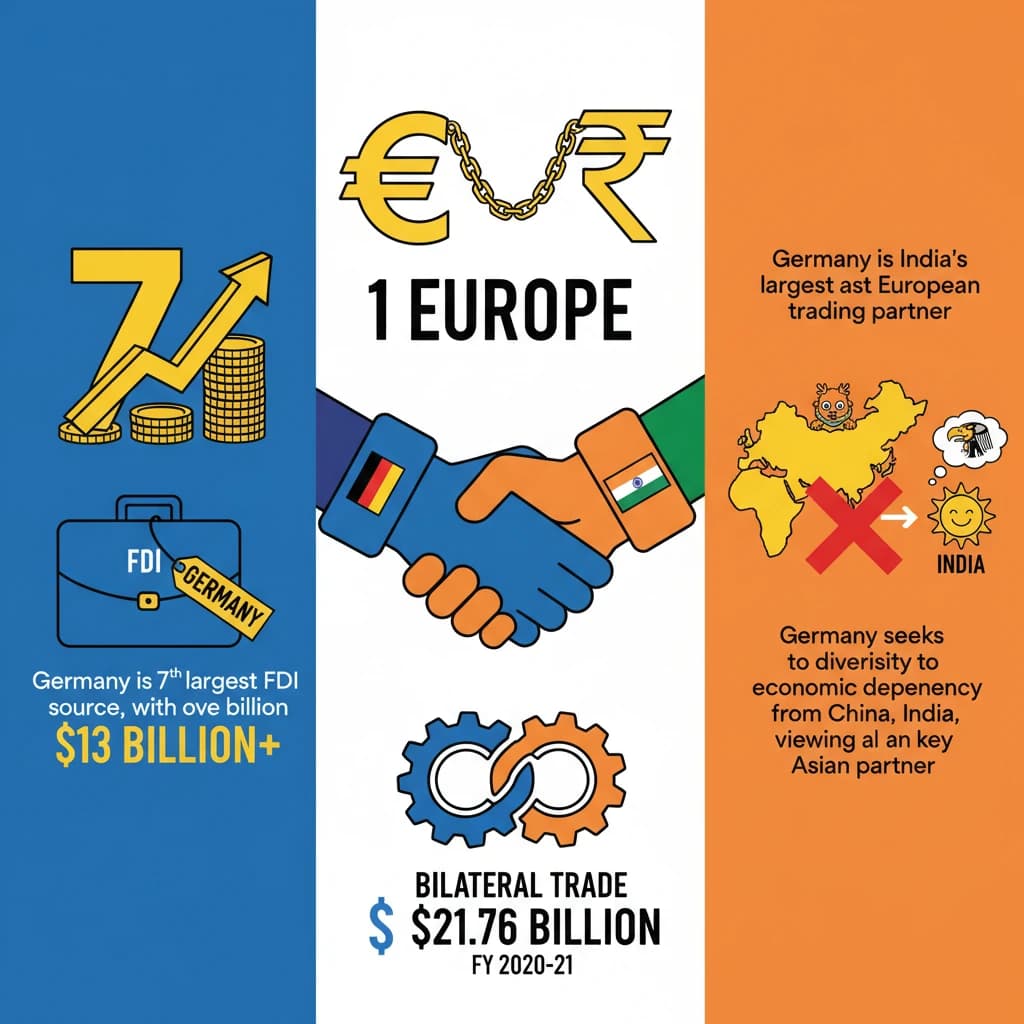
Germany stands as India’s largest trading partner within Europe, highlighting the significant volume and value of bilateral commerce between the two countries.
In Financial Year 2020-21, the total bilateral trade between India and Germany reached approximately USD 21.76 billion, underscoring a strong and consistent economic exchange.
This substantial trade volume encompasses a wide array of goods and services, ranging from machinery and automotive components to pharmaceuticals and IT services.
Significant Foreign Direct Investment (FDI)
Beyond trade, Germany is a crucial source of Foreign Direct Investment (FDI) for India, contributing significantly to India's economic development and industrial growth.
From April 2000 to September 2021, Germany invested over USD 13 billion in India, making it the seventh-largest source of FDI for the country.
This investment flows into diverse sectors, including manufacturing, infrastructure, and technology, fostering job creation and technological advancement in India.
Strategic Diversification and Geopolitical Alignment
A key driver for strengthening ties is Germany’s strategic imperative to reduce its economic over-reliance on China.
In this context, India emerges as a key partner for Germany, offering a stable and growing market for diversifying its trade and investment relations, particularly within the Asian region.
This alignment reflects a broader geopolitical shift towards resilient supply chains and diversified partnerships in the Indo-Pacific.
For UPSC Mains GS Paper 2 (International Relations), understanding this strategic diversification is crucial for analyzing India's role in global economic rebalancing.
💡 Key Takeaways
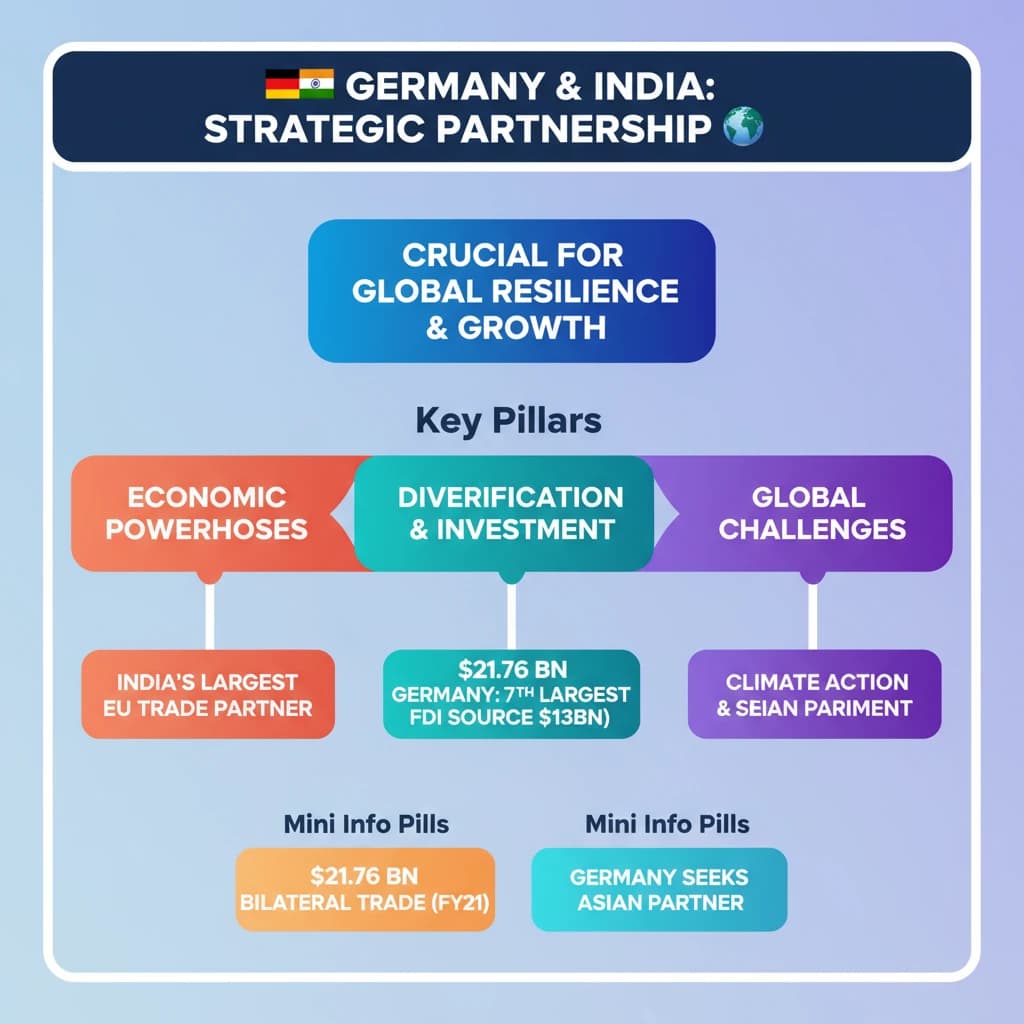
- •Germany is India's largest European trading partner.
- •Germany is the 7th largest FDI source for India, with over $13 billion invested (Apr 2000-Sep 2021).
- •Germany seeks to diversify its economic dependency from China, viewing India as a key Asian partner.
- •Bilateral trade between India and Germany amounted to $21.76 billion in FY 2020-21.
- •The partnership is crucial for economic resilience, strategic alignment, and addressing global challenges.
🧠 Memory Techniques
95% Verified Content
📚 Reference Sources
•Ministry of External Affairs (MEA) India reports on bilateral relations
•Department for Promotion of Industry and Internal Trade (DPIIT) FDI statistics
•General knowledge of international economic relations