Loading page, please wait…
Why is Ukraine Important for India’s Defence Sector? - UPSC International Relations
What is Why is Ukraine Important for India’s Defence Sector? in UPSC International Relations?
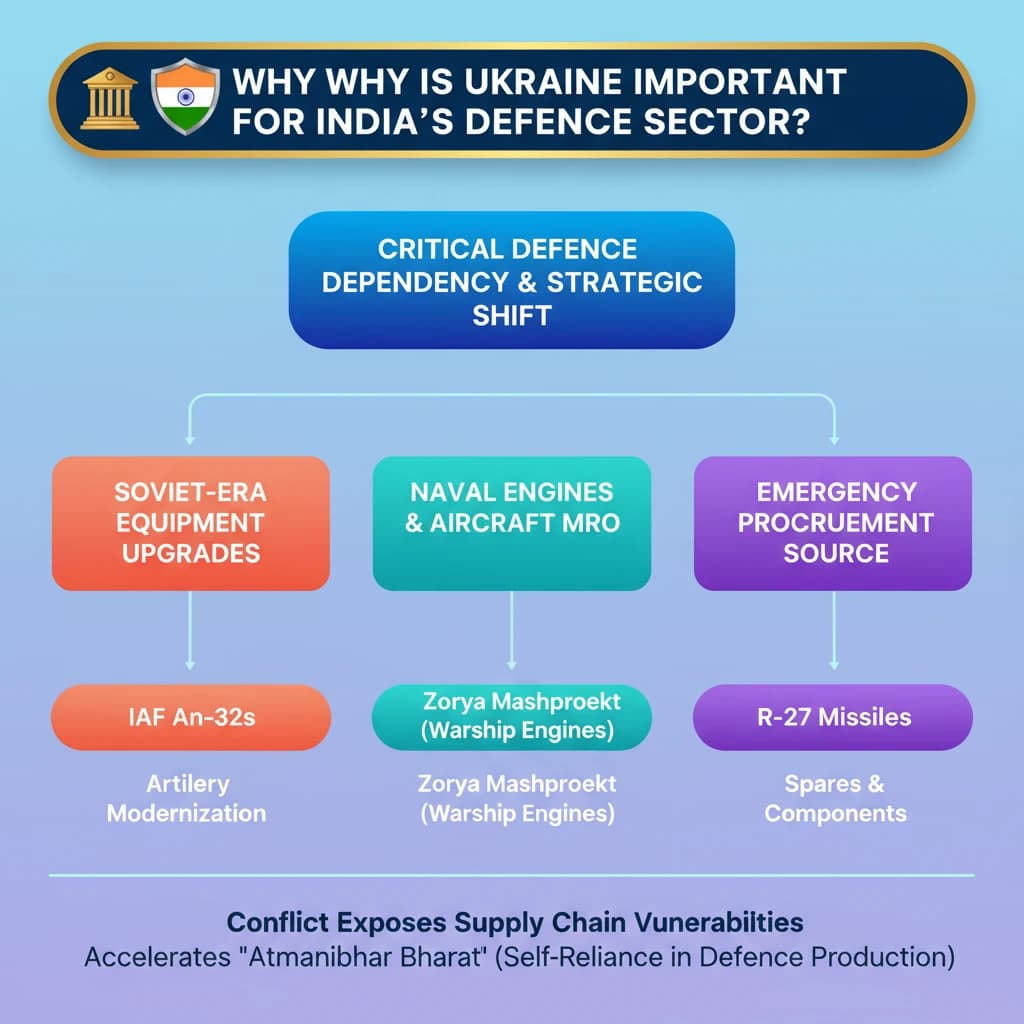
Why is Ukraine Important for India’s Defence Sector? is a key topic under International Relations for UPSC Civil Services Examination. Key points include: India relies heavily on Ukraine for maintenance and upgrades of Soviet-era defence equipment.. Key dependencies include IAF's An-32 aircraft and Indian Navy's warship engines (Zorya Mashproekt).. Ukraine has been a source for emergency defence procurements, like R-27 missiles.. Understanding this topic is essential for both UPSC Prelims and Mains preparation.
Why is Why is Ukraine Important for India’s Defence Sector? important for UPSC exam?
Why is Ukraine Important for India’s Defence Sector? is a Medium-level topic in UPSC International Relations. It is tested in both Prelims (factual MCQs) and Mains (analytical answer writing). Previous year UPSC questions have frequently covered aspects of Why is Ukraine Important for India’s Defence Sector?, making it essential for comprehensive IAS preparation.
How to prepare Why is Ukraine Important for India’s Defence Sector? for UPSC?
To prepare Why is Ukraine Important for India’s Defence Sector? for UPSC: (1) Study the comprehensive notes covering all key concepts on Vaidra. (2) Practice previous year questions on this topic. (3) Connect it with current affairs using daily updates. (4) Revise using key takeaways and mind maps available for International Relations. (5) Write practice answers linking Why is Ukraine Important for India’s Defence Sector? to related GS Paper topics.
Key takeaways of Why is Ukraine Important for India’s Defence Sector? for UPSC
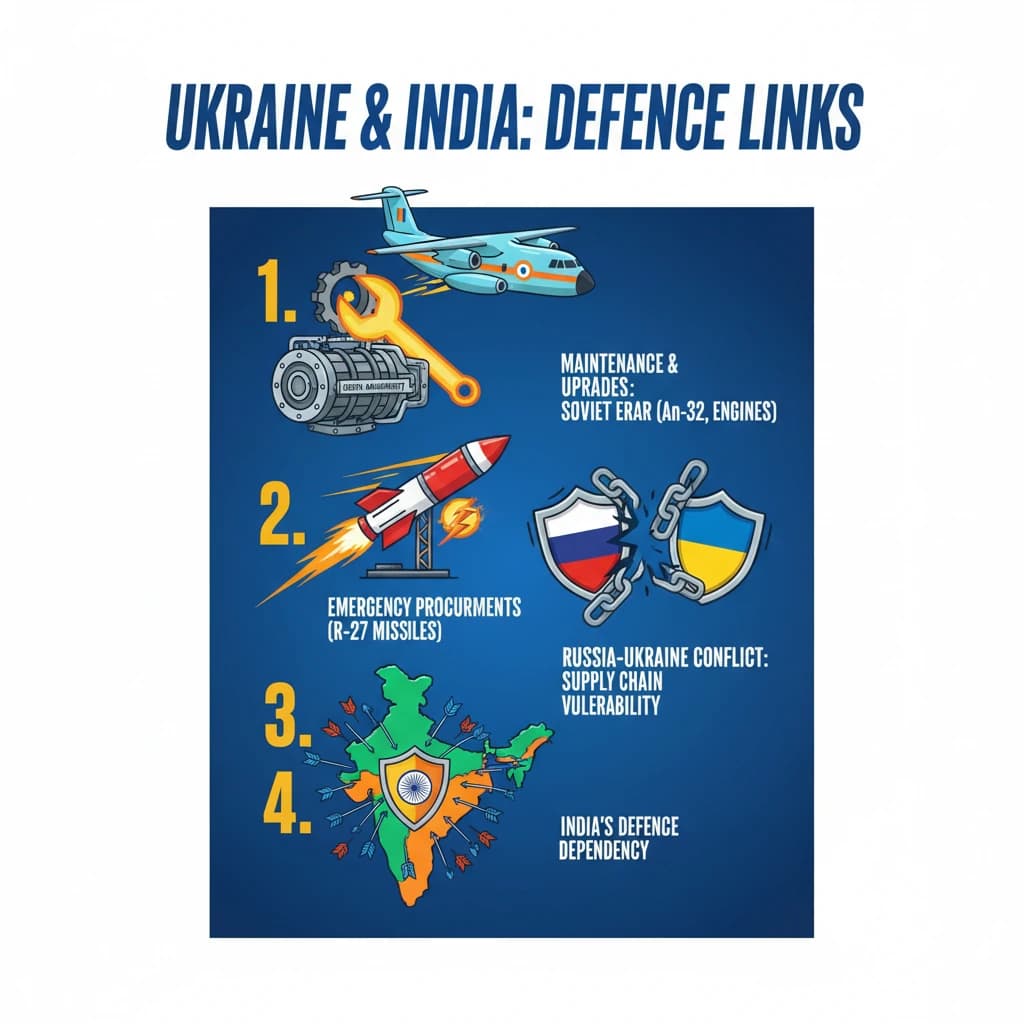
- India relies heavily on Ukraine for maintenance and upgrades of Soviet-era defence equipment.
- Key dependencies include IAF's An-32 aircraft and Indian Navy's warship engines (Zorya Mashproekt).
- Ukraine has been a source for emergency defence procurements, like R-27 missiles.
- The Russia-Ukraine conflict highlights India's defence supply chain vulnerabilities.
- The situation accelerates India's push for defence indigenization and diversification under Atmanirbhar Bharat.

Why is Ukraine Important for India’s Defence Sector?
Medium⏱️ 8 min read
international relations
📖 Introduction
Introduction to India-Ukraine Defence Ties
India maintains significant defence ties with Ukraine, primarily due to its vast inventory of Soviet-era defence equipment. Ukraine plays a crucial role in the maintenance, upgrade, and supply of critical components for these platforms.
This dependency highlights strategic vulnerabilities for India, especially amidst geopolitical shifts and conflicts involving Ukraine.
Legacy of Soviet-Era Equipment
A substantial portion of India's defence arsenal comprises equipment acquired from the former Soviet Union. Ukraine, as a successor state, inherited significant defence industrial capabilities.
These capabilities include manufacturing facilities for crucial components and expertise for the maintenance and upgrade of various Soviet-origin platforms.
- Gas Turbine Engines: Critical for Indian Navy Warships.
- An-32 Aircraft: Operational with the Indian Air Force (IAF).
Indian Air Force (IAF) Dependence on Ukraine
The Indian Air Force (IAF) relies heavily on Ukrainian expertise for the upkeep of its transport fleet, particularly the An-32 aircraft.
In June 2009, India signed a USD 400 million agreement with Ukraine's SpetsTechnoExport (STE). This deal aimed to upgrade 105 An-32 aircraft, extending their operational life by 40 years and improving their avionics.
The An-32 fleet is indispensable for India's logistical operations, especially in challenging terrains.
- Air Maintenance: Essential for army troops deployed along the northern frontier.
- Air Cargo Drop-off: For supplies and equipment.
- Para Drop-off: For airborne operations.
Indian Navy's Critical Reliance
The Indian Navy also shares a significant dependency on Ukraine for critical naval propulsion systems and components.
Over 30 Indian frontline warships are powered by engines supplied by Zorya Mashproekt of Ukraine. This includes crucial vessels like the Talwar-class frigates.
Ukraine is a vital supplier of components for the construction of naval vessels within India.
Specifically, Ukraine is supplying critical components for the construction of two Admiral Grigorovich-class frigates at the Goa Shipyard Limited (GSL).
To mitigate long-term dependency, Ukraine's state-owned Zorya-Mashproekt has been in discussions with Indian private sector companies for the joint manufacture of gas turbines.
Recent Defence Trade and Collaborations
Beyond maintenance and component supply, India has also engaged in direct defence procurement from Ukraine for urgent operational needs.
Following the Balakot air strike in 2019, the IAF made emergency procurements of R-27 air-to-air missiles from Ukraine. These missiles are crucial for its SU-30MKI fighters.
Defence cooperation continued with new agreements in recent years.
At Aero India in February 2021, Ukraine signed four agreements worth USD 70 million with India, further solidifying their defence trade relationship.
Understanding these specific examples is crucial for illustrating India's defence dependencies and the strategic implications for UPSC Mains GS Paper 2 (International Relations) and GS Paper 3 (Internal Security/Defence).
💡 Key Takeaways
- •India relies heavily on Ukraine for maintenance and upgrades of Soviet-era defence equipment.
- •Key dependencies include IAF's An-32 aircraft and Indian Navy's warship engines (Zorya Mashproekt).
- •Ukraine has been a source for emergency defence procurements, like R-27 missiles.
- •The Russia-Ukraine conflict highlights India's defence supply chain vulnerabilities.
- •The situation accelerates India's push for defence indigenization and diversification under Atmanirbhar Bharat.
🧠 Memory Techniques
95% Verified Content
📚 Reference Sources
•Publicly available defence news and government statements regarding India-Ukraine defence deals (e.g., AN-32 upgrade, frigate components, R-27 missiles)