Loading page, please wait…
Vaidra Logo
Vaidra

Top 4 items + smart groups

UPSC GPT
New
Current Affairs
Daily Solutions
Daily Puzzle
Mains Evaluator

Version 2.0.0 • Built with ❤️ for UPSC aspirants

Loading...
Loading...
Loading...
Loading...
Loading...
Loading...
Loading...
Loading...
Loading...
Loading...
Loading...
Loading...
Loading...
Back
All Subjects

Topics

0 topics • 0 completed

Loading topics...
Loading...
Loading...
Loading...
Loading...
Loading...
Overall Progress0%
What is the Information Technology Amendment Rules 2023? - UPSC Polity And Governance

What is the Information Technology Amendment Rules 2023? - UPSC Polity And Governance

What is What is the Information Technology Amendment Rules 2023? in UPSC Polity And Governance?

What is the Information Technology Amendment Rules 2023? is a key topic under Polity And Governance for UPSC Civil Services Examination. Key points include: IT Amendment Rules 2023 replaced IT (Intermediaries Guidelines) Rules, 2011.. Established under the Information Technology Act, 2000.. Mandates enhanced due diligence by online intermediaries.. Understanding this topic is essential for both UPSC Prelims and Mains preparation.

Why is What is the Information Technology Amendment Rules 2023? important for UPSC exam?

What is the Information Technology Amendment Rules 2023? is a Medium-level topic in UPSC Polity And Governance. It is tested in both Prelims (factual MCQs) and Mains (analytical answer writing). Previous year UPSC questions have frequently covered aspects of What is the Information Technology Amendment Rules 2023?, making it essential for comprehensive IAS preparation.

How to prepare What is the Information Technology Amendment Rules 2023? for UPSC?

To prepare What is the Information Technology Amendment Rules 2023? for UPSC: (1) Study the comprehensive notes covering all key concepts on Vaidra. (2) Practice previous year questions on this topic. (3) Connect it with current affairs using daily updates. (4) Revise using key takeaways and mind maps available for Polity And Governance. (5) Write practice answers linking What is the Information Technology Amendment Rules 2023? to related GS Paper topics.

Key takeaways of What is the Information Technology Amendment Rules 2023? for UPSC

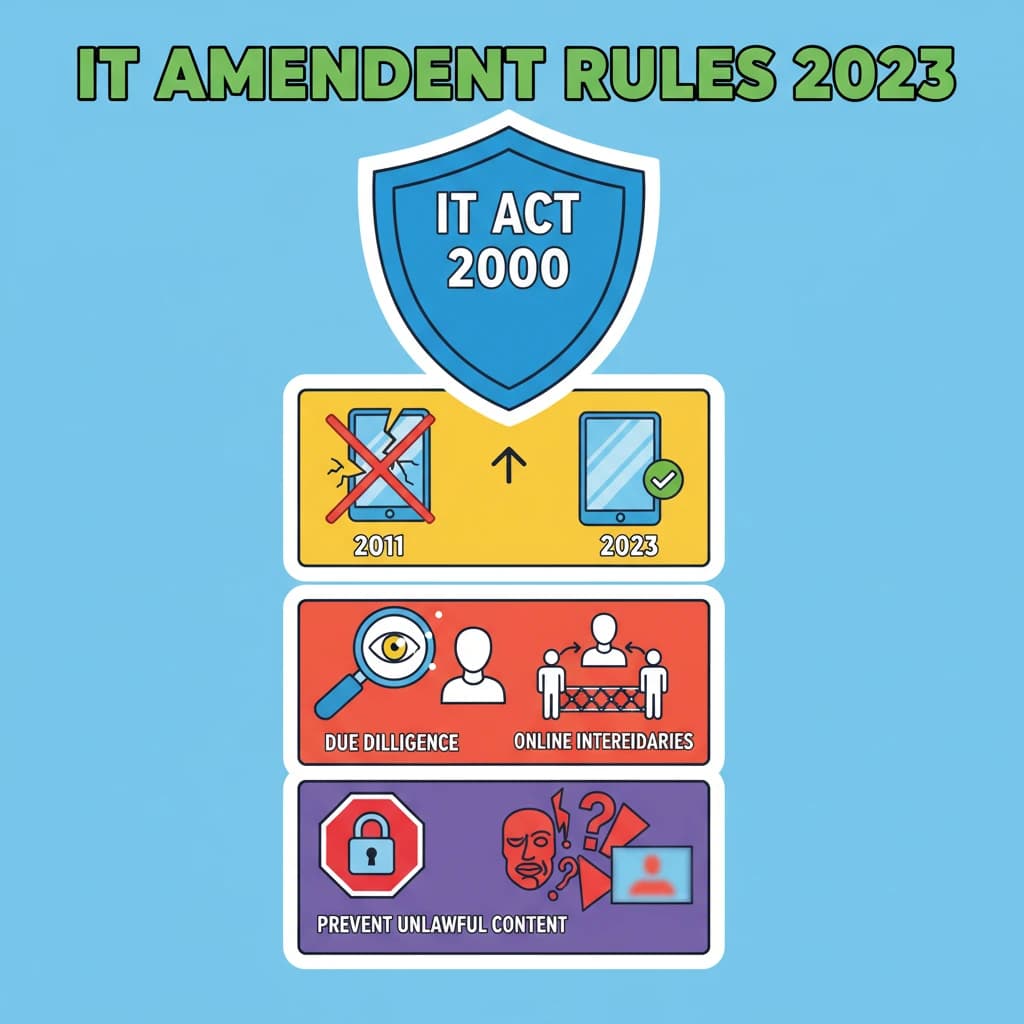
  • IT Amendment Rules 2023 replaced IT (Intermediaries Guidelines) Rules, 2011.
  • Established under the Information Technology Act, 2000.
  • Mandates enhanced due diligence by online intermediaries.
  • Requires intermediaries to prevent unlawful content (obscene, defamatory, misleading).
  • Stipulates establishment of robust Grievance Redressal Mechanisms by platforms.
What is the Information Technology Amendment Rules 2023?

What is the Information Technology Amendment Rules 2023?

Medium⏱️ 7 min read✓ 98% Verified
polity and governance

📖 Introduction

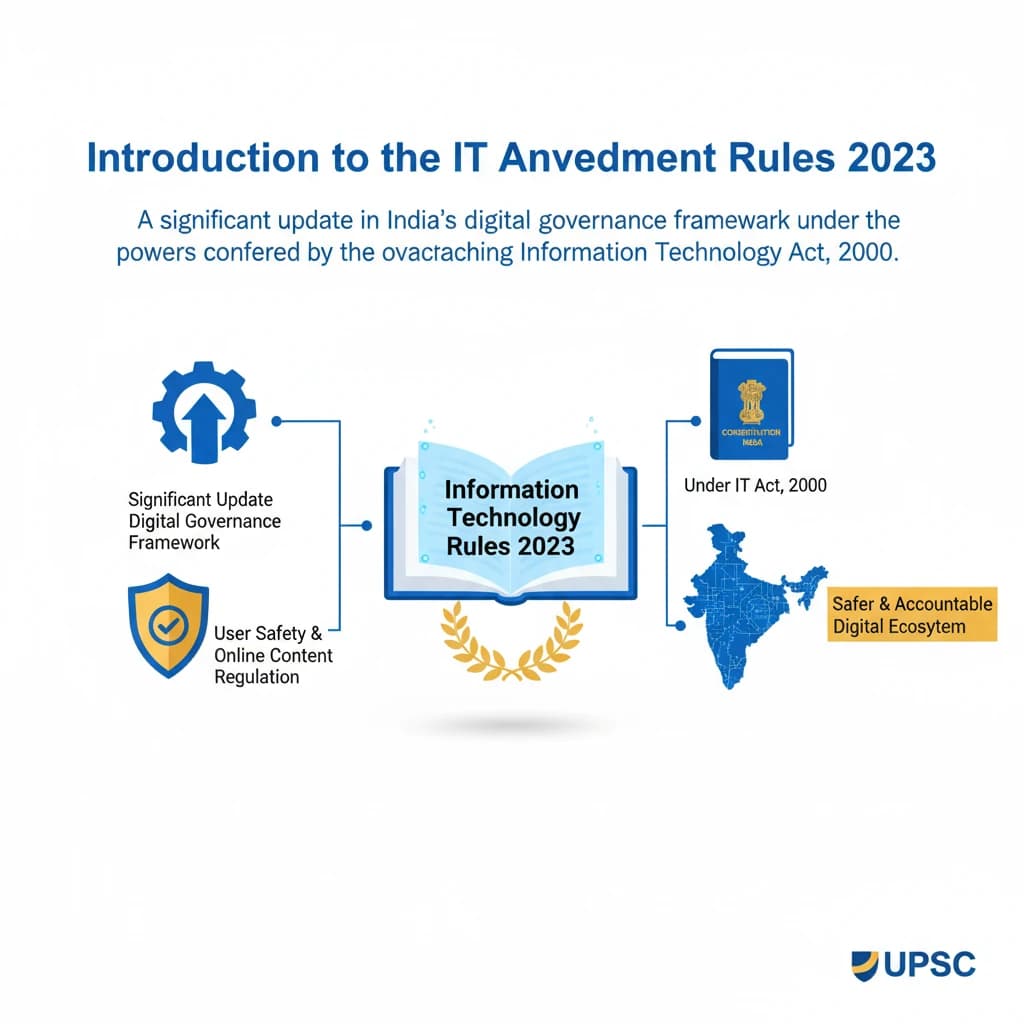
<h4>Introduction to the IT Amendment Rules 2023</h4><p>The <strong>Information Technology Amendment Rules 2023</strong> represent a significant update in India's digital governance framework. These rules were established under the powers conferred by the overarching <strong>Information Technology Act, 2000</strong>.</p><p>They aim to regulate online content and enhance user safety across various digital platforms. The amendments reflect the government's commitment to creating a safer and more accountable internet ecosystem.</p><div class='info-box'><p><strong>Key Fact:</strong> The <strong>IT Amendment Rules 2023</strong> superseded the earlier <strong>Information Technology (Intermediaries Guidelines) Rules, 2011</strong>, bringing in updated provisions for digital intermediaries.</p></div><h4>Due Diligence by Intermediaries</h4><p>A central tenet of the new rules is the enhanced requirement for <strong>due diligence</strong> by online intermediaries. This mandates platforms to be more proactive in managing content and user conduct.</p><p>Intermediaries are now obligated to prominently display their <strong>rules, regulations, privacy policies</strong>, and <strong>user agreements</strong> on their platforms. This ensures transparency and informs users of their responsibilities and rights.</p><div class='key-point-box'><p><strong>Core Obligation:</strong> Intermediaries must take active steps to prevent the publishing of <strong>unlawful content</strong>. This includes material deemed obscene, defamatory, or misleading, thereby fostering a more responsible online environment.</p></div><h4>Grievance Redressal Mechanism</h4><p>To address user concerns effectively, the rules mandate the establishment of robust <strong>Grievance Redressal Mechanisms</strong>. This provides a structured channel for users to report issues and seek resolutions.</p><p>Intermediaries are required to set up accessible systems to handle user complaints promptly and efficiently. This ensures accountability and builds trust between users and digital platforms.</p><div class='exam-tip-box'><p><strong>UPSC Insight:</strong> Understanding the evolution from <strong>IT Act 2000</strong> to <strong>IT Rules 2011</strong> and now <strong>IT Amendment Rules 2023</strong> is crucial for questions on digital governance and online content regulation in <strong>GS-II Polity and Governance</strong>.</p></div>
Concept Diagram

💡 Key Takeaways

  • •IT Amendment Rules 2023 replaced IT (Intermediaries Guidelines) Rules, 2011.
  • •Established under the Information Technology Act, 2000.
  • •Mandates enhanced due diligence by online intermediaries.
  • •Requires intermediaries to prevent unlawful content (obscene, defamatory, misleading).
  • •Stipulates establishment of robust Grievance Redressal Mechanisms by platforms.

🧠 Memory Techniques
Memory Aid
98% Verified Content

📚 Reference Sources

•The Information Technology Act, 2000 (India)
•The Information Technology (Intermediaries Guidelines) Rules, 2011 (India)
•The Information Technology (Intermediaries Guidelines and Digital Media Ethics Code) Amendment Rules, 2023 (India)

Related Topics

Loading related topics...
Explore:Polity And Governance Topics·All Subjects·Daily Current Affairs·Editorial Analysis·Previous Year Questions·UPSC GPT