Regulatory Bodies in India: SEBI & TRAI - Structure, Role & Functions - UPSC Polity And Governance
What is Regulatory Bodies in India: SEBI & TRAI - Structure, Role & Functions in UPSC Polity And Governance?
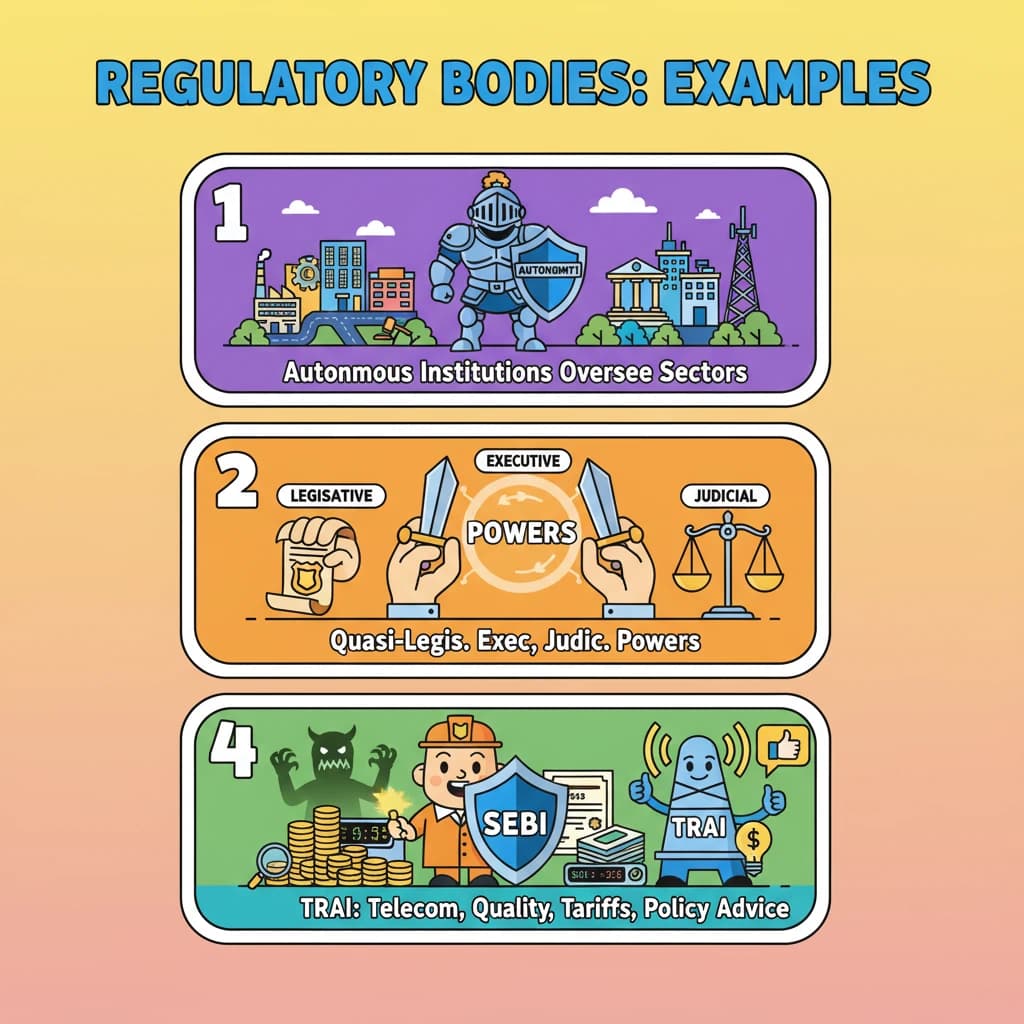
Regulatory Bodies in India: SEBI & TRAI - Structure, Role & Functions is a key topic under Polity And Governance for UPSC Civil Services Examination. Key points include: Regulatory bodies are autonomous institutions overseeing specific economic sectors.. They possess quasi-legislative, quasi-executive, and quasi-judicial powers.. SEBI regulates securities markets, protecting investors and ensuring market integrity.. Understanding this topic is essential for both UPSC Prelims and Mains preparation.
Why is Regulatory Bodies in India: SEBI & TRAI - Structure, Role & Functions important for UPSC exam?
Regulatory Bodies in India: SEBI & TRAI - Structure, Role & Functions is a Medium-level topic in UPSC Polity And Governance. It is tested in both Prelims (factual MCQs) and Mains (analytical answer writing). Previous year UPSC questions have frequently covered aspects of Regulatory Bodies in India: SEBI & TRAI - Structure, Role & Functions, making it essential for comprehensive IAS preparation.
How to prepare Regulatory Bodies in India: SEBI & TRAI - Structure, Role & Functions for UPSC?
To prepare Regulatory Bodies in India: SEBI & TRAI - Structure, Role & Functions for UPSC: (1) Study the comprehensive notes covering all key concepts on Vaidra. (2) Practice previous year questions on this topic. (3) Connect it with current affairs using daily updates. (4) Revise using key takeaways and mind maps available for Polity And Governance. (5) Write practice answers linking Regulatory Bodies in India: SEBI & TRAI - Structure, Role & Functions to related GS Paper topics.
Key takeaways of Regulatory Bodies in India: SEBI & TRAI - Structure, Role & Functions for UPSC
- Regulatory bodies are autonomous institutions overseeing specific economic sectors.
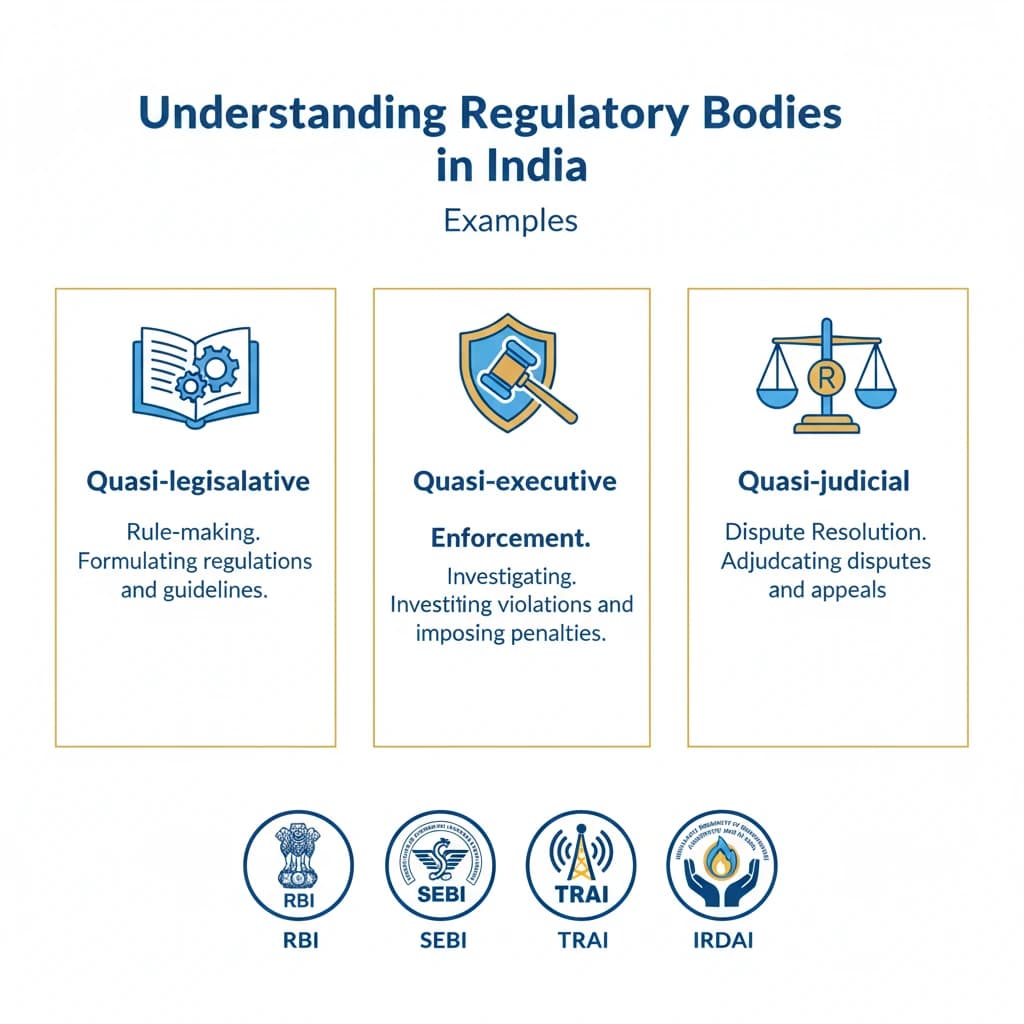
- They possess quasi-legislative, quasi-executive, and quasi-judicial powers.
- SEBI regulates securities markets, protecting investors and ensuring market integrity.
- TRAI regulates telecom services, ensuring quality, fair tariffs, and advising policy.
- Their establishment post-1991 reforms was crucial for market liberalization and growth.
- They are vital for market stability, consumer protection, fair competition, and effective policy implementation.
- Challenges include maintaining autonomy, avoiding regulatory capture, and adapting to technological changes.
Regulatory Bodies in India: SEBI & TRAI - Structure, Role & Functions
📖 Introduction
💡 Key Takeaways
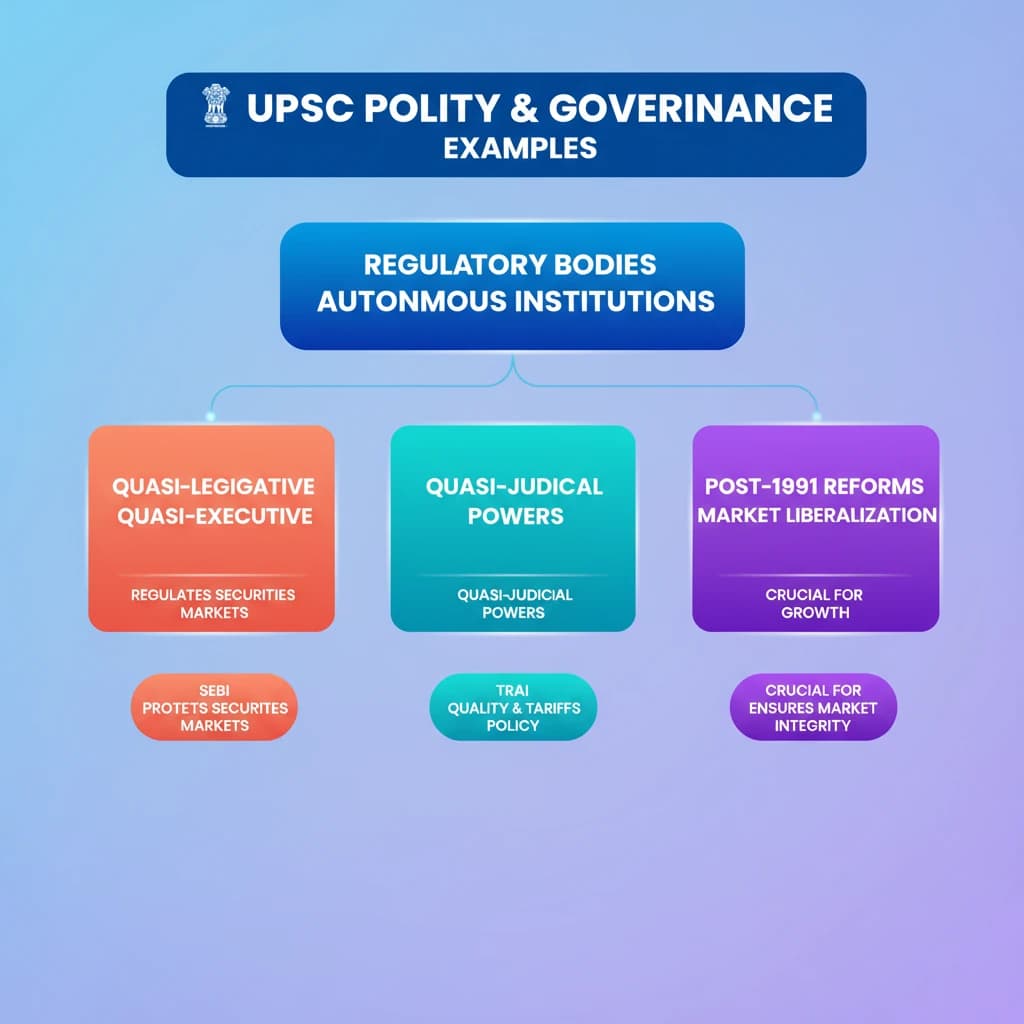
- •Regulatory bodies are autonomous institutions overseeing specific economic sectors.
- •They possess quasi-legislative, quasi-executive, and quasi-judicial powers.
- •SEBI regulates securities markets, protecting investors and ensuring market integrity.
- •TRAI regulates telecom services, ensuring quality, fair tariffs, and advising policy.
- •Their establishment post-1991 reforms was crucial for market liberalization and growth.
- •They are vital for market stability, consumer protection, fair competition, and effective policy implementation.
- •Challenges include maintaining autonomy, avoiding regulatory capture, and adapting to technological changes.
🧠 Memory Techniques