PENCIL Portal: Child Labour Enforcement & Tracking System - UPSC Polity And Governance
What is PENCIL Portal: Child Labour Enforcement & Tracking System in UPSC Polity And Governance?
PENCIL Portal: Child Labour Enforcement & Tracking System is a key topic under Polity And Governance for UPSC Civil Services Examination. Key points include: PENCIL Portal (Platform for Effective Enforcement for No Child Labour) launched in 2017.. Initiated by the Ministry of Labour and Employment to enforce the Child and Adolescent Labour (Prohibition and Regulation) Act, 1986.. Comprises five key components: Central Government, State Government, District Project Societies, Child Tracking System, and Complaint Corner.. Understanding this topic is essential for both UPSC Prelims and Mains preparation.
Why is PENCIL Portal: Child Labour Enforcement & Tracking System important for UPSC exam?
PENCIL Portal: Child Labour Enforcement & Tracking System is a Medium-level topic in UPSC Polity And Governance. It is tested in both Prelims (factual MCQs) and Mains (analytical answer writing). Previous year UPSC questions have frequently covered aspects of PENCIL Portal: Child Labour Enforcement & Tracking System, making it essential for comprehensive IAS preparation.
How to prepare PENCIL Portal: Child Labour Enforcement & Tracking System for UPSC?
To prepare PENCIL Portal: Child Labour Enforcement & Tracking System for UPSC: (1) Study the comprehensive notes covering all key concepts on Vaidra. (2) Practice previous year questions on this topic. (3) Connect it with current affairs using daily updates. (4) Revise using key takeaways and mind maps available for Polity And Governance. (5) Write practice answers linking PENCIL Portal: Child Labour Enforcement & Tracking System to related GS Paper topics.
Key takeaways of PENCIL Portal: Child Labour Enforcement & Tracking System for UPSC
- PENCIL Portal (Platform for Effective Enforcement for No Child Labour) launched in 2017.
- Initiated by the Ministry of Labour and Employment to enforce the Child and Adolescent Labour (Prohibition and Regulation) Act, 1986.
- Comprises five key components: Central Government, State Government, District Project Societies, Child Tracking System, and Complaint Corner.
- Leverages e-governance for transparency, accountability, and multi-stakeholder coordination in combating child labour.
- A crucial tool for child protection, rescue, rehabilitation, and data-driven policy making.
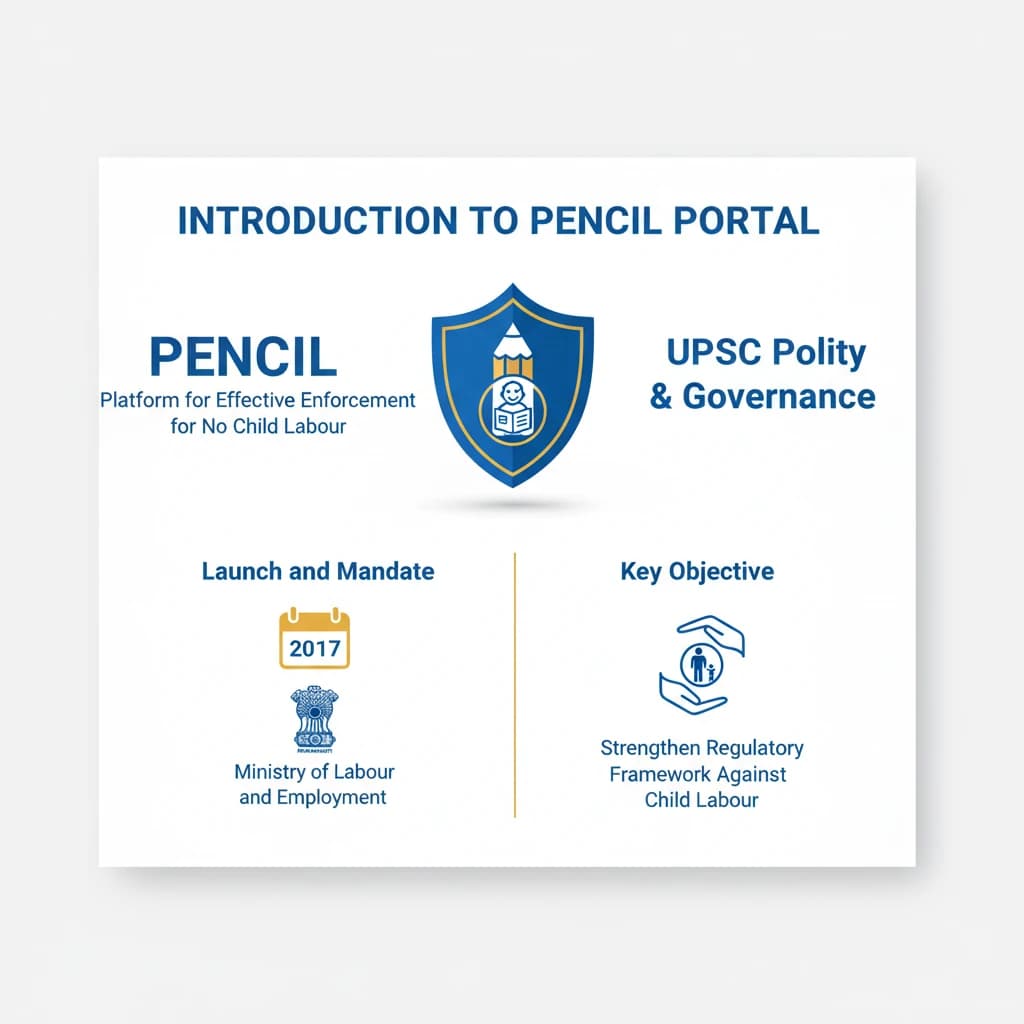
PENCIL Portal: Child Labour Enforcement & Tracking System
📖 Introduction

💡 Key Takeaways
- •PENCIL Portal (Platform for Effective Enforcement for No Child Labour) launched in 2017.
- •Initiated by the Ministry of Labour and Employment to enforce the Child and Adolescent Labour (Prohibition and Regulation) Act, 1986.
- •Comprises five key components: Central Government, State Government, District Project Societies, Child Tracking System, and Complaint Corner.
- •Leverages e-governance for transparency, accountability, and multi-stakeholder coordination in combating child labour.
- •A crucial tool for child protection, rescue, rehabilitation, and data-driven policy making.
🧠 Memory Techniques