Loading page, please wait…
APAAR: One Nation One Student ID Card - UPSC Polity And Governance
What is APAAR: One Nation One Student ID Card in UPSC Polity And Governance?
APAAR: One Nation One Student ID Card is a key topic under Polity And Governance for UPSC Civil Services Examination. Key points include: APAAR is a voluntary, 12-digit Automated Permanent Academic Account Registry for all Indian students.. It aligns with NEP 2020 and NCQF, aiming to consolidate academic records digitally.. Benefits include enhanced accountability, efficiency, fraud combat, smooth transfers, and improved employment access.. Understanding this topic is essential for both UPSC Prelims and Mains preparation.
Why is APAAR: One Nation One Student ID Card important for UPSC exam?
APAAR: One Nation One Student ID Card is a Medium-level topic in UPSC Polity And Governance. It is tested in both Prelims (factual MCQs) and Mains (analytical answer writing). Previous year UPSC questions have frequently covered aspects of APAAR: One Nation One Student ID Card, making it essential for comprehensive IAS preparation.
How to prepare APAAR: One Nation One Student ID Card for UPSC?
To prepare APAAR: One Nation One Student ID Card for UPSC: (1) Study the comprehensive notes covering all key concepts on Vaidra. (2) Practice previous year questions on this topic. (3) Connect it with current affairs using daily updates. (4) Revise using key takeaways and mind maps available for Polity And Governance. (5) Write practice answers linking APAAR: One Nation One Student ID Card to related GS Paper topics.
Key takeaways of APAAR: One Nation One Student ID Card for UPSC
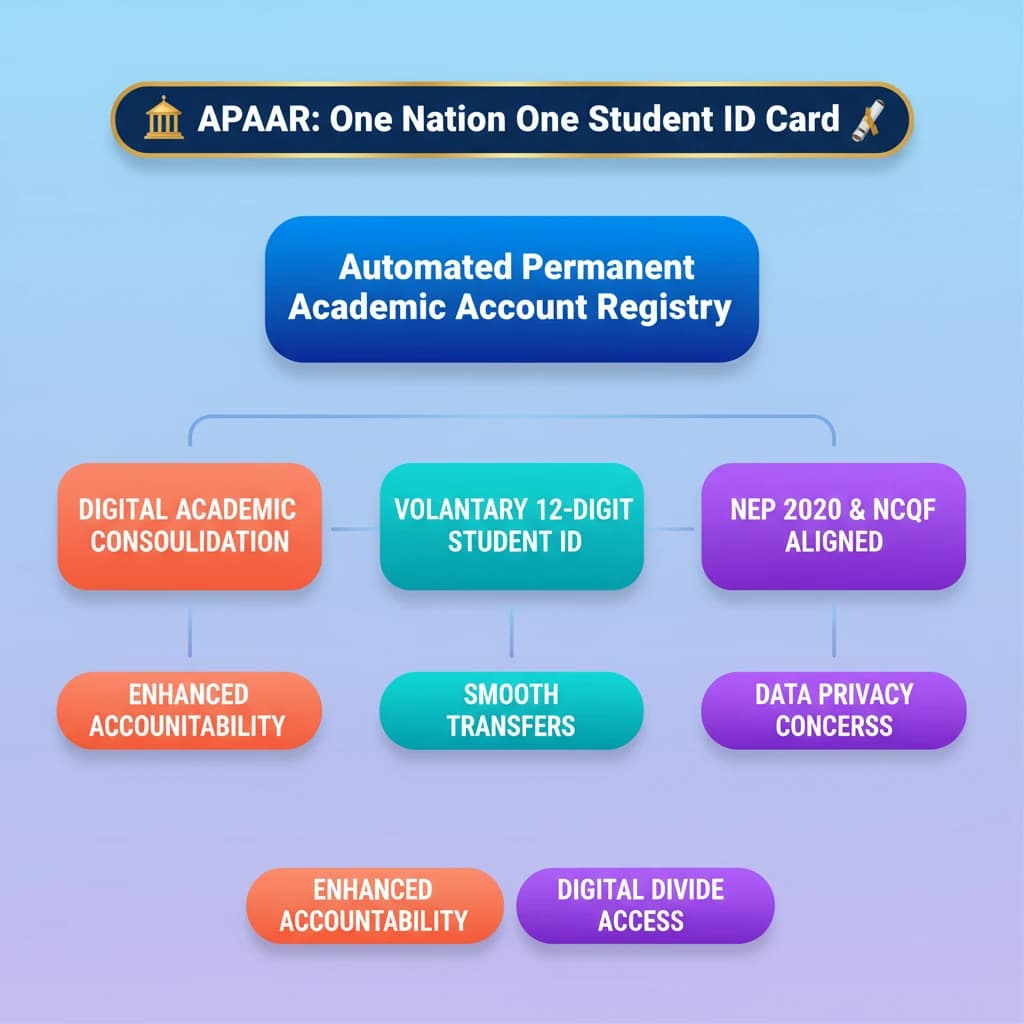
- APAAR is a voluntary, 12-digit Automated Permanent Academic Account Registry for all Indian students.
- It aligns with NEP 2020 and NCQF, aiming to consolidate academic records digitally.
- Benefits include enhanced accountability, efficiency, fraud combat, smooth transfers, and improved employment access.
- Key concerns are student data privacy, security risks, and the potential widening of the digital divide.
- Successful implementation requires robust security, digital literacy, and inclusive access strategies.

APAAR: One Nation One Student ID Card
Medium⏱️ 8 min read
polity and governance
📖 Introduction
Introduction: The APAAR Initiative
The National Conference on APAAR: One Nation One Student ID Card was recently convened in New Delhi, bringing this significant educational reform into focus.
This initiative aims to create a unified digital identity for students across India, aligning with the broader goals of the National Education Policy (NEP) 2020.
What is APAAR?
APAAR stands for Automated Permanent Academic Account Registry. It is a specialized identification system designed for every student in India, from early childhood.
The APAAR ID is a unique and permanent 12-digit identification number assigned to each student.
It is conceptualized under the framework of the National Education Policy (NEP) 2020 and the National Credit and Qualifications Framework (NCQF).
Crucially, registration for an APAAR ID is entirely voluntary, not mandatory, ensuring student autonomy.
Core Objectives of APAAR
The primary objective of APAAR is to streamline and enhance the academic experience for students nationwide.
By consolidating all academic records onto a single, accessible digital platform, APAAR aims to simplify educational processes.
It is envisioned as a vital tool for tracking the educational progress of over 260 million students in India, serving as an aspirational and globally recognized academic document.
Key Benefits of APAAR
- Accountability & Transparency: APAAR tracks student progress, ensuring greater accountability and transparency in the education system.
- Efficiency & Fraud Combat: It enhances administrative efficiency, helping to combat academic fraud and ensure genuine record-keeping.
- Holistic Development: The system includes records of co-curricular achievements, promoting a holistic view of student development.
- Smooth Transfers: APAAR facilitates a seamless transfer process for students moving between institutions or states.
- Data-Driven Decisions: It provides valuable data for educational institutions to make informed, data-driven decisions.
- Employment Access: Students can easily share their verified academic records, potentially enhancing access to employment opportunities.
Associated Concerns and Challenges
Despite its benefits, the APAAR initiative raises several important concerns that require careful consideration and robust solutions.
UPSC often asks about the pros and cons of digital initiatives. Be prepared to discuss both sides comprehensively.
- Privacy Concerns: Consolidating sensitive academic records into a centralized database raises significant questions about the privacy and security of student data.
- Data Security Risks: The widespread adoption of APAAR IDs could increase the risk of identity theft or fraudulent activities, necessitating robust cybersecurity measures.
- Digital Divide: There is a risk that students from marginalized or remote communities may lack equal access to the necessary digital infrastructure, potentially exacerbating existing educational disparities.
💡 Key Takeaways
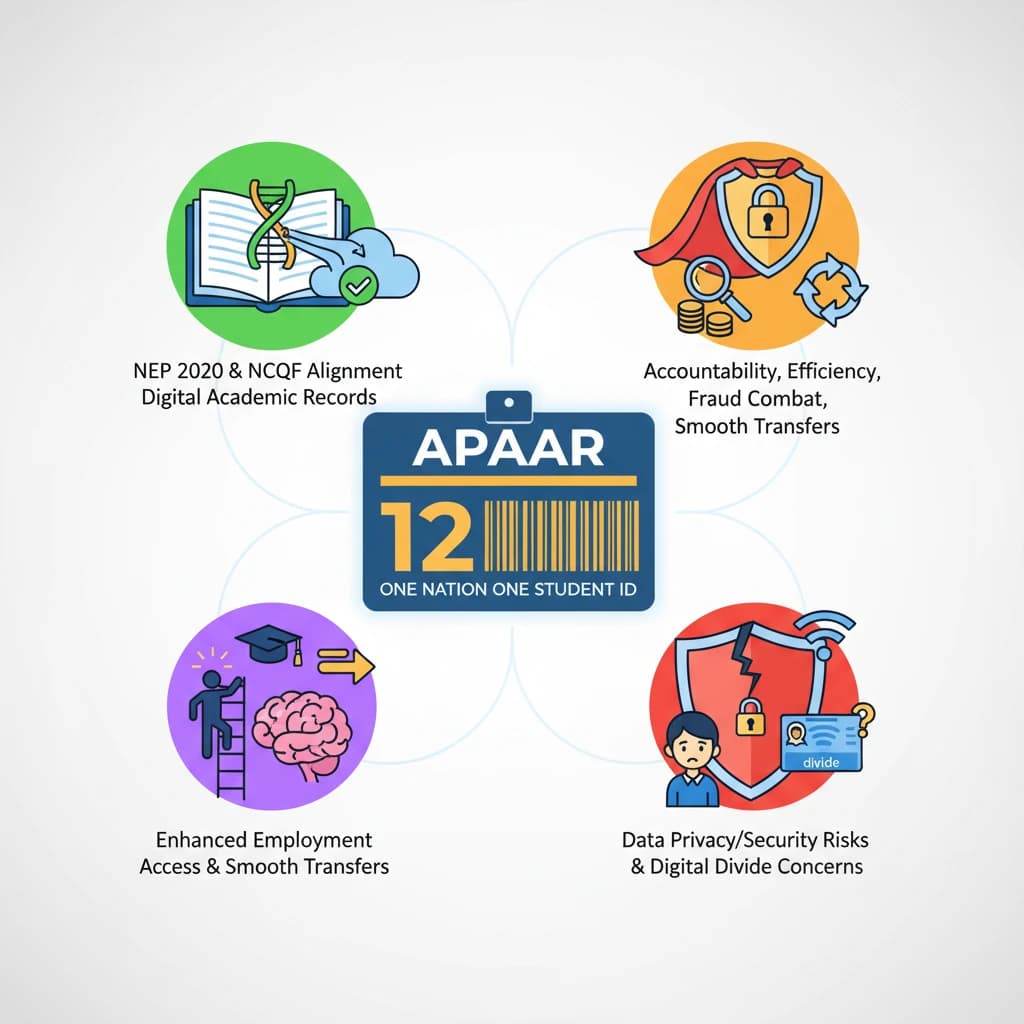
- •APAAR is a voluntary, 12-digit Automated Permanent Academic Account Registry for all Indian students.
- •It aligns with NEP 2020 and NCQF, aiming to consolidate academic records digitally.
- •Benefits include enhanced accountability, efficiency, fraud combat, smooth transfers, and improved employment access.
- •Key concerns are student data privacy, security risks, and the potential widening of the digital divide.
- •Successful implementation requires robust security, digital literacy, and inclusive access strategies.
🧠 Memory Techniques
95% Verified Content
📚 Reference Sources
•National Education Policy 2020 (NEP 2020) document
•National Credit and Qualifications Framework (NCQF) document