Legal and Social Issues - UPSC Polity And Governance
What is Legal and Social Issues in UPSC Polity And Governance?
Legal and Social Issues is a key topic under Polity And Governance for UPSC Civil Services Examination. Key points include: POCSO Act (2012) is India's key law for protecting children from sexual offenses.. It grants children rights to information and privacy during legal proceedings, mandating special courts and time-bound trials.. Section 42A ensures POCSO provisions override any conflicting laws, strengthening its implementation.. Understanding this topic is essential for both UPSC Prelims and Mains preparation.
Why is Legal and Social Issues important for UPSC exam?
Legal and Social Issues is a Medium-level topic in UPSC Polity And Governance. It is tested in both Prelims (factual MCQs) and Mains (analytical answer writing). Previous year UPSC questions have frequently covered aspects of Legal and Social Issues, making it essential for comprehensive IAS preparation.
How to prepare Legal and Social Issues for UPSC?
To prepare Legal and Social Issues for UPSC: (1) Study the comprehensive notes covering all key concepts on Vaidra. (2) Practice previous year questions on this topic. (3) Connect it with current affairs using daily updates. (4) Revise using key takeaways and mind maps available for Polity And Governance. (5) Write practice answers linking Legal and Social Issues to related GS Paper topics.
Key takeaways of Legal and Social Issues for UPSC
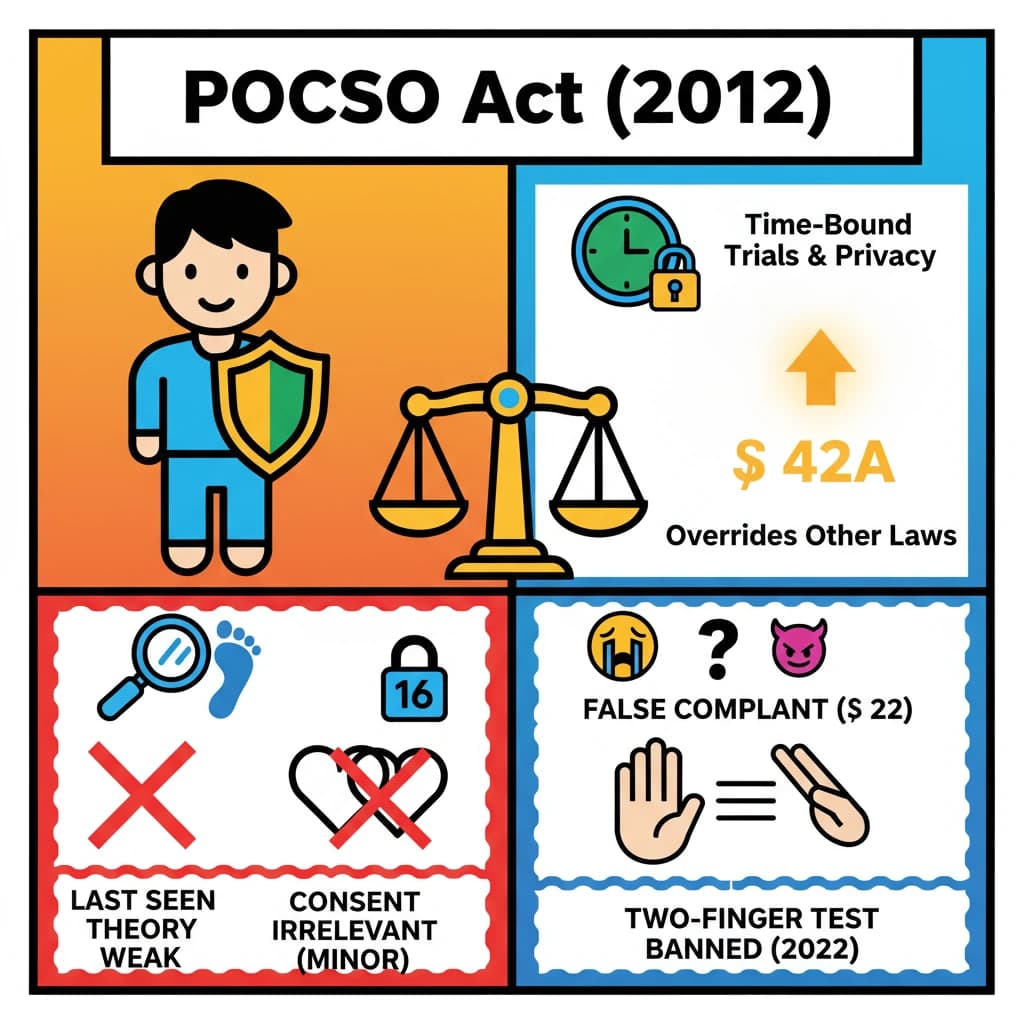
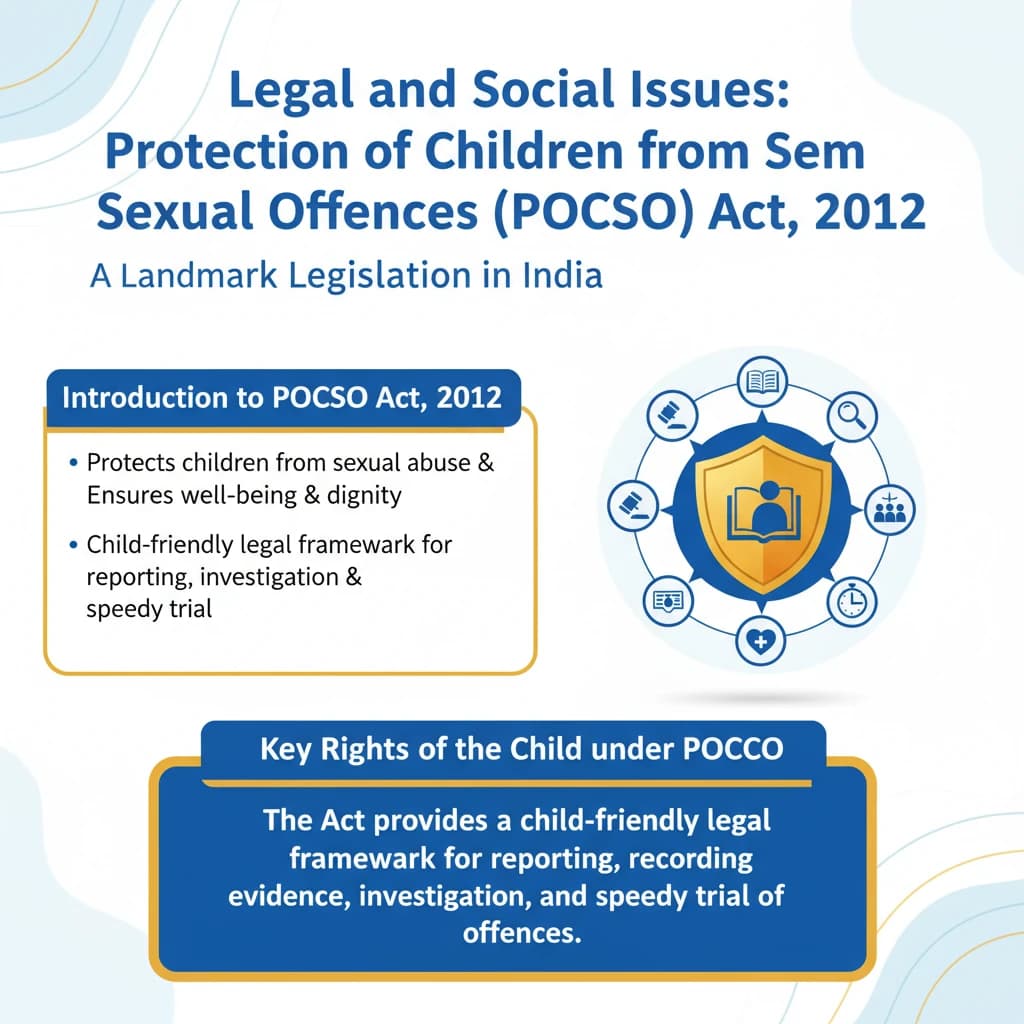
- POCSO Act (2012) is India's key law for protecting children from sexual offenses.
- It grants children rights to information and privacy during legal proceedings, mandating special courts and time-bound trials.
- Section 42A ensures POCSO provisions override any conflicting laws, strengthening its implementation.
- Key shortcomings include issues with the 'Last Seen Theory' (weak without corroboration), treatment of consensual activities (minor's consent irrelevant), potential misuse of false complaint exemption (Section 22), and the banned 'Two-Finger Test' (reaffirmed as misconduct in 2022).
- Investigation machinery often faces challenges, with procedural errors (e.g., unsealed evidence) leading to acquittals, highlighting the need for capacity building.
- Judicial pronouncements (e.g., Anjan Kumar Sarma, Lillu @ Rakesh, Addl. Sessions Judge, Hoingoli) are crucial for interpreting and improving POCSO implementation.
Legal and Social Issues
📖 Introduction
💡 Key Takeaways
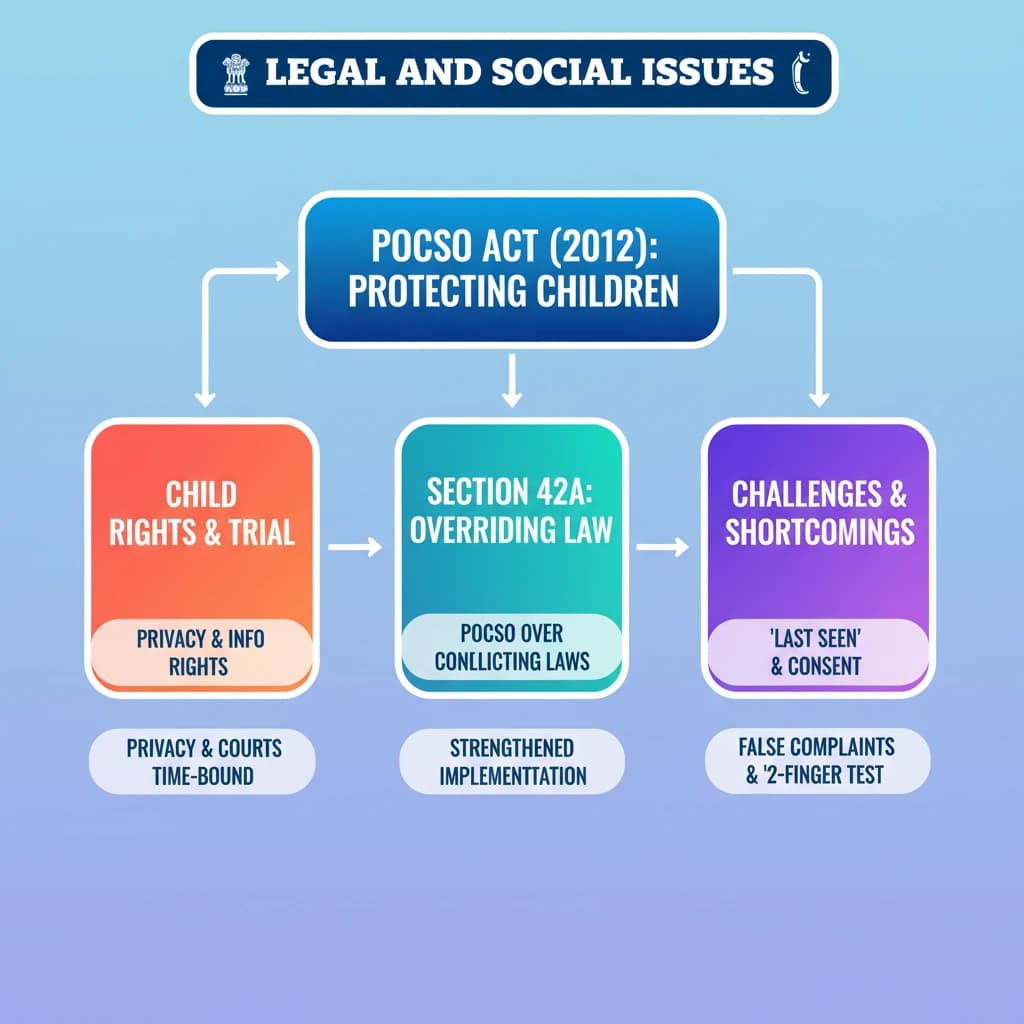
- •POCSO Act (2012) is India's key law for protecting children from sexual offenses.
- •It grants children rights to information and privacy during legal proceedings, mandating special courts and time-bound trials.
- •Section 42A ensures POCSO provisions override any conflicting laws, strengthening its implementation.
- •Key shortcomings include issues with the 'Last Seen Theory' (weak without corroboration), treatment of consensual activities (minor's consent irrelevant), potential misuse of false complaint exemption (Section 22), and the banned 'Two-Finger Test' (reaffirmed as misconduct in 2022).
- •Investigation machinery often faces challenges, with procedural errors (e.g., unsealed evidence) leading to acquittals, highlighting the need for capacity building.
- •Judicial pronouncements (e.g., Anjan Kumar Sarma, Lillu @ Rakesh, Addl. Sessions Judge, Hoingoli) are crucial for interpreting and improving POCSO implementation.
🧠 Memory Techniques