Personality Rights - UPSC Polity And Governance
What is Personality Rights in UPSC Polity And Governance?
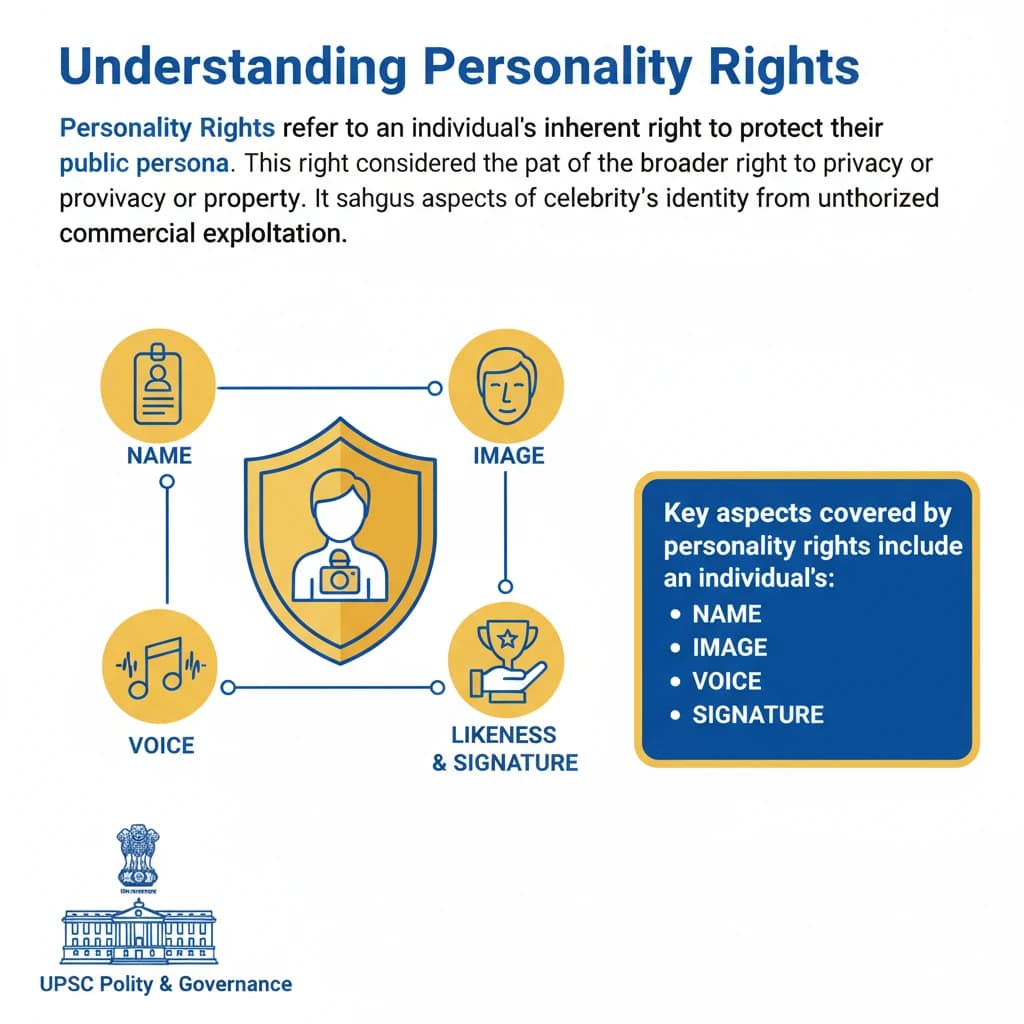
Personality Rights is a key topic under Polity And Governance for UPSC Civil Services Examination. Key points include: Personality Rights protect an individual's public persona, including name, voice, image, and likeness.. They encompass the Right to Privacy and the Right of Publicity.. In India, they are protected through Article 21 (Right to Privacy), Copyright Act (passing off/deception), and Trademark Act.. Understanding this topic is essential for both UPSC Prelims and Mains preparation.
Why is Personality Rights important for UPSC exam?
Personality Rights is a Medium-level topic in UPSC Polity And Governance. It is tested in both Prelims (factual MCQs) and Mains (analytical answer writing). Previous year UPSC questions have frequently covered aspects of Personality Rights, making it essential for comprehensive IAS preparation.
How to prepare Personality Rights for UPSC?
To prepare Personality Rights for UPSC: (1) Study the comprehensive notes covering all key concepts on Vaidra. (2) Practice previous year questions on this topic. (3) Connect it with current affairs using daily updates. (4) Revise using key takeaways and mind maps available for Polity And Governance. (5) Write practice answers linking Personality Rights to related GS Paper topics.
Key takeaways of Personality Rights for UPSC
- Personality Rights protect an individual's public persona, including name, voice, image, and likeness.
- They encompass the Right to Privacy and the Right of Publicity.
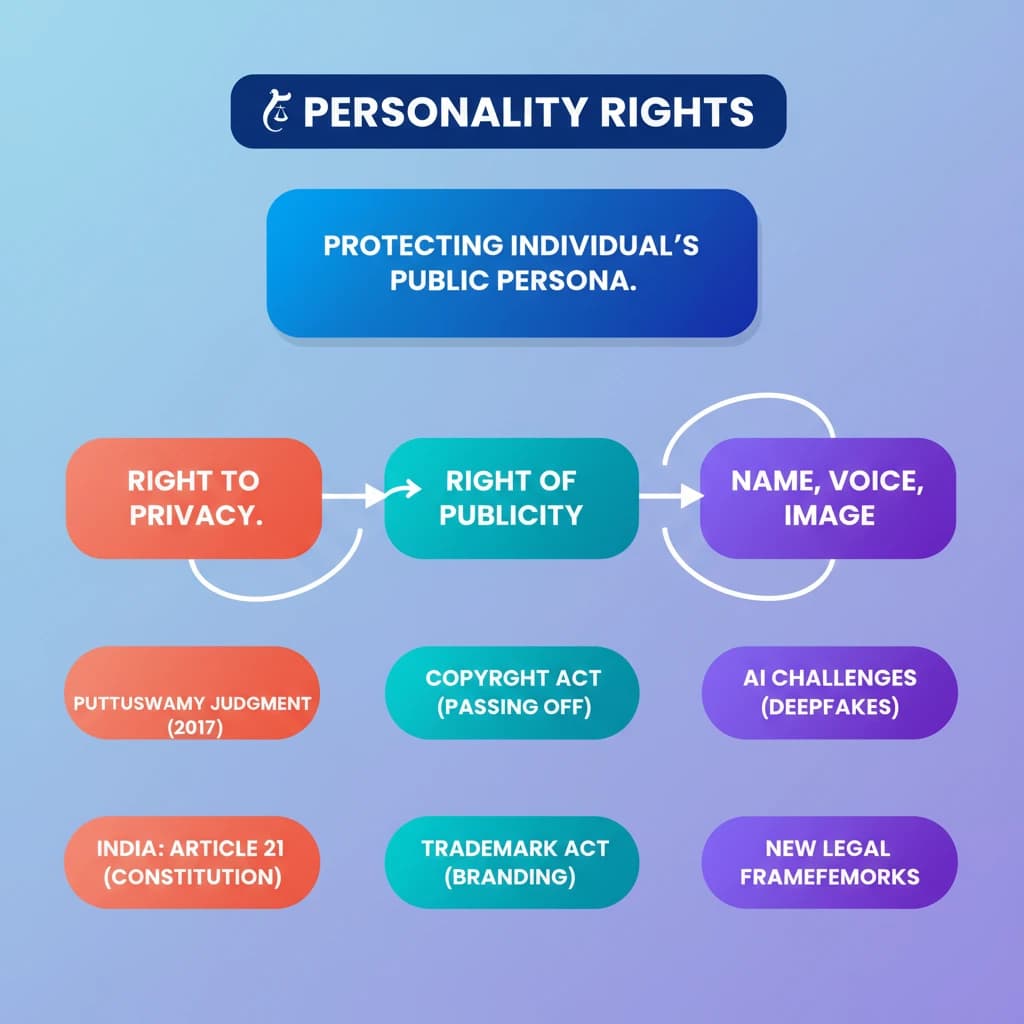
- In India, they are protected through Article 21 (Right to Privacy), Copyright Act (passing off/deception), and Trademark Act.
- The Puttuswamy judgment (2017) strengthened the constitutional basis for privacy, indirectly aiding personality rights.
- AI technologies (voice cloning, deepfakes) pose significant contemporary challenges to personality rights, necessitating new legal frameworks.
Personality Rights
📖 Introduction
💡 Key Takeaways
- •Personality Rights protect an individual's public persona, including name, voice, image, and likeness.
- •They encompass the Right to Privacy and the Right of Publicity.
- •In India, they are protected through Article 21 (Right to Privacy), Copyright Act (passing off/deception), and Trademark Act.
- •The Puttuswamy judgment (2017) strengthened the constitutional basis for privacy, indirectly aiding personality rights.
- •AI technologies (voice cloning, deepfakes) pose significant contemporary challenges to personality rights, necessitating new legal frameworks.
🧠 Memory Techniques