Loading page, please wait…
SC Uphold Socialist and Secular Values in Preamble - UPSC Polity And Governance
What is SC Uphold Socialist and Secular Values in Preamble in UPSC Polity And Governance?
SC Uphold Socialist and Secular Values in Preamble is a key topic under Polity And Governance for UPSC Civil Services Examination. Key points include: SC upheld 'Socialist' and 'Secular' additions to Preamble by 42nd Amendment, 1976.. Parliament can amend Preamble under Article 368, subject to Basic Structure Doctrine.. Indian Secularism means equal state protection for all religions (SR Bommai, 1994).. Understanding this topic is essential for both UPSC Prelims and Mains preparation.
Why is SC Uphold Socialist and Secular Values in Preamble important for UPSC exam?
SC Uphold Socialist and Secular Values in Preamble is a Medium-level topic in UPSC Polity And Governance. It is tested in both Prelims (factual MCQs) and Mains (analytical answer writing). Previous year UPSC questions have frequently covered aspects of SC Uphold Socialist and Secular Values in Preamble, making it essential for comprehensive IAS preparation.
How to prepare SC Uphold Socialist and Secular Values in Preamble for UPSC?
To prepare SC Uphold Socialist and Secular Values in Preamble for UPSC: (1) Study the comprehensive notes covering all key concepts on Vaidra. (2) Practice previous year questions on this topic. (3) Connect it with current affairs using daily updates. (4) Revise using key takeaways and mind maps available for Polity And Governance. (5) Write practice answers linking SC Uphold Socialist and Secular Values in Preamble to related GS Paper topics.
Key takeaways of SC Uphold Socialist and Secular Values in Preamble for UPSC
- SC upheld 'Socialist' and 'Secular' additions to Preamble by 42nd Amendment, 1976.
- Parliament can amend Preamble under Article 368, subject to Basic Structure Doctrine.
- Indian Secularism means equal state protection for all religions (SR Bommai, 1994).
- Articles 25-28 ensure Freedom of Religion for all citizens.
- Articles 14-16 prohibit religious discrimination and ensure equality in law and public employment.
SC Uphold Socialist and Secular Values in Preamble
Medium⏱️ 7 min read
polity and governance
📖 Introduction
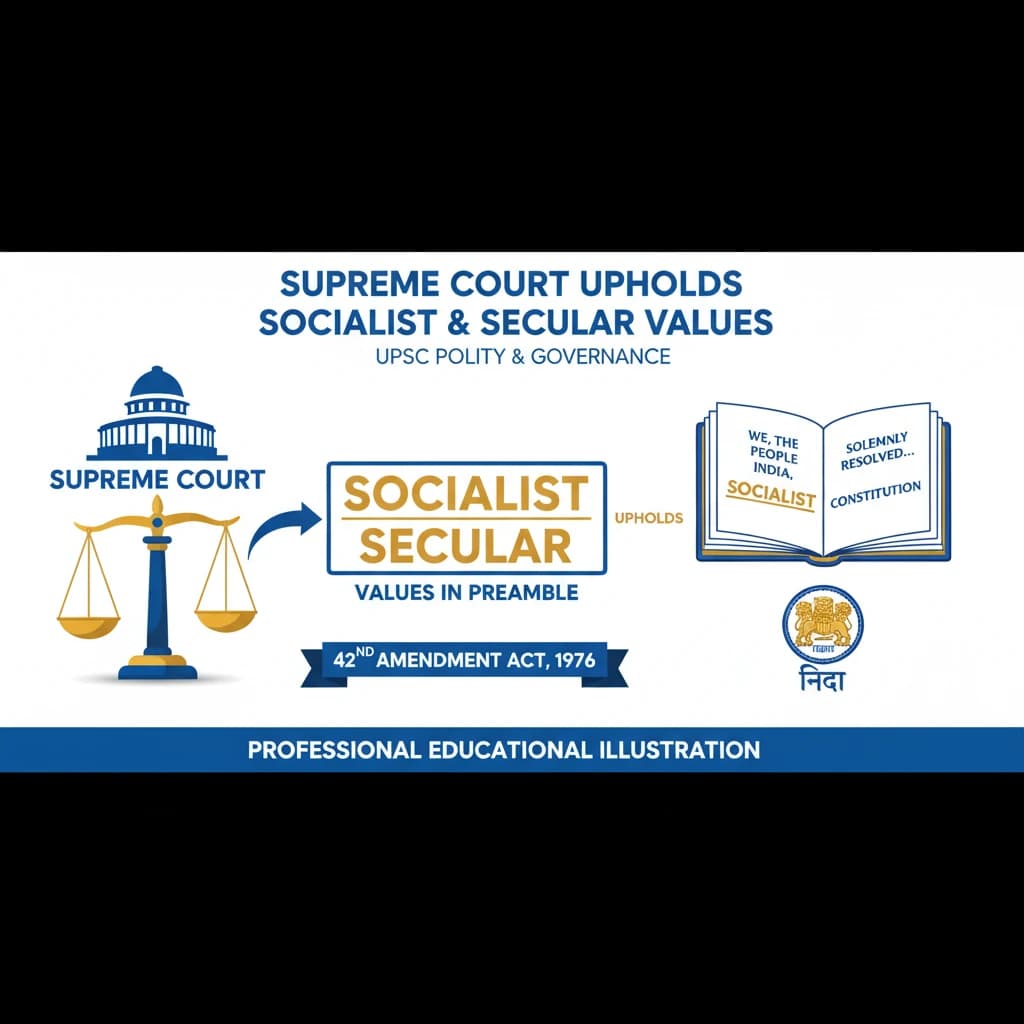
Supreme Court Upholds Socialist and Secular Values
The Supreme Court has affirmed the constitutional validity of the terms 'Socialist' and 'Secular' as additions to the Preamble of the Indian Constitution.
These crucial terms were incorporated into the Preamble through the 42nd Amendment Act of 1976, a significant legislative change during the Emergency period.
Parliament's Amending Power
The Supreme Court clarified that Parliament possesses the power to amend the Constitution, including the Preamble, under Article 368.
This power allows for modifications to the foundational document, provided they do not alter the Basic Structure of the Constitution, a doctrine established in the Kesavananda Bharati case, 1973.
Key Fact: The 42nd Amendment Act, 1976, added three words to the Preamble: Socialist, Secular, and Integrity.
Validity of 1976 Additions
The Court specifically ruled that the additions made in 1976 were valid, despite the argument regarding the original adoption date of the Preamble on 26th November 1949.
The Preamble, though adopted earlier, is considered part of the Constitution and thus amenable to amendment under Article 368, subject to the Basic Structure Doctrine.
Understanding Indian Secularism
Secularism, as enshrined in the Indian Constitution, represents a unique interpretation where the State protects all religions equally.
This differs from the Western concept of strict separation of church and state, as India adopts a model of 'positive secularism' or 'principled distance'.
The SR Bommai Case (1994) is a landmark judgment that extensively discussed and upheld Secularism as a Basic Feature of the Constitution.
Constitutional Safeguards for Religion and Equality
The Right to Freedom of Religion is guaranteed under Articles 25 to 28 of the Constitution.
These articles provide citizens with the liberty to preach, practice, and propagate the religion of their choice, ensuring religious freedom for all.
Furthermore, Articles 14, 15, and 16 reinforce the secular and egalitarian principles by prohibiting discrimination against citizens on religious grounds.
These articles guarantee equal protection of laws and equal opportunity in public employment, irrespective of one's religious affiliation.
When discussing Secularism, always link it to Fundamental Rights (Articles 25-28) and Equality Provisions (Articles 14-16) to provide a comprehensive answer in UPSC Mains GS Paper II.
💡 Key Takeaways
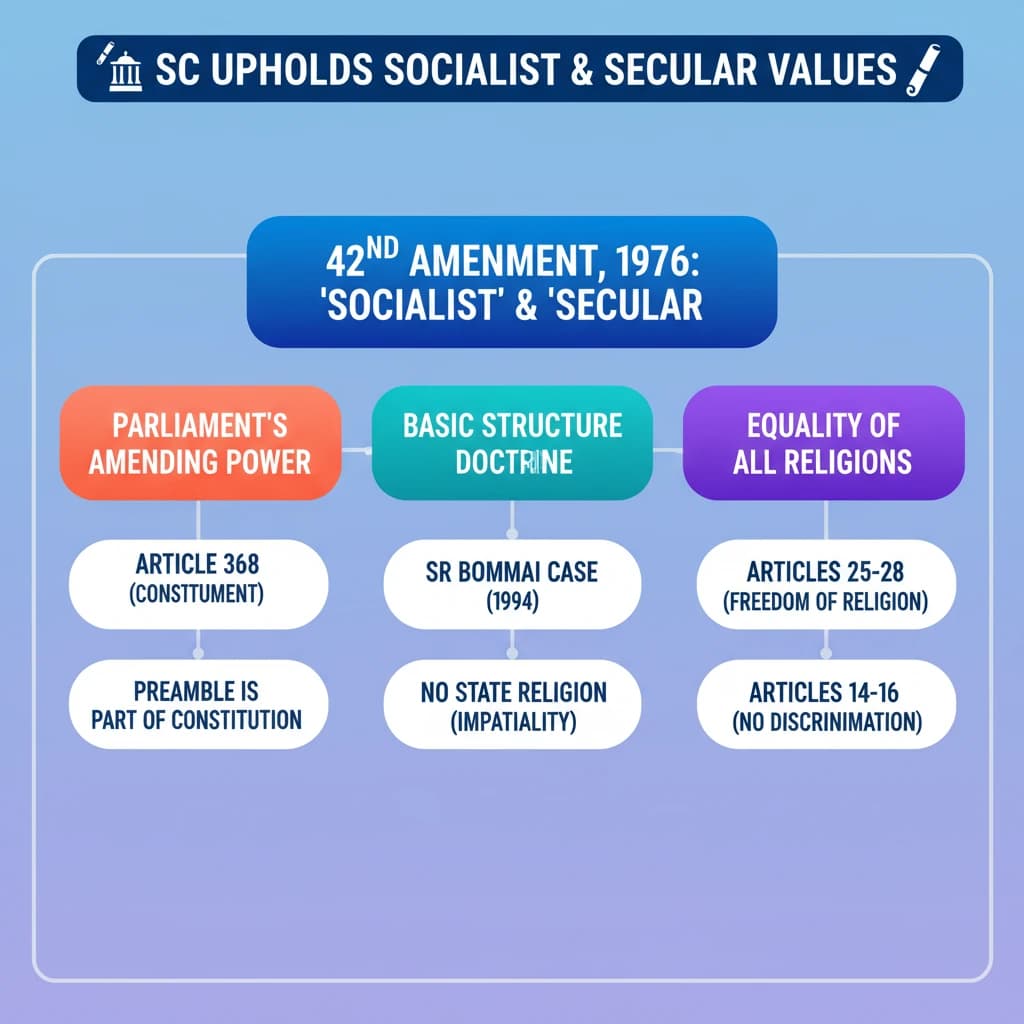
- •SC upheld 'Socialist' and 'Secular' additions to Preamble by 42nd Amendment, 1976.
- •Parliament can amend Preamble under Article 368, subject to Basic Structure Doctrine.
- •Indian Secularism means equal state protection for all religions (SR Bommai, 1994).
- •Articles 25-28 ensure Freedom of Religion for all citizens.
- •Articles 14-16 prohibit religious discrimination and ensure equality in law and public employment.
🧠 Memory Techniques

95% Verified Content