Loading page, please wait…
SC Upholds EVM and VVPAT System - UPSC Polity And Governance
What is SC Upholds EVM and VVPAT System in UPSC Polity And Governance?
SC Upholds EVM and VVPAT System is a key topic under Polity And Governance for UPSC Civil Services Examination. Key points include: Supreme Court dismissed a PIL seeking re-introduction of ballot papers, upholding EVM and VVPAT systems.. SC reaffirmed confidence in EVM mechanism, noting challenges often follow electoral losses.. EVMs are microcontroller-based, portable instruments for conducting elections across all levels.. Understanding this topic is essential for both UPSC Prelims and Mains preparation.
Why is SC Upholds EVM and VVPAT System important for UPSC exam?
SC Upholds EVM and VVPAT System is a Medium-level topic in UPSC Polity And Governance. It is tested in both Prelims (factual MCQs) and Mains (analytical answer writing). Previous year UPSC questions have frequently covered aspects of SC Upholds EVM and VVPAT System, making it essential for comprehensive IAS preparation.
How to prepare SC Upholds EVM and VVPAT System for UPSC?
To prepare SC Upholds EVM and VVPAT System for UPSC: (1) Study the comprehensive notes covering all key concepts on Vaidra. (2) Practice previous year questions on this topic. (3) Connect it with current affairs using daily updates. (4) Revise using key takeaways and mind maps available for Polity And Governance. (5) Write practice answers linking SC Upholds EVM and VVPAT System to related GS Paper topics.
Key takeaways of SC Upholds EVM and VVPAT System for UPSC
- Supreme Court dismissed a PIL seeking re-introduction of ballot papers, upholding EVM and VVPAT systems.
- SC reaffirmed confidence in EVM mechanism, noting challenges often follow electoral losses.
- EVMs are microcontroller-based, portable instruments for conducting elections across all levels.
- An EVM comprises two units: a Control Unit (with polling officer) and a Ballot Unit (for voters).
- VVPAT enables voters to verify their vote via a printed slip showing candidate details.
- VVPAT slips are visible for 7 seconds, then automatically cut and stored in a sealed box for audit.
- The system aims for enhanced transparency, efficiency, and voter confidence in elections.
SC Upholds EVM and VVPAT System
Medium⏱️ 5 min read
polity and governance
📖 Introduction
Supreme Court Upholds EVM and VVPAT System
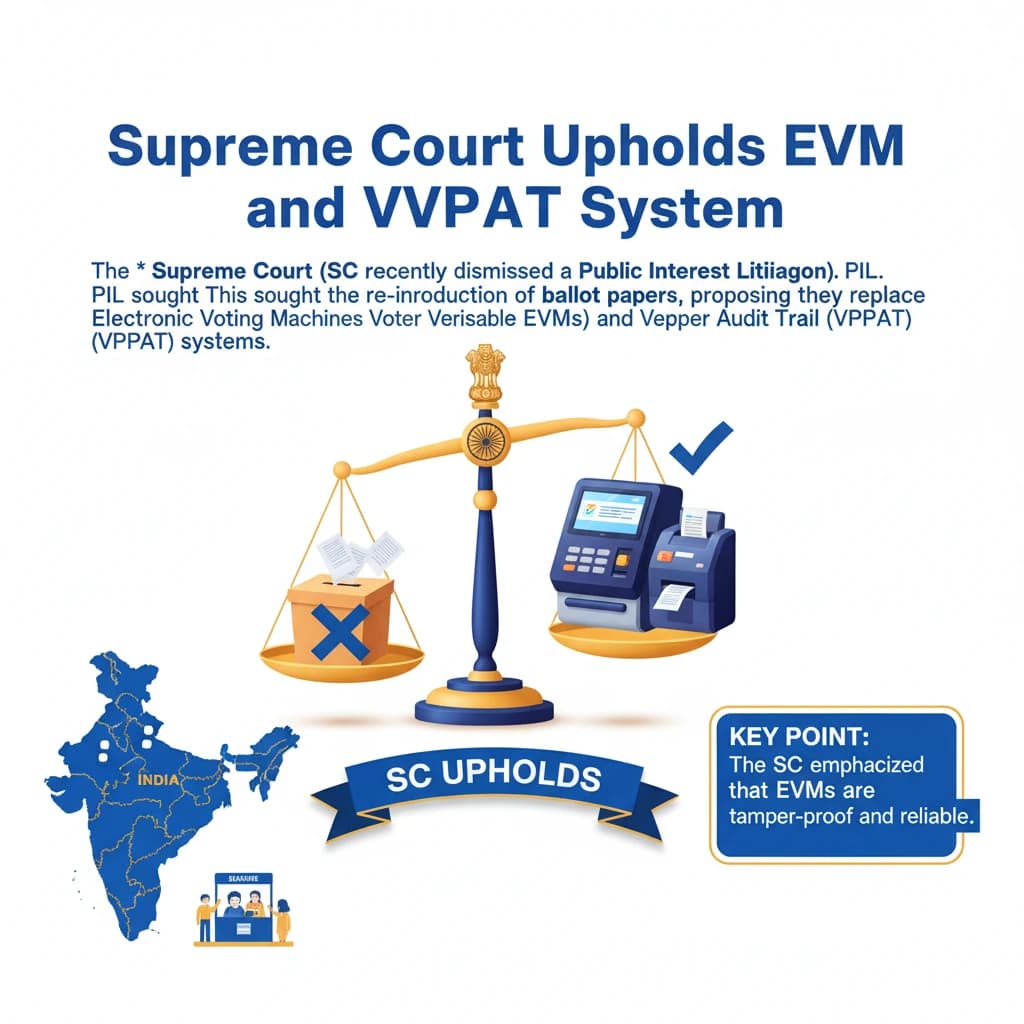
The Supreme Court (SC) recently dismissed a Public Interest Litigation (PIL). This PIL sought the re-introduction of ballot papers, proposing they replace Electronic Voting Machines (EVMs) and Voter Verifiable Paper Audit Trail (VVPAT) systems.
The SC emphasized that EVMs are frequently questioned only after electoral losses. It reaffirmed its confidence in the EVM mechanism and the robust safeguards in place.
Understanding Electronic Voting Machines (EVMs)
EVMs are portable instruments specifically designed for conducting elections.
They are utilized for elections to the parliament, state legislatures, and various local bodies such as panchayats and municipalities.
An EVM is a microcontroller-based instrument. It is engineered to facilitate a single poll and record a single vote per elector.
Components of an EVM
An EVM system comprises two primary units, which are interconnected by a cable:
- Control Unit
- Ballot Unit
This design ensures that the polling officer can effectively verify the identity of the user before voting.
Control Unit
The Control Unit of the EVM is typically kept under the charge of the presiding officer or the polling officer at the polling station.
Ballot Unit
The Ballot Unit is placed inside the voting compartment. This allows electors to cast their votes privately and securely.
Understanding Voter Verifiable Paper Audit Trail (VVPAT)
The VVPAT system is an independent verification mechanism. It enables voters to visually confirm that their vote has been recorded accurately, as intended.
How VVPAT Works
- When a voter casts their vote, a slip is printed by the VVPAT machine.
- This slip displays the serial number, the candidate's name, and their corresponding symbol.
- The printed slip is visible through a transparent window for approximately 7 seconds.
- After this duration, the slip is automatically cut and securely stored in a sealed box, ensuring auditability.
💡 Key Takeaways
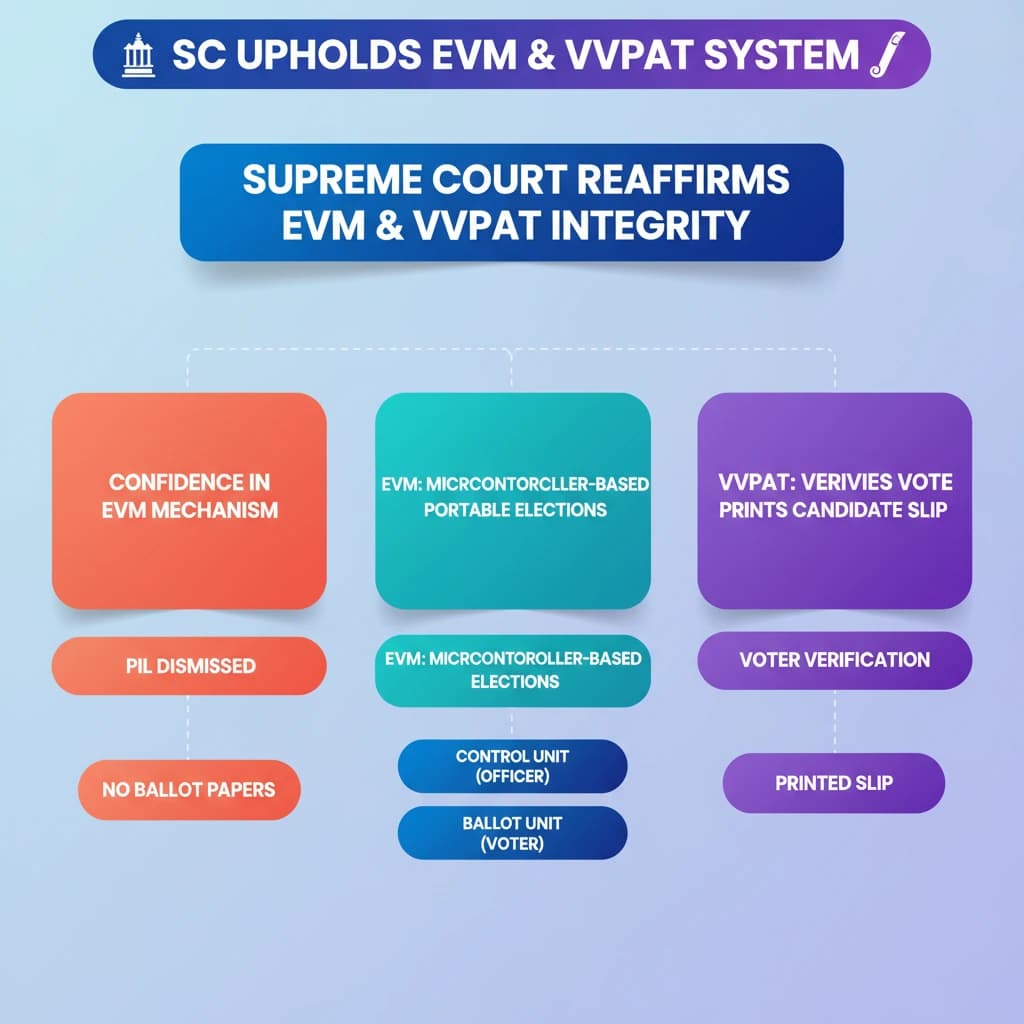
- •Supreme Court dismissed a PIL seeking re-introduction of ballot papers, upholding EVM and VVPAT systems.
- •SC reaffirmed confidence in EVM mechanism, noting challenges often follow electoral losses.
- •EVMs are microcontroller-based, portable instruments for conducting elections across all levels.
- •An EVM comprises two units: a Control Unit (with polling officer) and a Ballot Unit (for voters).
- •VVPAT enables voters to verify their vote via a printed slip showing candidate details.
- •VVPAT slips are visible for 7 seconds, then automatically cut and stored in a sealed box for audit.
- •The system aims for enhanced transparency, efficiency, and voter confidence in elections.
🧠 Memory Techniques
98% Verified Content
📚 Reference Sources
•Election Commission of India (ECI) official website
•Supreme Court of India judgments related to EVMs and VVPATs
•Press Information Bureau (PIB) releases on electoral reforms