What are Developments Related to Reservations in India? - UPSC Social Issues
What is What are Developments Related to Reservations in India? in UPSC Social Issues?
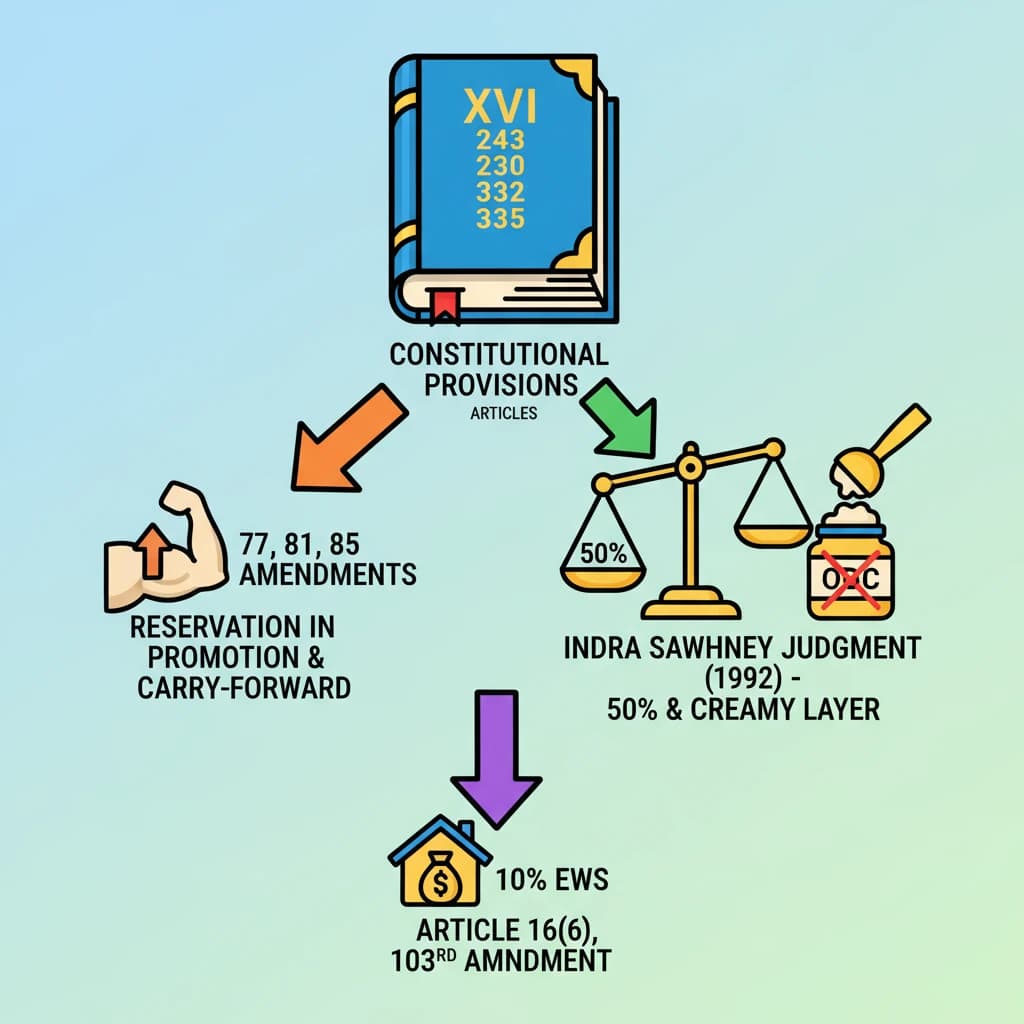
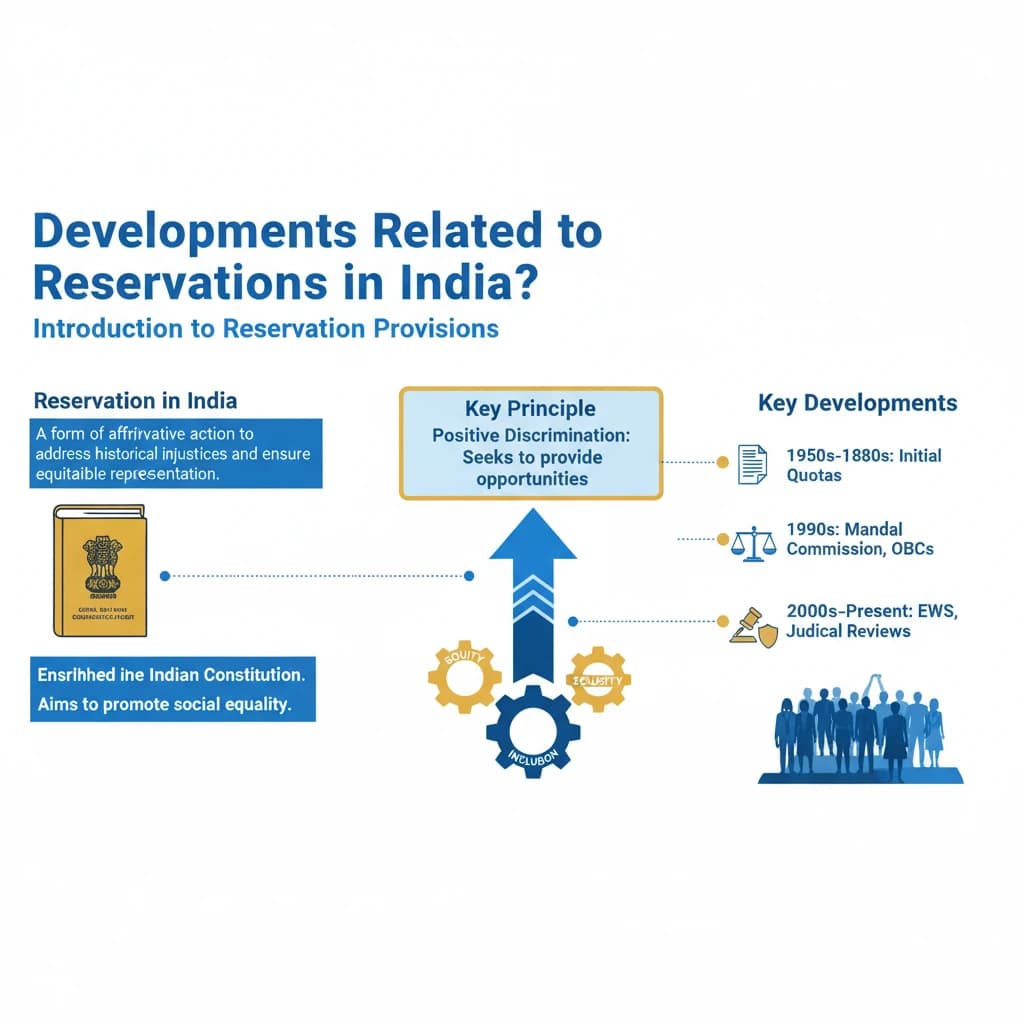
What are Developments Related to Reservations in India? is a key topic under Social Issues for UPSC Civil Services Examination. Key points include: Reservations are constitutional provisions (Articles 16, 243D/T, 330, 332, 335) for positive discrimination.. Key amendments (77th, 81st, 85th) enabled reservation in promotion for SC/ST and the carry-forward rule.. Indra Sawhney Judgment (1992) established the 50% ceiling and the 'creamy layer' concept for OBCs.. Understanding this topic is essential for both UPSC Prelims and Mains preparation.
Why is What are Developments Related to Reservations in India? important for UPSC exam?
What are Developments Related to Reservations in India? is a Medium-level topic in UPSC Social Issues. It is tested in both Prelims (factual MCQs) and Mains (analytical answer writing). Previous year UPSC questions have frequently covered aspects of What are Developments Related to Reservations in India?, making it essential for comprehensive IAS preparation.
How to prepare What are Developments Related to Reservations in India? for UPSC?
To prepare What are Developments Related to Reservations in India? for UPSC: (1) Study the comprehensive notes covering all key concepts on Vaidra. (2) Practice previous year questions on this topic. (3) Connect it with current affairs using daily updates. (4) Revise using key takeaways and mind maps available for Social Issues. (5) Write practice answers linking What are Developments Related to Reservations in India? to related GS Paper topics.
Key takeaways of What are Developments Related to Reservations in India? for UPSC
- Reservations are constitutional provisions (Articles 16, 243D/T, 330, 332, 335) for positive discrimination.
- Key amendments (77th, 81st, 85th) enabled reservation in promotion for SC/ST and the carry-forward rule.
- Indra Sawhney Judgment (1992) established the 50% ceiling and the 'creamy layer' concept for OBCs.
- Article 16(6) and the 103rd Amendment introduced 10% reservation for Economically Weaker Sections (EWS).
- Reservation policy balances social justice with the need for administrative efficiency (Article 335).
What are Developments Related to Reservations in India?
📖 Introduction
💡 Key Takeaways
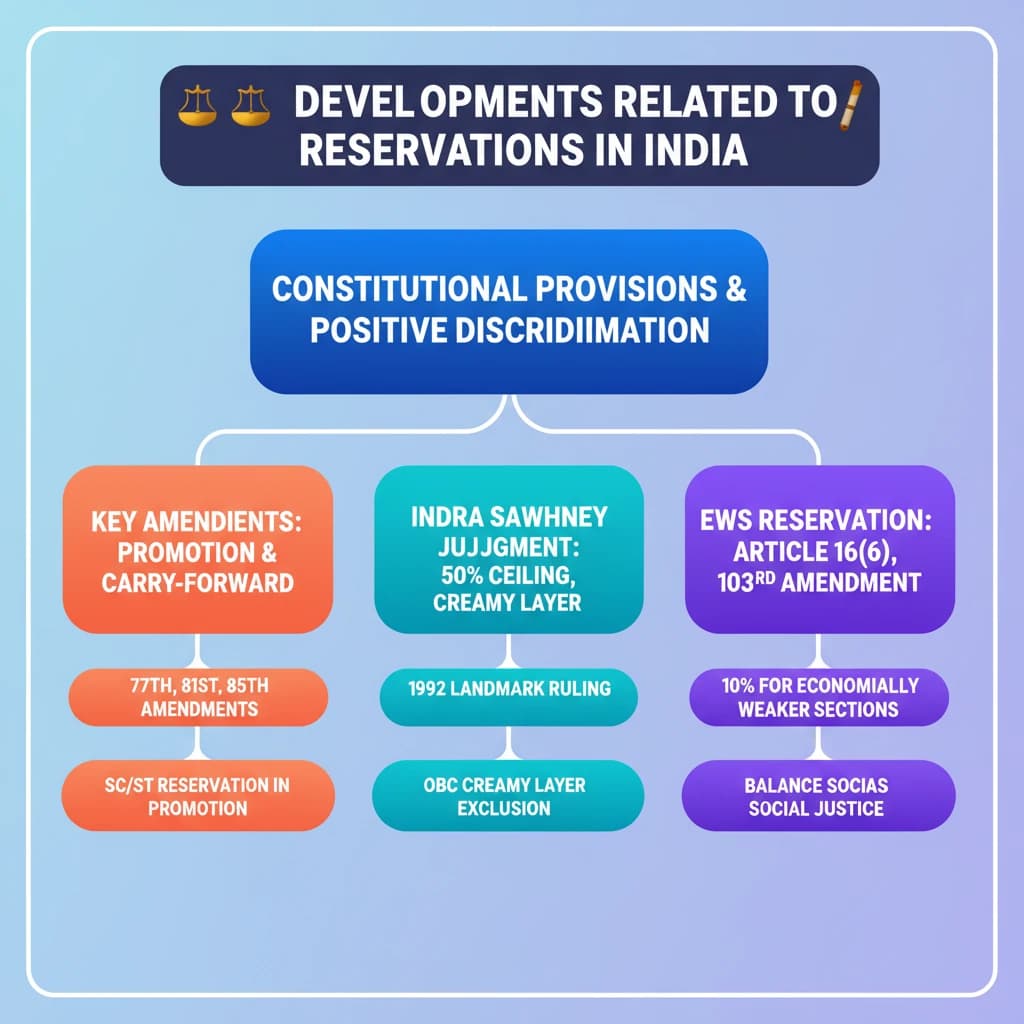
- •Reservations are constitutional provisions (Articles 16, 243D/T, 330, 332, 335) for positive discrimination.
- •Key amendments (77th, 81st, 85th) enabled reservation in promotion for SC/ST and the carry-forward rule.
- •Indra Sawhney Judgment (1992) established the 50% ceiling and the 'creamy layer' concept for OBCs.
- •Article 16(6) and the 103rd Amendment introduced 10% reservation for Economically Weaker Sections (EWS).
- •Reservation policy balances social justice with the need for administrative efficiency (Article 335).
🧠 Memory Techniques