HIV Transmission: Modes and Mechanisms - UPSC Social Issues
What is HIV Transmission: Modes and Mechanisms in UPSC Social Issues?
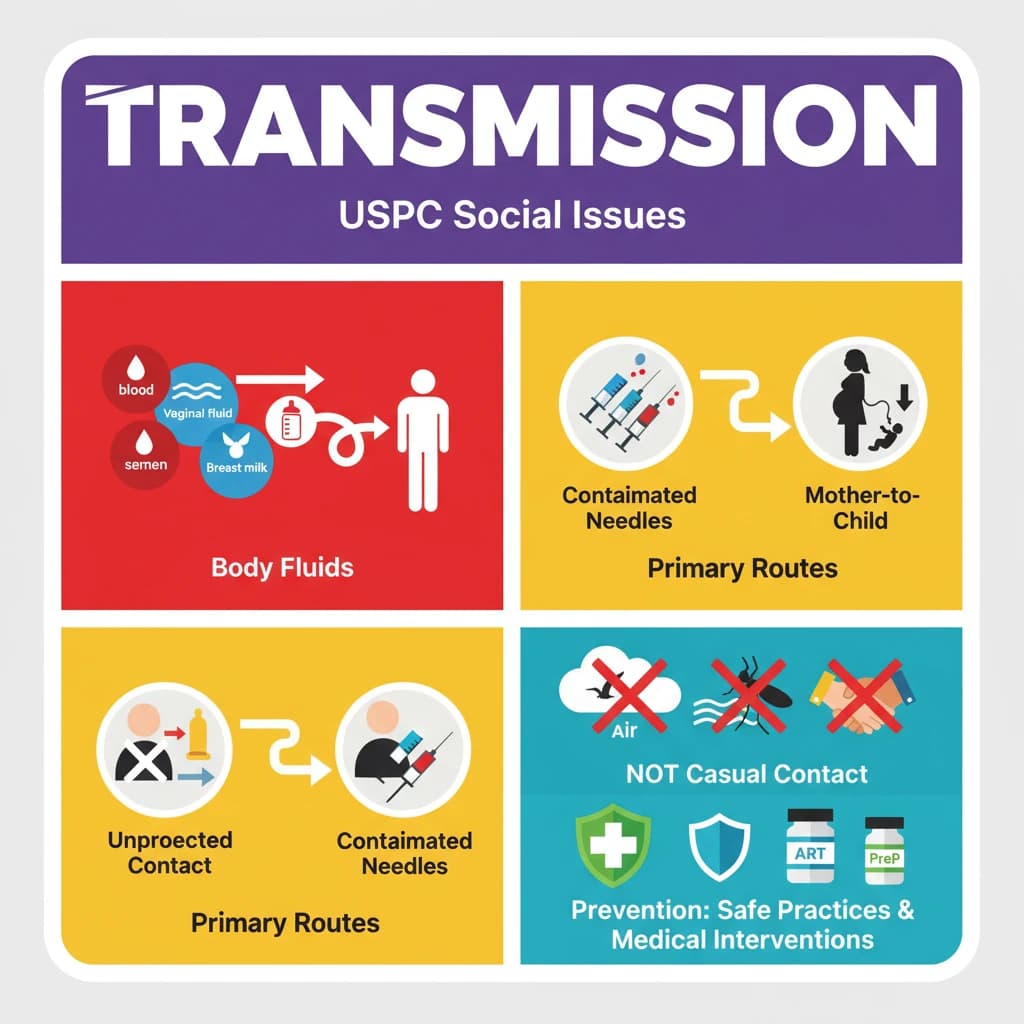
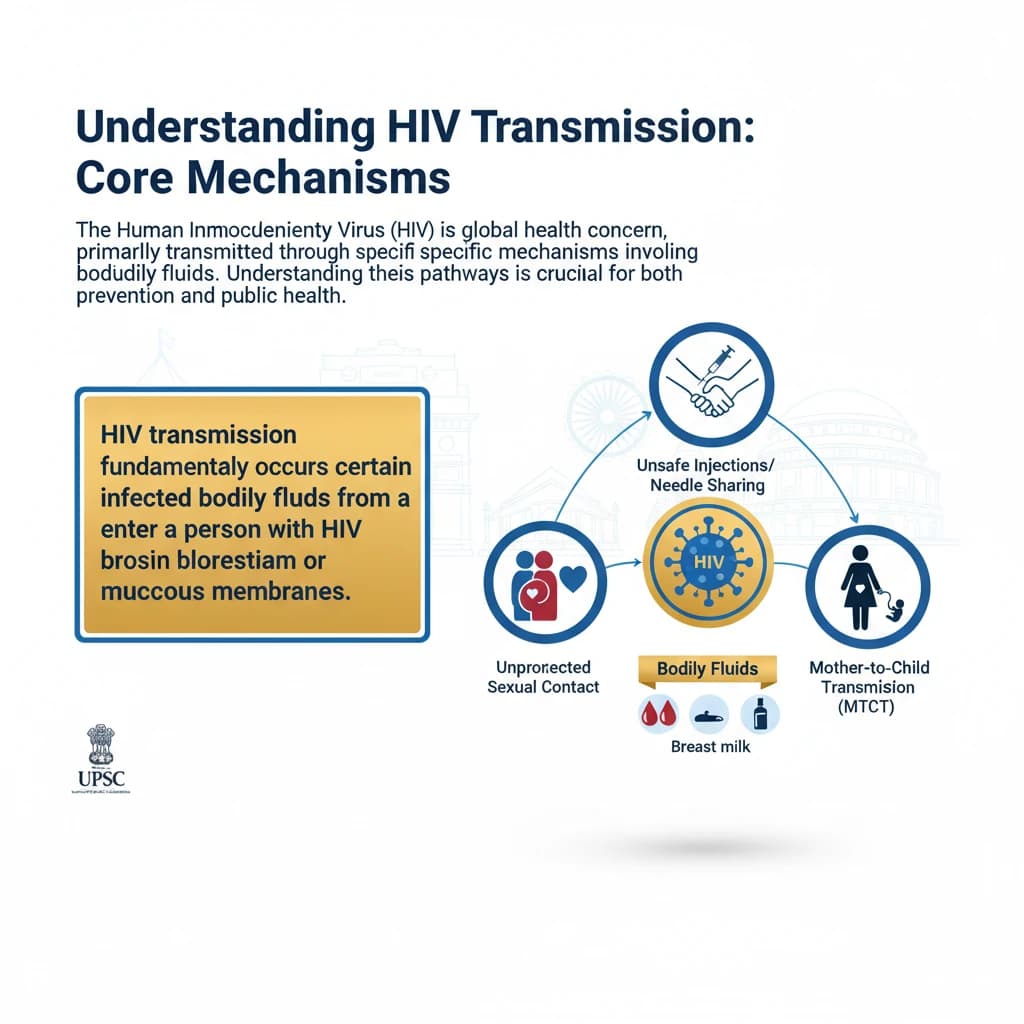
HIV Transmission: Modes and Mechanisms is a key topic under Social Issues for UPSC Civil Services Examination. Key points include: HIV is transmitted through specific bodily fluids: blood, semen, vaginal fluids, and breast milk.. Primary transmission routes are unprotected sexual contact, sharing contaminated needles, and mother-to-child.. HIV is NOT spread through casual contact, air, water, or insects.. Understanding this topic is essential for both UPSC Prelims and Mains preparation.
Why is HIV Transmission: Modes and Mechanisms important for UPSC exam?
HIV Transmission: Modes and Mechanisms is a Medium-level topic in UPSC Social Issues. It is tested in both Prelims (factual MCQs) and Mains (analytical answer writing). Previous year UPSC questions have frequently covered aspects of HIV Transmission: Modes and Mechanisms, making it essential for comprehensive IAS preparation.
How to prepare HIV Transmission: Modes and Mechanisms for UPSC?
To prepare HIV Transmission: Modes and Mechanisms for UPSC: (1) Study the comprehensive notes covering all key concepts on Vaidra. (2) Practice previous year questions on this topic. (3) Connect it with current affairs using daily updates. (4) Revise using key takeaways and mind maps available for Social Issues. (5) Write practice answers linking HIV Transmission: Modes and Mechanisms to related GS Paper topics.
Key takeaways of HIV Transmission: Modes and Mechanisms for UPSC
- HIV is transmitted through specific bodily fluids: blood, semen, vaginal fluids, and breast milk.
- Primary transmission routes are unprotected sexual contact, sharing contaminated needles, and mother-to-child.
- HIV is NOT spread through casual contact, air, water, or insects.
- Prevention relies on safe practices, awareness, and medical interventions like ART and PrEP.
- Understanding transmission is critical for effective public health policies and reducing stigma.
- Global efforts aim to end the AIDS epidemic by 2030, emphasizing prevention and access to treatment.
HIV Transmission: Modes and Mechanisms
📖 Introduction
💡 Key Takeaways
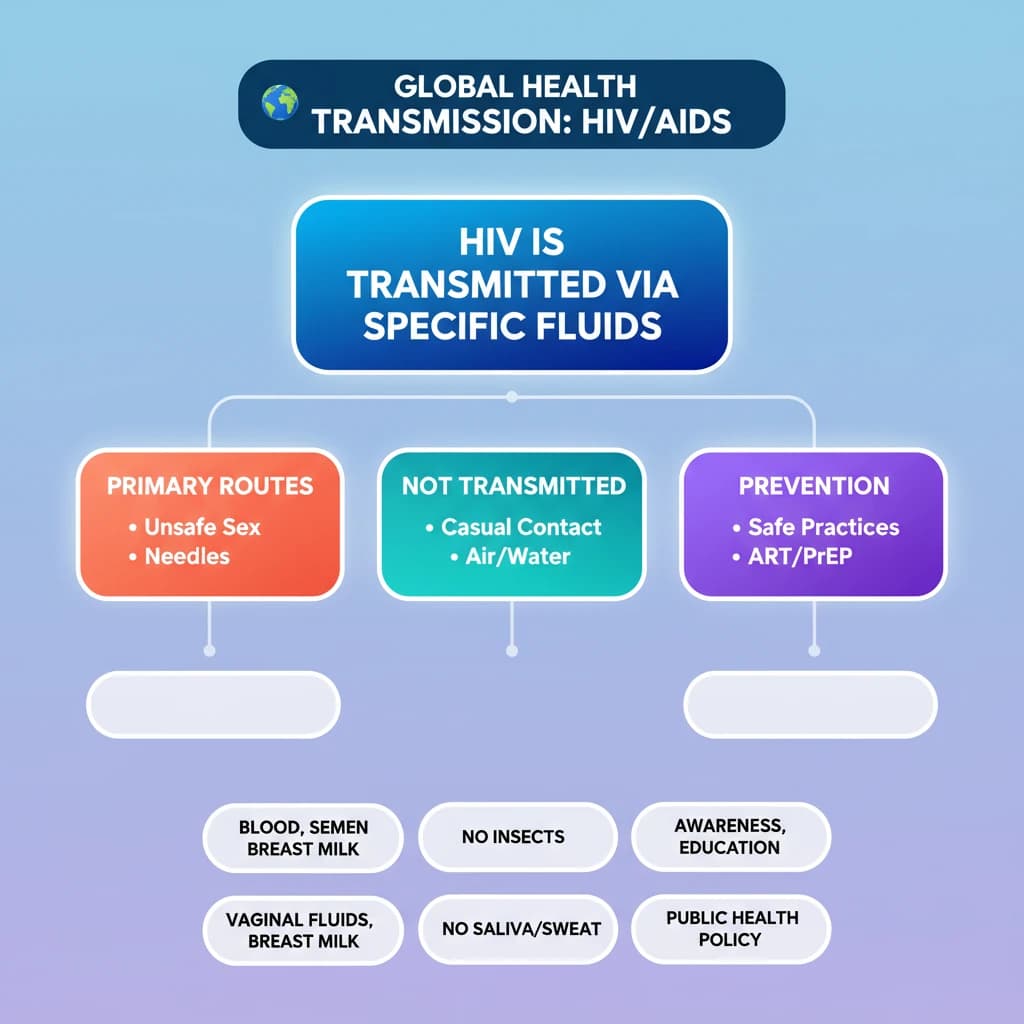
- •HIV is transmitted through specific bodily fluids: blood, semen, vaginal fluids, and breast milk.
- •Primary transmission routes are unprotected sexual contact, sharing contaminated needles, and mother-to-child.
- •HIV is NOT spread through casual contact, air, water, or insects.
- •Prevention relies on safe practices, awareness, and medical interventions like ART and PrEP.
- •Understanding transmission is critical for effective public health policies and reducing stigma.
- •Global efforts aim to end the AIDS epidemic by 2030, emphasizing prevention and access to treatment.
🧠 Memory Techniques