Loading page, please wait…
Vaidra Logo
Vaidra

Top 4 items + smart groups

UPSC GPT
New
Current Affairs
Daily Solutions
Daily Puzzle
Mains Evaluator

Version 2.0.0 • Built with ❤️ for UPSC aspirants

Loading...
Loading...
Loading...
Loading...
Loading...
Loading...
Loading...
Loading...
Loading...
Loading...
Loading...
Loading...
Loading...
What is the Significance of the Swachh Bharat Mission (SBM)? - UPSC Social Issues
Back
All Subjects

Topics

0 topics • 0 completed

Loading topics...
Loading...
Loading...
Loading...
Loading...
Loading...
Overall Progress0%

What is the Significance of the Swachh Bharat Mission (SBM)? - UPSC Social Issues

What is What is the Significance of the Swachh Bharat Mission (SBM)? in UPSC Social Issues?

What is the Significance of the Swachh Bharat Mission (SBM)? is a key topic under Social Issues for UPSC Civil Services Examination. Key points include: SBM significantly reduced Infant Mortality Rate (IMR) and Under-5 Mortality Rate (U5MR) by improving sanitation.. It addressed the 'Asian Enigma' by tackling widespread open defecation and its link to child stunting.. SBM generated substantial economic returns, with a UNICEF report stating Rs. 4.3 for every Re. 1 invested.. Understanding this topic is essential for both UPSC Prelims and Mains preparation.

Why is What is the Significance of the Swachh Bharat Mission (SBM)? important for UPSC exam?

What is the Significance of the Swachh Bharat Mission (SBM)? is a Medium-level topic in UPSC Social Issues. It is tested in both Prelims (factual MCQs) and Mains (analytical answer writing). Previous year UPSC questions have frequently covered aspects of What is the Significance of the Swachh Bharat Mission (SBM)?, making it essential for comprehensive IAS preparation.

How to prepare What is the Significance of the Swachh Bharat Mission (SBM)? for UPSC?

To prepare What is the Significance of the Swachh Bharat Mission (SBM)? for UPSC: (1) Study the comprehensive notes covering all key concepts on Vaidra. (2) Practice previous year questions on this topic. (3) Connect it with current affairs using daily updates. (4) Revise using key takeaways and mind maps available for Social Issues. (5) Write practice answers linking What is the Significance of the Swachh Bharat Mission (SBM)? to related GS Paper topics.

Key takeaways of What is the Significance of the Swachh Bharat Mission (SBM)? for UPSC

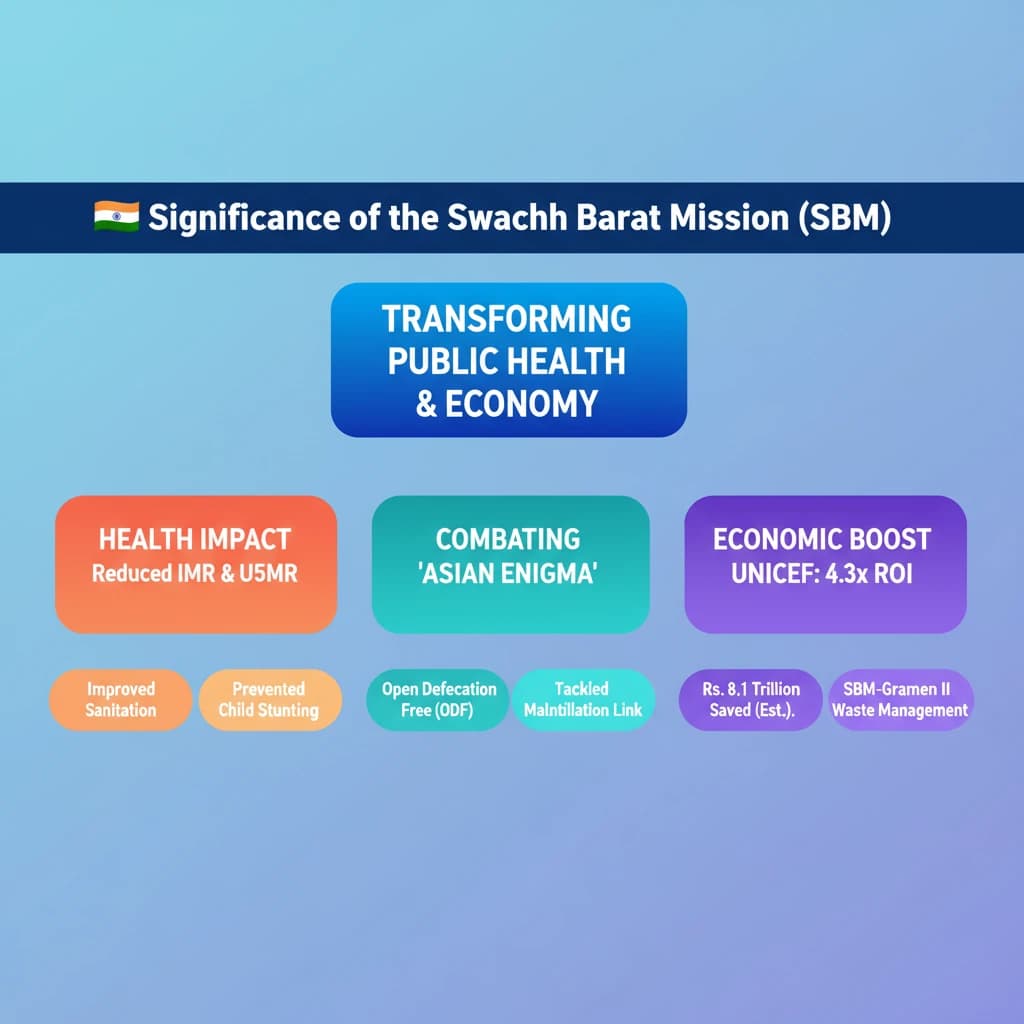
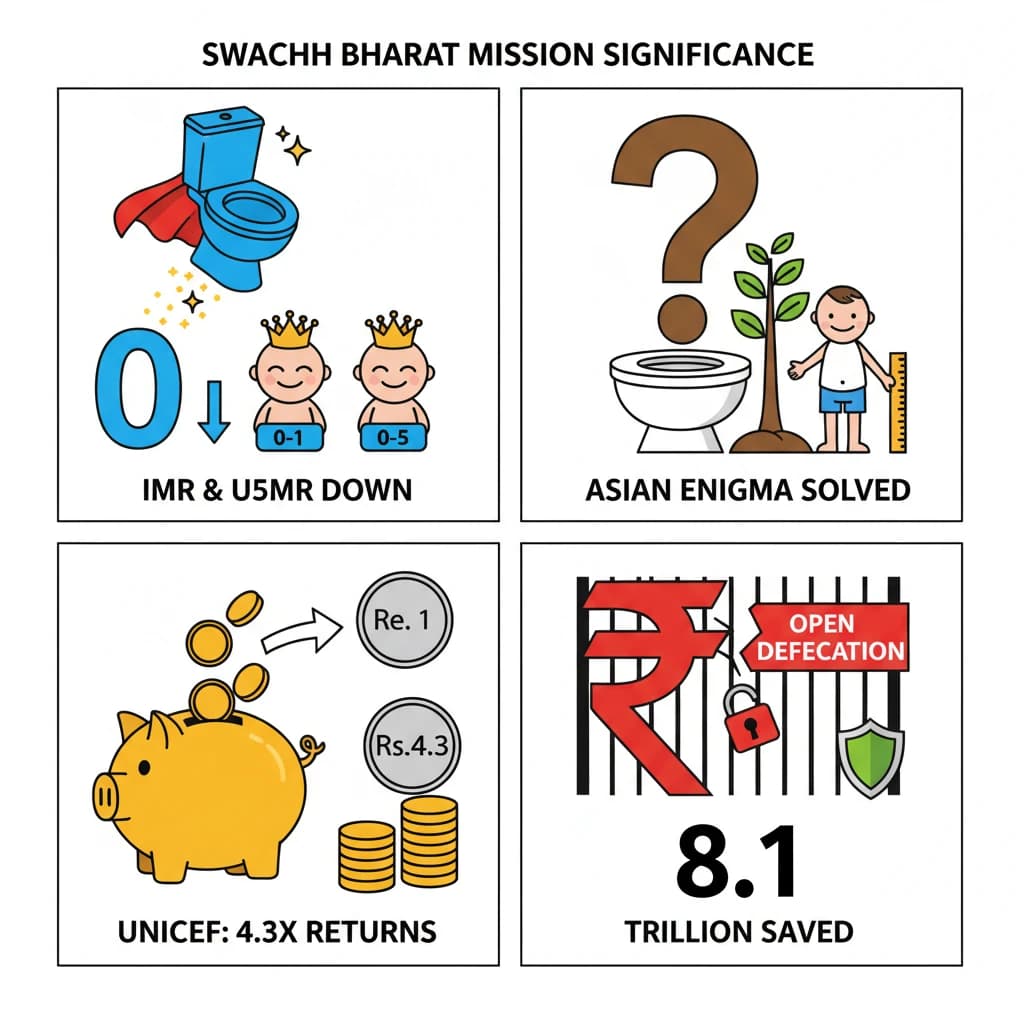
  • SBM significantly reduced Infant Mortality Rate (IMR) and Under-5 Mortality Rate (U5MR) by improving sanitation.
  • It addressed the 'Asian Enigma' by tackling widespread open defecation and its link to child stunting.
  • SBM generated substantial economic returns, with a UNICEF report stating Rs. 4.3 for every Re. 1 invested.
  • The mission aimed to eliminate open defecation, potentially saving Rs 8.1 trillion by reducing damage costs to 2.7% of GDP.
  • SBM continues with SBM-Grameen Phase II, focusing on sustaining ODF status and comprehensive solid and liquid waste management (ODF+).
What is the Significance of the Swachh Bharat Mission (SBM)?

What is the Significance of the Swachh Bharat Mission (SBM)?

Medium⏱️ 7 min read✓ 95% Verified
social issues

📖 Introduction

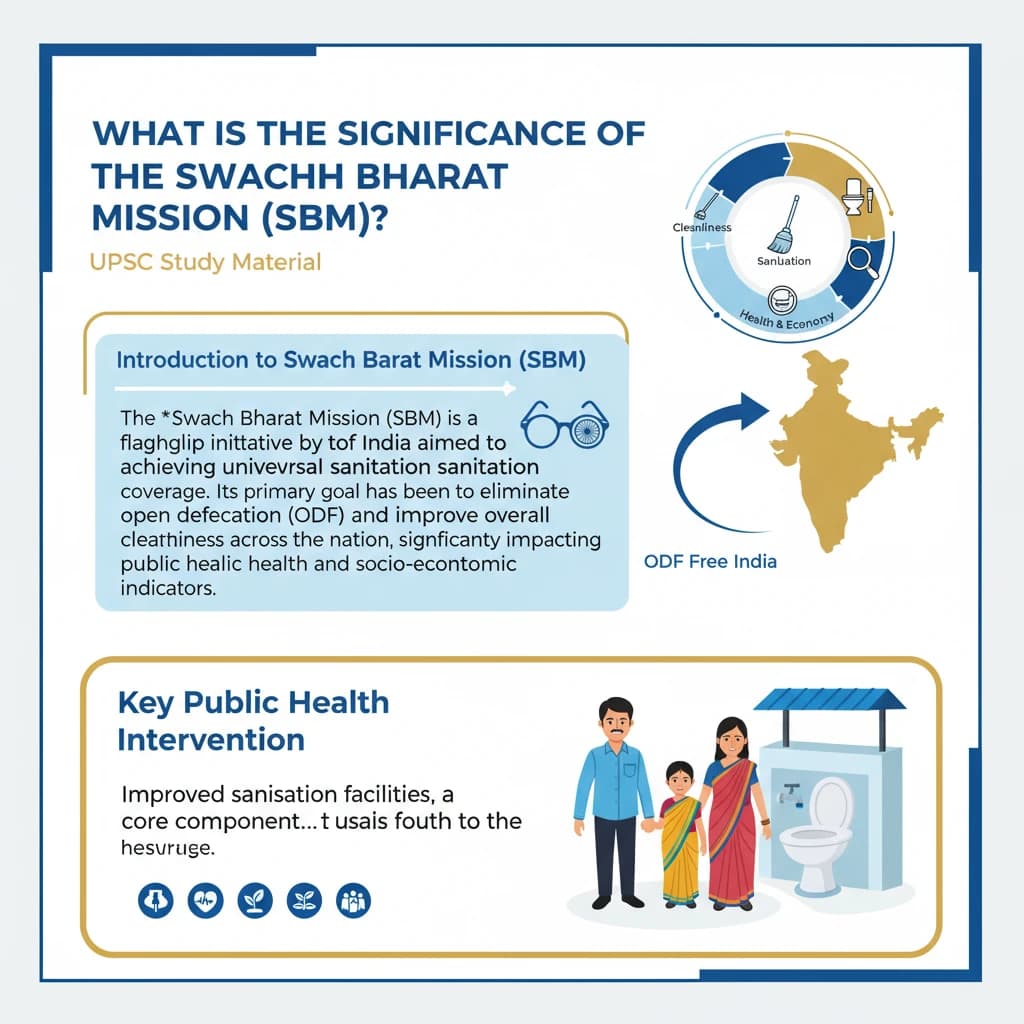
<h4>Introduction to Swachh Bharat Mission (SBM)</h4><p>The <strong>Swachh Bharat Mission (SBM)</strong> is a flagship initiative by the Government of India aimed at achieving universal sanitation coverage.</p><p>Its primary goal has been to eliminate <strong>open defecation (ODF)</strong> and improve overall cleanliness across the nation, significantly impacting public health and socio-economic indicators.</p><h4>Key Public Health Intervention</h4><p>Improved sanitation facilities, a core component of <strong>SBM</strong>, have been directly linked to substantial declines in <strong>Infant Mortality Rate (IMR)</strong> globally.</p><p>Historical trends in Western countries like the <strong>United States</strong> in the early <strong>1900s</strong> show similar positive correlations between sanitation and public health.</p><div class='key-point-box'><p>Research confirms that enhanced sanitation under <strong>SBM</strong> has been a critical factor in reducing both <strong>IMR</strong> and <strong>Under-5 Mortality Rate (U5MR)</strong> in India.</p></div><h4>Addressing the ‘Asian Enigma’</h4><p>The <strong>‘Asian Enigma’</strong> refers to the paradoxical situation where India experienced high rates of <strong>child stunting</strong> despite significant economic progress.</p><p>This enigma was often attributed to widespread <strong>open defecation</strong>, which contributed to poor hygiene and health outcomes among children.</p><div class='key-point-box'><p>The significant reduction in <strong>open defecation</strong> achieved through <strong>SBM</strong> directly addresses this enigma by improving overall sanitation.</p></div><p>This improvement is anticipated to have a profound, long-term impact on effectively reducing <strong>child stunting rates</strong> across the country.</p><h4>Significant Economic Benefits</h4><p>Investments in sanitation initiatives like <strong>SBM</strong> yield substantial economic returns, benefiting the nation on multiple fronts.</p><div class='info-box'><p>According to a <strong>UNICEF</strong> report, every <strong>rupee</strong> invested in <strong>Swachh Bharat Mission</strong> generates an impressive return of <strong>Rs. 4.3</strong>.</p></div><p>These economic gains stem from various factors, including significantly reduced healthcare costs and enhanced productivity among the population.</p><p>If <strong>SBM</strong> fully achieves its objective of eliminating <strong>open defecation</strong> and ensuring improved sanitation, the associated damage costs would drastically decrease.</p><div class='info-box'><p>The total damage costs are projected to be reduced to just <strong>2.7% of GDP</strong>, resulting in an estimated saving of <strong>Rs 8.1 trillion</strong> from the current situation.</p></div>
Concept Diagram

💡 Key Takeaways

  • •SBM significantly reduced Infant Mortality Rate (IMR) and Under-5 Mortality Rate (U5MR) by improving sanitation.
  • •It addressed the 'Asian Enigma' by tackling widespread open defecation and its link to child stunting.
  • •SBM generated substantial economic returns, with a UNICEF report stating Rs. 4.3 for every Re. 1 invested.
  • •The mission aimed to eliminate open defecation, potentially saving Rs 8.1 trillion by reducing damage costs to 2.7% of GDP.
  • •SBM continues with SBM-Grameen Phase II, focusing on sustaining ODF status and comprehensive solid and liquid waste management (ODF+).

🧠 Memory Techniques
Memory Aid
95% Verified Content

📚 Reference Sources

•UNICEF Report on SBM (as referenced in source material)

Related Topics

Loading related topics...
Explore:Social Issues Topics·All Subjects·Daily Current Affairs·Editorial Analysis·Previous Year Questions·UPSC GPT