Loading page, please wait…
Vaidra Logo
Vaidra

Top 4 items + smart groups

UPSC GPT
New
Current Affairs
Daily Solutions
Daily Puzzle
Mains Evaluator

Version 2.0.0 • Built with ❤️ for UPSC aspirants

Loading...
Loading...
Loading...
Loading...
Loading...
Loading...
Loading...
Loading...
Loading...
Loading...
Loading...
Loading...
Loading...
Back
All Subjects

Topics

0 topics • 0 completed

Loading topics...
Loading...
Loading...
Loading...
Loading...
Loading...
Overall Progress0%

Chipko Movement: Philosophy, Impact, and Key Figures - UPSC Social Issues

What is Chipko Movement: Philosophy, Impact, and Key Figures in UPSC Social Issues?

Chipko Movement: Philosophy, Impact, and Key Figures is a key topic under Social Issues for UPSC Civil Services Examination. Key points include: Chipko Movement started in Himalayan villages (Reni, Mandal) by women hugging trees.. The name 'Chipko' means 'to embrace', symbolizing unity with nature.. It was a non-violent, grassroots movement against commercial logging.. Understanding this topic is essential for both UPSC Prelims and Mains preparation.

Why is Chipko Movement: Philosophy, Impact, and Key Figures important for UPSC exam?

Chipko Movement: Philosophy, Impact, and Key Figures is a Medium-level topic in UPSC Social Issues. It is tested in both Prelims (factual MCQs) and Mains (analytical answer writing). Previous year UPSC questions have frequently covered aspects of Chipko Movement: Philosophy, Impact, and Key Figures, making it essential for comprehensive IAS preparation.

How to prepare Chipko Movement: Philosophy, Impact, and Key Figures for UPSC?

To prepare Chipko Movement: Philosophy, Impact, and Key Figures for UPSC: (1) Study the comprehensive notes covering all key concepts on Vaidra. (2) Practice previous year questions on this topic. (3) Connect it with current affairs using daily updates. (4) Revise using key takeaways and mind maps available for Social Issues. (5) Write practice answers linking Chipko Movement: Philosophy, Impact, and Key Figures to related GS Paper topics.

Key takeaways of Chipko Movement: Philosophy, Impact, and Key Figures for UPSC

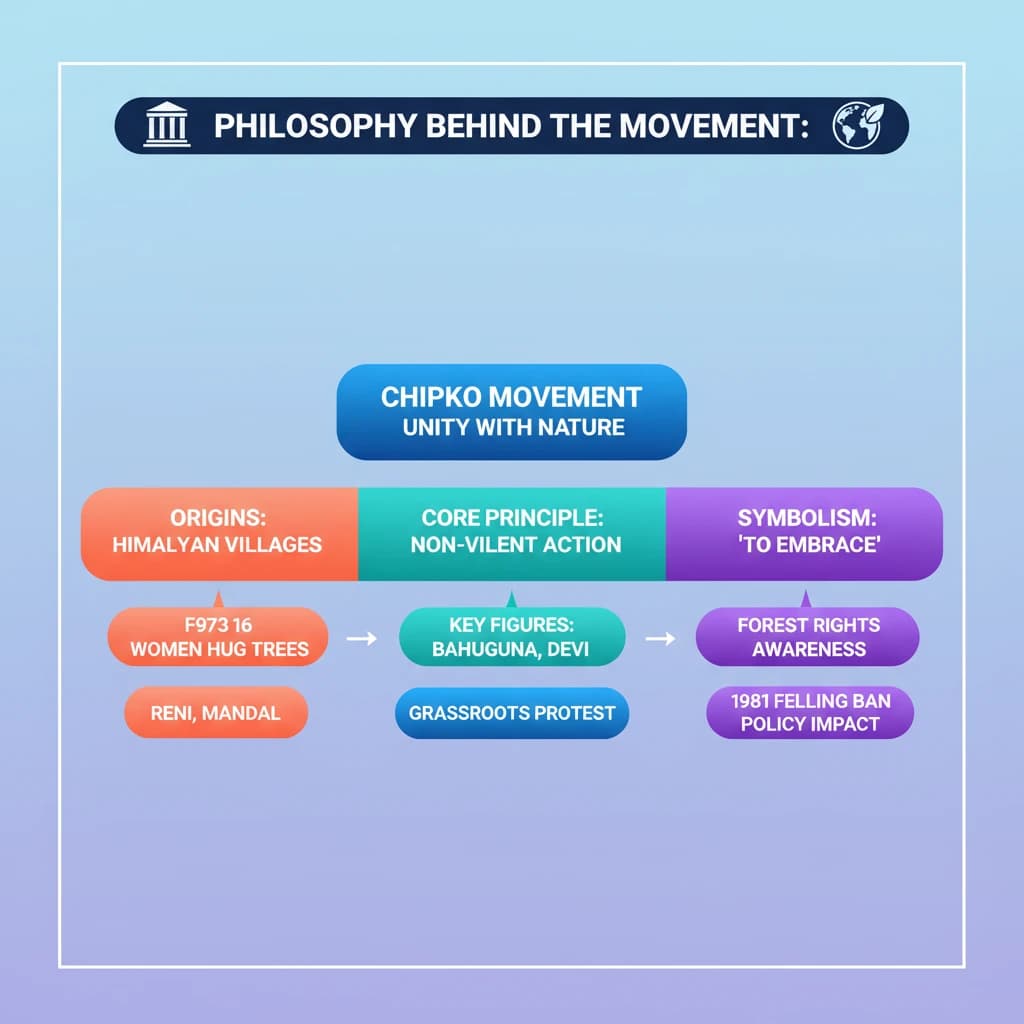
  • Chipko Movement started in Himalayan villages (Reni, Mandal) by women hugging trees.
  • The name 'Chipko' means 'to embrace', symbolizing unity with nature.
  • It was a non-violent, grassroots movement against commercial logging.
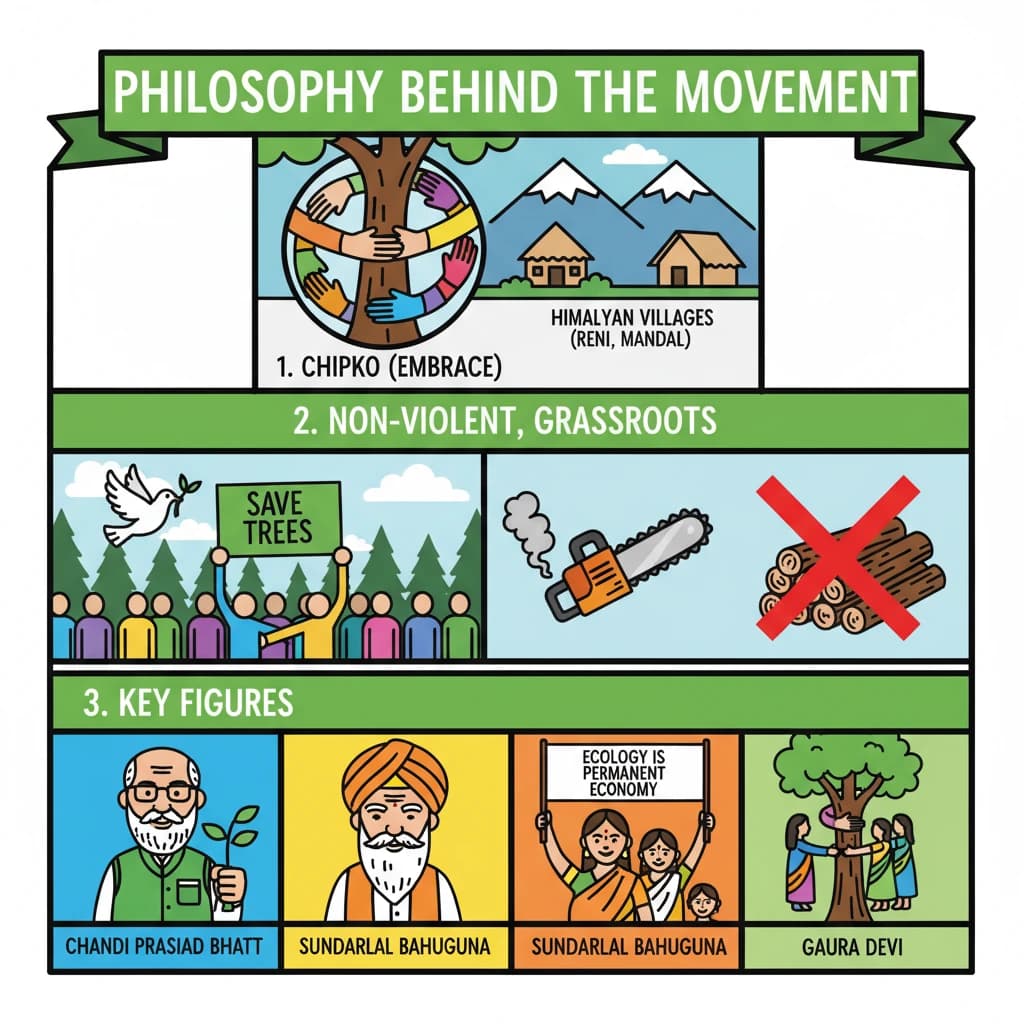
  • Key figures: Chandi Prasad Bhatt, Sundarlal Bahuguna, Gaura Devi.
  • Major impact: Increased awareness of forest rights, influenced policy (1981 ban on felling).
  • Highlights the power of community action and women's leadership in environmental conservation.
Chipko Movement: Philosophy, Impact, and Key Figures

Chipko Movement: Philosophy, Impact, and Key Figures

Medium⏱️ 6 min read✓ 95% Verified
social issues

📖 Introduction

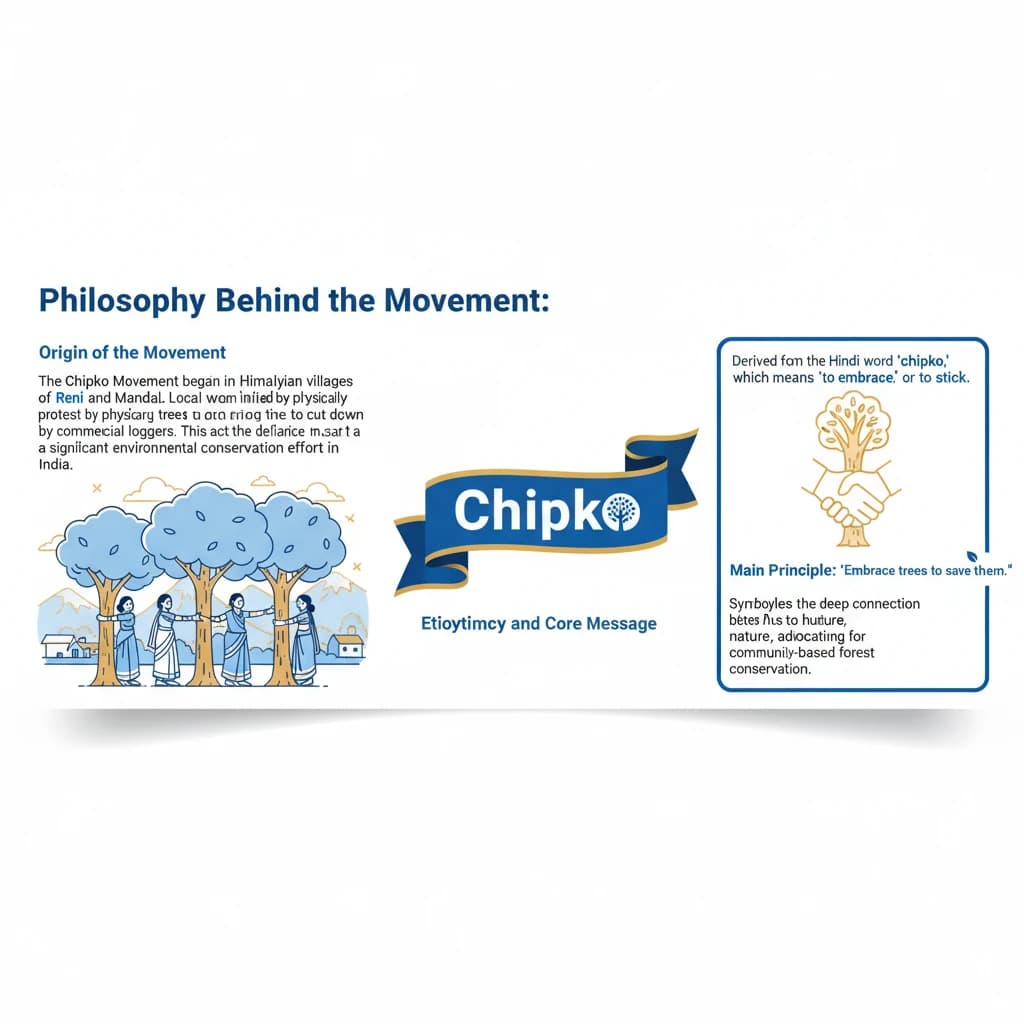
<h4>Origin of the Movement</h4><p>The <strong>Chipko Movement</strong> began in the <strong>Himalayan villages</strong> of <strong>Reni</strong> and <strong>Mandal</strong>. Local women initiated the protest by physically embracing trees to prevent them from being cut down by commercial loggers.</p><p>This act of defiance marked the start of a significant <strong>environmental conservation effort</strong> in India.</p><h4>Etymology and Core Message</h4><p>The name <strong>'Chipko'</strong> is derived from the Hindi word meaning <strong>'to embrace'</strong>. Villagers literally hugged the trees, encircling them to prevent felling.</p><div class='info-box'><p>The core message conveyed was: <strong>“we, our nature and us are One”</strong>, highlighting the intrinsic connection between humans and their environment.</p></div><p>It was fundamentally a <strong>non-violent agitation</strong>, deeply rooted in Gandhian philosophy, aimed at protecting nature.</p><h4>Key Achievements and Impact</h4><p>The movement's greatest triumph was fostering widespread <strong>awareness</strong> among people about their <strong>rights to forests</strong>. It demonstrated how <strong>grassroots activism</strong> could profoundly influence policy-making related to ecology and shared natural resources.</p><div class='exam-tip-box'><p>UPSC often asks about the impact of social movements. The <strong>Chipko Movement's</strong> influence on policy and community empowerment is a crucial point for <strong>GS Paper I (Social Issues)</strong> and <strong>GS Paper III (Environment)</strong>.</p></div><div class='info-box'><p>A significant policy outcome was the <strong>1981 ban</strong> on commercial felling of trees above <strong>30 degrees slope</strong> and above <strong>1,000 meters above mean sea level (msl)</strong> in the Himalayan regions.</p></div><h4>Prominent Figures and Their Contributions</h4><ul><li><strong>Chandi Prasad Bhatt:</strong> A prominent <strong>Gandhian Social Activist</strong> and <strong>Environmentalist</strong> during the early phase. He founded the <strong>Dasholi Gram Swarajya Mandal (DGSM)</strong>, an organization instrumental in shaping the movement and uniting villagers against unsustainable deforestation.</li><li><strong>Sundarlal Bahuguna:</strong> Inspired by <strong>Gandhian philosophy</strong> of <strong>non-violence</strong> and <strong>socialism</strong>. He played a crucial role in organizing local communities and spreading awareness about the importance of forests, mobilizing people through his efforts.</li><li><strong>Gaura Devi:</strong> An iconic village woman from <strong>Reni</strong> who led a group of women to confront loggers. Her act of physically embracing trees effectively prevented their cutting, making <strong>Chipko</strong> predominantly a <strong>women-led movement</strong> and inspiring women nationwide.</li></ul>
Concept Diagram

💡 Key Takeaways

  • •Chipko Movement started in Himalayan villages (Reni, Mandal) by women hugging trees.
  • •The name 'Chipko' means 'to embrace', symbolizing unity with nature.
  • •It was a non-violent, grassroots movement against commercial logging.
  • •Key figures: Chandi Prasad Bhatt, Sundarlal Bahuguna, Gaura Devi.
  • •Major impact: Increased awareness of forest rights, influenced policy (1981 ban on felling).
  • •Highlights the power of community action and women's leadership in environmental conservation.

🧠 Memory Techniques
Memory Aid
95% Verified Content

Related Topics

Loading related topics...
Explore:Social Issues Topics·All Subjects·Daily Current Affairs·Editorial Analysis·Previous Year Questions·UPSC GPT
Chipko Movement: Philosophy, Impact, and Key Figures - UPSC Social Issues