Loading page, please wait…
Vaidra Logo
Vaidra

Top 4 items + smart groups

UPSC GPT
New
Current Affairs
Daily Solutions
Daily Puzzle
Mains Evaluator

Version 2.0.0 • Built with ❤️ for UPSC aspirants

Loading...
Loading...
Loading...
Loading...
Loading...
Loading...
Loading...
Loading...
Loading...
Loading...
Loading...
Loading...
Loading...
Tribal Research Institutes (TRIs) - UPSC Social Issues
Back
All Subjects

Topics

0 topics • 0 completed

Loading topics...
Loading...
Loading...
Loading...
Loading...
Loading...
Overall Progress0%

Tribal Research Institutes (TRIs) - UPSC Social Issues

What is Tribal Research Institutes (TRIs) in UPSC Social Issues?

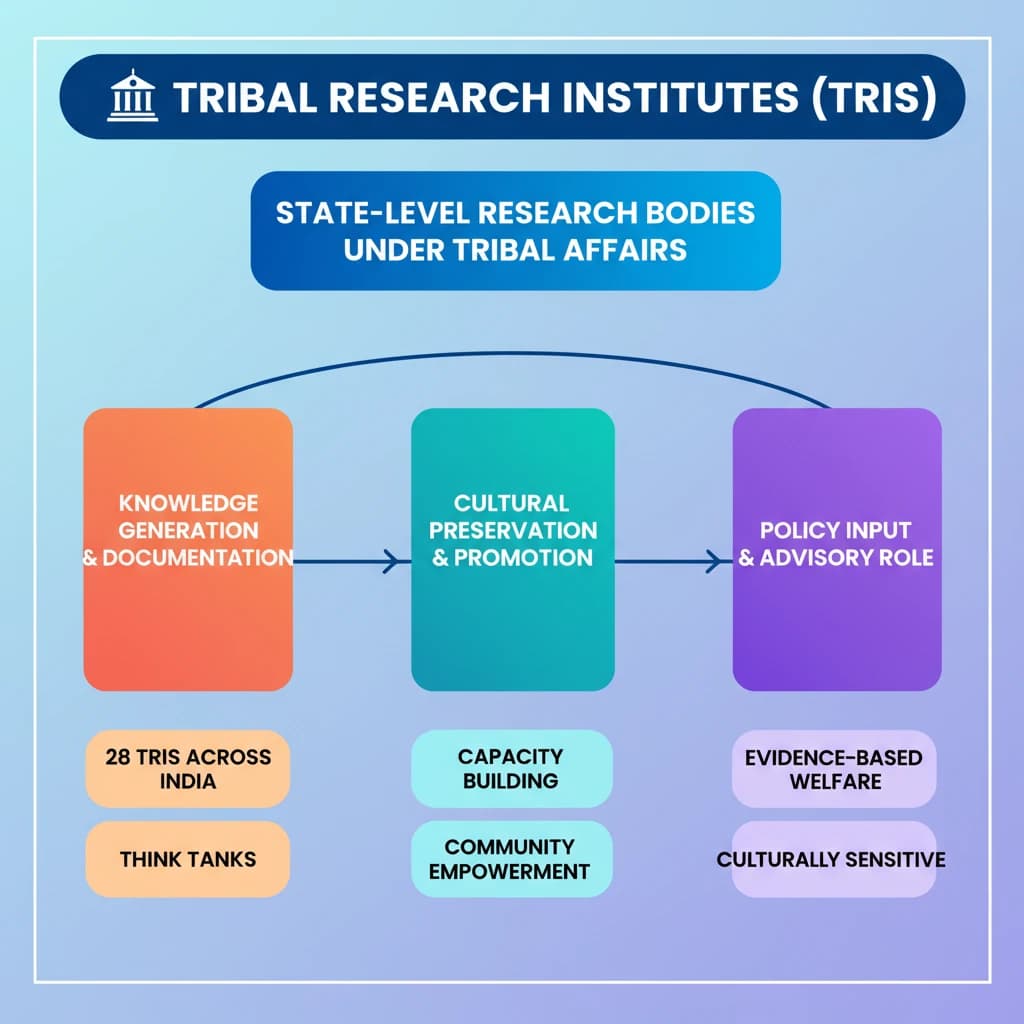
Tribal Research Institutes (TRIs) is a key topic under Social Issues for UPSC Civil Services Examination. Key points include: TRIs are state-level research bodies under the Ministry of Tribal Affairs.. There are 28 TRIs across India, acting as think tanks for tribal development.. Their core functions include knowledge generation, cultural preservation, and evidence-based policy input.. Understanding this topic is essential for both UPSC Prelims and Mains preparation.

Why is Tribal Research Institutes (TRIs) important for UPSC exam?

Tribal Research Institutes (TRIs) is a Medium-level topic in UPSC Social Issues. It is tested in both Prelims (factual MCQs) and Mains (analytical answer writing). Previous year UPSC questions have frequently covered aspects of Tribal Research Institutes (TRIs), making it essential for comprehensive IAS preparation.

How to prepare Tribal Research Institutes (TRIs) for UPSC?

To prepare Tribal Research Institutes (TRIs) for UPSC: (1) Study the comprehensive notes covering all key concepts on Vaidra. (2) Practice previous year questions on this topic. (3) Connect it with current affairs using daily updates. (4) Revise using key takeaways and mind maps available for Social Issues. (5) Write practice answers linking Tribal Research Institutes (TRIs) to related GS Paper topics.

Key takeaways of Tribal Research Institutes (TRIs) for UPSC

  • TRIs are state-level research bodies under the Ministry of Tribal Affairs.
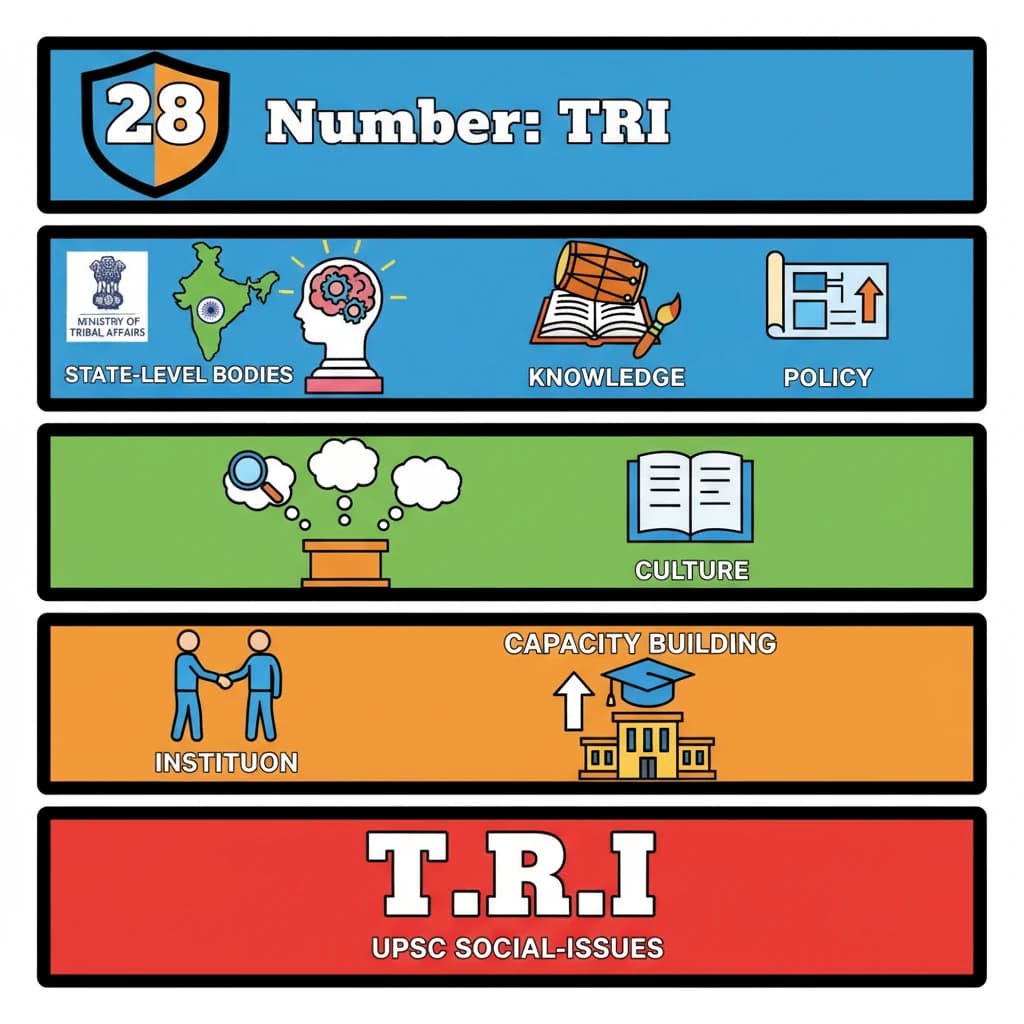
  • There are 28 TRIs across India, acting as think tanks for tribal development.
  • Their core functions include knowledge generation, cultural preservation, and evidence-based policy input.
  • TRIs also focus on capacity building for tribal communities and related institutions.
  • They are crucial for informed, culturally sensitive, and effective tribal welfare initiatives.
Tribal Research Institutes (TRIs)

Tribal Research Institutes (TRIs)

Medium⏱️ 8 min read✓ 95% Verified
social issues

📖 Introduction

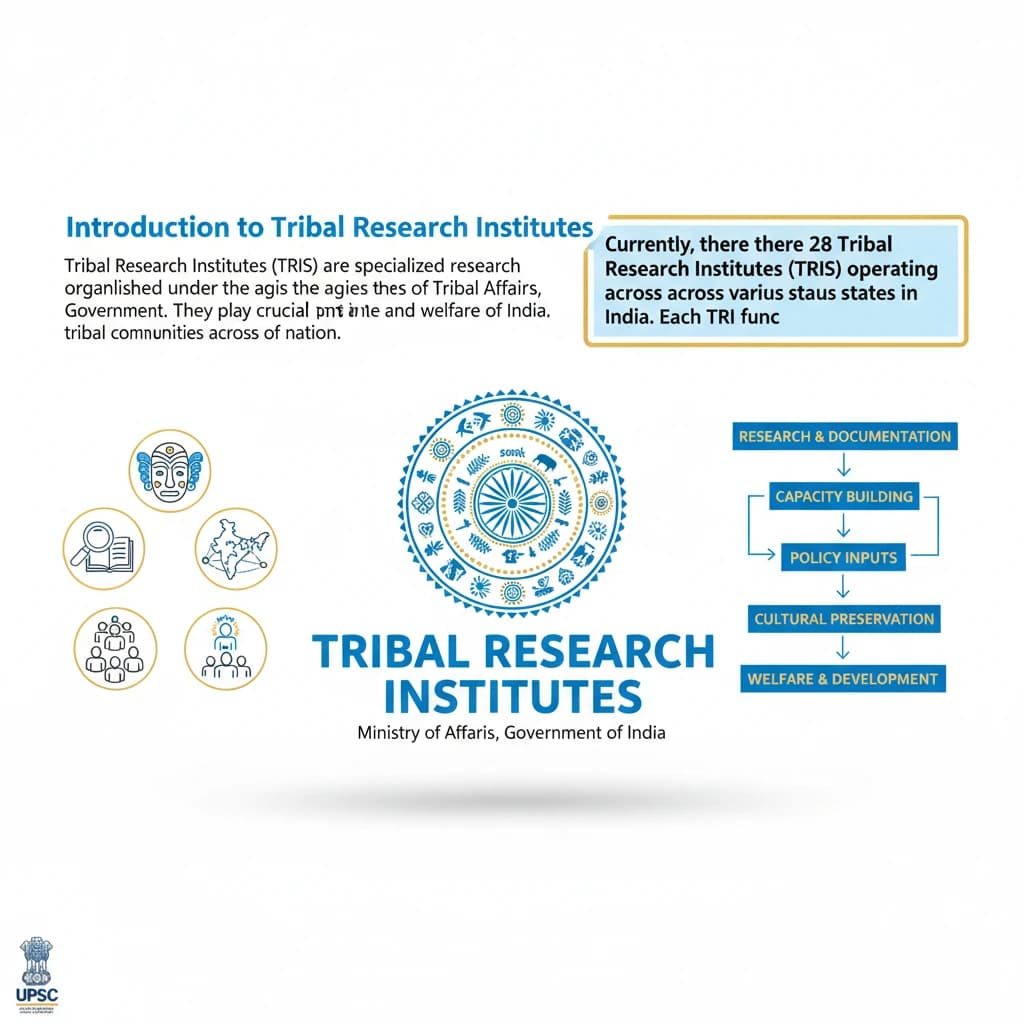
<h4>Introduction to Tribal Research Institutes</h4><p><strong>Tribal Research Institutes (TRIs)</strong> are specialized research organizations established under the aegis of the <strong>Ministry of Tribal Affairs</strong>, Government of India. They play a crucial role in the development and welfare of tribal communities across the nation.</p><div class='info-box'><p>Currently, there are <strong>28 Tribal Research Institutes (TRIs)</strong> operating across various states in India. Each TRI functions at the <strong>state level</strong>, catering to the specific needs and contexts of the tribal populations within its jurisdiction.</p></div><h4>Key Functions and Objectives of TRIs</h4><p>TRIs are multifaceted bodies with several core functions designed to support holistic tribal development. Their primary objectives can be categorized into four main areas:</p><ul><li><strong>Knowledge and Research:</strong> TRIs serve as vital <strong>think tanks</strong>, generating critical knowledge and conducting extensive research on various aspects of tribal life, including their socio-economic conditions, cultural practices, and challenges.</li><li><strong>Cultural Heritage Preservation:</strong> A significant objective is to actively <strong>preserve and promote the rich cultural heritage and traditions</strong> of diverse tribal communities. This includes documenting languages, art forms, rituals, and traditional knowledge systems.</li><li><strong>Evidence-Based Planning:</strong> They provide essential <strong>data and insights</strong> to state governments. This information is crucial for formulating effective, evidence-based tribal development policies, programs, and legislations tailored to specific regional needs.</li><li><strong>Capacity Building:</strong> TRIs are also instrumental in <strong>enhancing the skills and capabilities</strong> of tribal individuals and communities. They work towards strengthening institutions that are dedicated to working with tribal populations, ensuring sustainable development.</li></ul><div class='key-point-box'><p>The overarching goal of TRIs is to bridge the gap between policy formulation and ground-level implementation, ensuring that tribal development initiatives are informed, culturally sensitive, and effective.</p></div><div class='exam-tip-box'><p>For <strong>UPSC Mains (GS Paper 1 & 2)</strong>, understanding TRIs is crucial when discussing <strong>tribal welfare, social justice, cultural preservation, and government policies</strong>. Mentioning their role adds depth to answers on tribal development challenges and solutions.</p></div>
Concept Diagram

💡 Key Takeaways

  • •TRIs are state-level research bodies under the Ministry of Tribal Affairs.
  • •There are 28 TRIs across India, acting as think tanks for tribal development.
  • •Their core functions include knowledge generation, cultural preservation, and evidence-based policy input.
  • •TRIs also focus on capacity building for tribal communities and related institutions.
  • •They are crucial for informed, culturally sensitive, and effective tribal welfare initiatives.

🧠 Memory Techniques
Memory Aid
95% Verified Content

📚 Reference Sources

•Ministry of Tribal Affairs, Government of India (General information on TRIs)

Related Topics

Loading related topics...
Explore:Social Issues Topics·All Subjects·Daily Current Affairs·Editorial Analysis·Previous Year Questions·UPSC GPT