Loading page, please wait…
Vaidra Logo
Vaidra

Top 4 items + smart groups

UPSC GPT
New
Current Affairs
Daily Solutions
Daily Puzzle
Mains Evaluator

Version 2.0.0 • Built with ❤️ for UPSC aspirants

Loading...
Loading...
Loading...
Loading...
Loading...
Loading...
Loading...
Loading...
Loading...
Loading...
Loading...
Loading...
Loading...
Back
All Subjects

Topics

0 topics • 0 completed

Loading topics...
Loading...
Loading...
Loading...
Loading...
Loading...
Overall Progress0%

Inheritance Laws in Other Communities - UPSC Social Issues

What is Inheritance Laws in Other Communities in UPSC Social Issues?

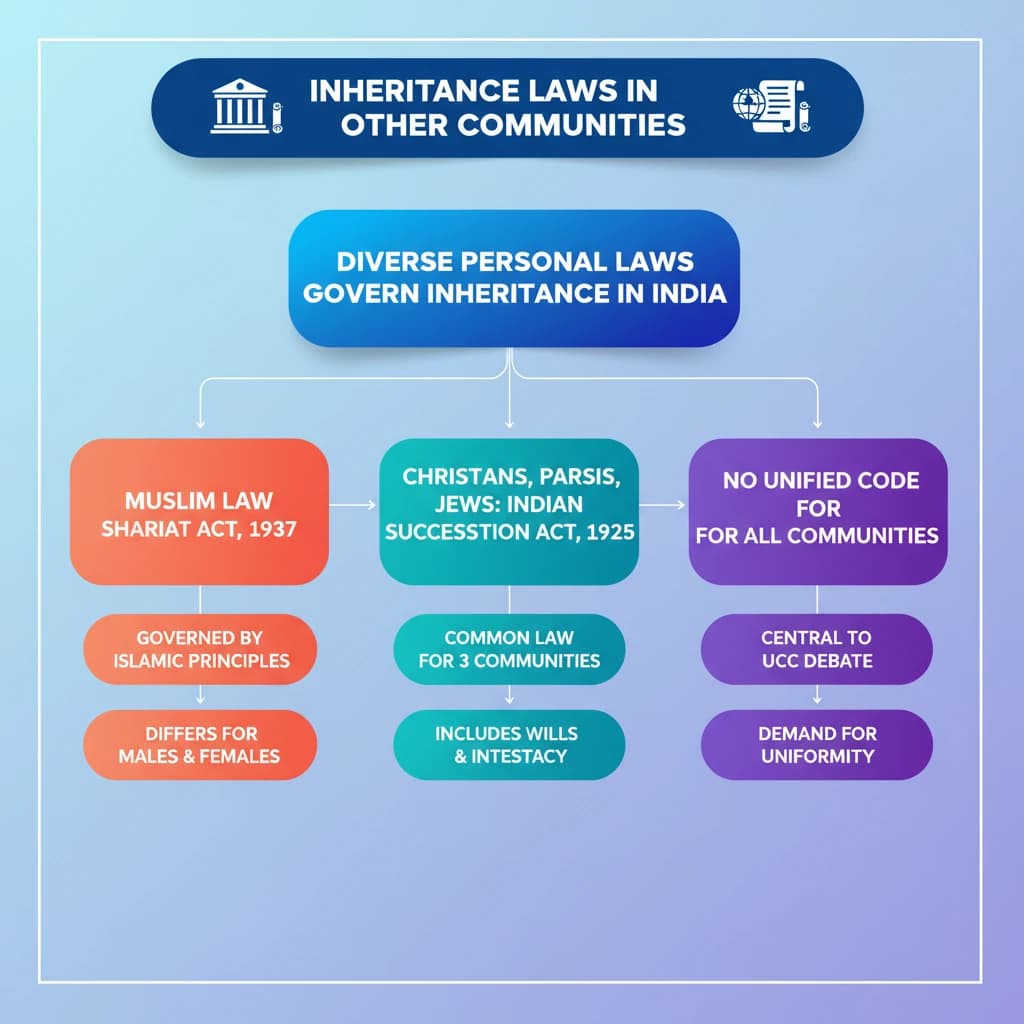
Inheritance Laws in Other Communities is a key topic under Social Issues for UPSC Civil Services Examination. Key points include: Muslim inheritance is governed by the Muslim Personal Law (Shariat) Application Act, 1937.. Christians, Parsis, and Jews follow the Indian Succession Act, 1925 for inheritance.. India has diverse personal laws, not a single unified code for all communities regarding inheritance.. Understanding this topic is essential for both UPSC Prelims and Mains preparation.

Why is Inheritance Laws in Other Communities important for UPSC exam?

Inheritance Laws in Other Communities is a Medium-level topic in UPSC Social Issues. It is tested in both Prelims (factual MCQs) and Mains (analytical answer writing). Previous year UPSC questions have frequently covered aspects of Inheritance Laws in Other Communities, making it essential for comprehensive IAS preparation.

How to prepare Inheritance Laws in Other Communities for UPSC?

To prepare Inheritance Laws in Other Communities for UPSC: (1) Study the comprehensive notes covering all key concepts on Vaidra. (2) Practice previous year questions on this topic. (3) Connect it with current affairs using daily updates. (4) Revise using key takeaways and mind maps available for Social Issues. (5) Write practice answers linking Inheritance Laws in Other Communities to related GS Paper topics.

Key takeaways of Inheritance Laws in Other Communities for UPSC

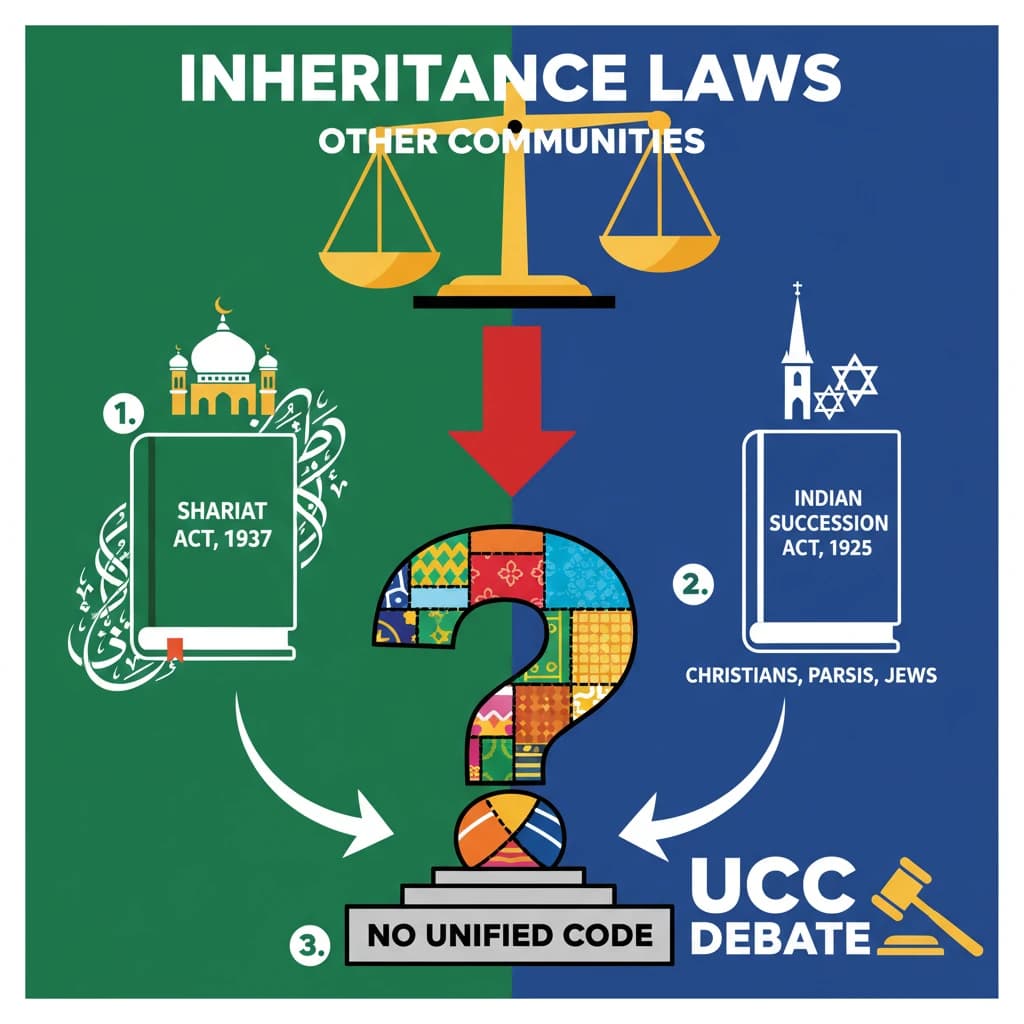
  • Muslim inheritance is governed by the Muslim Personal Law (Shariat) Application Act, 1937.
  • Christians, Parsis, and Jews follow the Indian Succession Act, 1925 for inheritance.
  • India has diverse personal laws, not a single unified code for all communities regarding inheritance.
  • These distinct laws are central to the Uniform Civil Code (UCC) debate.
Inheritance Laws in Other Communities

Inheritance Laws in Other Communities

Medium⏱️ 7 min read✓ 95% Verified
social issues

📖 Introduction

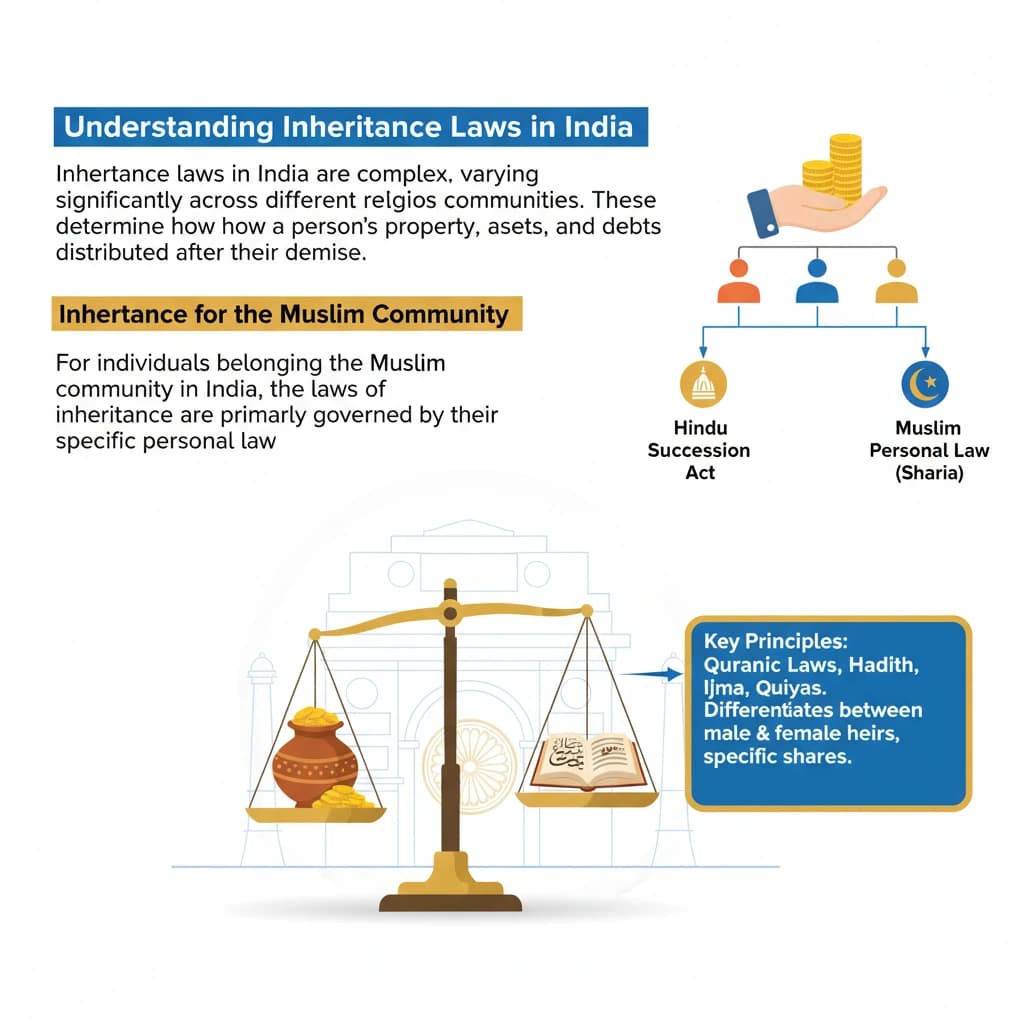
<h4>Understanding Inheritance Laws in India</h4><p><strong>Inheritance laws</strong> in India are complex, varying significantly across different religious communities. These laws determine how a person's property, assets, and debts are distributed after their demise.</p><h4>Inheritance for the Muslim Community</h4><p>For individuals belonging to the <strong>Muslim community</strong> in India, the laws of inheritance are primarily governed by their specific personal law.</p><div class='info-box'><p>The governing legislation is the <strong>Muslim Personal Law (Shariat) Application Act, 1937</strong>.</p></div><p>This Act ensures that matters of inheritance, succession, marriage, and divorce for Muslims are decided according to <strong>Islamic Shariat law</strong>.</p><h4>Inheritance for Christians, Parsis, and Jews</h4><p>In contrast, members of the <strong>Christian</strong>, <strong>Parsi</strong>, and <strong>Jewish communities</strong> in India fall under a different legal framework for inheritance.</p><div class='info-box'><p>Their inheritance matters are regulated by the comprehensive <strong>Indian Succession Act, 1925</strong>.</p></div><p>This Act provides a uniform set of rules for testamentary (wills) and intestate (without a will) succession for these communities.</p><div class='exam-tip-box'><p><strong>UPSC Insight:</strong> Differentiating between personal laws and common civil laws for various communities is crucial for questions on <strong>Uniform Civil Code (UCC)</strong> and secularism.</p></div>
Concept Diagram

💡 Key Takeaways

  • •Muslim inheritance is governed by the Muslim Personal Law (Shariat) Application Act, 1937.
  • •Christians, Parsis, and Jews follow the Indian Succession Act, 1925 for inheritance.
  • •India has diverse personal laws, not a single unified code for all communities regarding inheritance.
  • •These distinct laws are central to the Uniform Civil Code (UCC) debate.

🧠 Memory Techniques
Memory Aid
95% Verified Content

📚 Reference Sources

•The Indian Succession Act, 1925
•The Muslim Personal Law (Shariat) Application Act, 1937

Related Topics

Loading related topics...
Explore:Social Issues Topics·All Subjects·Daily Current Affairs·Editorial Analysis·Previous Year Questions·UPSC GPT
Inheritance Laws in Other Communities - UPSC Social Issues