Loading page, please wait…
Vaidra Logo
Vaidra

Top 4 items + smart groups

UPSC GPT
New
Current Affairs
Daily Solutions
Daily Puzzle
Mains Evaluator

Version 2.0.0 • Built with ❤️ for UPSC aspirants

Loading...
Loading...
Loading...
Loading...
Loading...
Loading...
Loading...
Loading...
Loading...
Loading...
Loading...
Loading...
Loading...
Back
All Subjects

Topics

0 topics • 0 completed

Loading topics...
Loading...
Loading...
Loading...
Loading...
Loading...
Overall Progress0%

What are the Key Facts About Hepatitis? - UPSC Social Issues

What is What are the Key Facts About Hepatitis? in UPSC Social Issues?

What are the Key Facts About Hepatitis? is a key topic under Social Issues for UPSC Civil Services Examination. Key points include: Hepatitis is liver inflammation caused by viruses (A, B, C, D, E) or non-infectious agents.. Hepatitis B and C are the most dangerous, leading to cirrhosis, liver cancer, and most hepatitis-related deaths.. Transmission varies: fecal-oral (A, E), blood-borne (B, C, D).. Understanding this topic is essential for both UPSC Prelims and Mains preparation.

Why is What are the Key Facts About Hepatitis? important for UPSC exam?

What are the Key Facts About Hepatitis? is a Medium-level topic in UPSC Social Issues. It is tested in both Prelims (factual MCQs) and Mains (analytical answer writing). Previous year UPSC questions have frequently covered aspects of What are the Key Facts About Hepatitis?, making it essential for comprehensive IAS preparation.

How to prepare What are the Key Facts About Hepatitis? for UPSC?

To prepare What are the Key Facts About Hepatitis? for UPSC: (1) Study the comprehensive notes covering all key concepts on Vaidra. (2) Practice previous year questions on this topic. (3) Connect it with current affairs using daily updates. (4) Revise using key takeaways and mind maps available for Social Issues. (5) Write practice answers linking What are the Key Facts About Hepatitis? to related GS Paper topics.

Key takeaways of What are the Key Facts About Hepatitis? for UPSC

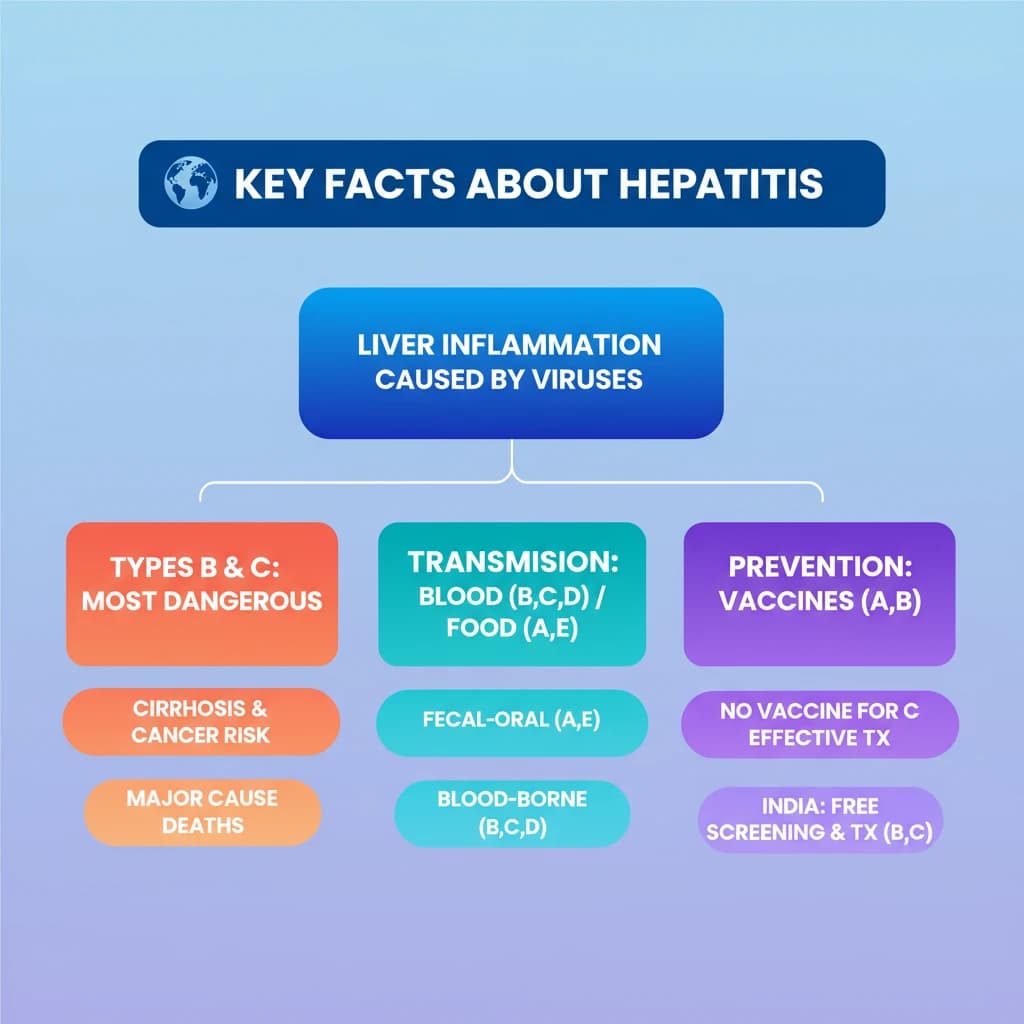
  • Hepatitis is liver inflammation caused by viruses (A, B, C, D, E) or non-infectious agents.
  • Hepatitis B and C are the most dangerous, leading to cirrhosis, liver cancer, and most hepatitis-related deaths.
  • Transmission varies: fecal-oral (A, E), blood-borne (B, C, D).
  • Vaccines exist for Hepatitis A and B, but not for C (though highly effective treatments are available).
  • India's National Viral Hepatitis Control Program aims for free screening and treatment for B and C.
  • Global goal: eliminate viral hepatitis as a public health threat by 2030 (WHO).
What are the Key Facts About Hepatitis?

What are the Key Facts About Hepatitis?

Medium⏱️ 8 min read✓ 98% Verified
social issues

📖 Introduction

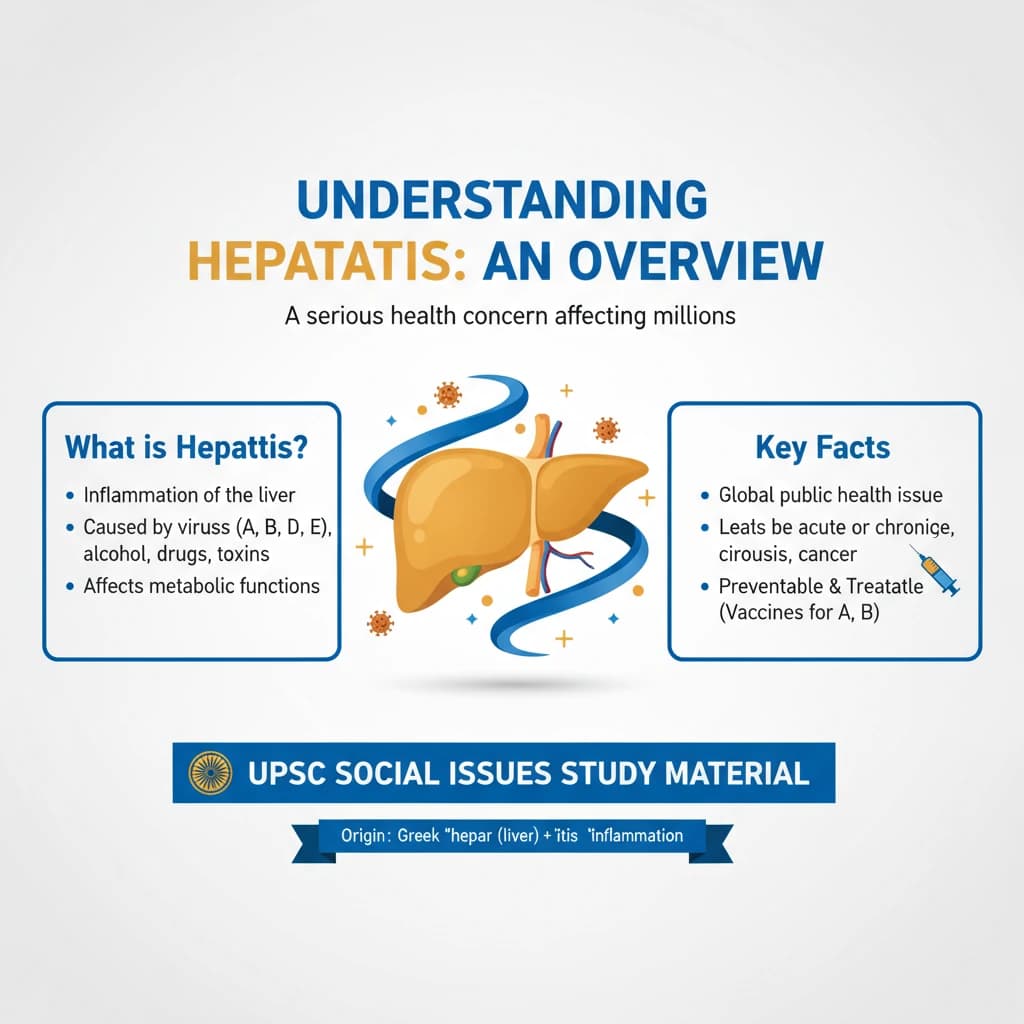
<h4>Understanding Hepatitis: An Overview</h4><p><strong>Hepatitis</strong> is an inflammation of the <strong>liver</strong>, a vital organ responsible for numerous metabolic functions. This condition can be triggered by various factors, leading to a spectrum of health issues, some of which can be life-threatening.</p><div class='info-box'><p>The term <strong>Hepatitis</strong> originates from the Greek words 'hepar' (liver) and 'itis' (inflammation). It signifies a serious health concern affecting millions globally.</p></div><h4>Causes of Hepatitis</h4><p>Hepatitis primarily arises from two main categories of agents: <strong>infectious viruses</strong> and <strong>noninfectious agents</strong>. Understanding these distinctions is crucial for prevention and treatment.</p><ul><li><strong>Viral Hepatitis:</strong> This is the most common cause, involving specific viruses that target the liver.</li><li><strong>Noninfectious Agents:</strong> These include excessive alcohol consumption, certain medications, toxins, and autoimmune diseases.</li></ul><h4>Main Strains of Hepatitis Virus</h4><p>There are five primary strains of the <strong>hepatitis virus</strong>, each designated by a letter. These strains exhibit distinct characteristics in terms of transmission, severity, global distribution, and preventive measures.</p><ul><li><strong>Hepatitis A (HAV)</strong></li><li><strong>Hepatitis B (HBV)</strong></li><li><strong>Hepatitis C (HCV)</strong></li><li><strong>Hepatitis D (HDV)</strong></li><li><strong>Hepatitis E (HEV)</strong></li></ul><div class='key-point-box'><p>Each viral strain requires a specific diagnostic approach and targeted treatment strategy, highlighting the importance of accurate identification.</p></div><h4>Severity and Impact of Hepatitis B and C</h4><p>Among the five strains, <strong>Hepatitis B</strong> and <strong>Hepatitis C</strong> are particularly concerning due to their significant health implications. They are the leading causes of severe chronic liver diseases worldwide.</p><div class='info-box'><p><strong>Liver Cirrhosis:</strong> A condition where the <strong>liver</strong> becomes severely scarred and permanently damaged, impairing its ability to function. This is a common outcome of chronic <strong>Hepatitis B</strong> and <strong>C</strong> infections.</p></div><p>These two strains are also major contributors to <strong>liver cancer (Hepatocellular Carcinoma)</strong> and account for the majority of <strong>viral hepatitis-related deaths</strong> globally. Early detection and management are critical to prevent these severe outcomes.</p><div class='exam-tip-box'><p>For <strong>UPSC Mains (GS-II: Health)</strong>, understanding the distinctions between Hepatitis types and their public health impact is vital. Focus on prevention strategies and government initiatives.</p></div>
Concept Diagram

💡 Key Takeaways

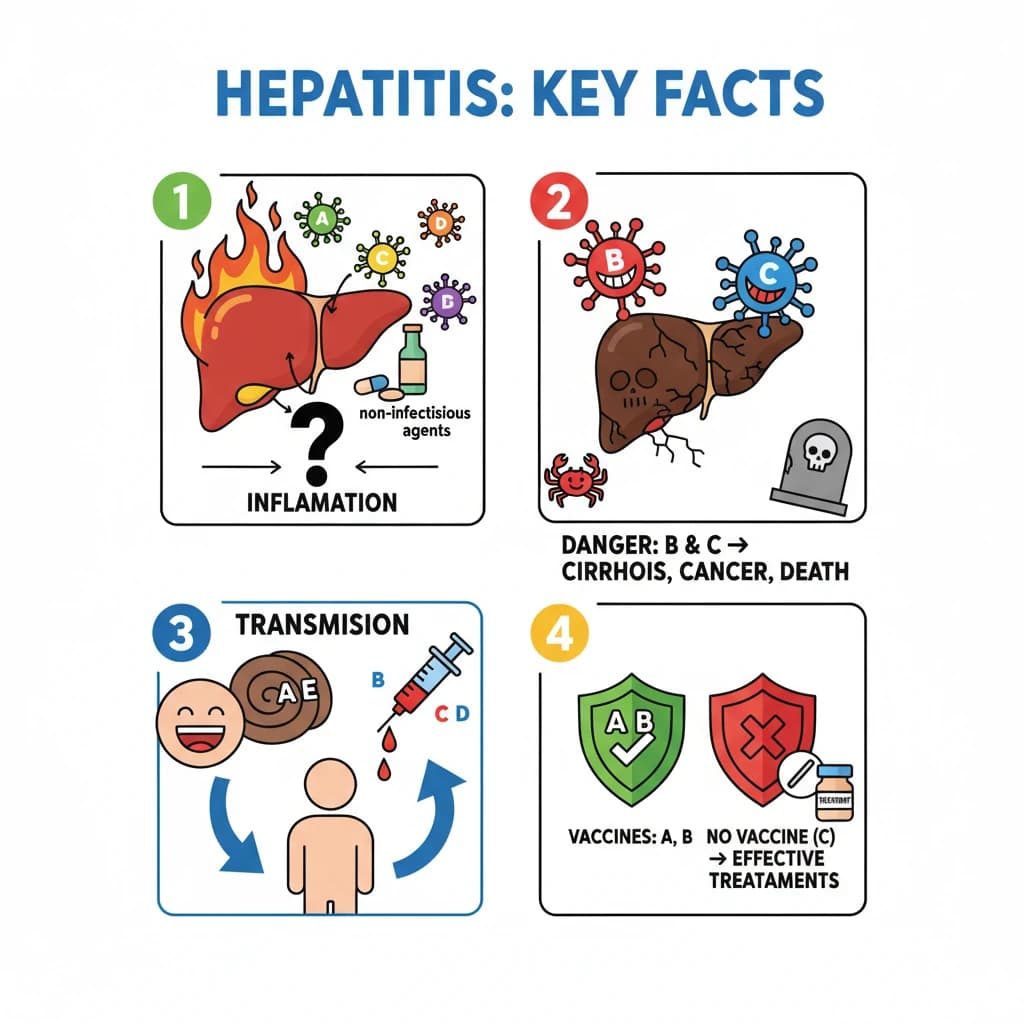
  • •Hepatitis is liver inflammation caused by viruses (A, B, C, D, E) or non-infectious agents.
  • •Hepatitis B and C are the most dangerous, leading to cirrhosis, liver cancer, and most hepatitis-related deaths.
  • •Transmission varies: fecal-oral (A, E), blood-borne (B, C, D).
  • •Vaccines exist for Hepatitis A and B, but not for C (though highly effective treatments are available).
  • •India's National Viral Hepatitis Control Program aims for free screening and treatment for B and C.
  • •Global goal: eliminate viral hepatitis as a public health threat by 2030 (WHO).

🧠 Memory Techniques
Memory Aid
98% Verified Content

📚 Reference Sources

•Ministry of Health & Family Welfare, Government of India - National Viral Hepatitis Control Program documents
•Centers for Disease Control and Prevention (CDC) - Hepatitis Information
•Drishti IAS (original source content)

Related Topics

Loading related topics...
Explore:Social Issues Topics·All Subjects·Daily Current Affairs·Editorial Analysis·Previous Year Questions·UPSC GPT
What are the Key Facts About Hepatitis? - UPSC Social Issues