Rights Of Forest Dwellers and Thanthattai Periyar Sanctuary - UPSC Social Issues
What is Rights Of Forest Dwellers and Thanthattai Periyar Sanctuary in UPSC Social Issues?
Rights Of Forest Dwellers and Thanthattai Periyar Sanctuary is a key topic under Social Issues for UPSC Civil Services Examination. Key points include: FRA 2006 recognizes and vests forest rights, rectifying historical injustice to forest dwellers.. Grants both individual (cultivation, habitation) and community rights (grazing, fishing, resource access).. Empowers Gram Sabha as the central authority for implementing FRA and managing forest resources.. Understanding this topic is essential for both UPSC Prelims and Mains preparation.
Why is Rights Of Forest Dwellers and Thanthattai Periyar Sanctuary important for UPSC exam?
Rights Of Forest Dwellers and Thanthattai Periyar Sanctuary is a Medium-level topic in UPSC Social Issues. It is tested in both Prelims (factual MCQs) and Mains (analytical answer writing). Previous year UPSC questions have frequently covered aspects of Rights Of Forest Dwellers and Thanthattai Periyar Sanctuary, making it essential for comprehensive IAS preparation.
How to prepare Rights Of Forest Dwellers and Thanthattai Periyar Sanctuary for UPSC?
To prepare Rights Of Forest Dwellers and Thanthattai Periyar Sanctuary for UPSC: (1) Study the comprehensive notes covering all key concepts on Vaidra. (2) Practice previous year questions on this topic. (3) Connect it with current affairs using daily updates. (4) Revise using key takeaways and mind maps available for Social Issues. (5) Write practice answers linking Rights Of Forest Dwellers and Thanthattai Periyar Sanctuary to related GS Paper topics.
Key takeaways of Rights Of Forest Dwellers and Thanthattai Periyar Sanctuary for UPSC
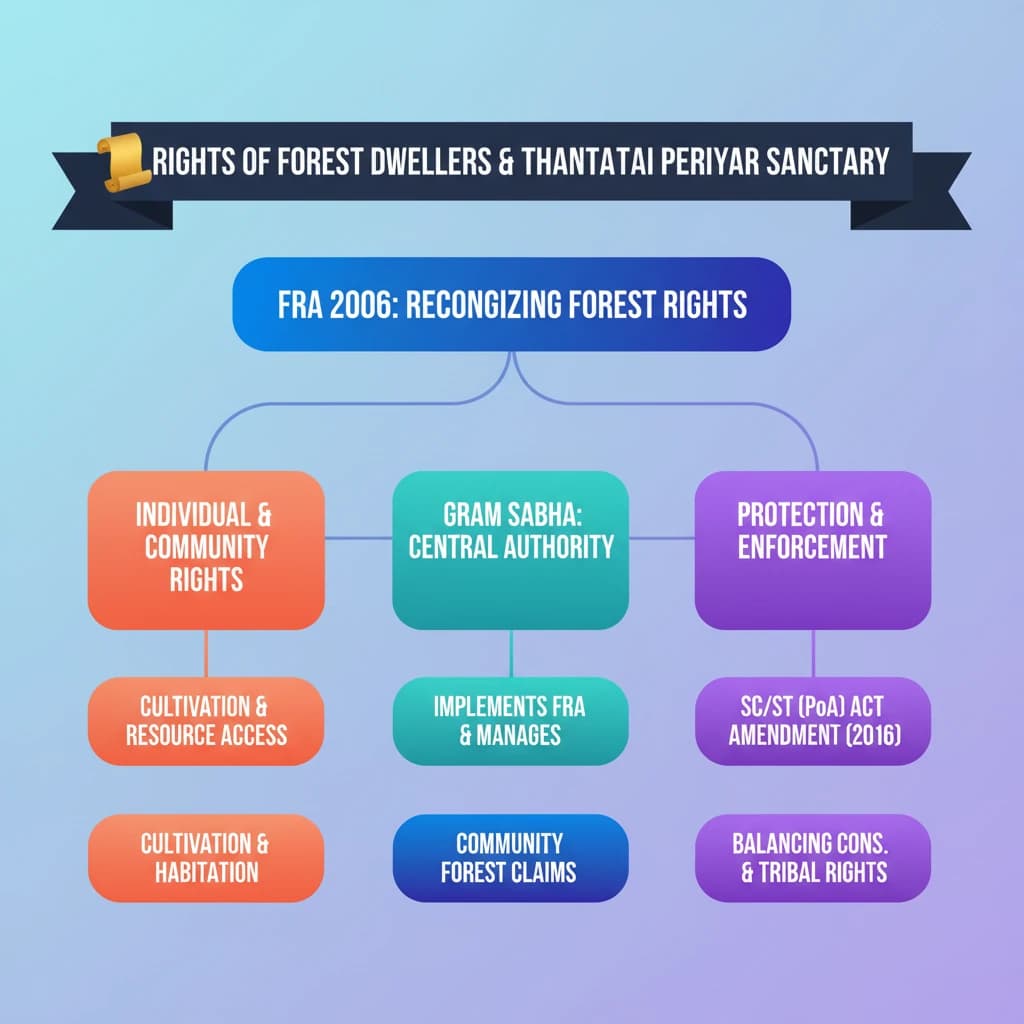
- FRA 2006 recognizes and vests forest rights, rectifying historical injustice to forest dwellers.
- Grants both individual (cultivation, habitation) and community rights (grazing, fishing, resource access).
- Empowers Gram Sabha as the central authority for implementing FRA and managing forest resources.
- Violations against Scheduled Tribes under FRA are criminalized by the 2016 SC/ST (PoA) Act amendment.
- Ongoing challenges exist in balancing conservation (e.g., sanctuaries) with FRA implementation and tribal rights.
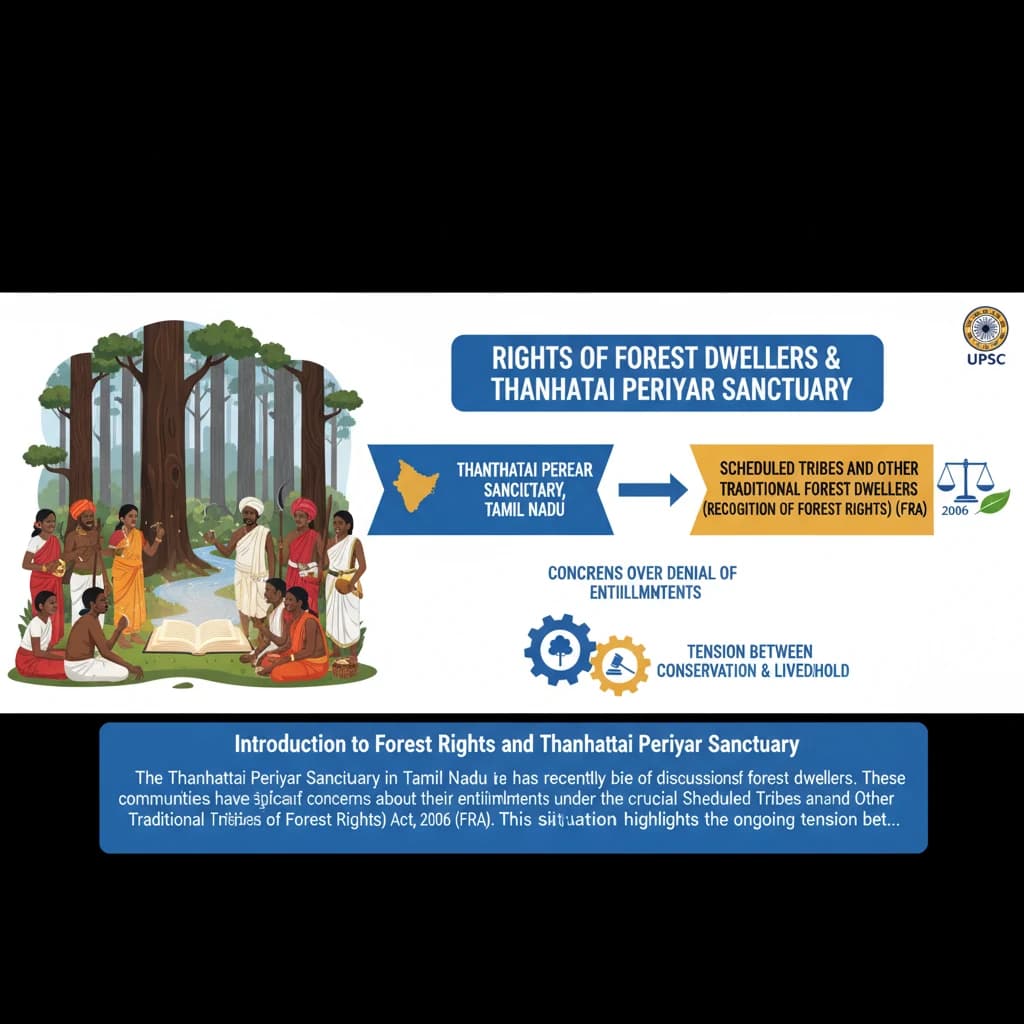
Rights Of Forest Dwellers and Thanthattai Periyar Sanctuary
📖 Introduction
💡 Key Takeaways
- •FRA 2006 recognizes and vests forest rights, rectifying historical injustice to forest dwellers.
- •Grants both individual (cultivation, habitation) and community rights (grazing, fishing, resource access).
- •Empowers Gram Sabha as the central authority for implementing FRA and managing forest resources.
- •Violations against Scheduled Tribes under FRA are criminalized by the 2016 SC/ST (PoA) Act amendment.
- •Ongoing challenges exist in balancing conservation (e.g., sanctuaries) with FRA implementation and tribal rights.
🧠 Memory Techniques