What is India’s Approach to Tribal Development Policy? - UPSC Social Issues
What is What is India’s Approach to Tribal Development Policy? in UPSC Social Issues?
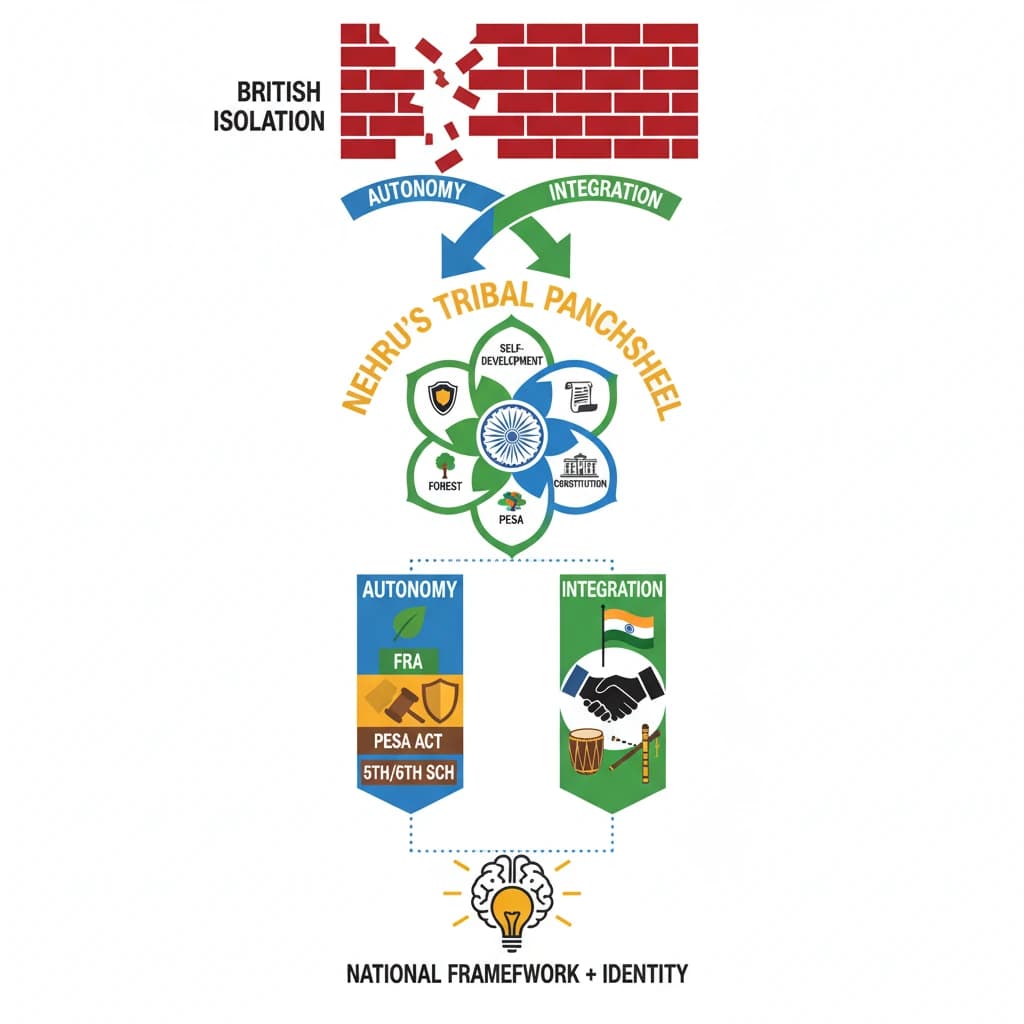
What is India’s Approach to Tribal Development Policy? is a key topic under Social Issues for UPSC Civil Services Examination. Key points include: India's tribal policy evolved from British isolation to a post-independence dual approach of autonomy and integration.. Post-independence policy is guided by Nehru's Tribal Panchsheel principles, emphasizing self-development and respect for rights.. Key autonomy measures include PESA Act, Forest Rights Act, and constitutional safeguards (Fifth & Sixth Schedules).. Understanding this topic is essential for both UPSC Prelims and Mains preparation.
Why is What is India’s Approach to Tribal Development Policy? important for UPSC exam?
What is India’s Approach to Tribal Development Policy? is a Medium-level topic in UPSC Social Issues. It is tested in both Prelims (factual MCQs) and Mains (analytical answer writing). Previous year UPSC questions have frequently covered aspects of What is India’s Approach to Tribal Development Policy?, making it essential for comprehensive IAS preparation.
How to prepare What is India’s Approach to Tribal Development Policy? for UPSC?
To prepare What is India’s Approach to Tribal Development Policy? for UPSC: (1) Study the comprehensive notes covering all key concepts on Vaidra. (2) Practice previous year questions on this topic. (3) Connect it with current affairs using daily updates. (4) Revise using key takeaways and mind maps available for Social Issues. (5) Write practice answers linking What is India’s Approach to Tribal Development Policy? to related GS Paper topics.
Key takeaways of What is India’s Approach to Tribal Development Policy? for UPSC
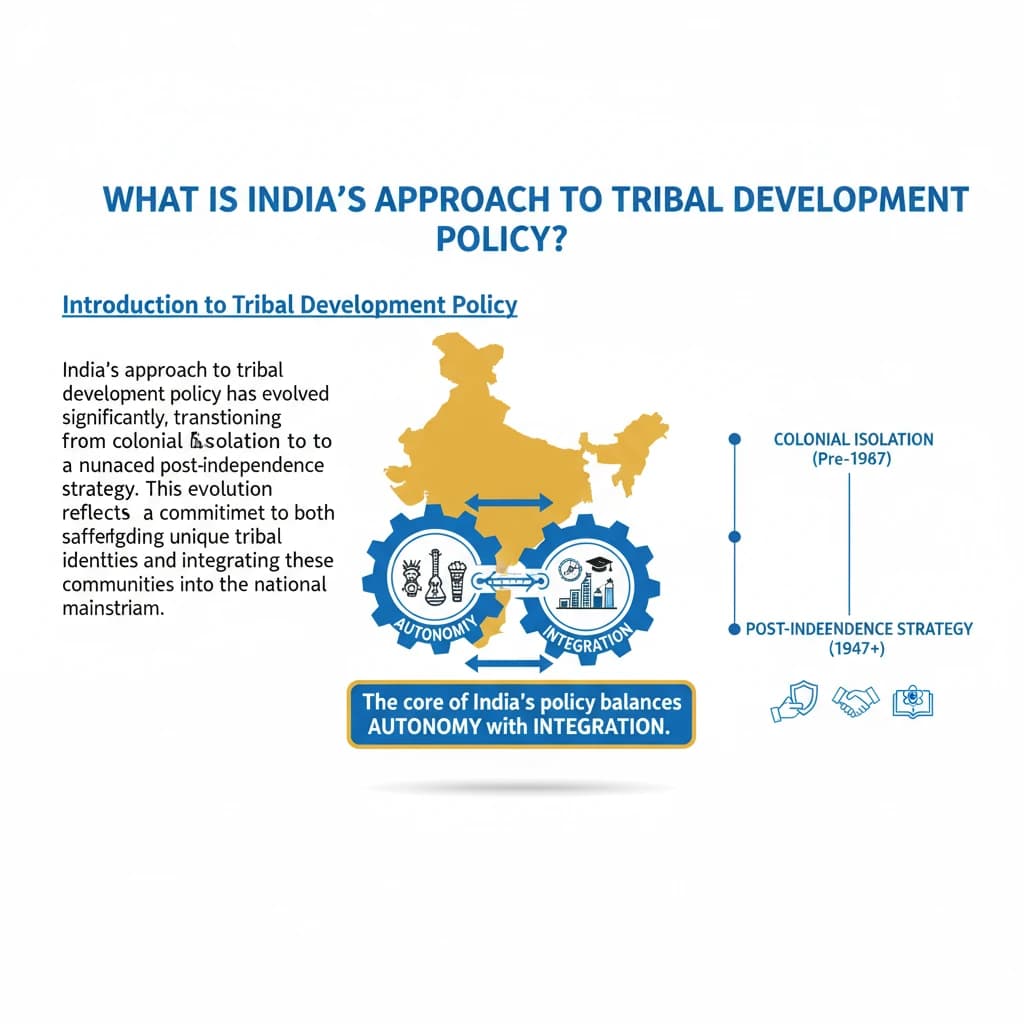
- India's tribal policy evolved from British isolation to a post-independence dual approach of autonomy and integration.
- Post-independence policy is guided by Nehru's Tribal Panchsheel principles, emphasizing self-development and respect for rights.
- Key autonomy measures include PESA Act, Forest Rights Act, and constitutional safeguards (Fifth & Sixth Schedules).
- Integration aims to incorporate tribals into the national framework while preserving their identity.
- Recent initiatives like PVTG Mission, EMRS, Van Dhan Yojana, and sickle cell anaemia mission address current developmental needs.
What is India’s Approach to Tribal Development Policy?
📖 Introduction
💡 Key Takeaways
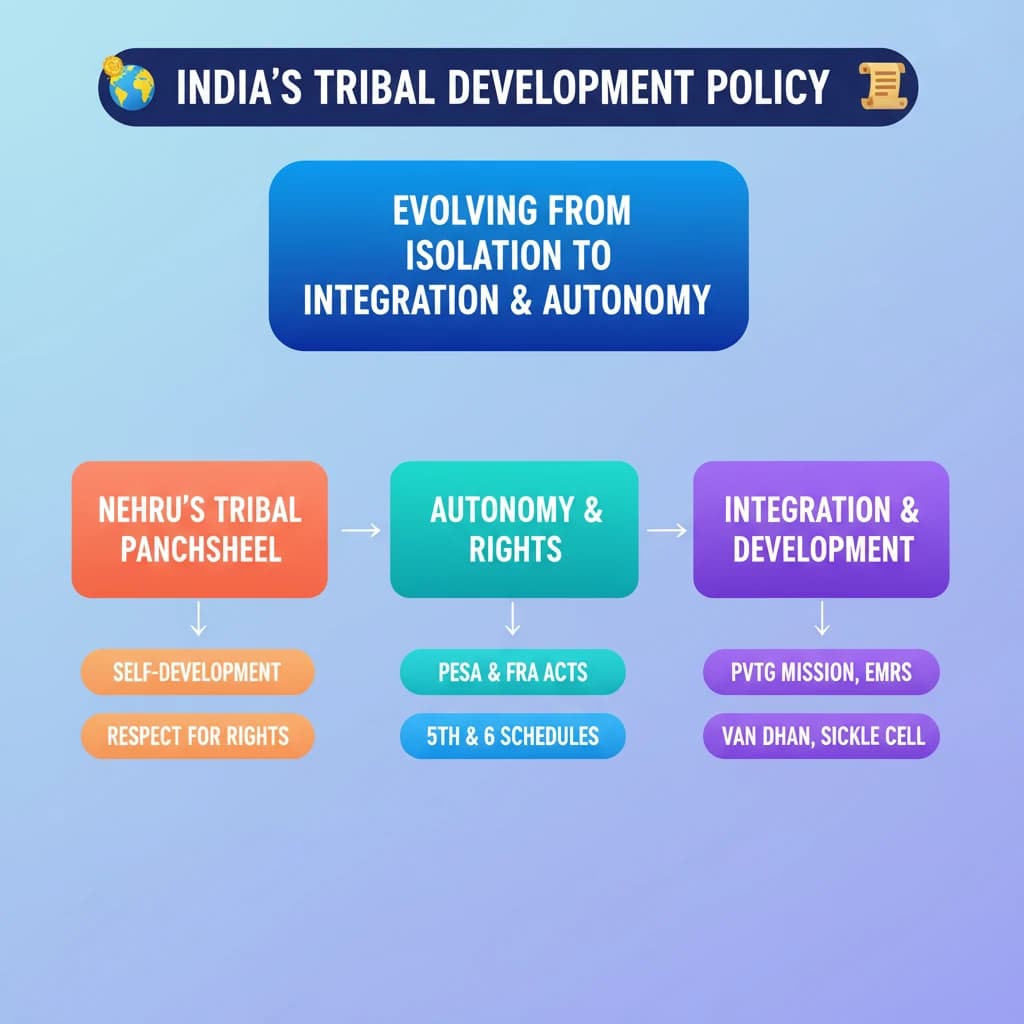
- •India's tribal policy evolved from British isolation to a post-independence dual approach of autonomy and integration.
- •Post-independence policy is guided by Nehru's Tribal Panchsheel principles, emphasizing self-development and respect for rights.
- •Key autonomy measures include PESA Act, Forest Rights Act, and constitutional safeguards (Fifth & Sixth Schedules).
- •Integration aims to incorporate tribals into the national framework while preserving their identity.
- •Recent initiatives like PVTG Mission, EMRS, Van Dhan Yojana, and sickle cell anaemia mission address current developmental needs.
🧠 Memory Techniques