What are the Key Features of Comprehensive Cancer Multi-omics Data Portal? - UPSC Social Issues
What is What are the Key Features of Comprehensive Cancer Multi-omics Data Portal? in UPSC Social Issues?
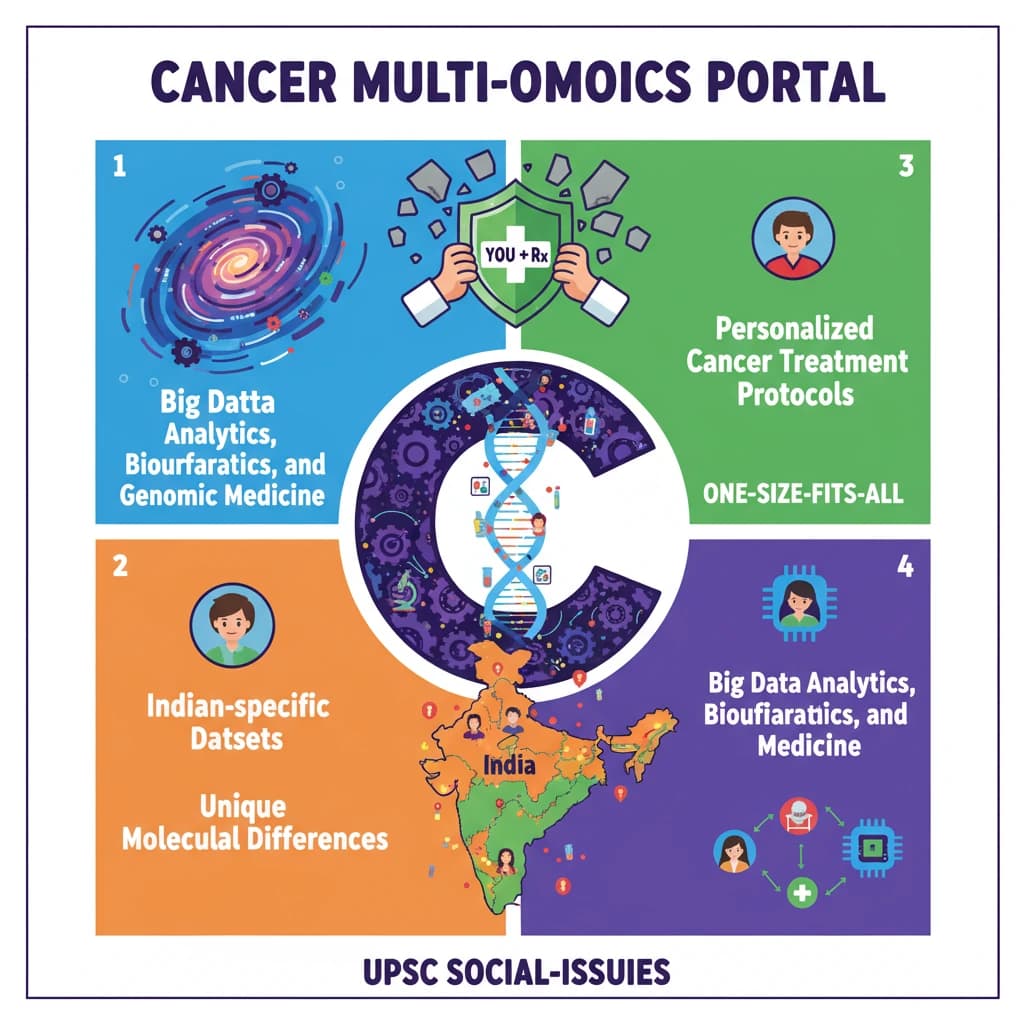
What are the Key Features of Comprehensive Cancer Multi-omics Data Portal? is a key topic under Social Issues for UPSC Civil Services Examination. Key points include: Comprehensive Cancer Multi-omics Data Portals integrate diverse biological data for holistic cancer understanding.. Indian-specific datasets are crucial due to unique molecular differences in cancer patients across the Indian population.. The primary goal is to enable personalized cancer treatment protocols, moving beyond 'one-size-fits-all' medicine.. Understanding this topic is essential for both UPSC Prelims and Mains preparation.
Why is What are the Key Features of Comprehensive Cancer Multi-omics Data Portal? important for UPSC exam?
What are the Key Features of Comprehensive Cancer Multi-omics Data Portal? is a Medium-level topic in UPSC Social Issues. It is tested in both Prelims (factual MCQs) and Mains (analytical answer writing). Previous year UPSC questions have frequently covered aspects of What are the Key Features of Comprehensive Cancer Multi-omics Data Portal?, making it essential for comprehensive IAS preparation.
How to prepare What are the Key Features of Comprehensive Cancer Multi-omics Data Portal? for UPSC?
To prepare What are the Key Features of Comprehensive Cancer Multi-omics Data Portal? for UPSC: (1) Study the comprehensive notes covering all key concepts on Vaidra. (2) Practice previous year questions on this topic. (3) Connect it with current affairs using daily updates. (4) Revise using key takeaways and mind maps available for Social Issues. (5) Write practice answers linking What are the Key Features of Comprehensive Cancer Multi-omics Data Portal? to related GS Paper topics.
Key takeaways of What are the Key Features of Comprehensive Cancer Multi-omics Data Portal? for UPSC
- Comprehensive Cancer Multi-omics Data Portals integrate diverse biological data for holistic cancer understanding.
- Indian-specific datasets are crucial due to unique molecular differences in cancer patients across the Indian population.
- The primary goal is to enable personalized cancer treatment protocols, moving beyond 'one-size-fits-all' medicine.
- These portals leverage principles of big data analytics, bioinformatics, and genomic medicine.
- They support national health initiatives like the National Cancer Grid and align with the 'Make in India' in healthcare.
What are the Key Features of Comprehensive Cancer Multi-omics Data Portal?
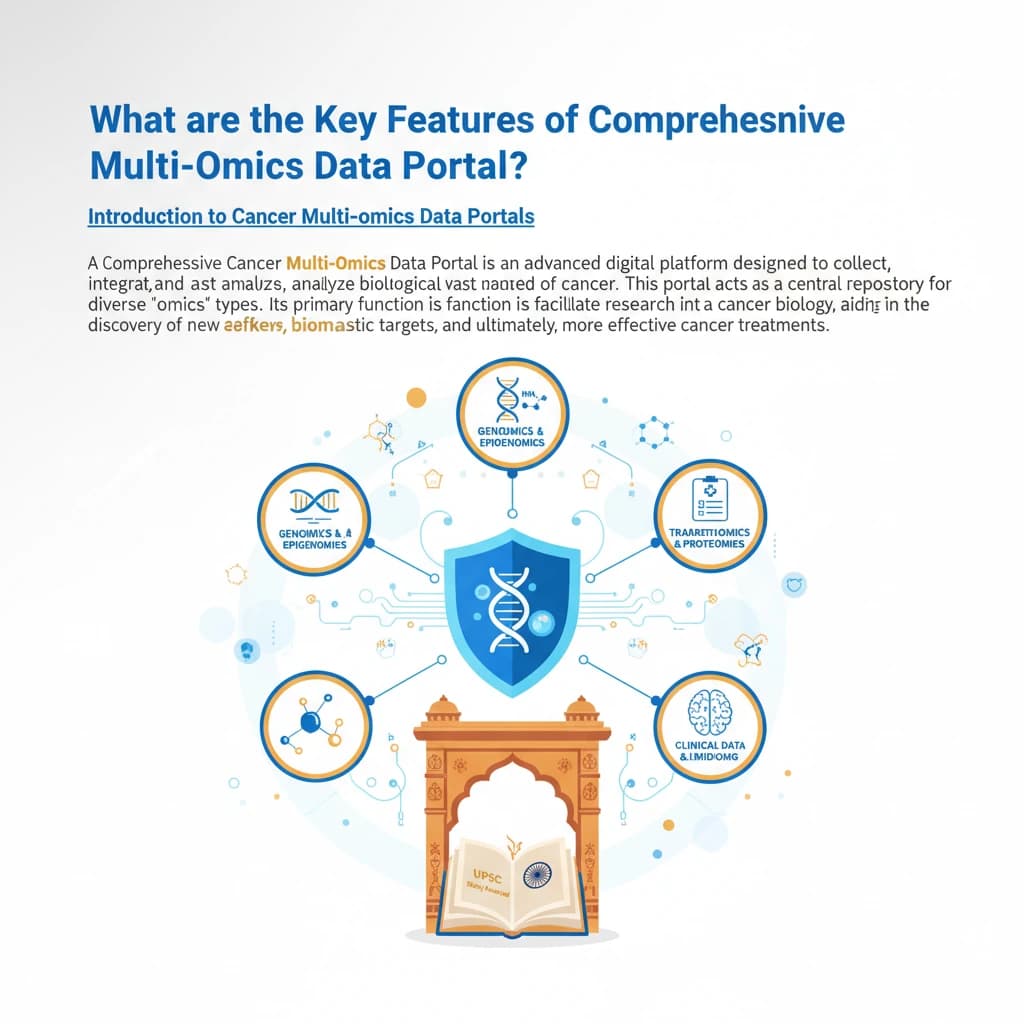
📖 Introduction
💡 Key Takeaways
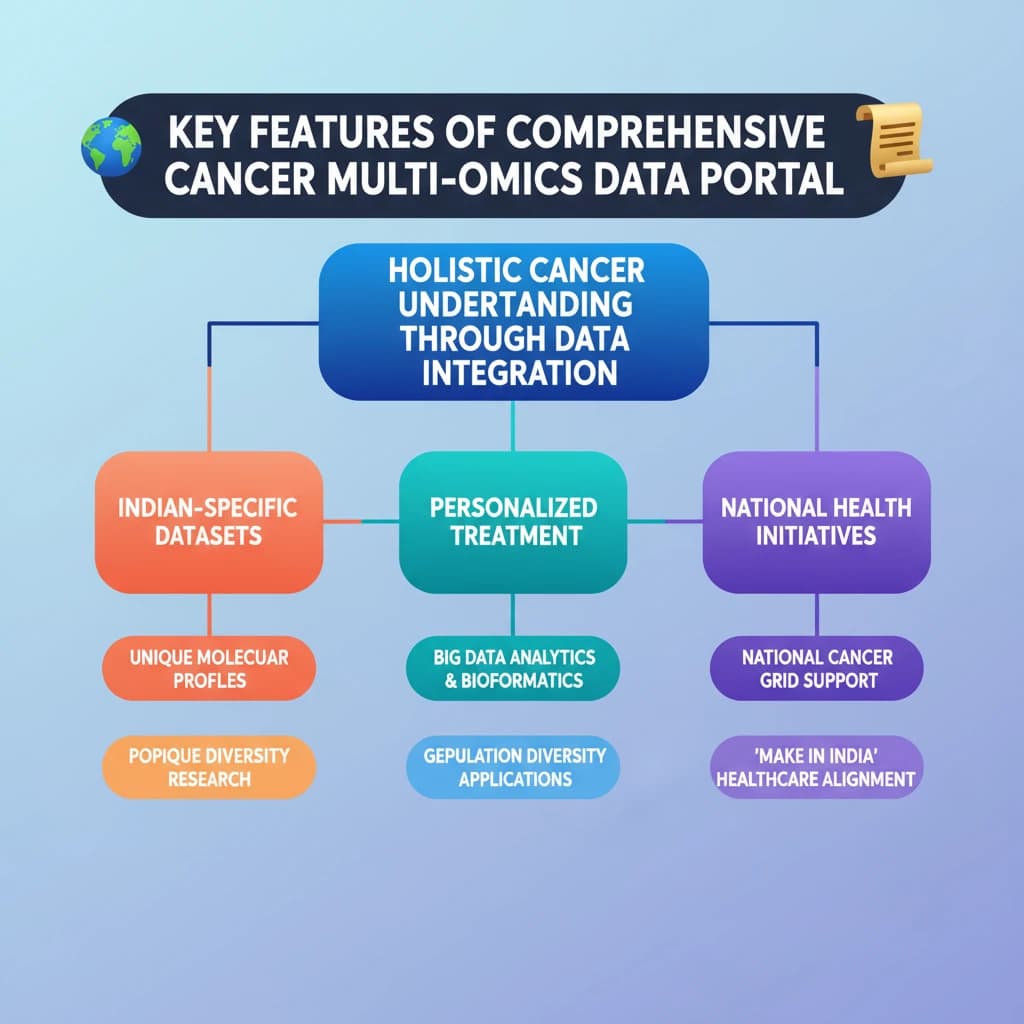
- •Comprehensive Cancer Multi-omics Data Portals integrate diverse biological data for holistic cancer understanding.
- •Indian-specific datasets are crucial due to unique molecular differences in cancer patients across the Indian population.
- •The primary goal is to enable personalized cancer treatment protocols, moving beyond 'one-size-fits-all' medicine.
- •These portals leverage principles of big data analytics, bioinformatics, and genomic medicine.
- •They support national health initiatives like the National Cancer Grid and align with the 'Make in India' in healthcare.
🧠 Memory Techniques