OTHER VULNERABLE SECTIONS: SCs, STs, MINORITIES AND DISABLED - UPSC Social Issues
What is OTHER VULNERABLE SECTIONS: SCs, STs, MINORITIES AND DISABLED in UPSC Social Issues?
OTHER VULNERABLE SECTIONS: SCs, STs, MINORITIES AND DISABLED is a key topic under Social Issues for UPSC Civil Services Examination. Key points include: India's Constitution mandates special provisions for SCs, STs, Minorities, and PwDs to ensure social justice and equality.. SCs faced historical untouchability; STs are indigenous, often isolated communities; Minorities are numerically smaller religious/linguistic groups; PwDs have long-term impairments.. Key constitutional articles (e.g., 17, 46, 244, 29, 30) and acts (e.g., PoA Act, FRA, RPwD Act) protect their rights.. Understanding this topic is essential for both UPSC Prelims and Mains preparation.
Why is OTHER VULNERABLE SECTIONS: SCs, STs, MINORITIES AND DISABLED important for UPSC exam?
OTHER VULNERABLE SECTIONS: SCs, STs, MINORITIES AND DISABLED is a Medium-level topic in UPSC Social Issues. It is tested in both Prelims (factual MCQs) and Mains (analytical answer writing). Previous year UPSC questions have frequently covered aspects of OTHER VULNERABLE SECTIONS: SCs, STs, MINORITIES AND DISABLED, making it essential for comprehensive IAS preparation.
How to prepare OTHER VULNERABLE SECTIONS: SCs, STs, MINORITIES AND DISABLED for UPSC?
To prepare OTHER VULNERABLE SECTIONS: SCs, STs, MINORITIES AND DISABLED for UPSC: (1) Study the comprehensive notes covering all key concepts on Vaidra. (2) Practice previous year questions on this topic. (3) Connect it with current affairs using daily updates. (4) Revise using key takeaways and mind maps available for Social Issues. (5) Write practice answers linking OTHER VULNERABLE SECTIONS: SCs, STs, MINORITIES AND DISABLED to related GS Paper topics.
Key takeaways of OTHER VULNERABLE SECTIONS: SCs, STs, MINORITIES AND DISABLED for UPSC
- India's Constitution mandates special provisions for SCs, STs, Minorities, and PwDs to ensure social justice and equality.
- SCs faced historical untouchability; STs are indigenous, often isolated communities; Minorities are numerically smaller religious/linguistic groups; PwDs have long-term impairments.
- Key constitutional articles (e.g., 17, 46, 244, 29, 30) and acts (e.g., PoA Act, FRA, RPwD Act) protect their rights.
- Challenges include discrimination, economic disparities, lack of access to education/healthcare, and inadequate representation.
- Government initiatives focus on education, employment, infrastructure development, and ensuring an inclusive environment.
- A rights-based approach and effective implementation of laws are crucial for their holistic empowerment.
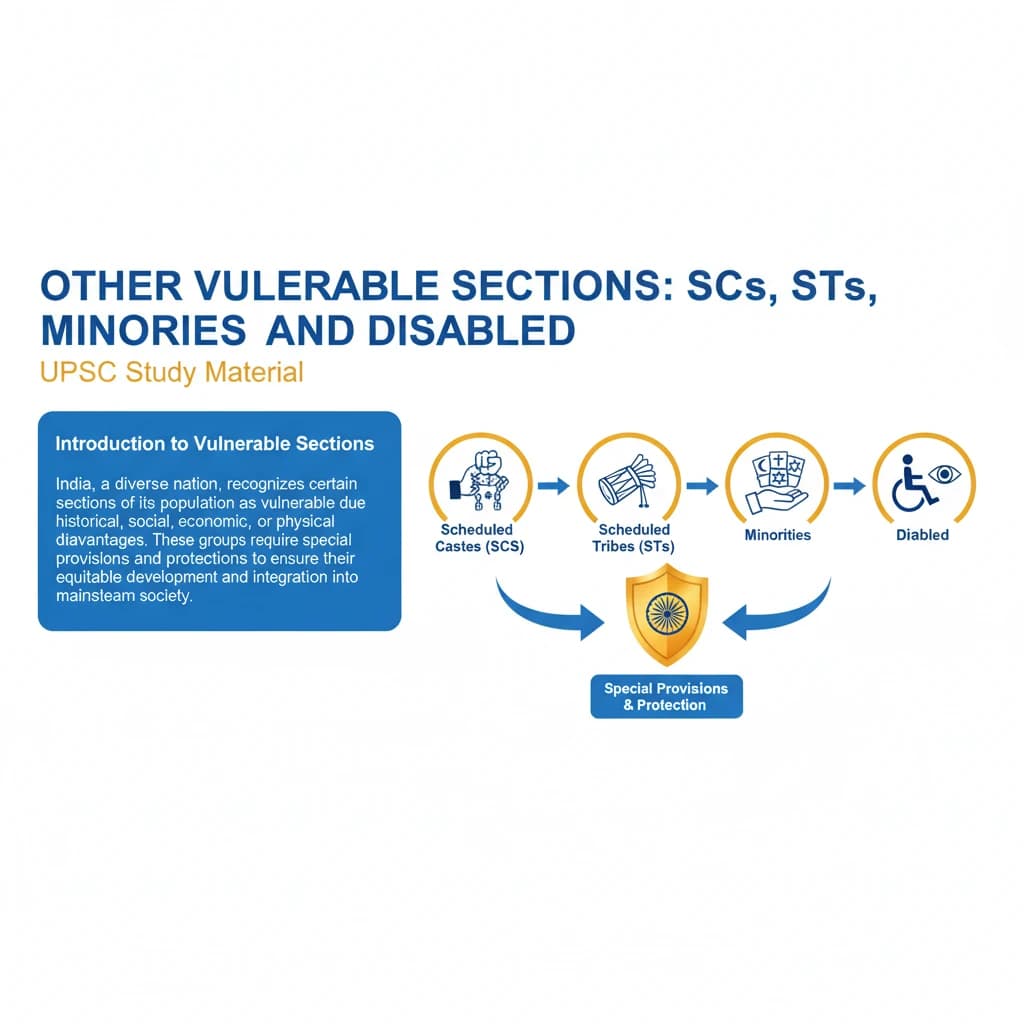
OTHER VULNERABLE SECTIONS: SCs, STs, MINORITIES AND DISABLED
📖 Introduction
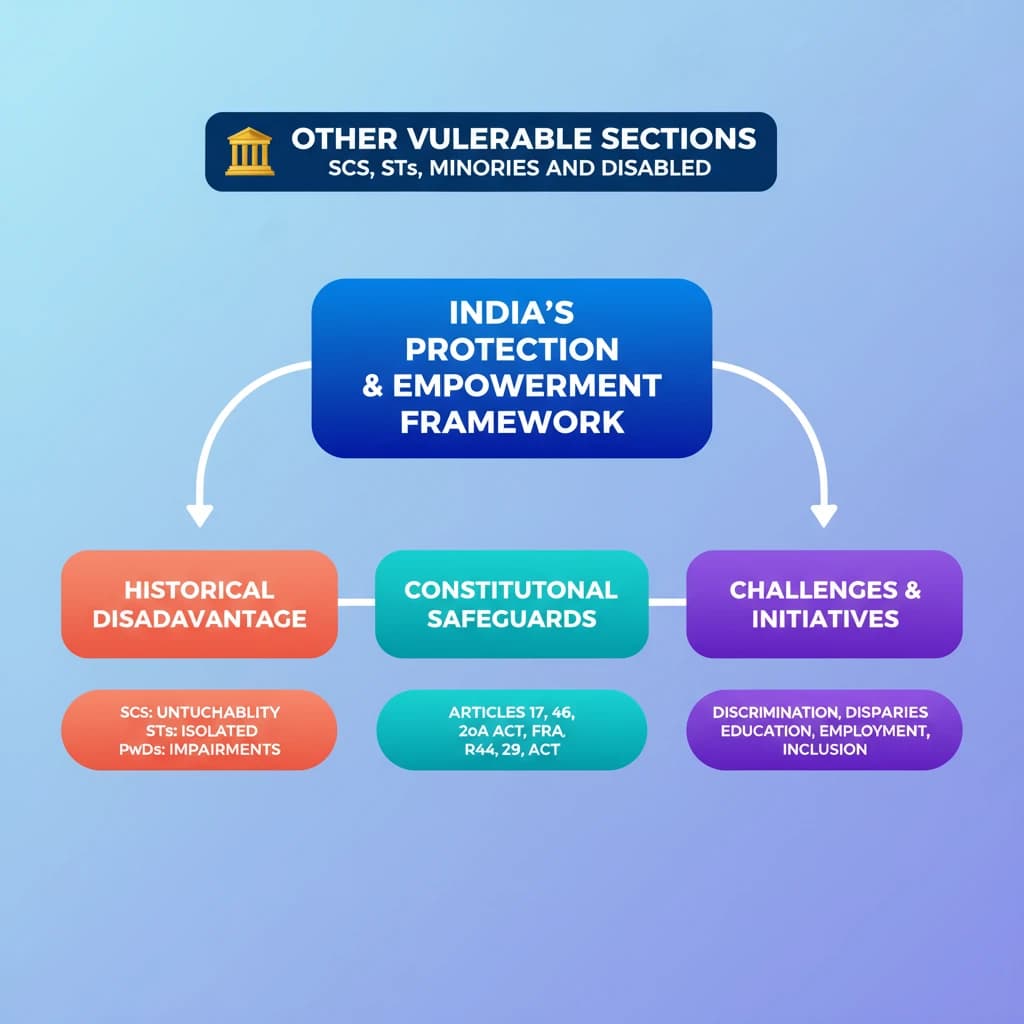
💡 Key Takeaways
- •India's Constitution mandates special provisions for SCs, STs, Minorities, and PwDs to ensure social justice and equality.
- •SCs faced historical untouchability; STs are indigenous, often isolated communities; Minorities are numerically smaller religious/linguistic groups; PwDs have long-term impairments.
- •Key constitutional articles (e.g., 17, 46, 244, 29, 30) and acts (e.g., PoA Act, FRA, RPwD Act) protect their rights.
- •Challenges include discrimination, economic disparities, lack of access to education/healthcare, and inadequate representation.
- •Government initiatives focus on education, employment, infrastructure development, and ensuring an inclusive environment.
- •A rights-based approach and effective implementation of laws are crucial for their holistic empowerment.
🧠 Memory Techniques
