What is Tuberculosis? - UPSC Social Issues
What is What is Tuberculosis? in UPSC Social Issues?
What is Tuberculosis? is a key topic under Social Issues for UPSC Civil Services Examination. Key points include: Tuberculosis (TB) is a bacterial infection caused by Mycobacterium tuberculosis.. It is an airborne disease, spreading through close contact, particularly in crowded, poorly ventilated areas.. TB primarily affects the lungs but can impact almost any organ, including lymph nodes, spine, and brain.. Understanding this topic is essential for both UPSC Prelims and Mains preparation.
Why is What is Tuberculosis? important for UPSC exam?
What is Tuberculosis? is a Medium-level topic in UPSC Social Issues. It is tested in both Prelims (factual MCQs) and Mains (analytical answer writing). Previous year UPSC questions have frequently covered aspects of What is Tuberculosis?, making it essential for comprehensive IAS preparation.
How to prepare What is Tuberculosis? for UPSC?
To prepare What is Tuberculosis? for UPSC: (1) Study the comprehensive notes covering all key concepts on Vaidra. (2) Practice previous year questions on this topic. (3) Connect it with current affairs using daily updates. (4) Revise using key takeaways and mind maps available for Social Issues. (5) Write practice answers linking What is Tuberculosis? to related GS Paper topics.
Key takeaways of What is Tuberculosis? for UPSC
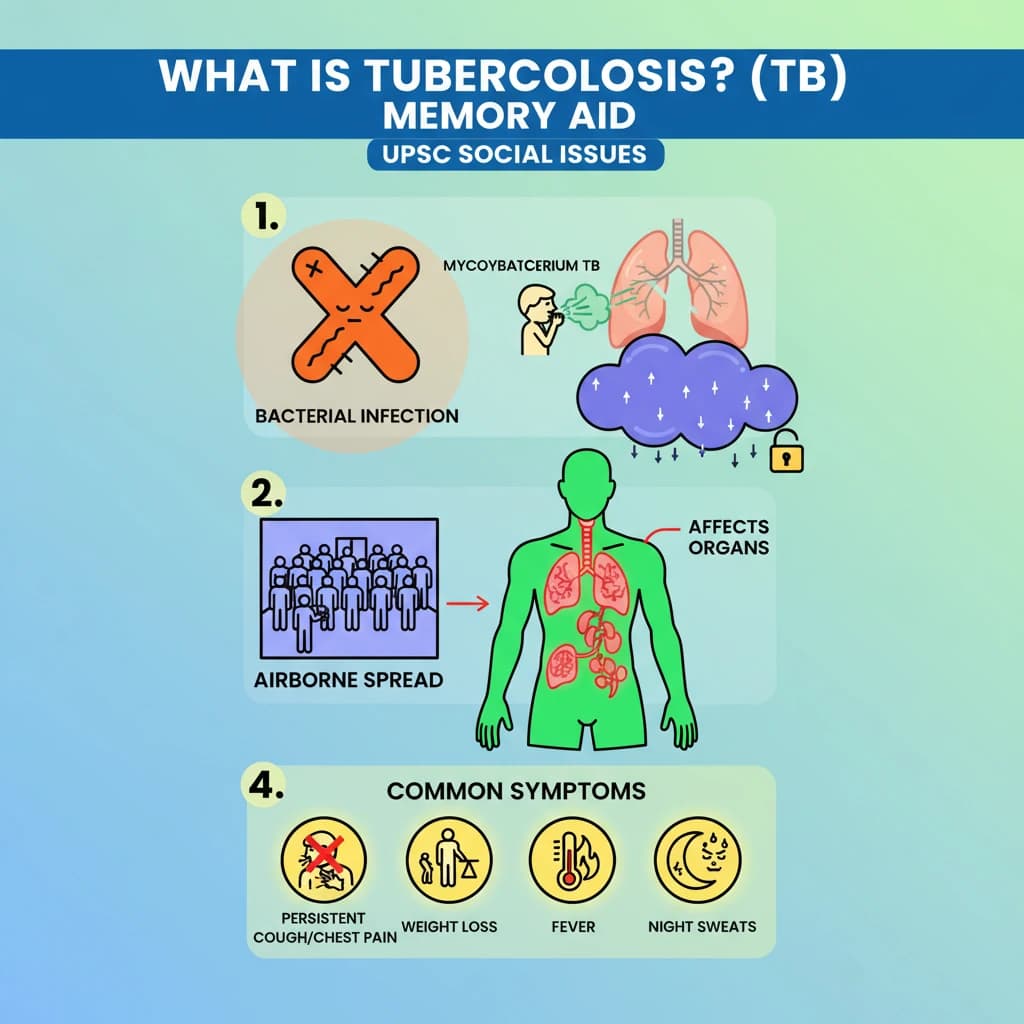
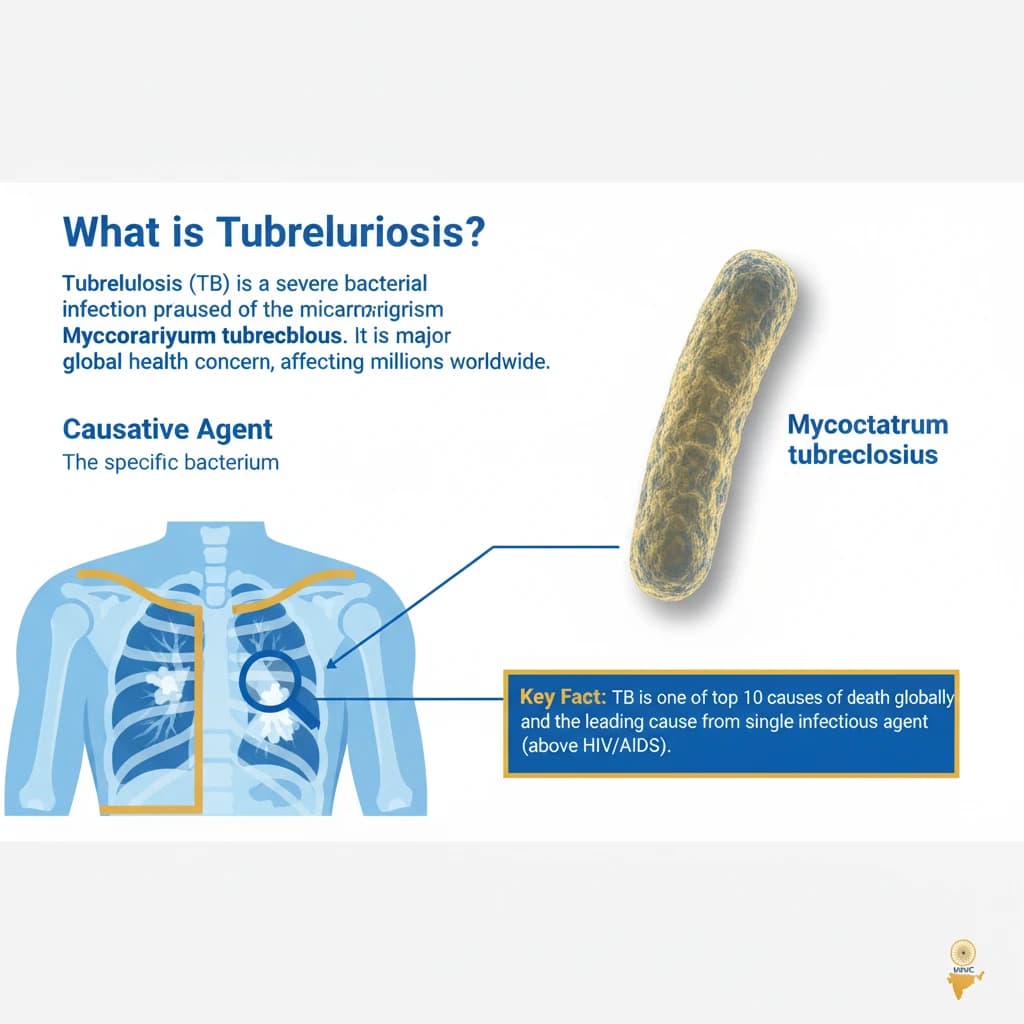
- Tuberculosis (TB) is a bacterial infection caused by Mycobacterium tuberculosis.
- It is an airborne disease, spreading through close contact, particularly in crowded, poorly ventilated areas.
- TB primarily affects the lungs but can impact almost any organ, including lymph nodes, spine, and brain.
- Common symptoms include persistent cough, chest pains, weight loss, fever, and night sweats.
- TB is curable with a 6-month course of antimicrobial drugs, but drug resistance (MDR-TB) is a growing concern.
- India aims to eliminate TB by 2025 through programs like NTEP and Nikshay Poshan Yojana.
What is Tuberculosis?
📖 Introduction
💡 Key Takeaways
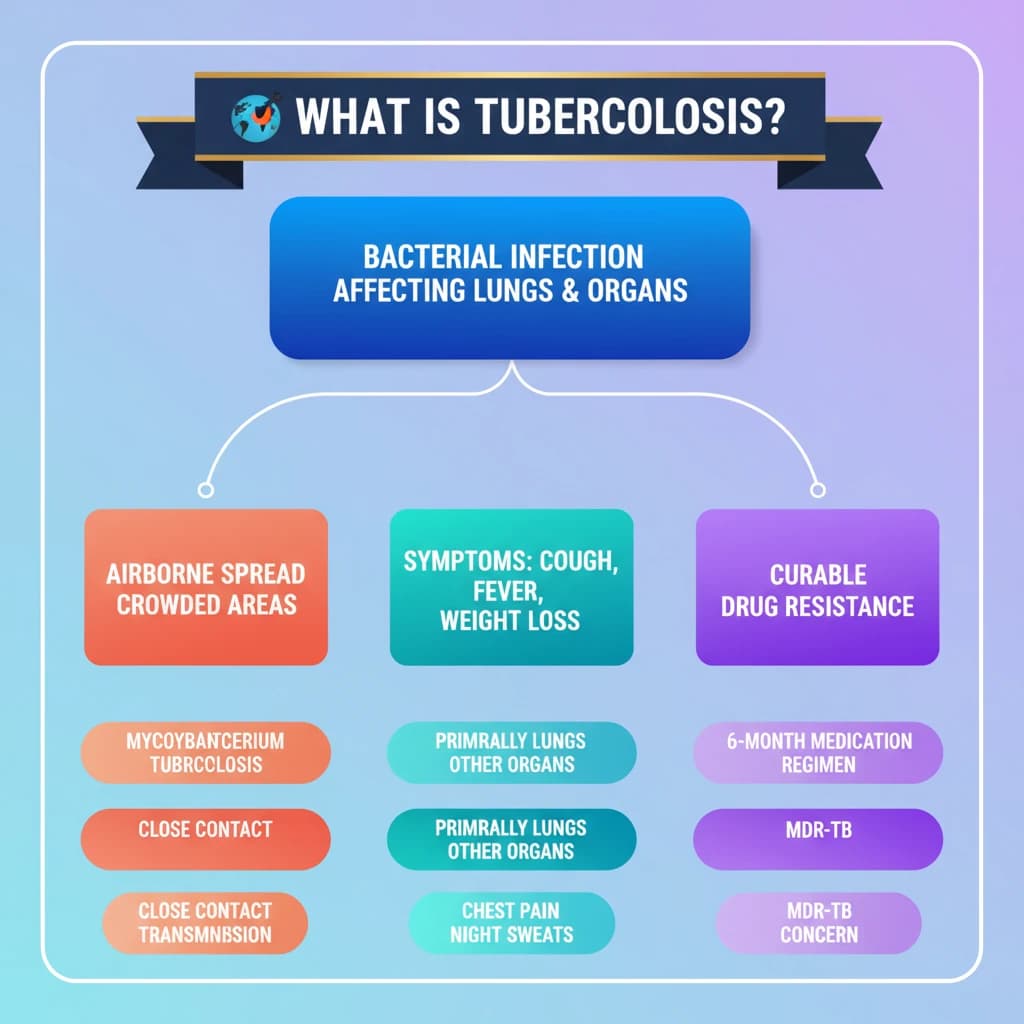
- •Tuberculosis (TB) is a bacterial infection caused by Mycobacterium tuberculosis.
- •It is an airborne disease, spreading through close contact, particularly in crowded, poorly ventilated areas.
- •TB primarily affects the lungs but can impact almost any organ, including lymph nodes, spine, and brain.
- •Common symptoms include persistent cough, chest pains, weight loss, fever, and night sweats.
- •TB is curable with a 6-month course of antimicrobial drugs, but drug resistance (MDR-TB) is a growing concern.
- •India aims to eliminate TB by 2025 through programs like NTEP and Nikshay Poshan Yojana.
🧠 Memory Techniques