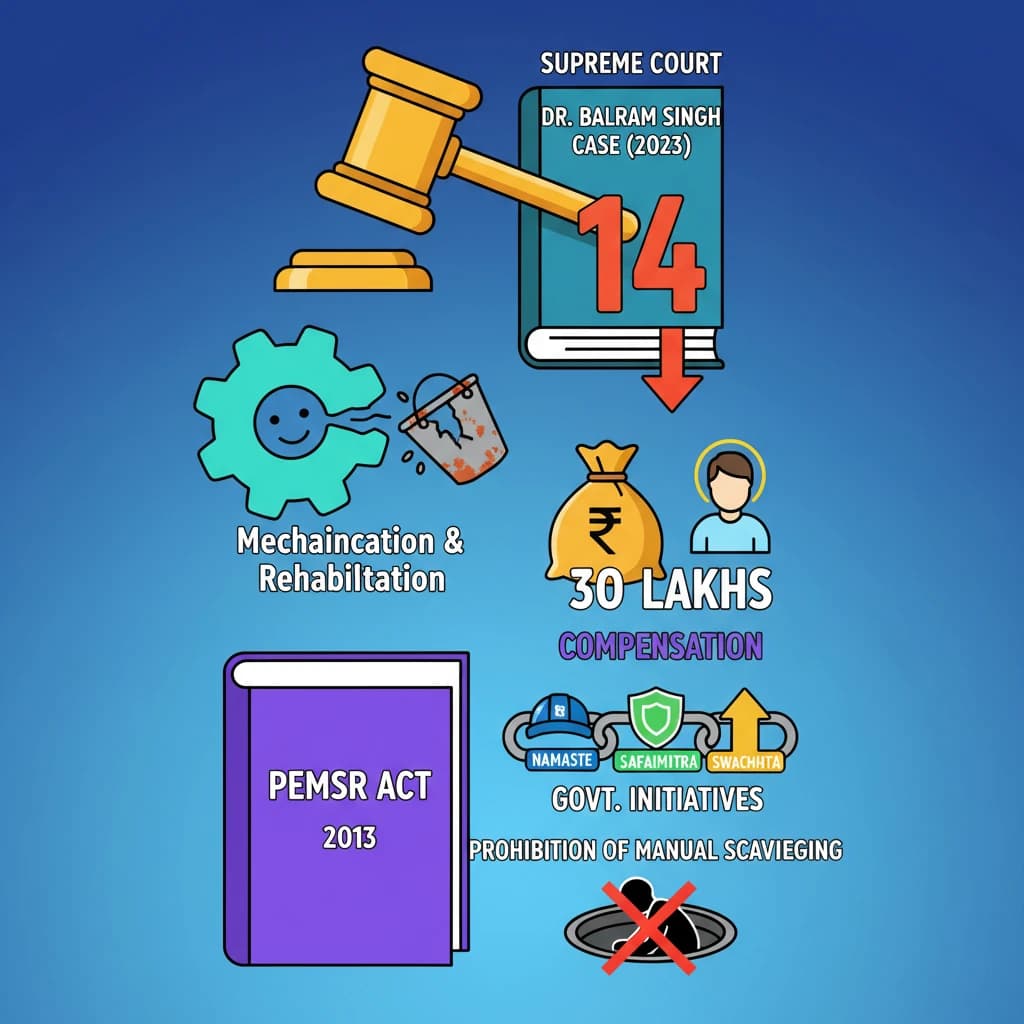
What is the Supreme Court Guideline on Manual Scavenging? - UPSC Social Issues
What is What is the Supreme Court Guideline on Manual Scavenging? in UPSC Social Issues?
What is the Supreme Court Guideline on Manual Scavenging? is a key topic under Social Issues for UPSC Civil Services Examination. Key points include: Supreme Court's Dr. Balram Singh Case (2023) issued 14 directions for complete eradication of manual scavenging.. Key directives include phased elimination of manual sewer cleaning, comprehensive rehabilitation, and significant compensation (₹30L for death).. Government initiatives like NAMASTE, Safaimitra Suraksha Challenge, and Swachhta Udyami Yojana aim for mechanisation and rehabilitation.. Understanding this topic is essential for both UPSC Prelims and Mains preparation.
Why is What is the Supreme Court Guideline on Manual Scavenging? important for UPSC exam?
What is the Supreme Court Guideline on Manual Scavenging? is a Medium-level topic in UPSC Social Issues. It is tested in both Prelims (factual MCQs) and Mains (analytical answer writing). Previous year UPSC questions have frequently covered aspects of What is the Supreme Court Guideline on Manual Scavenging?, making it essential for comprehensive IAS preparation.
How to prepare What is the Supreme Court Guideline on Manual Scavenging? for UPSC?
To prepare What is the Supreme Court Guideline on Manual Scavenging? for UPSC: (1) Study the comprehensive notes covering all key concepts on Vaidra. (2) Practice previous year questions on this topic. (3) Connect it with current affairs using daily updates. (4) Revise using key takeaways and mind maps available for Social Issues. (5) Write practice answers linking What is the Supreme Court Guideline on Manual Scavenging? to related GS Paper topics.
Key takeaways of What is the Supreme Court Guideline on Manual Scavenging? for UPSC
- Supreme Court's Dr. Balram Singh Case (2023) issued 14 directions for complete eradication of manual scavenging.
- Key directives include phased elimination of manual sewer cleaning, comprehensive rehabilitation, and significant compensation (₹30L for death).
- Government initiatives like NAMASTE, Safaimitra Suraksha Challenge, and Swachhta Udyami Yojana aim for mechanisation and rehabilitation.
- The Prohibition of Employment as Manual Scavengers and their Rehabilitation Act, 2013 (PEMSR Act) is the primary legislation.
- Technological solutions like the Bandicoot Robot are crucial for replacing human intervention in hazardous sanitation tasks.
- The issue highlights persistent social injustice, requiring strong political will, effective implementation, and societal change.
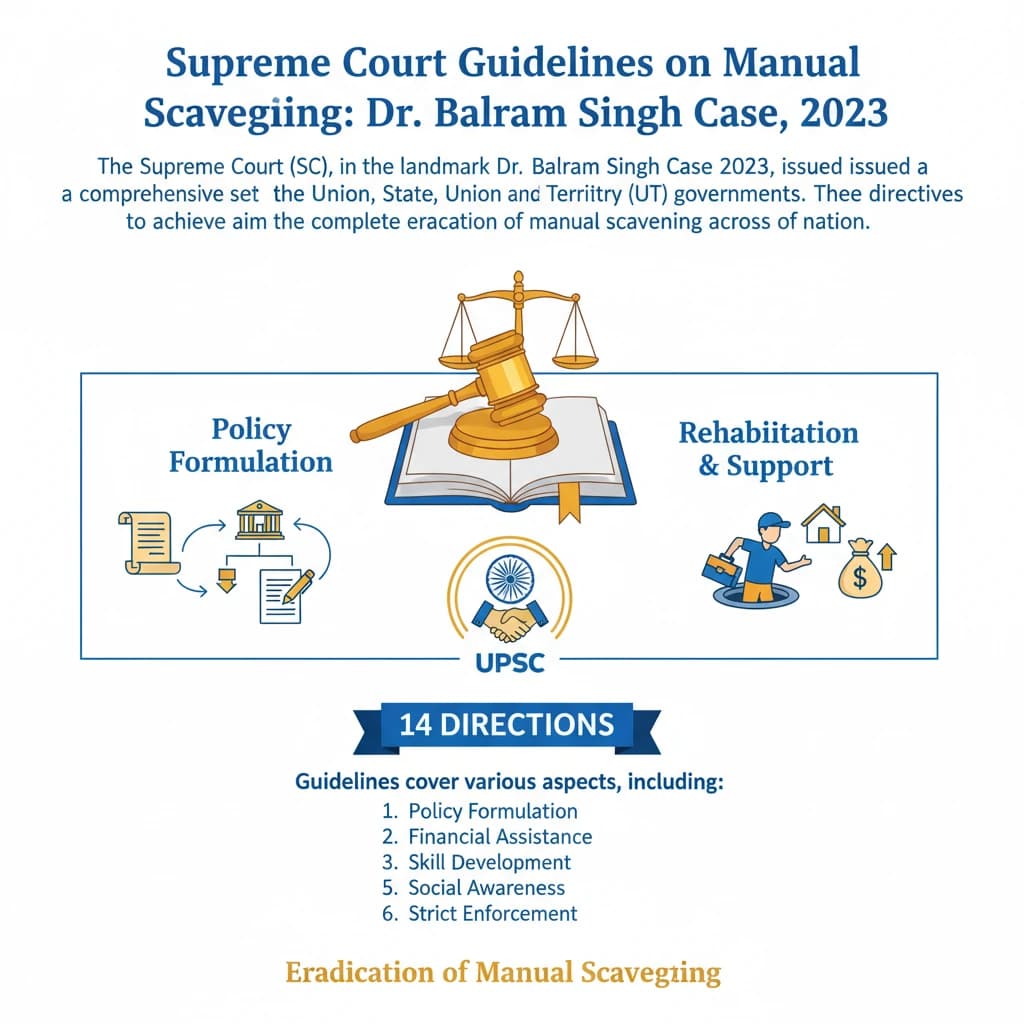
What is the Supreme Court Guideline on Manual Scavenging?
📖 Introduction
💡 Key Takeaways
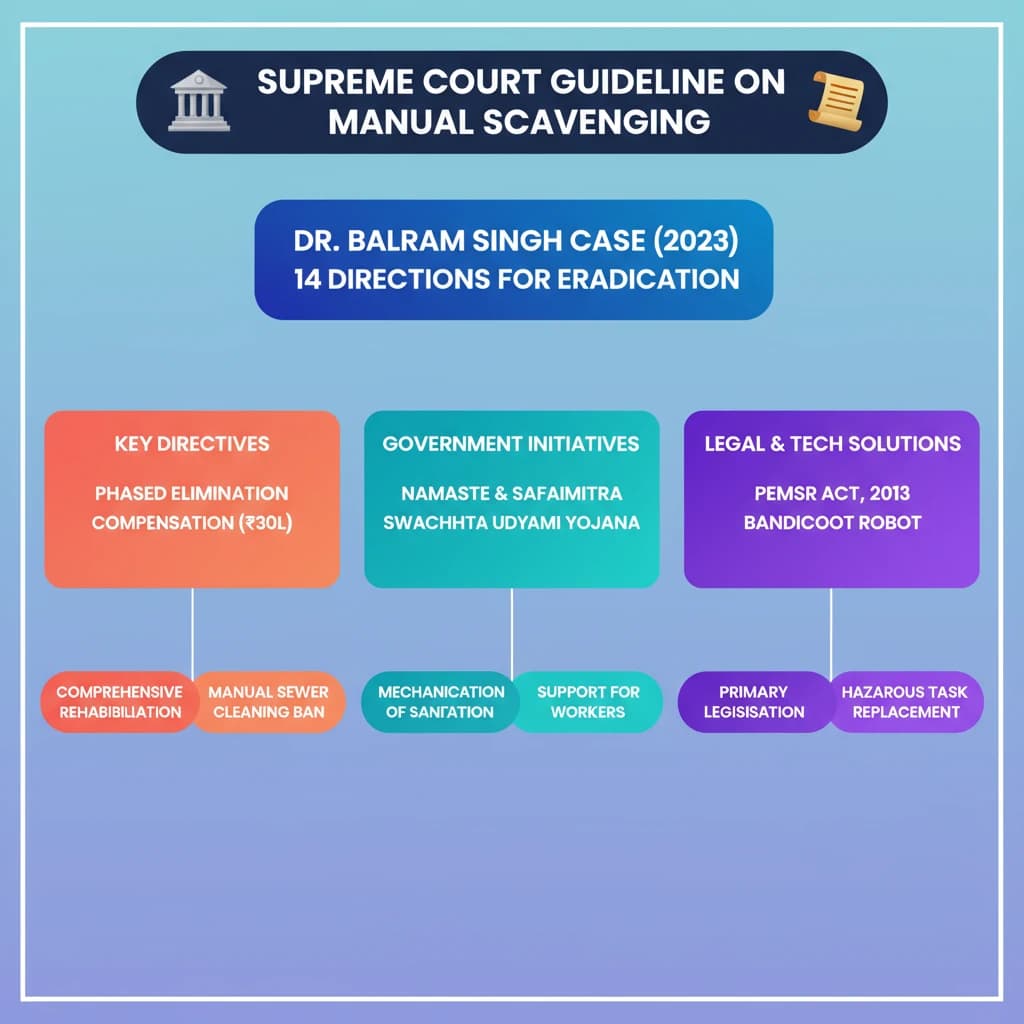
- •Supreme Court's Dr. Balram Singh Case (2023) issued 14 directions for complete eradication of manual scavenging.
- •Key directives include phased elimination of manual sewer cleaning, comprehensive rehabilitation, and significant compensation (₹30L for death).
- •Government initiatives like NAMASTE, Safaimitra Suraksha Challenge, and Swachhta Udyami Yojana aim for mechanisation and rehabilitation.
- •The Prohibition of Employment as Manual Scavengers and their Rehabilitation Act, 2013 (PEMSR Act) is the primary legislation.
- •Technological solutions like the Bandicoot Robot are crucial for replacing human intervention in hazardous sanitation tasks.
- •The issue highlights persistent social injustice, requiring strong political will, effective implementation, and societal change.
🧠 Memory Techniques