Loading page, please wait…
Vaidra Logo
Vaidra

Top 4 items + smart groups

UPSC GPT
New
Current Affairs
Daily Solutions
Daily Puzzle
Mains Evaluator

Version 2.0.0 • Built with ❤️ for UPSC aspirants

Loading...
Loading...
Loading...
Loading...
Loading...
Loading...
Loading...
Loading...
Loading...
Loading...
Loading...
Loading...
Loading...
Back
All Subjects

Topics

0 topics • 0 completed

Loading topics...
Loading...
Loading...
Loading...
Loading...
Loading...
Overall Progress0%

Surrogacy Arrangements - UPSC Social Issues

What is Surrogacy Arrangements in UPSC Social Issues?

Surrogacy Arrangements is a key topic under Social Issues for UPSC Civil Services Examination. Key points include: Surrogacy involves a woman carrying a pregnancy for intended parents.. Altruistic surrogacy reimburses only medical/related expenses; no direct payment for carrying the child.. Commercial surrogacy involves financial compensation beyond expenses for the surrogate mother.. Understanding this topic is essential for both UPSC Prelims and Mains preparation.

Why is Surrogacy Arrangements important for UPSC exam?

Surrogacy Arrangements is a Medium-level topic in UPSC Social Issues. It is tested in both Prelims (factual MCQs) and Mains (analytical answer writing). Previous year UPSC questions have frequently covered aspects of Surrogacy Arrangements, making it essential for comprehensive IAS preparation.

How to prepare Surrogacy Arrangements for UPSC?

To prepare Surrogacy Arrangements for UPSC: (1) Study the comprehensive notes covering all key concepts on Vaidra. (2) Practice previous year questions on this topic. (3) Connect it with current affairs using daily updates. (4) Revise using key takeaways and mind maps available for Social Issues. (5) Write practice answers linking Surrogacy Arrangements to related GS Paper topics.

Key takeaways of Surrogacy Arrangements for UPSC

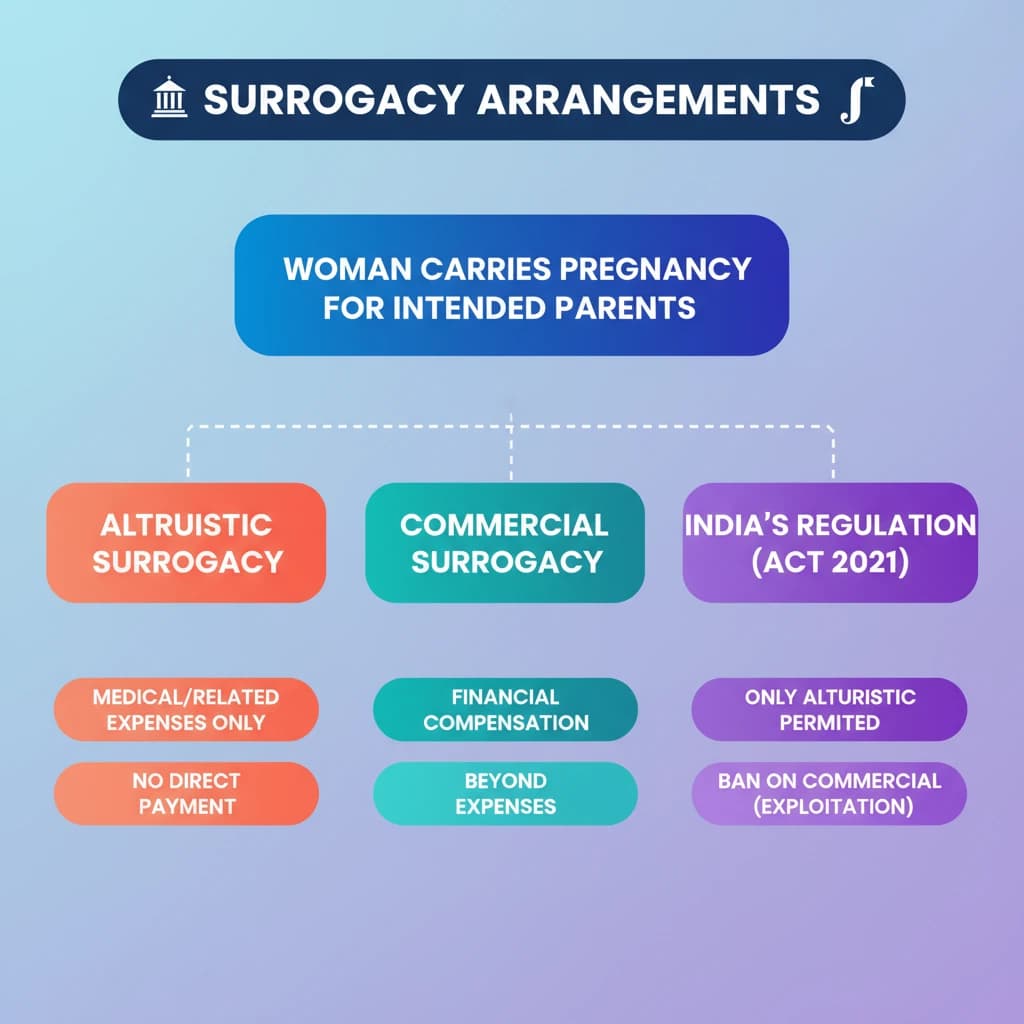
  • Surrogacy involves a woman carrying a pregnancy for intended parents.
  • Altruistic surrogacy reimburses only medical/related expenses; no direct payment for carrying the child.
  • Commercial surrogacy involves financial compensation beyond expenses for the surrogate mother.
  • India's Surrogacy (Regulation) Act, 2021, permits only altruistic surrogacy.
  • The ban on commercial surrogacy aims to prevent exploitation of surrogate mothers.
  • Ethical and social implications are central to understanding surrogacy arrangements.
Surrogacy Arrangements

Surrogacy Arrangements

Medium⏱️ 5 min read✓ 95% Verified
social issues

📖 Introduction

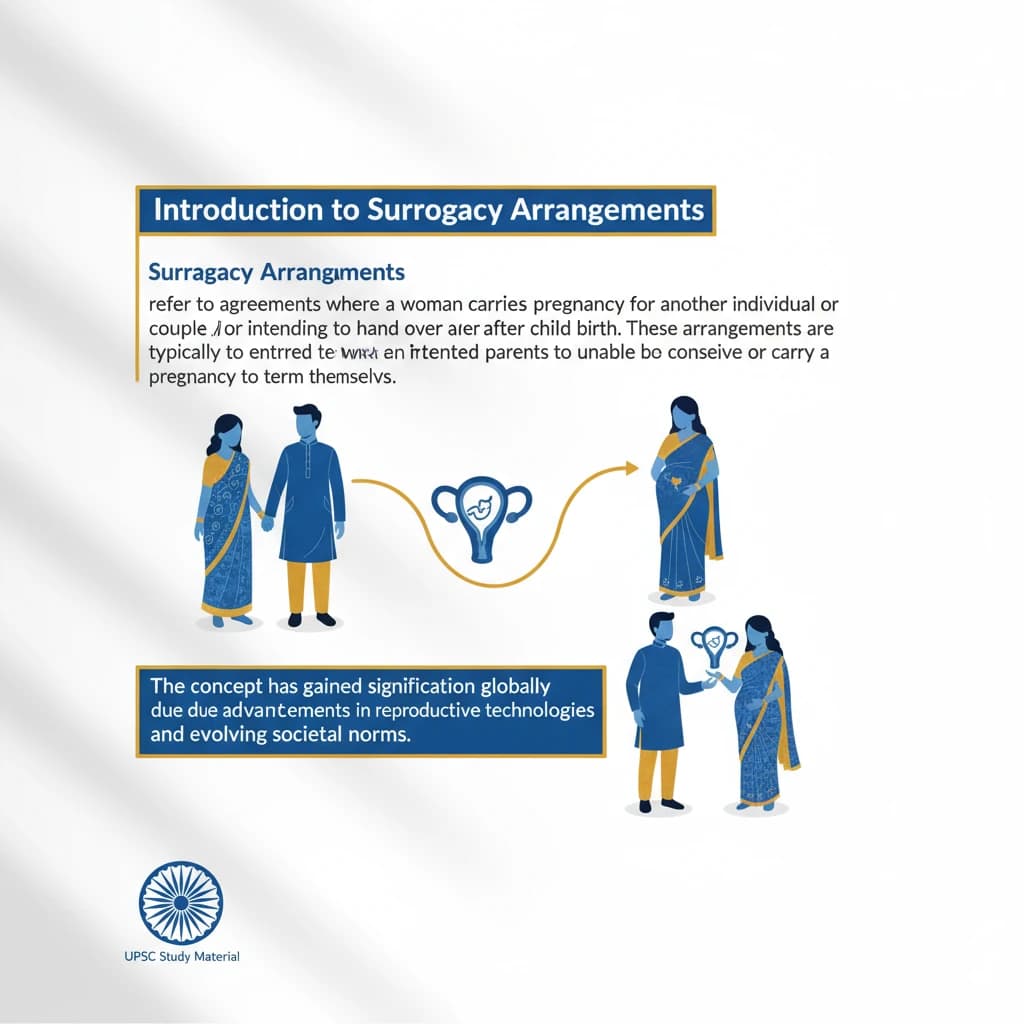
<h4>Introduction to Surrogacy Arrangements</h4><p><strong>Surrogacy arrangements</strong> refer to agreements where a woman carries a pregnancy for another individual or couple, intending to hand over the child after birth. These arrangements are typically entered into when the intended parents are unable to conceive or carry a pregnancy to term themselves.</p><p>The concept has gained significant attention globally due to advancements in reproductive technologies and evolving societal norms.</p><div class='key-point-box'><p>Understanding the distinction between different types of surrogacy is crucial for comprehending the legal and ethical landscape surrounding assisted reproductive technologies.</p></div><h4>Altruistic Surrogacy</h4><p><strong>Altruistic surrogacy</strong> is a type of surrogacy arrangement where the <strong>surrogate mother</strong> does not receive any financial compensation beyond the reimbursement for her medical expenses and other pregnancy-related costs.</p><p>The primary motivation for a surrogate in an altruistic arrangement is typically to help another individual or couple fulfill their dream of having a child. It is driven by a sense of goodwill and compassion.</p><div class='info-box'><p><strong>Key Characteristics of Altruistic Surrogacy:</strong><ul><li><strong>No financial compensation</strong> for carrying the pregnancy.</li><li>Only <strong>reimbursement for medical expenses</strong> and related costs.</li><li>Motivation is primarily <strong>humanitarian</strong> or familial.</li></ul></p></div><h4>Commercial Surrogacy</h4><p><strong>Commercial surrogacy</strong> involves a contractual agreement where the <strong>surrogate mother</strong> receives financial compensation that goes beyond just the reimbursement for medical expenses and other costs associated with the pregnancy.</p><p>This compensation is often a significant sum, agreed upon in advance, reflecting the service provided by the surrogate.</p><div class='info-box'><p><strong>Key Characteristics of Commercial Surrogacy:</strong><ul><li><strong>Financial compensation</strong> is provided to the surrogate.</li><li>Compensation covers <strong>more than just medical and related expenses</strong>.</li><li>The amount may vary based on market rates and specific contractual terms.</li></ul></p></div><div class='exam-tip-box'><p>For UPSC, it's vital to grasp the <strong>ethical dilemmas</strong> and <strong>socio-economic implications</strong> associated with both altruistic and commercial surrogacy, especially in the Indian context. The distinction forms the basis of recent legislative changes.</p></div>
Concept Diagram

💡 Key Takeaways

  • •Surrogacy involves a woman carrying a pregnancy for intended parents.
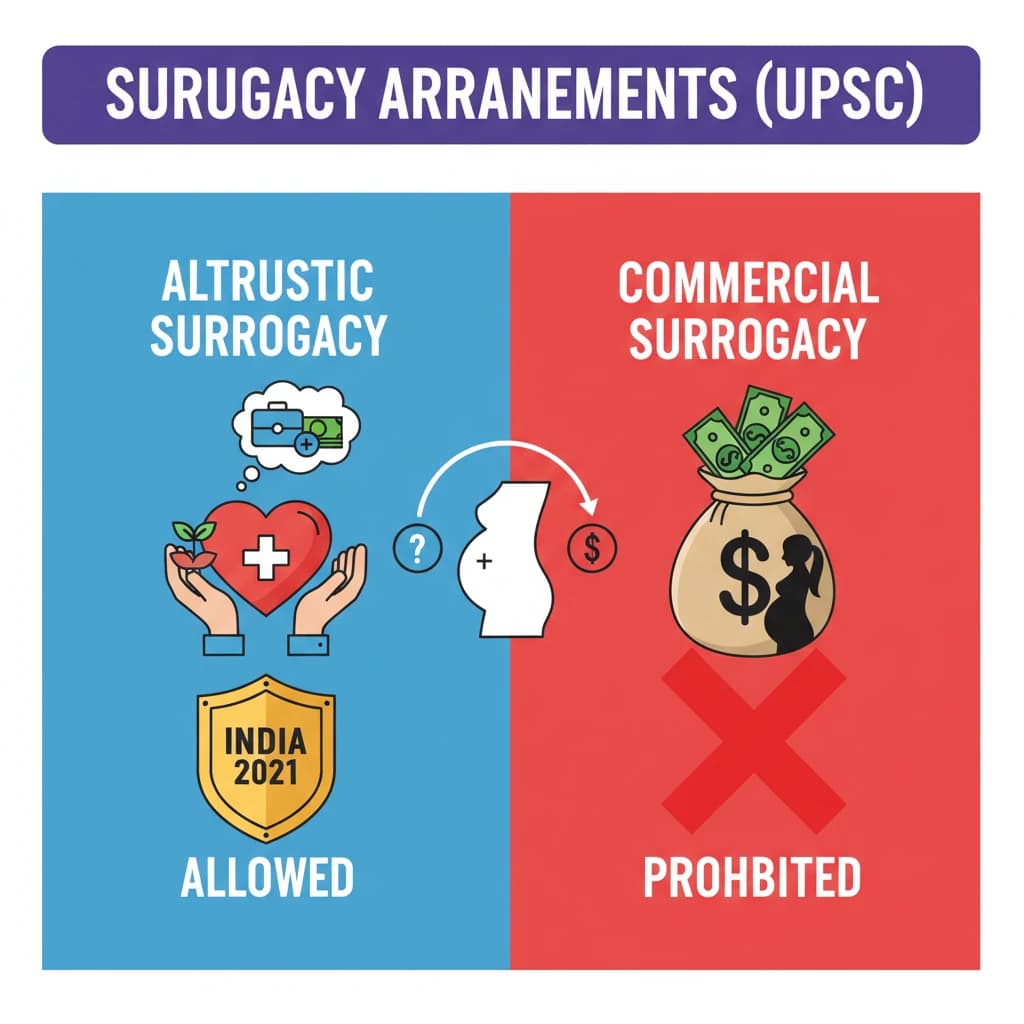
  • •Altruistic surrogacy reimburses only medical/related expenses; no direct payment for carrying the child.
  • •Commercial surrogacy involves financial compensation beyond expenses for the surrogate mother.
  • •India's Surrogacy (Regulation) Act, 2021, permits only altruistic surrogacy.
  • •The ban on commercial surrogacy aims to prevent exploitation of surrogate mothers.
  • •Ethical and social implications are central to understanding surrogacy arrangements.

🧠 Memory Techniques
Memory Aid
95% Verified Content

📚 Reference Sources

•Surrogacy (Regulation) Act, 2021 (for current relevance and historical context framing)

Related Topics

Loading related topics...
Explore:Social Issues Topics·All Subjects·Daily Current Affairs·Editorial Analysis·Previous Year Questions·UPSC GPT
Surrogacy Arrangements - UPSC Social Issues