Loading page, please wait…
Vaidra Logo
Vaidra

Top 4 items + smart groups

UPSC GPT
New
Current Affairs
Daily Solutions
Daily Puzzle
Mains Evaluator

Version 2.0.0 • Built with ❤️ for UPSC aspirants

Loading...
Loading...
Loading...
Loading...
Loading...
Loading...
Loading...
Loading...
Loading...
Loading...
Loading...
Loading...
Loading...
Back
All Subjects

Topics

0 topics • 0 completed

Loading topics...
Loading...
Loading...
Loading...
Loading...
Loading...
Overall Progress0%
What are the Related Iniatives Taken in India? - UPSC Social Issues

What are the Related Iniatives Taken in India? - UPSC Social Issues

What is What are the Related Iniatives Taken in India? in UPSC Social Issues?

What are the Related Iniatives Taken in India? is a key topic under Social Issues for UPSC Civil Services Examination. Key points include: India has a comprehensive suite of initiatives addressing food security, nutrition, and agricultural welfare.. The National Food Security Act (NFSA) 2013 is a landmark rights-based legislation for subsidized food grains.. Mission Poshan 2.0 consolidates nutrition programs, while ICDS and Mid-Day Meal Scheme focus on child development.. Understanding this topic is essential for both UPSC Prelims and Mains preparation.

Why is What are the Related Iniatives Taken in India? important for UPSC exam?

What are the Related Iniatives Taken in India? is a Medium-level topic in UPSC Social Issues. It is tested in both Prelims (factual MCQs) and Mains (analytical answer writing). Previous year UPSC questions have frequently covered aspects of What are the Related Iniatives Taken in India?, making it essential for comprehensive IAS preparation.

How to prepare What are the Related Iniatives Taken in India? for UPSC?

To prepare What are the Related Iniatives Taken in India? for UPSC: (1) Study the comprehensive notes covering all key concepts on Vaidra. (2) Practice previous year questions on this topic. (3) Connect it with current affairs using daily updates. (4) Revise using key takeaways and mind maps available for Social Issues. (5) Write practice answers linking What are the Related Iniatives Taken in India? to related GS Paper topics.

Key takeaways of What are the Related Iniatives Taken in India? for UPSC

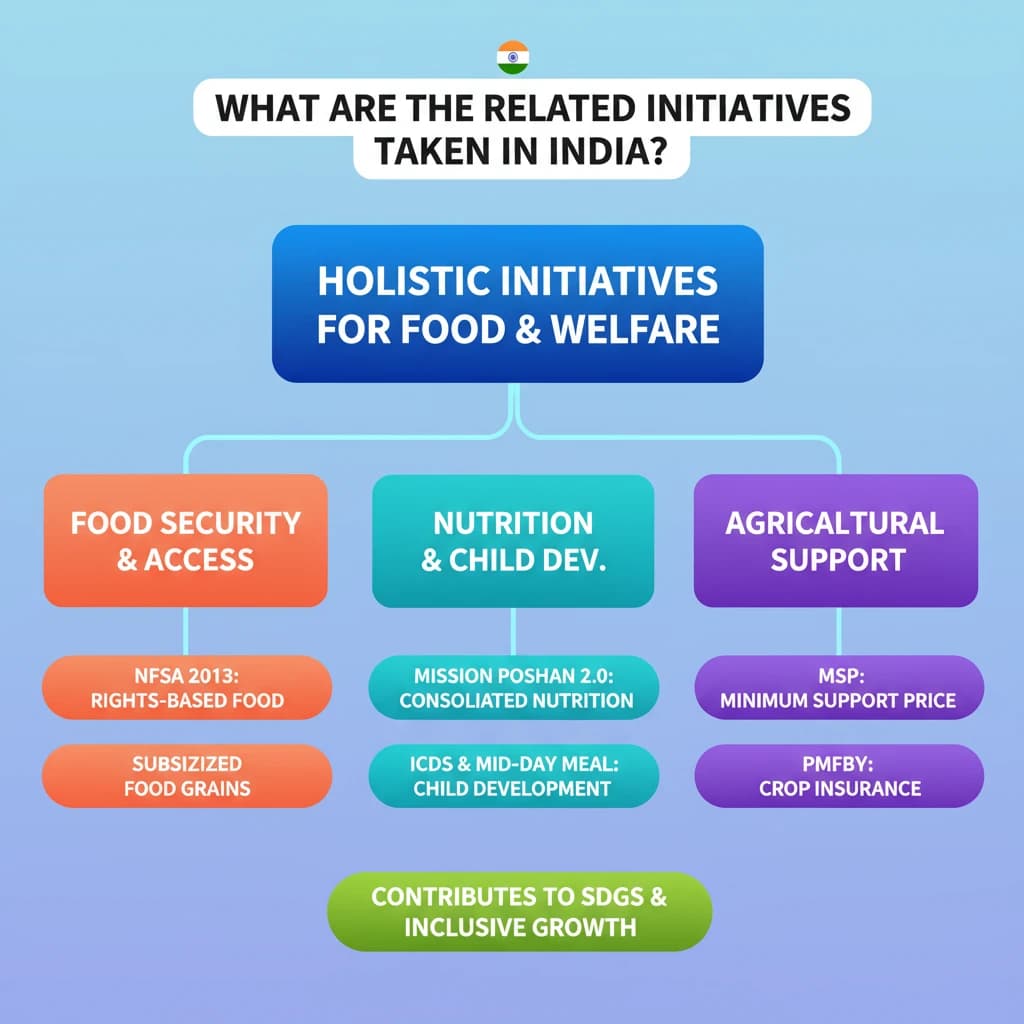
  • India has a comprehensive suite of initiatives addressing food security, nutrition, and agricultural welfare.
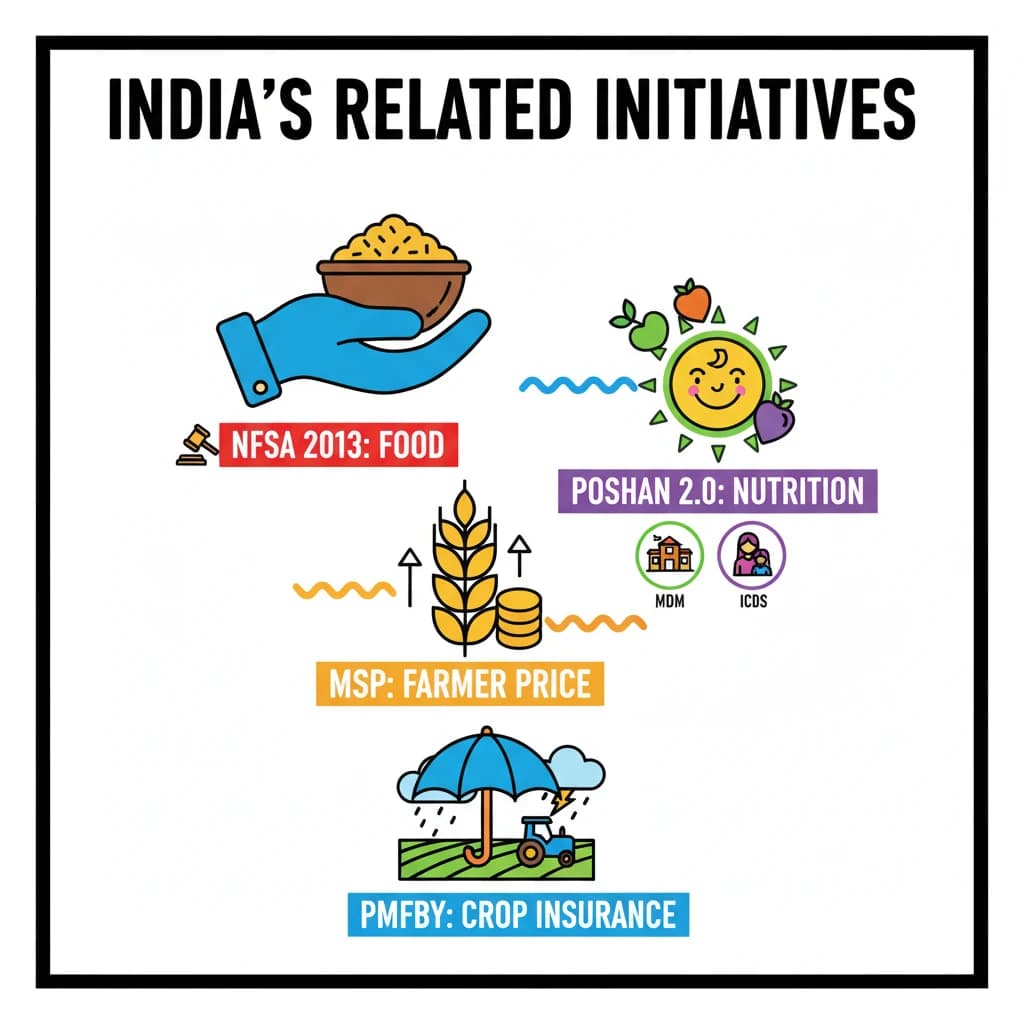
  • The National Food Security Act (NFSA) 2013 is a landmark rights-based legislation for subsidized food grains.
  • Mission Poshan 2.0 consolidates nutrition programs, while ICDS and Mid-Day Meal Scheme focus on child development.
  • Agricultural support includes Minimum Support Prices (MSP) and Pradhan Mantri Fasal Bima Yojana (PMFBY) for farmer protection.
  • These initiatives are crucial for achieving Sustainable Development Goals (SDGs) and fostering inclusive growth.
  • The approach has evolved from welfare to rights-based, with a focus on targeted, multi-sectoral interventions.
What are the Related Iniatives Taken in India?

What are the Related Iniatives Taken in India?

Medium⏱️ 10 min read✓ 95% Verified
social issues

📖 Introduction

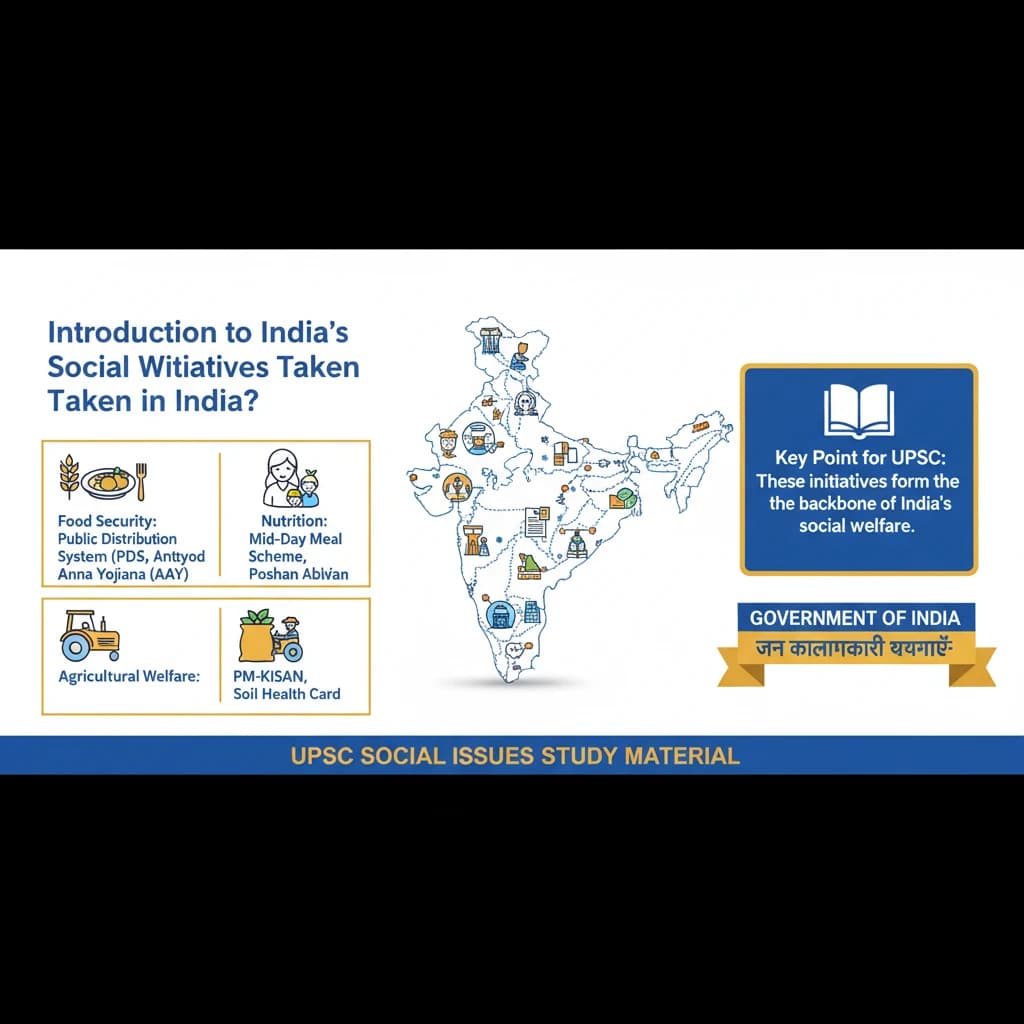
<h4>Introduction to India's Social Welfare Initiatives</h4><p>India has launched numerous initiatives to address critical social issues, particularly focusing on <strong>food security</strong>, <strong>nutrition</strong>, and <strong>agricultural welfare</strong>. These programs aim to uplift vulnerable populations and ensure equitable access to essential resources.</p><div class='key-point-box'><p>Understanding these initiatives is crucial for UPSC aspirants, as they form the backbone of India's social welfare framework and are frequently tested in <strong>GS Paper 2</strong> and <strong>GS Paper 3</strong>.</p></div><h4>Food Security and Nutrition Initiatives</h4><p>The Indian government has implemented a robust set of programs to combat hunger and malnutrition, especially among women and children. These initiatives reflect a commitment to a rights-based approach to food and health.</p><ul><li><strong>National Food Security Act (NFSA) 2013</strong>: This landmark act legally entitles up to 75% of the rural population and 50% of the urban population to receive subsidized food grains. It is a cornerstone of India's food security policy.</li><li><strong>Mission Poshan 2.0</strong>: This scheme consolidates and strengthens the supplementary nutrition programs, focusing on holistic development and well-being. It integrates the <strong>Integrated Child Development Services (ICDS)</strong>, <strong>Poshan Abhiyaan</strong>, and <strong>Scheme for Adolescent Girls</strong>.</li><li><strong>Integrated Child Development Services (ICDS) Scheme</strong>: Launched in <strong>1975</strong>, ICDS provides a package of services including supplementary nutrition, pre-school non-formal education, nutrition and health education, immunization, health check-up, and referral services.</li><li><strong>Pradhan Mantri Matru Vandana Yojana (PMMVY)</strong>: A maternity benefit program providing financial support to pregnant women and lactating mothers for wage loss compensation and improved health-seeking behavior.</li><li><strong>Mid-Day Meal Scheme (PM-POSHAN)</strong>: A school meal program designed to better the nutritional standing of school-age children nationwide, while also encouraging attendance and enrollment.</li><li><strong>Scheme for Adolescent Girls (SAG)</strong>: Aims to empower adolescent girls (11-14 years) by improving their nutrition and health status, enhancing life skills, and mainstreaming out-of-school girls back into formal schooling.</li><li><strong>Mother’s Absolute Affection (MAA)</strong>: A nationwide program to promote breastfeeding, emphasizing its critical role in infant health and development.</li><li><strong>Poshan Vatikas</strong>: Also known as Nutri-gardens, these promote the cultivation of fruits and vegetables in households or community lands to address micronutrient deficiencies.</li></ul><h4>Agricultural Support Policies</h4><p>Beyond direct food distribution, the government also supports the agricultural sector to ensure food production and farmer welfare, indirectly contributing to food security.</p><ul><li><strong>Minimum Support Prices (MSP) for Agricultural products</strong>: A policy where the government announces prices for certain crops to protect farmers from excessive fall in prices during bumper production years.</li><li><strong>Pradhan Mantri Fasal Bima Yojana (PMFBY)</strong>: A crop insurance scheme that provides financial support to farmers suffering crop loss/damage arising out of unforeseen events.</li><li><strong>National Horticulture Mission (NHM)</strong>: A scheme for the holistic development of the horticulture sector, promoting growth in fruits, vegetables, flowers, spices, and other crops.</li></ul>
Concept Diagram

💡 Key Takeaways

  • •India has a comprehensive suite of initiatives addressing food security, nutrition, and agricultural welfare.
  • •The National Food Security Act (NFSA) 2013 is a landmark rights-based legislation for subsidized food grains.
  • •Mission Poshan 2.0 consolidates nutrition programs, while ICDS and Mid-Day Meal Scheme focus on child development.
  • •Agricultural support includes Minimum Support Prices (MSP) and Pradhan Mantri Fasal Bima Yojana (PMFBY) for farmer protection.
  • •These initiatives are crucial for achieving Sustainable Development Goals (SDGs) and fostering inclusive growth.
  • •The approach has evolved from welfare to rights-based, with a focus on targeted, multi-sectoral interventions.

🧠 Memory Techniques
Memory Aid
95% Verified Content

📚 Reference Sources

•Ministry of Women and Child Development (WCD) - Official Website
•Ministry of Agriculture & Farmers Welfare - Official Website
•Ministry of Consumer Affairs, Food & Public Distribution - Official Website
•Press Information Bureau (PIB) - Government of India

Related Topics

Loading related topics...
Explore:Social Issues Topics·All Subjects·Daily Current Affairs·Editorial Analysis·Previous Year Questions·UPSC GPT