Loading page, please wait…
Vaidra Logo
Vaidra

Top 4 items + smart groups

UPSC GPT
New
Current Affairs
Daily Solutions
Daily Puzzle
Mains Evaluator

Version 2.0.0 • Built with ❤️ for UPSC aspirants

Loading...
Loading...
Loading...
Loading...
Loading...
Loading...
Loading...
Loading...
Loading...
Loading...
Loading...
Loading...
Loading...
Back
All Subjects

Topics

0 topics • 0 completed

Loading topics...
Loading...
Loading...
Loading...
Loading...
Loading...
Overall Progress0%

Women Candidates by Political Parties - UPSC Social Issues

What is Women Candidates by Political Parties in UPSC Social Issues?

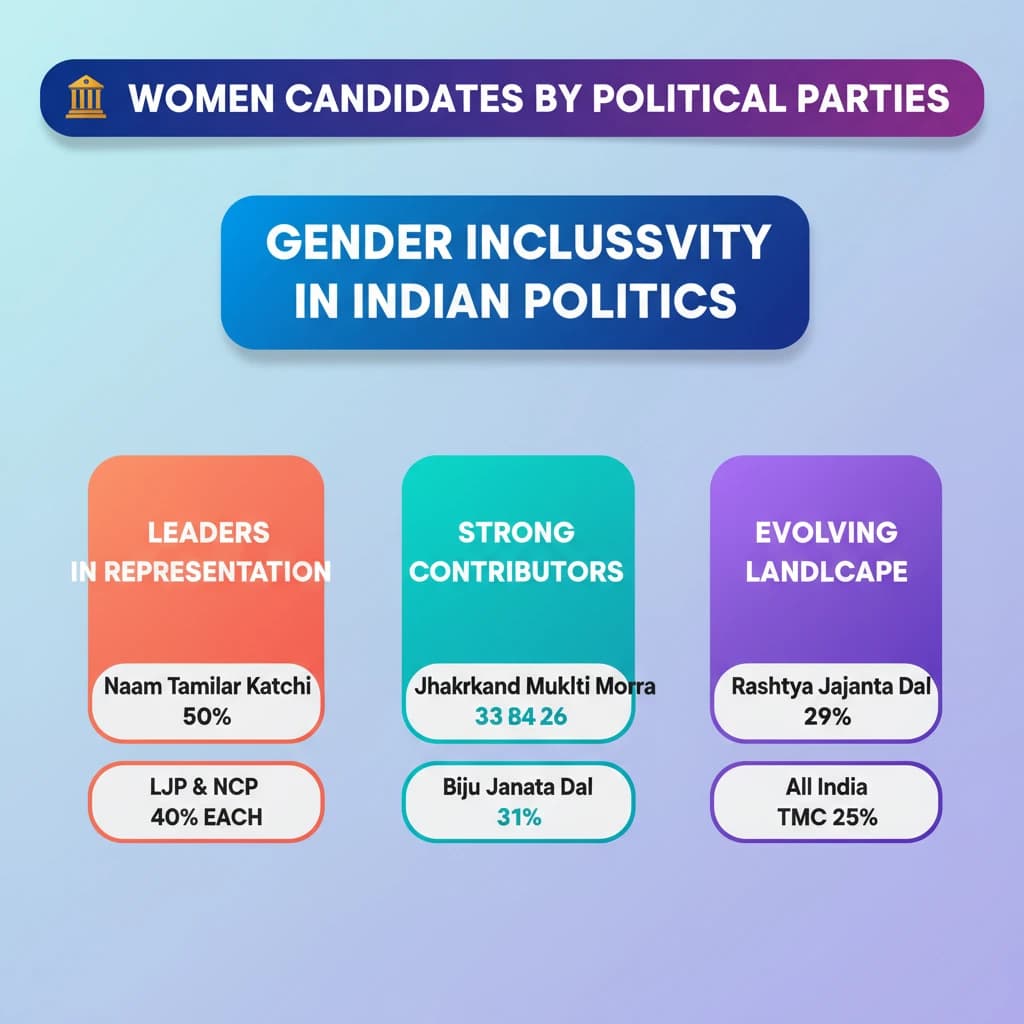
Women Candidates by Political Parties is a key topic under Social Issues for UPSC Civil Services Examination. Key points include: Naam Tamilar Katchi leads with 50% women candidates.. Lok Janshakti Party and Nationalist Congress Party each fielded 40% women.. Jharkhand Mukti Morcha (33%), Biju Janata Dal (31%), and Rashtriya Janata Dal (29%) also show significant representation.. Understanding this topic is essential for both UPSC Prelims and Mains preparation.

Why is Women Candidates by Political Parties important for UPSC exam?

Women Candidates by Political Parties is a Medium-level topic in UPSC Social Issues. It is tested in both Prelims (factual MCQs) and Mains (analytical answer writing). Previous year UPSC questions have frequently covered aspects of Women Candidates by Political Parties, making it essential for comprehensive IAS preparation.

How to prepare Women Candidates by Political Parties for UPSC?

To prepare Women Candidates by Political Parties for UPSC: (1) Study the comprehensive notes covering all key concepts on Vaidra. (2) Practice previous year questions on this topic. (3) Connect it with current affairs using daily updates. (4) Revise using key takeaways and mind maps available for Social Issues. (5) Write practice answers linking Women Candidates by Political Parties to related GS Paper topics.

Key takeaways of Women Candidates by Political Parties for UPSC

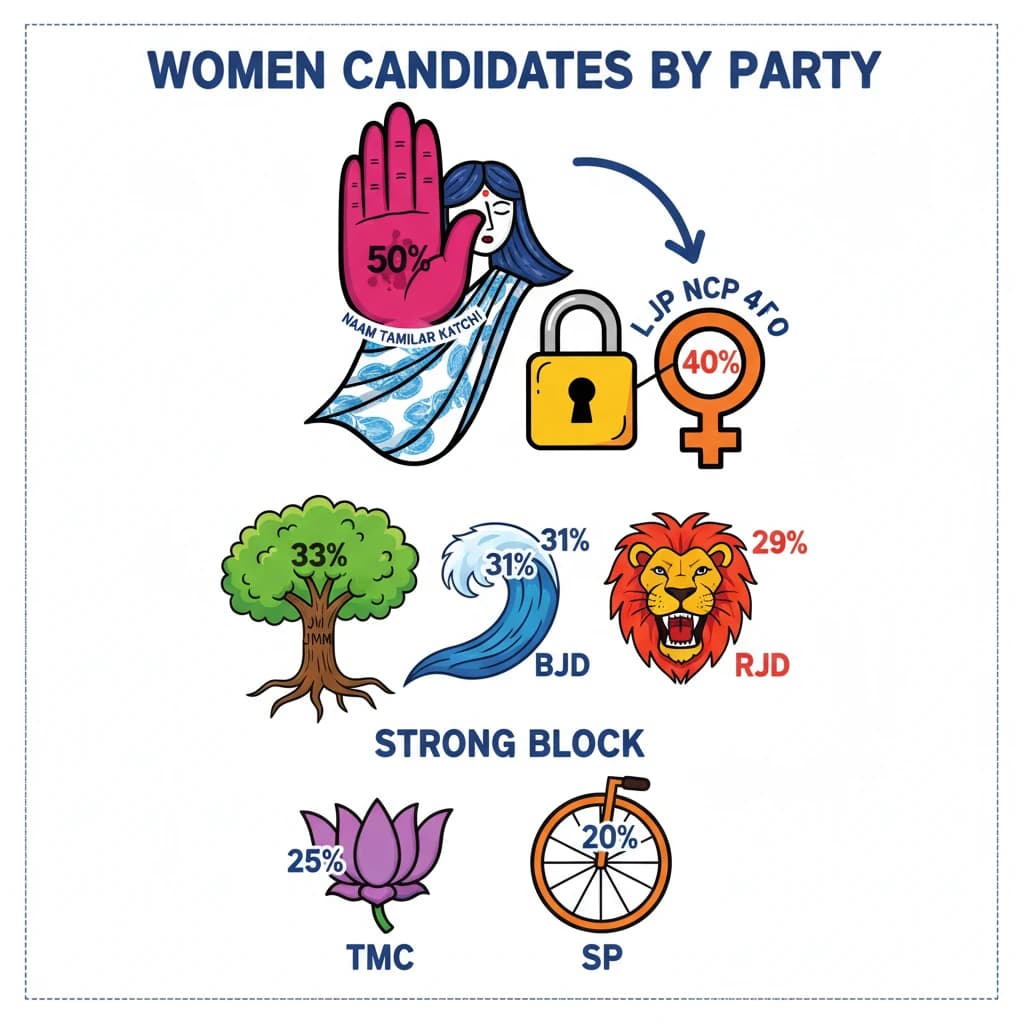
  • Naam Tamilar Katchi leads with 50% women candidates.
  • Lok Janshakti Party and Nationalist Congress Party each fielded 40% women.
  • Jharkhand Mukti Morcha (33%), Biju Janata Dal (31%), and Rashtriya Janata Dal (29%) also show significant representation.
  • All India Trinamool Congress (25%) and Samajwadi Party (20%) contribute to women's candidacies.
  • Women's representation by parties is a key indicator of gender inclusivity in politics.
  • The Women's Reservation Bill (Nari Shakti Vandan Adhiniyam, 2023) aims to increase women's legislative representation in the future.
Women Candidates by Political Parties

Women Candidates by Political Parties

Medium⏱️ 7 min read✓ 95% Verified
social issues

📖 Introduction

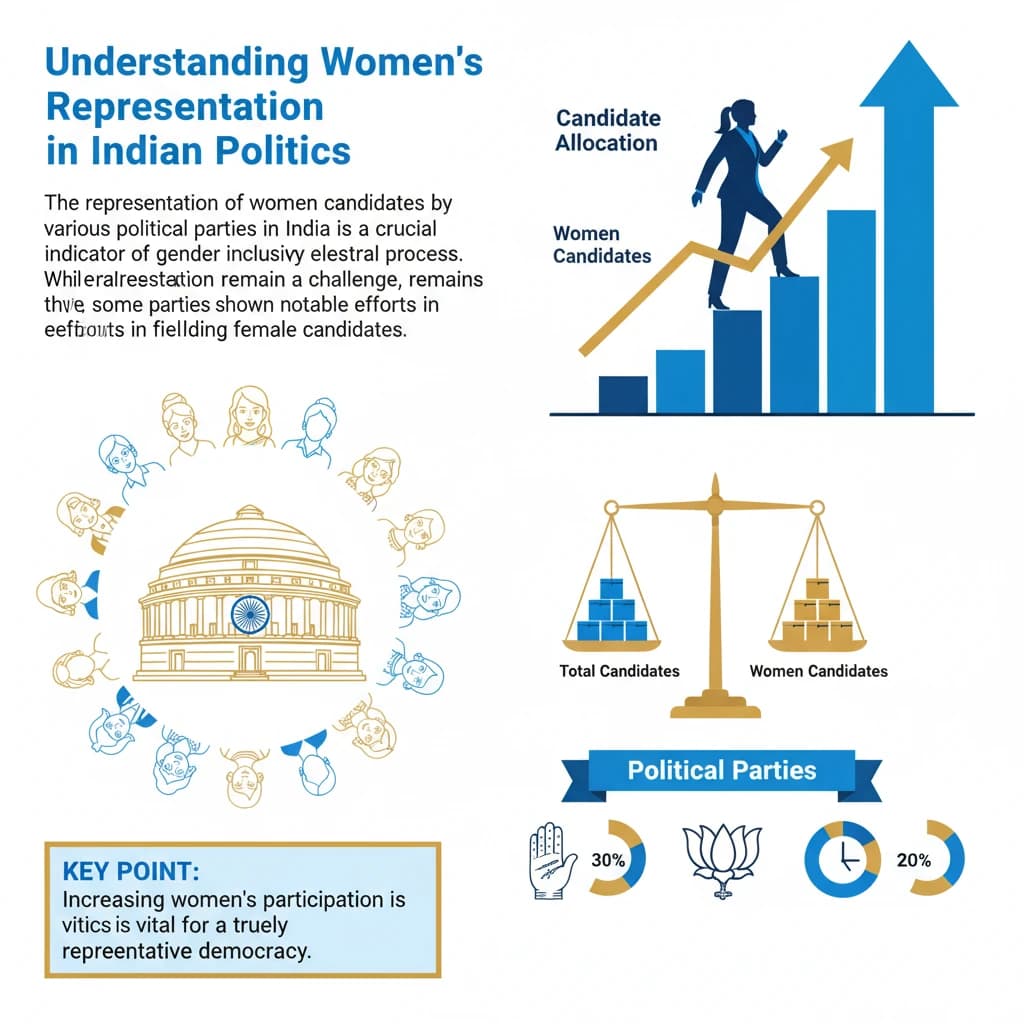
<h4>Understanding Women's Representation in Indian Politics</h4><p>The representation of <strong>women candidates</strong> by various <strong>political parties</strong> in India is a crucial indicator of gender inclusivity in the electoral process. While the overall representation remains a challenge, some parties have shown notable efforts in fielding female candidates.</p><div class='key-point-box'><p>Increasing <strong>women's participation</strong> in politics is vital for a truly representative democracy and for ensuring that diverse perspectives are included in policy-making.</p></div><h4>Leading Parties in Women Candidate Nomination</h4><p>Among the political parties, the <strong>Naam Tamilar Katchi</strong> has demonstrated a significant commitment to gender parity in candidate selection.</p><div class='info-box'><p>The <strong>Naam Tamilar Katchi</strong> nominated <strong>50% women candidates</strong>, setting a high benchmark for other parties.</p></div><p>Following closely, a couple of national parties also showed strong representation for women in their candidate lists.</p><div class='info-box'><p>The <strong>Lok Janshakti Party</strong> and the <strong>Nationalist Congress Party</strong> each fielded <strong>40% women candidates</strong>.</p></div><h4>Mid-Range Representation by Regional Parties</h4><p>Several regional parties also contributed to women's representation, albeit at varying percentages. These efforts highlight a growing awareness of the need for gender balance in political nominations.</p><div class='info-box'><p>The <strong>Jharkhand Mukti Morcha</strong> had <strong>33% female representation</strong> among its candidates.</p><p>The <strong>Biju Janata Dal</strong> nominated <strong>31% women candidates</strong>.</p><p>The <strong>Rashtriya Janata Dal</strong> had <strong>29% female representation</strong>.</p></div><h4>Other Notable Parties</h4><p>Other prominent political parties, including major regional players, also contributed to the pool of women candidates, reflecting a gradual shift in their nomination strategies.</p><div class='info-box'><p>The <strong>All India Trinamool Congress</strong> had <strong>25% women candidates</strong>.</p><p>The <strong>Samajwadi Party</strong> fielded <strong>20% women candidates</strong>.</p></div><div class='exam-tip-box'><p>For <strong>UPSC Mains GS-I (Society)</strong> and <strong>GS-II (Polity)</strong>, understanding these statistics helps in substantiating arguments on <strong>gender equality</strong>, <strong>political empowerment</strong>, and <strong>electoral reforms</strong>. Mentioning specific party examples adds weight to your answers.</p></div>
Concept Diagram

💡 Key Takeaways

  • •Naam Tamilar Katchi leads with 50% women candidates.
  • •Lok Janshakti Party and Nationalist Congress Party each fielded 40% women.
  • •Jharkhand Mukti Morcha (33%), Biju Janata Dal (31%), and Rashtriya Janata Dal (29%) also show significant representation.
  • •All India Trinamool Congress (25%) and Samajwadi Party (20%) contribute to women's candidacies.
  • •Women's representation by parties is a key indicator of gender inclusivity in politics.
  • •The Women's Reservation Bill (Nari Shakti Vandan Adhiniyam, 2023) aims to increase women's legislative representation in the future.

🧠 Memory Techniques
Memory Aid
95% Verified Content

📚 Reference Sources

•Official Election Commission of India reports (for general context on party data trends)
•Parliamentary records on Women's Reservation Bill

Related Topics

Loading related topics...
Explore:Social Issues Topics·All Subjects·Daily Current Affairs·Editorial Analysis·Previous Year Questions·UPSC GPT
Women Candidates by Political Parties - UPSC Social Issues