Women’s Representation in State Legislatures - UPSC Social Issues
What is Women’s Representation in State Legislatures in UPSC Social Issues?
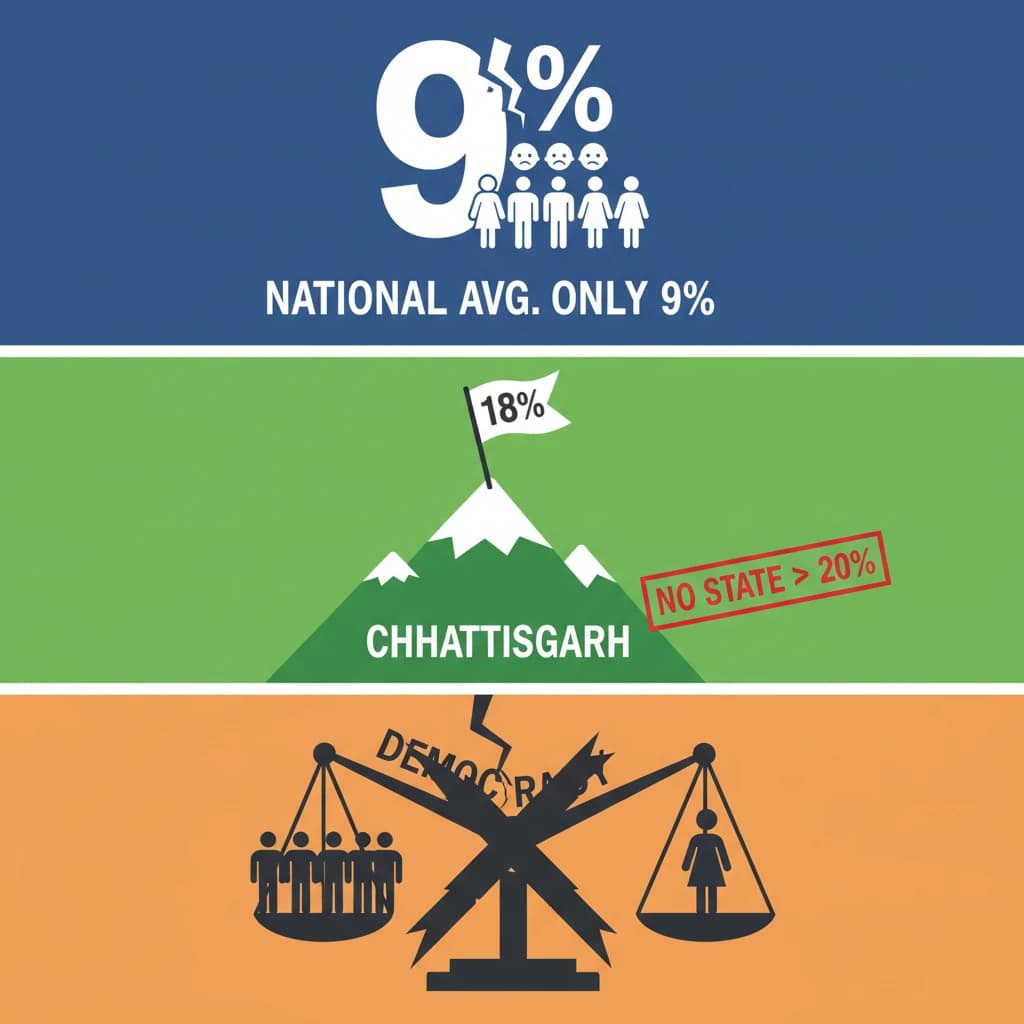
Women’s Representation in State Legislatures is a key topic under Social Issues for UPSC Civil Services Examination. Key points include: National average of women in State Legislative Assemblies is a mere 9%.. No state has more than 20% women legislators; Chhattisgarh leads with 18%.. Low representation signifies a democratic deficit and hinders inclusive governance.. Understanding this topic is essential for both UPSC Prelims and Mains preparation.
Why is Women’s Representation in State Legislatures important for UPSC exam?
Women’s Representation in State Legislatures is a Medium-level topic in UPSC Social Issues. It is tested in both Prelims (factual MCQs) and Mains (analytical answer writing). Previous year UPSC questions have frequently covered aspects of Women’s Representation in State Legislatures, making it essential for comprehensive IAS preparation.
How to prepare Women’s Representation in State Legislatures for UPSC?
To prepare Women’s Representation in State Legislatures for UPSC: (1) Study the comprehensive notes covering all key concepts on Vaidra. (2) Practice previous year questions on this topic. (3) Connect it with current affairs using daily updates. (4) Revise using key takeaways and mind maps available for Social Issues. (5) Write practice answers linking Women’s Representation in State Legislatures to related GS Paper topics.
Key takeaways of Women’s Representation in State Legislatures for UPSC
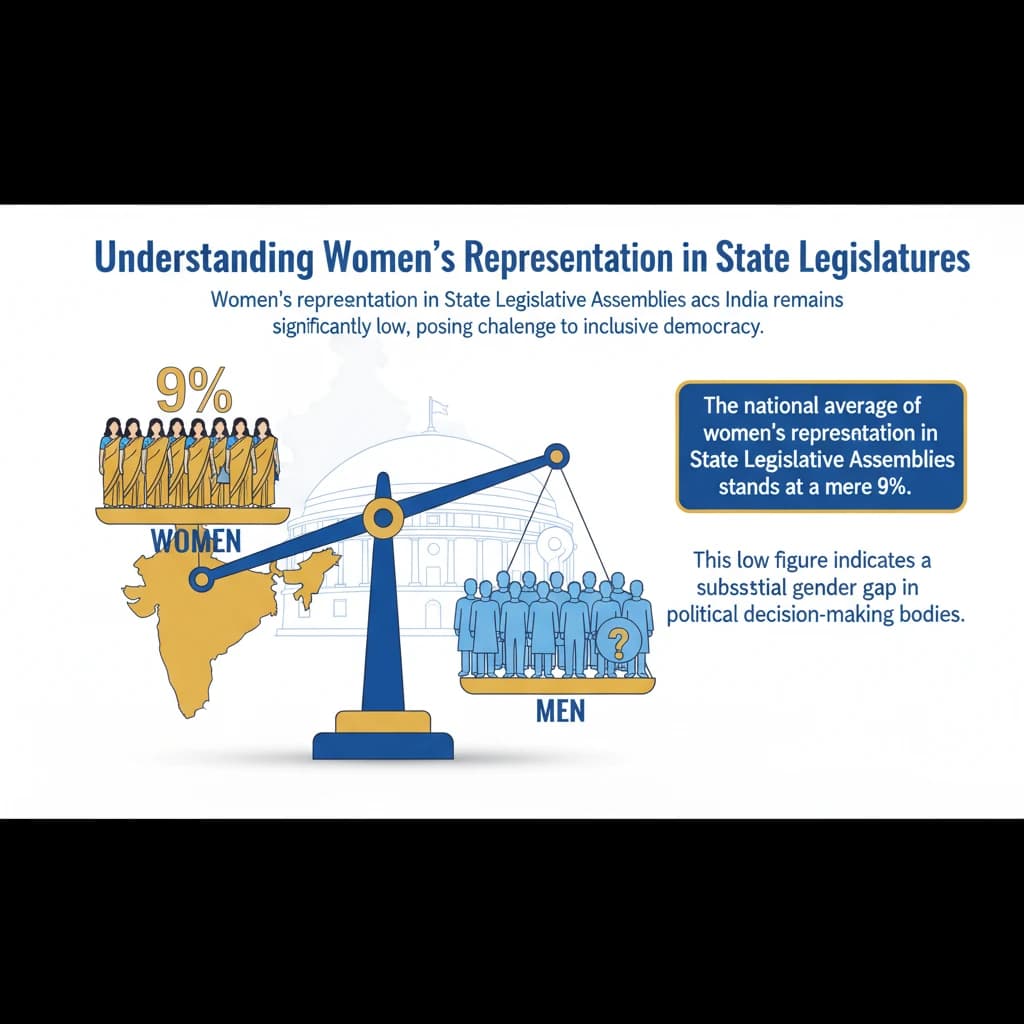
- National average of women in State Legislative Assemblies is a mere 9%.
- No state has more than 20% women legislators; Chhattisgarh leads with 18%.
- Low representation signifies a democratic deficit and hinders inclusive governance.
- The Women's Reservation Bill (Nari Shakti Vandan Adhiniyam, 2023) aims to address this, but implementation is pending.
- Enhanced women's representation is vital for better policy outcomes and achieving gender equality.
Women’s Representation in State Legislatures
📖 Introduction
💡 Key Takeaways
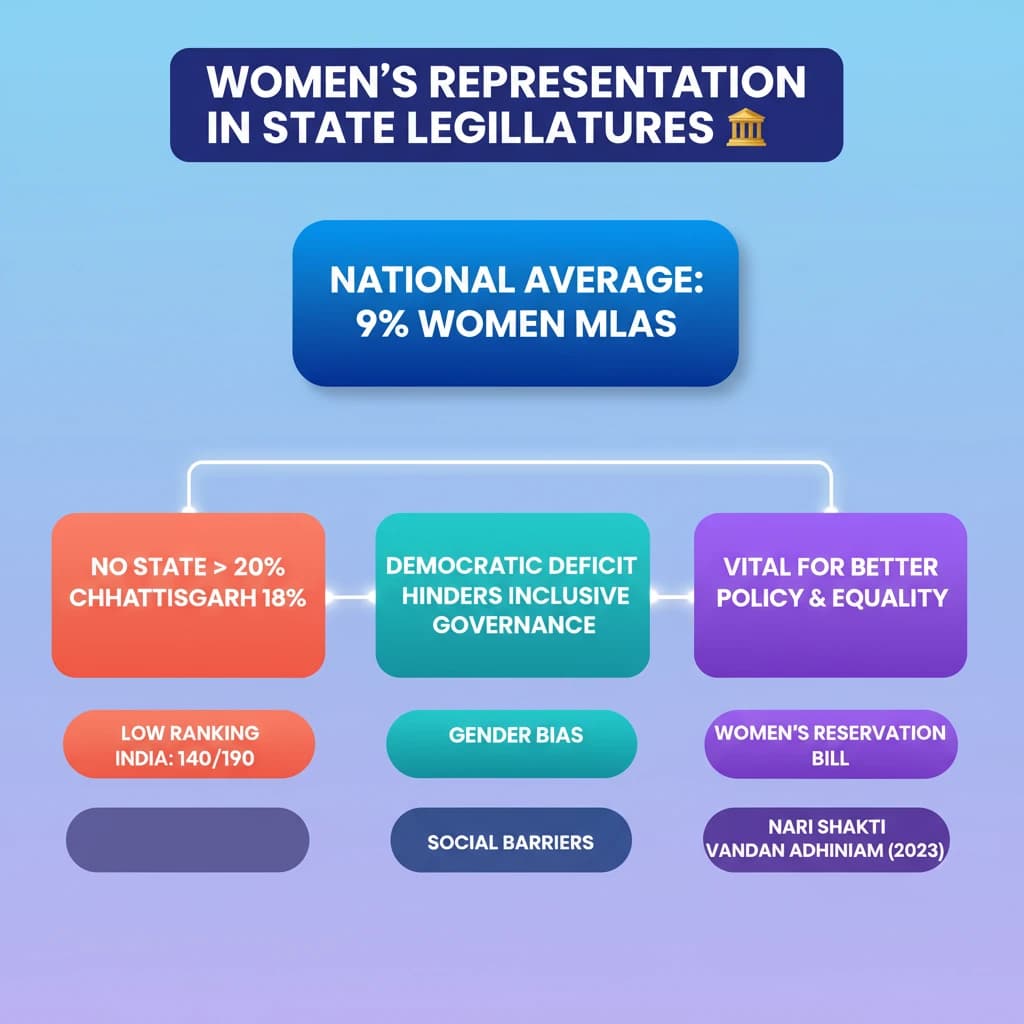
- •National average of women in State Legislative Assemblies is a mere 9%.
- •No state has more than 20% women legislators; Chhattisgarh leads with 18%.
- •Low representation signifies a democratic deficit and hinders inclusive governance.
- •The Women's Reservation Bill (Nari Shakti Vandan Adhiniyam, 2023) aims to address this, but implementation is pending.
- •Enhanced women's representation is vital for better policy outcomes and achieving gender equality.
🧠 Memory Techniques