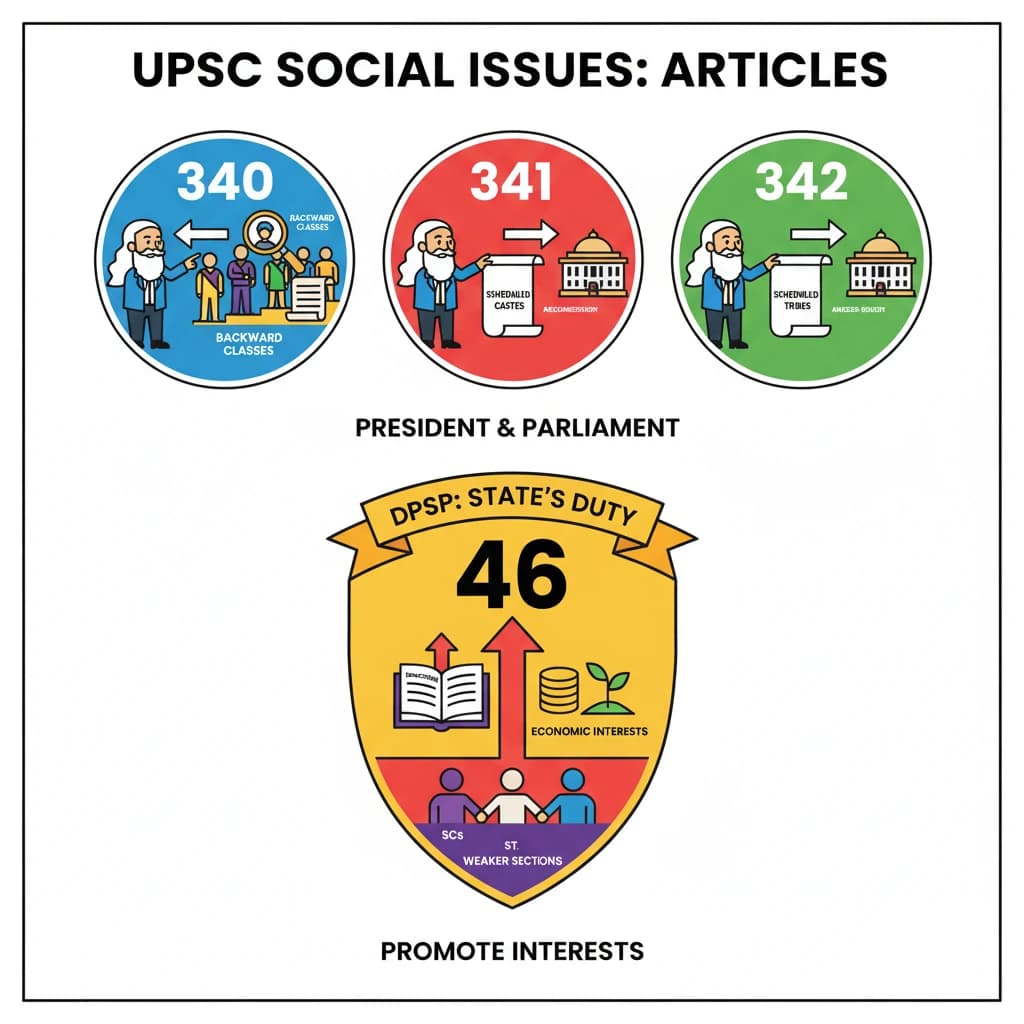
Constitutional & Statutory Safeguards for Vulnerable Sections - UPSC Social Issues
What is Constitutional & Statutory Safeguards for Vulnerable Sections in UPSC Social Issues?
Constitutional & Statutory Safeguards for Vulnerable Sections is a key topic under Social Issues for UPSC Civil Services Examination. Key points include: Article 340: President appoints commission for backward classes (investigate & recommend).. Article 341: President specifies Scheduled Castes (Parliament amends list).. Article 342: President specifies Scheduled Tribes (Parliament amends list).. Understanding this topic is essential for both UPSC Prelims and Mains preparation.
Why is Constitutional & Statutory Safeguards for Vulnerable Sections important for UPSC exam?
Constitutional & Statutory Safeguards for Vulnerable Sections is a Medium-level topic in UPSC Social Issues. It is tested in both Prelims (factual MCQs) and Mains (analytical answer writing). Previous year UPSC questions have frequently covered aspects of Constitutional & Statutory Safeguards for Vulnerable Sections, making it essential for comprehensive IAS preparation.
How to prepare Constitutional & Statutory Safeguards for Vulnerable Sections for UPSC?
To prepare Constitutional & Statutory Safeguards for Vulnerable Sections for UPSC: (1) Study the comprehensive notes covering all key concepts on Vaidra. (2) Practice previous year questions on this topic. (3) Connect it with current affairs using daily updates. (4) Revise using key takeaways and mind maps available for Social Issues. (5) Write practice answers linking Constitutional & Statutory Safeguards for Vulnerable Sections to related GS Paper topics.
Key takeaways of Constitutional & Statutory Safeguards for Vulnerable Sections for UPSC
- Article 340: President appoints commission for backward classes (investigate & recommend).
- Article 341: President specifies Scheduled Castes (Parliament amends list).
- Article 342: President specifies Scheduled Tribes (Parliament amends list).
- Article 46: DPSP directing State to promote educational/economic interests of SCs, STs, and weaker sections.
- Articles 338, 338A, 338B: Establish NCSC, NCST, and NCBC (102nd Amendment) respectively.
- Fifth & Sixth Schedules: Special administration for ST areas.
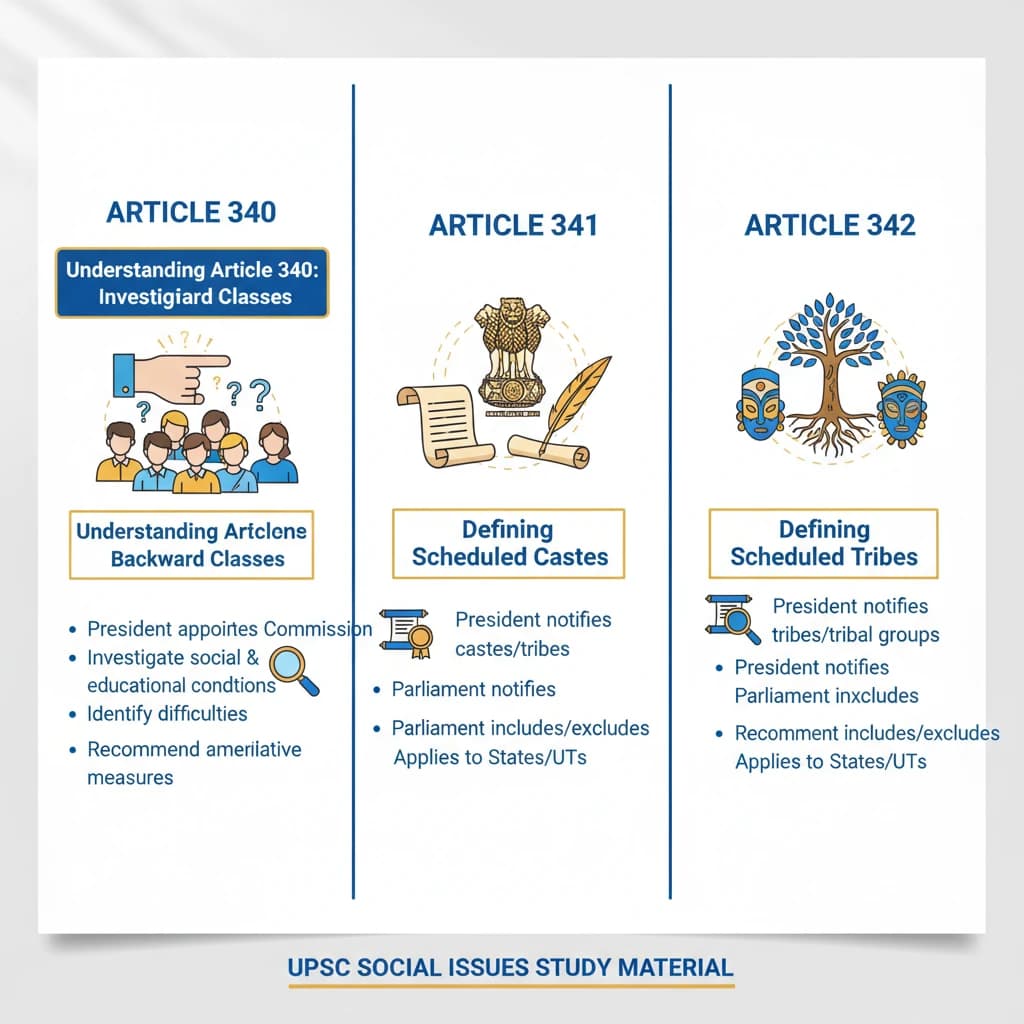
Constitutional & Statutory Safeguards for Vulnerable Sections
📖 Introduction
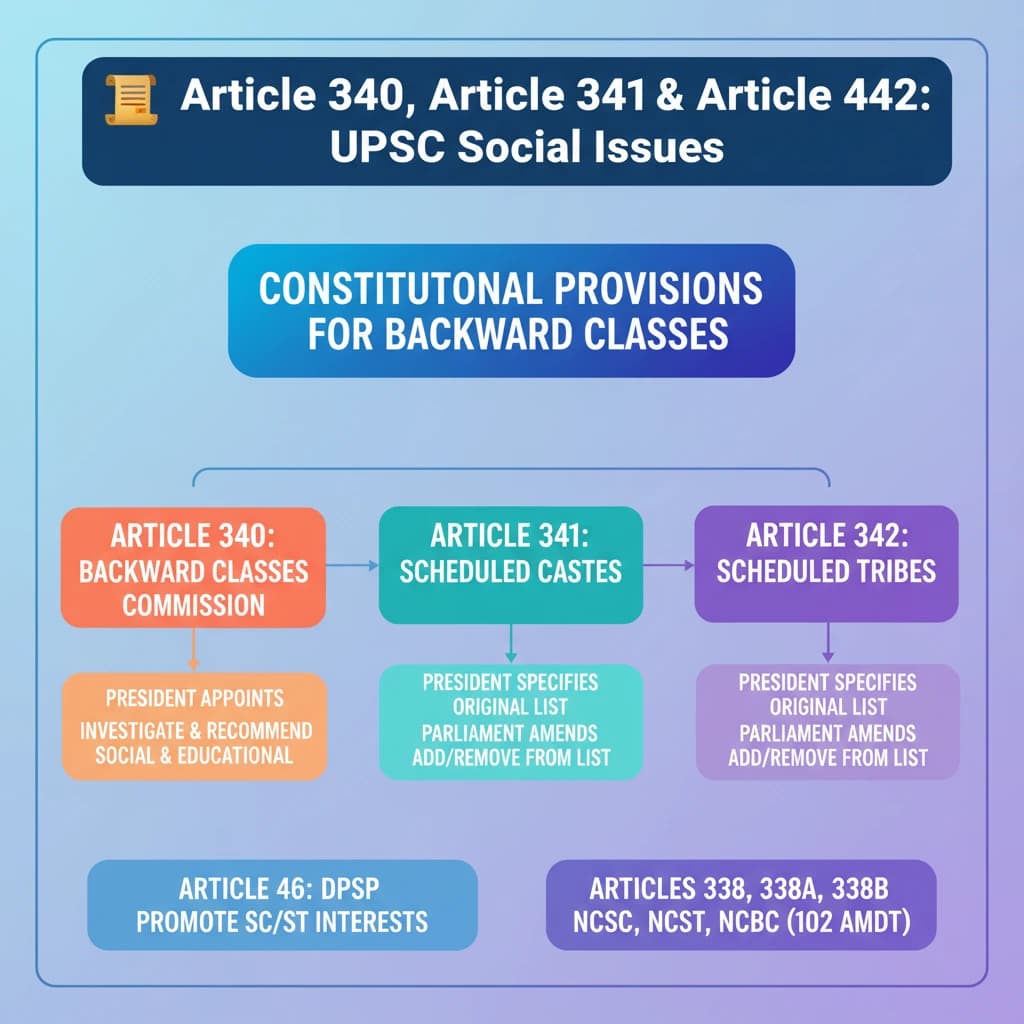
💡 Key Takeaways
- •Article 340: President appoints commission for backward classes (investigate & recommend).
- •Article 341: President specifies Scheduled Castes (Parliament amends list).
- •Article 342: President specifies Scheduled Tribes (Parliament amends list).
- •Article 46: DPSP directing State to promote educational/economic interests of SCs, STs, and weaker sections.
- •Articles 338, 338A, 338B: Establish NCSC, NCST, and NCBC (102nd Amendment) respectively.
- •Fifth & Sixth Schedules: Special administration for ST areas.
🧠 Memory Techniques