What Laws are Made to Support the Right to Shelter in India? - UPSC Social Issues
What is What Laws are Made to Support the Right to Shelter in India? in UPSC Social Issues?
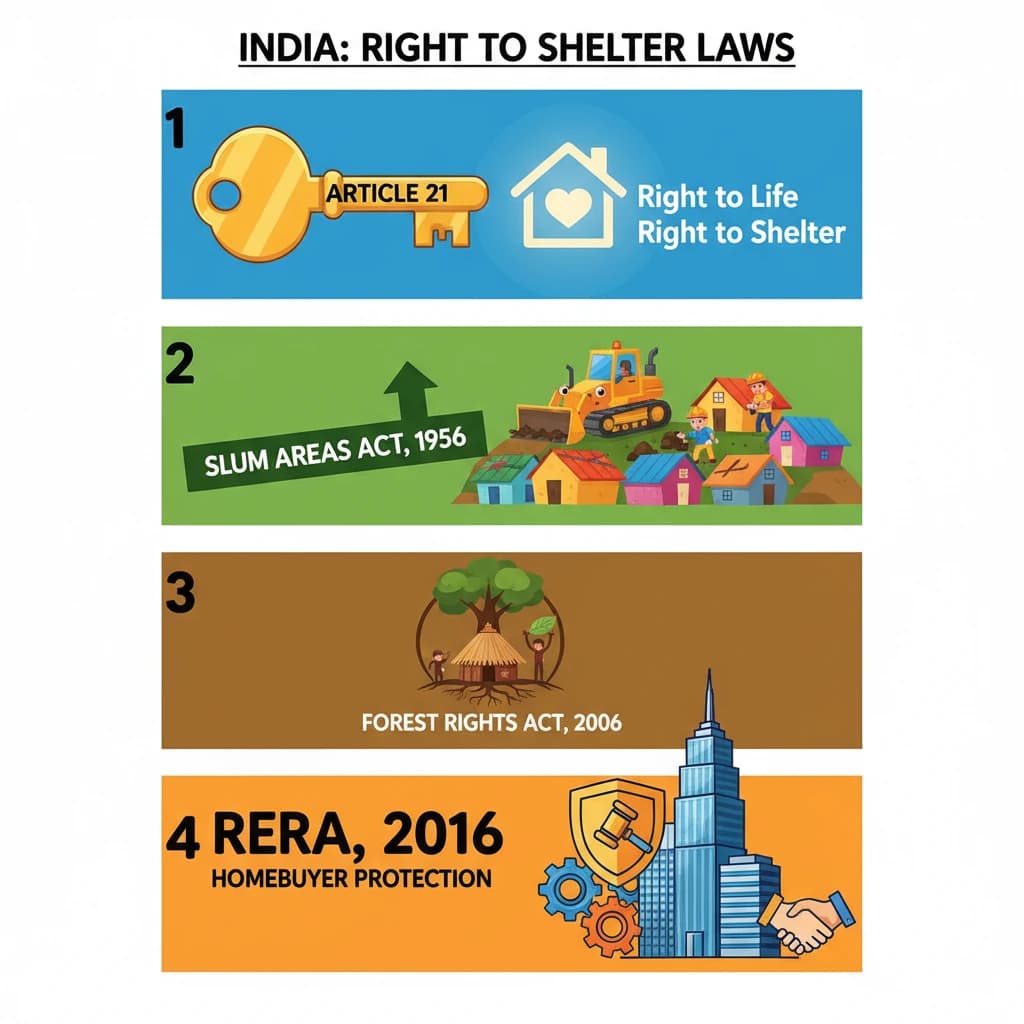
What Laws are Made to Support the Right to Shelter in India? is a key topic under Social Issues for UPSC Civil Services Examination. Key points include: Right to Shelter is implicitly derived from Article 21 (Right to Life) of the Indian Constitution.. The Slum Areas Act, 1956, enables government intervention for slum improvement and clearance.. The Forest Rights Act, 2006, recognises habitation and resource rights of forest-dwelling communities.. Understanding this topic is essential for both UPSC Prelims and Mains preparation.
Why is What Laws are Made to Support the Right to Shelter in India? important for UPSC exam?
What Laws are Made to Support the Right to Shelter in India? is a Medium-level topic in UPSC Social Issues. It is tested in both Prelims (factual MCQs) and Mains (analytical answer writing). Previous year UPSC questions have frequently covered aspects of What Laws are Made to Support the Right to Shelter in India?, making it essential for comprehensive IAS preparation.
How to prepare What Laws are Made to Support the Right to Shelter in India? for UPSC?
To prepare What Laws are Made to Support the Right to Shelter in India? for UPSC: (1) Study the comprehensive notes covering all key concepts on Vaidra. (2) Practice previous year questions on this topic. (3) Connect it with current affairs using daily updates. (4) Revise using key takeaways and mind maps available for Social Issues. (5) Write practice answers linking What Laws are Made to Support the Right to Shelter in India? to related GS Paper topics.
Key takeaways of What Laws are Made to Support the Right to Shelter in India? for UPSC
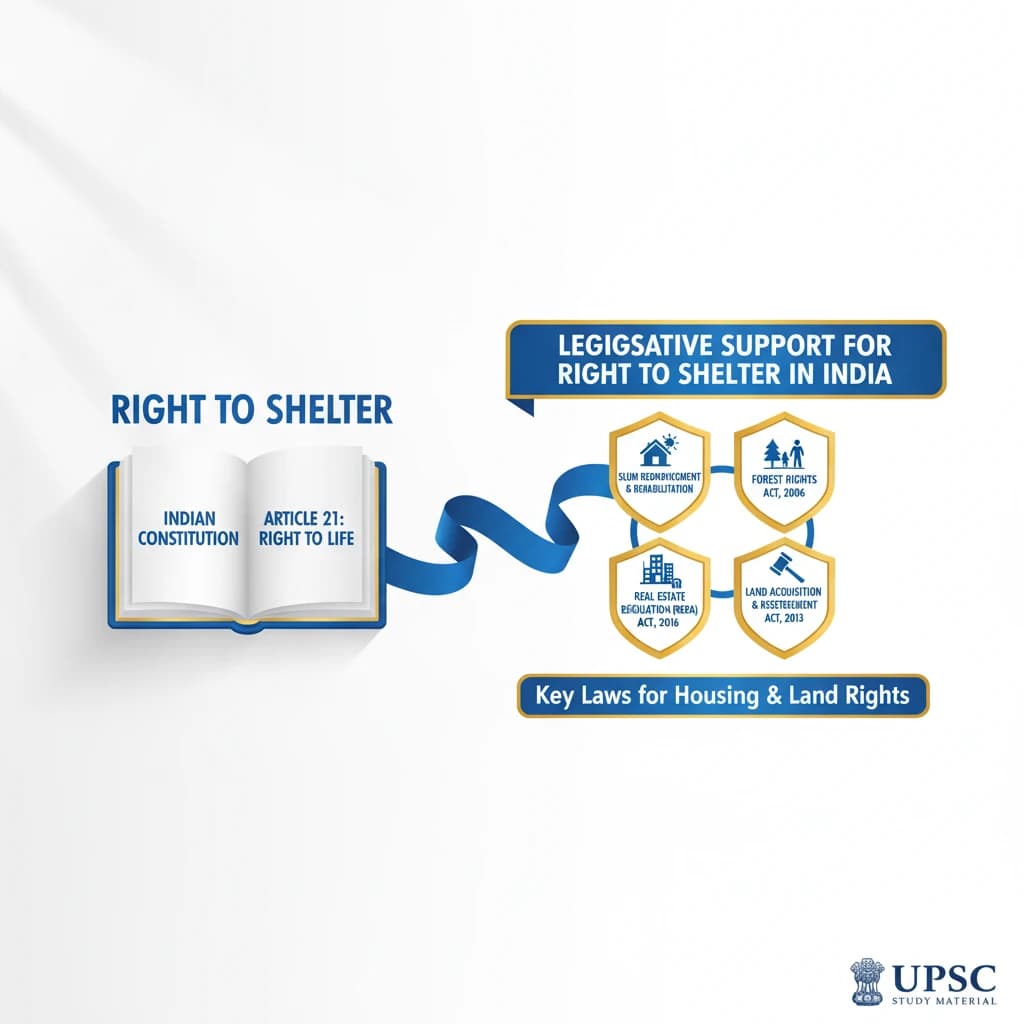
- Right to Shelter is implicitly derived from Article 21 (Right to Life) of the Indian Constitution.
- The Slum Areas Act, 1956, enables government intervention for slum improvement and clearance.
- The Forest Rights Act, 2006, recognises habitation and resource rights of forest-dwelling communities.
- RERA, 2016, regulates the real estate sector for transparency and protects homebuyers' interests.
- The LARR Act, 2013, ensures fair compensation and rehabilitation for land acquisition-affected families.
- The Model Tenancy Act, 2021, aims to formalise and streamline the rental housing market.
What Laws are Made to Support the Right to Shelter in India?
📖 Introduction
💡 Key Takeaways
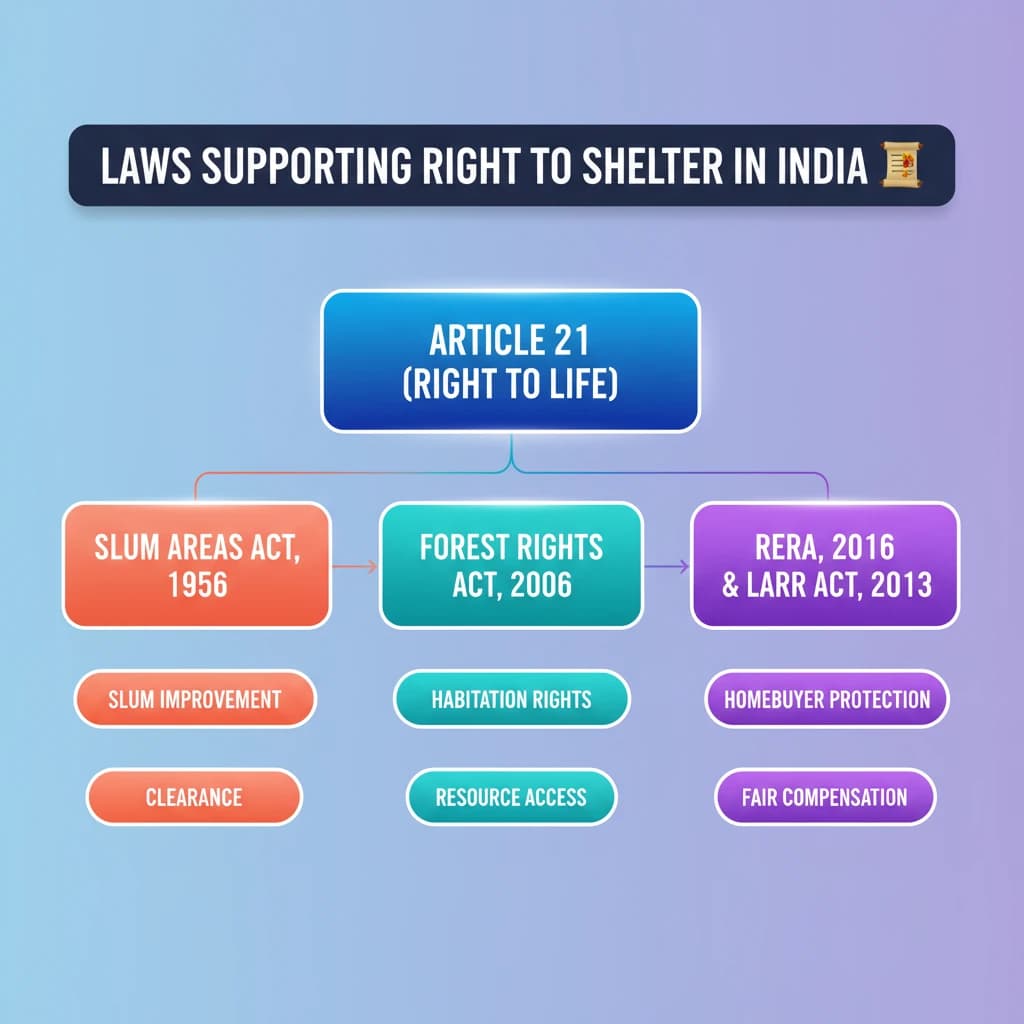
- •Right to Shelter is implicitly derived from Article 21 (Right to Life) of the Indian Constitution.
- •The Slum Areas Act, 1956, enables government intervention for slum improvement and clearance.
- •The Forest Rights Act, 2006, recognises habitation and resource rights of forest-dwelling communities.
- •RERA, 2016, regulates the real estate sector for transparency and protects homebuyers' interests.
- •The LARR Act, 2013, ensures fair compensation and rehabilitation for land acquisition-affected families.
- •The Model Tenancy Act, 2021, aims to formalise and streamline the rental housing market.
🧠 Memory Techniques