Loading page, please wait…
Cancer: Burden, Causes, and Global Access to Treatment - UPSC Social Issues
What is Cancer: Burden, Causes, and Global Access to Treatment in UPSC Social Issues?
Cancer: Burden, Causes, and Global Access to Treatment is a key topic under Social Issues for UPSC Civil Services Examination. Key points include: Cancer is a group of diseases characterized by uncontrolled growth and spread of abnormal cells.. Cancer cells invade and destroy healthy tissues, disrupting normal body functions.. Genetic mutations or abnormalities disrupt the normal cell cycle, leading to uncontrolled cell division.. Understanding this topic is essential for both UPSC Prelims and Mains preparation.
Why is Cancer: Burden, Causes, and Global Access to Treatment important for UPSC exam?
Cancer: Burden, Causes, and Global Access to Treatment is a Medium-level topic in UPSC Social Issues. It is tested in both Prelims (factual MCQs) and Mains (analytical answer writing). Previous year UPSC questions have frequently covered aspects of Cancer: Burden, Causes, and Global Access to Treatment, making it essential for comprehensive IAS preparation.
How to prepare Cancer: Burden, Causes, and Global Access to Treatment for UPSC?
To prepare Cancer: Burden, Causes, and Global Access to Treatment for UPSC: (1) Study the comprehensive notes covering all key concepts on Vaidra. (2) Practice previous year questions on this topic. (3) Connect it with current affairs using daily updates. (4) Revise using key takeaways and mind maps available for Social Issues. (5) Write practice answers linking Cancer: Burden, Causes, and Global Access to Treatment to related GS Paper topics.
Key takeaways of Cancer: Burden, Causes, and Global Access to Treatment for UPSC
- Cancer is a group of diseases characterized by uncontrolled growth and spread of abnormal cells.
- Cancer cells invade and destroy healthy tissues, disrupting normal body functions.
- Genetic mutations or abnormalities disrupt the normal cell cycle, leading to uncontrolled cell division.
- Addressing the rising cancer burden requires global efforts for systematic testing, early diagnosis, and equitable treatment access.
- Public health policies in India (e.g., NPCDCS) focus on prevention, early detection, and affordable management of cancer as an NCD.
Cancer: Burden, Causes, and Global Access to Treatment
Medium⏱️ 6 min read
social issues
📖 Introduction
Understanding Cancer: A Global Health Challenge
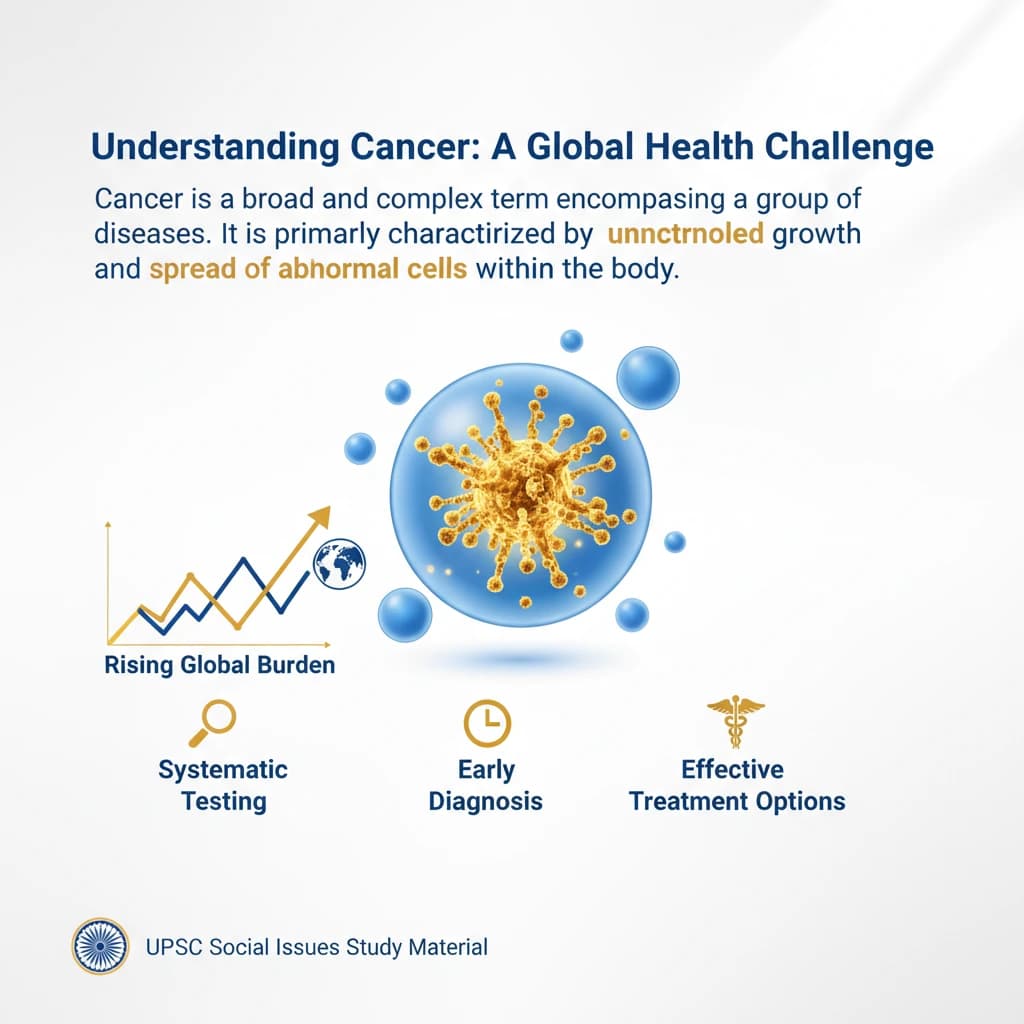
Cancer is a broad and complex term encompassing a group of diseases. It is primarily characterized by the uncontrolled growth and spread of abnormal cells within the body.
The rising global burden of cancer necessitates a uniform approach to address it. This includes ensuring all people worldwide have access to systematic testing, early diagnosis, and effective treatment options.
The Nature of Cancer Cells
These abnormal cells are specifically known as cancer cells. A defining characteristic of cancer cells is their ability to invade and destroy healthy tissues and organs, disrupting normal bodily functions.
Normal Cell Function vs. Cancerous Growth
In a healthy human body, cells adhere to a highly regulated cycle of growth, division, and programmed death. This precise regulation ensures the proper functioning and maintenance of all tissues and organs.
However, in the context of cancer, this natural and controlled cell cycle is severely disrupted. This disruption leads to cells dividing and growing without any normal regulatory control.
Causes of Uncontrolled Cell Division
The primary cause of this uncontrolled cellular proliferation is often attributed to certain genetic mutations or other abnormalities. These genetic changes interfere with the internal mechanisms that govern cell division and growth.
Key Concept: Cancer fundamentally arises from a breakdown in the body's natural cellular control mechanisms, leading to unchecked proliferation and tissue invasion.
For UPSC, understanding cancer as a disease of uncontrolled cell growth due to genetic mutations is crucial for GS-III Science & Technology and GS-II Health topics. Emphasize the global burden and access issues.
💡 Key Takeaways
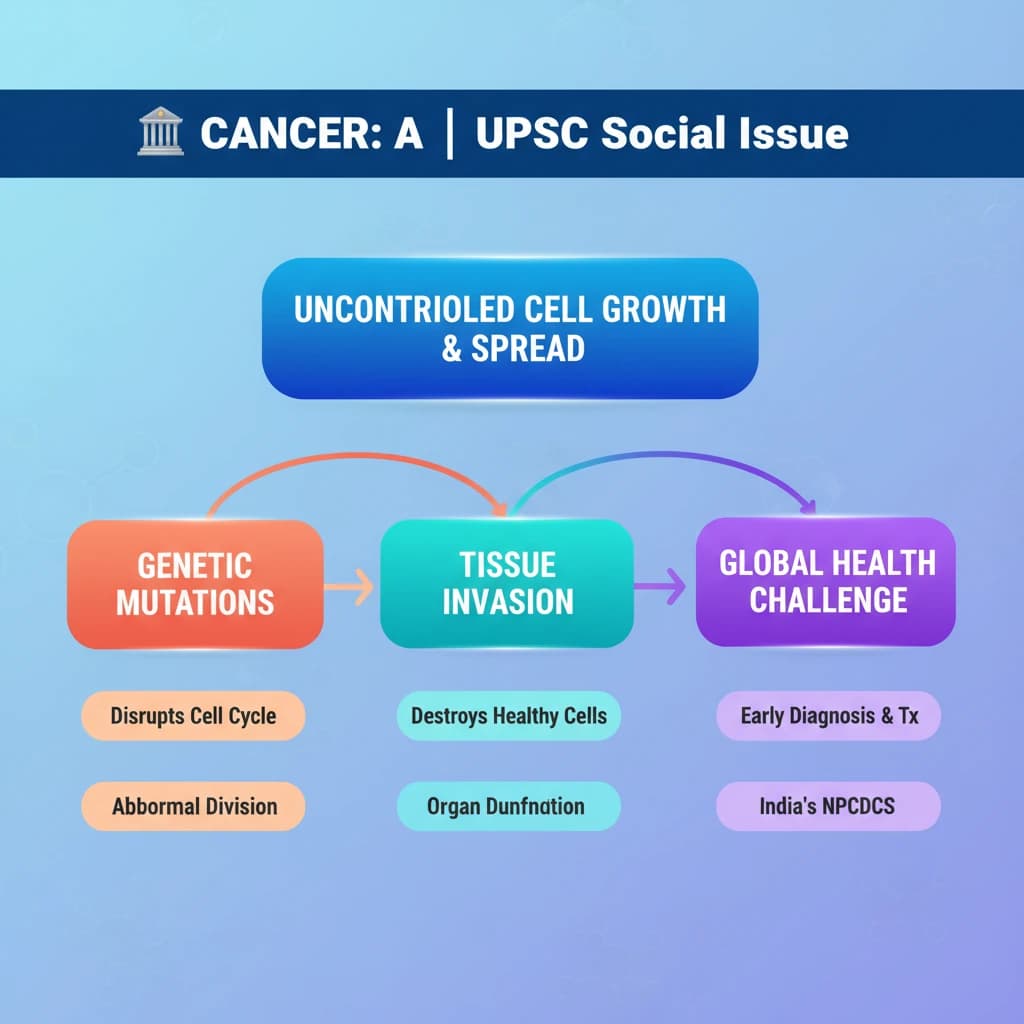
- •Cancer is a group of diseases characterized by uncontrolled growth and spread of abnormal cells.
- •Cancer cells invade and destroy healthy tissues, disrupting normal body functions.
- •Genetic mutations or abnormalities disrupt the normal cell cycle, leading to uncontrolled cell division.
- •Addressing the rising cancer burden requires global efforts for systematic testing, early diagnosis, and equitable treatment access.
- •Public health policies in India (e.g., NPCDCS) focus on prevention, early detection, and affordable management of cancer as an NCD.
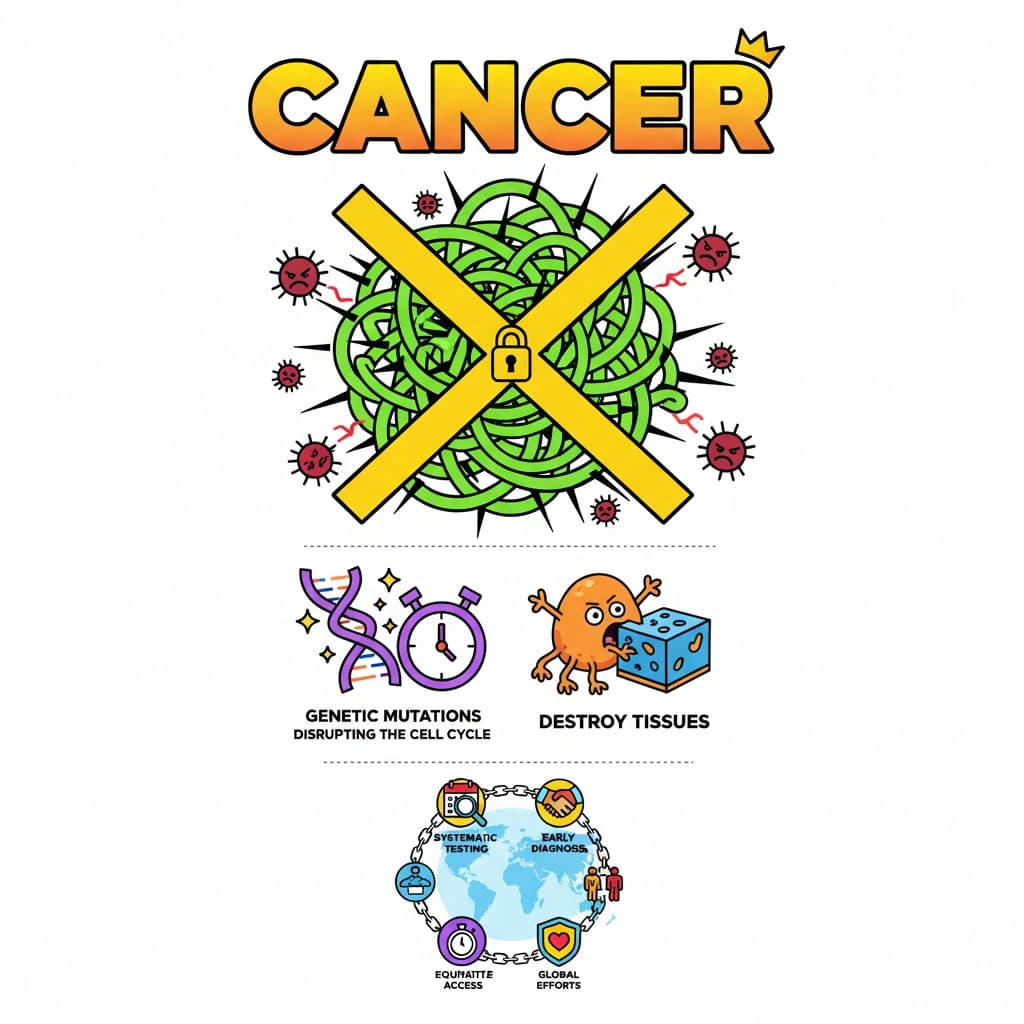
🧠 Memory Techniques
95% Verified Content
📚 Reference Sources
•World Health Organization (WHO) reports on cancer
•National Programme for Prevention and Control of Cancer, Diabetes, Cardiovascular Diseases and Stroke (NPCDCS) documents
•General medical knowledge on cancer