Loading page, please wait…
Vaidra Logo
Vaidra

Top 4 items + smart groups

UPSC GPT
New
Current Affairs
Daily Solutions
Daily Puzzle
Mains Evaluator

Version 2.0.0 • Built with ❤️ for UPSC aspirants

Loading...
Loading...
Loading...
Loading...
Loading...
Loading...
Loading...
Loading...
Loading...
Loading...
Loading...
Loading...
Loading...
Back
All Subjects

Topics

0 topics • 0 completed

Loading topics...
Loading...
Loading...
Loading...
Loading...
Loading...
Overall Progress0%
Anaemia: Causes, Impact, and Mitigation Strategies - UPSC Social Issues

Anaemia: Causes, Impact, and Mitigation Strategies - UPSC Social Issues

What is Anaemia: Causes, Impact, and Mitigation Strategies in UPSC Social Issues?

Anaemia: Causes, Impact, and Mitigation Strategies is a key topic under Social Issues for UPSC Civil Services Examination. Key points include: Anaemia is characterized by low red blood cells or haemoglobin, impairing oxygen transport.. Haemoglobin is an iron-rich protein vital for oxygen binding and delivery.. Common causes include iron, Vitamin B12, or folate deficiencies, blood loss, and genetic disorders.. Understanding this topic is essential for both UPSC Prelims and Mains preparation.

Why is Anaemia: Causes, Impact, and Mitigation Strategies important for UPSC exam?

Anaemia: Causes, Impact, and Mitigation Strategies is a Easy-level topic in UPSC Social Issues. It is tested in both Prelims (factual MCQs) and Mains (analytical answer writing). Previous year UPSC questions have frequently covered aspects of Anaemia: Causes, Impact, and Mitigation Strategies, making it essential for comprehensive IAS preparation.

How to prepare Anaemia: Causes, Impact, and Mitigation Strategies for UPSC?

To prepare Anaemia: Causes, Impact, and Mitigation Strategies for UPSC: (1) Study the comprehensive notes covering all key concepts on Vaidra. (2) Practice previous year questions on this topic. (3) Connect it with current affairs using daily updates. (4) Revise using key takeaways and mind maps available for Social Issues. (5) Write practice answers linking Anaemia: Causes, Impact, and Mitigation Strategies to related GS Paper topics.

Key takeaways of Anaemia: Causes, Impact, and Mitigation Strategies for UPSC

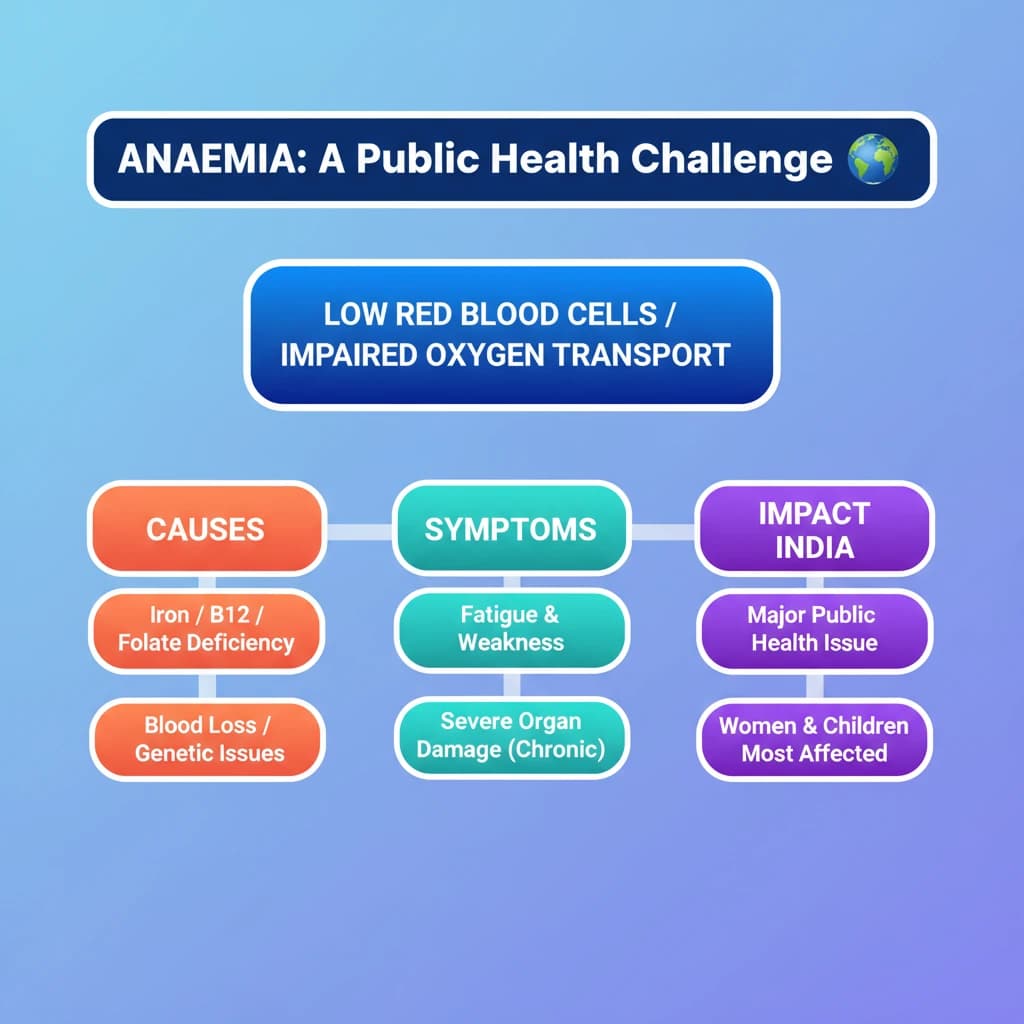
  • Anaemia is characterized by low red blood cells or haemoglobin, impairing oxygen transport.
  • Haemoglobin is an iron-rich protein vital for oxygen binding and delivery.
  • Common causes include iron, Vitamin B12, or folate deficiencies, blood loss, and genetic disorders.
  • Symptoms range from fatigue and weakness to severe organ damage in chronic cases.
  • Anaemia is a major public health issue in India, particularly for women and children.
  • Government initiatives like Anaemia Mukt Bharat aim to reduce its prevalence and impact.
Anaemia: Causes, Impact, and Mitigation Strategies

Anaemia: Causes, Impact, and Mitigation Strategies

Easy⏱️ 10 min read✓ 98% Verified
social issues

📖 Introduction

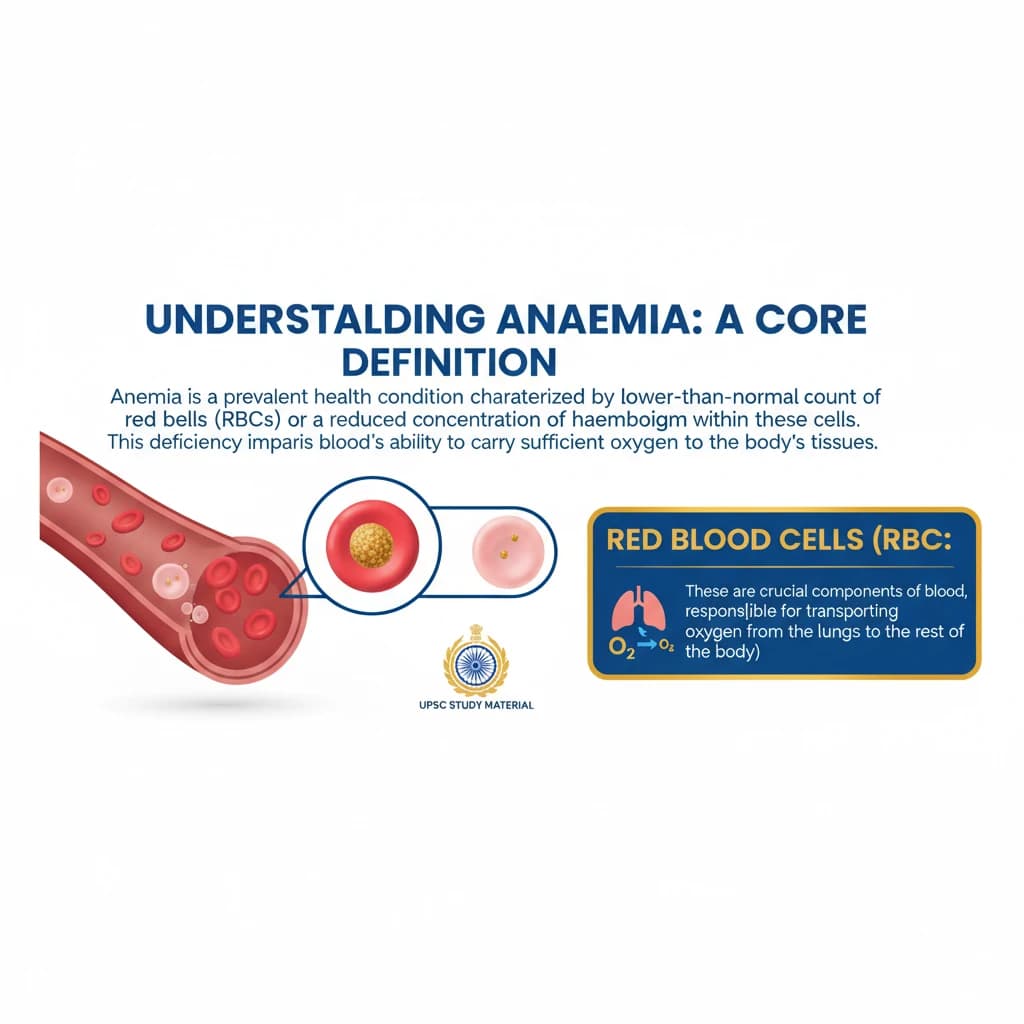
<h4>Understanding Anaemia: A Core Definition</h4><p><strong>Anaemia</strong> is a prevalent health condition characterized by a lower-than-normal count of <strong>red blood cells</strong> (RBCs) or a reduced concentration of <strong>haemoglobin</strong> within these cells. This deficiency impairs the blood's ability to carry sufficient <strong>oxygen</strong> to the body's tissues.</p><div class='info-box'><p><strong>Red Blood Cells (RBCs):</strong> These are crucial components of blood, responsible for transporting oxygen from the lungs to various parts of the body and carrying carbon dioxide back to the lungs.</p></div><h4>The Role of Haemoglobin</h4><p><strong>Haemoglobin</strong> is a vital protein found within <strong>red blood cells</strong>. Its primary function is to bind with <strong>oxygen</strong> in the lungs and release it in tissues where it's needed for metabolic processes. A healthy haemoglobin level is essential for optimal bodily function.</p><div class='info-box'><p><strong>Haemoglobin Composition:</strong> It is an iron-rich protein, giving blood its characteristic red color. The iron component is critical for its oxygen-binding capacity.</p></div><h4>Impact of Reduced Haemoglobin</h4><p>When <strong>haemoglobin</strong> levels are low, the body's tissues and organs do not receive adequate <strong>oxygen</strong>. This leads to a range of symptoms, including fatigue, weakness, shortness of breath, dizziness, and pale skin. Severe anaemia can have serious health consequences.</p><div class='key-point-box'><p><strong>Key Concept: Oxygen Transport.</strong> The entire pathology of anaemia revolves around the impaired capacity of blood to transport oxygen, directly impacting cellular respiration and overall energy production.</p></div><h4>Causes and Types of Anaemia</h4><p>Anaemia can stem from various causes, broadly categorized into three main groups: decreased <strong>red blood cell</strong> production, increased <strong>red blood cell</strong> destruction, or significant blood loss. Nutritional deficiencies are a major contributor, especially in developing countries.</p><ul><li><strong>Nutritional Anaemias:</strong> Often caused by deficiencies in <strong>iron</strong>, <strong>Vitamin B12</strong>, or <strong>folate</strong>.</li><li><strong>Haemolytic Anaemias:</strong> Occur when red blood cells are destroyed faster than they can be produced (e.g., <strong>Sickle Cell Anaemia</strong>, <strong>Thalassemia</strong>).</li><li><strong>Aplastic Anaemia:</strong> A rare condition where the bone marrow fails to produce enough blood cells.</li><li><strong>Anaemia of Chronic Disease:</strong> Associated with chronic inflammatory conditions, infections, or cancers.</li></ul><div class='exam-tip-box'><p><strong>UPSC Insight:</strong> While the definition is fundamental, UPSC questions often focus on the <strong>causes, consequences, prevalence, and government initiatives</strong> related to anaemia, particularly in the context of public health and women's/child health.</p></div>
Concept Diagram

💡 Key Takeaways

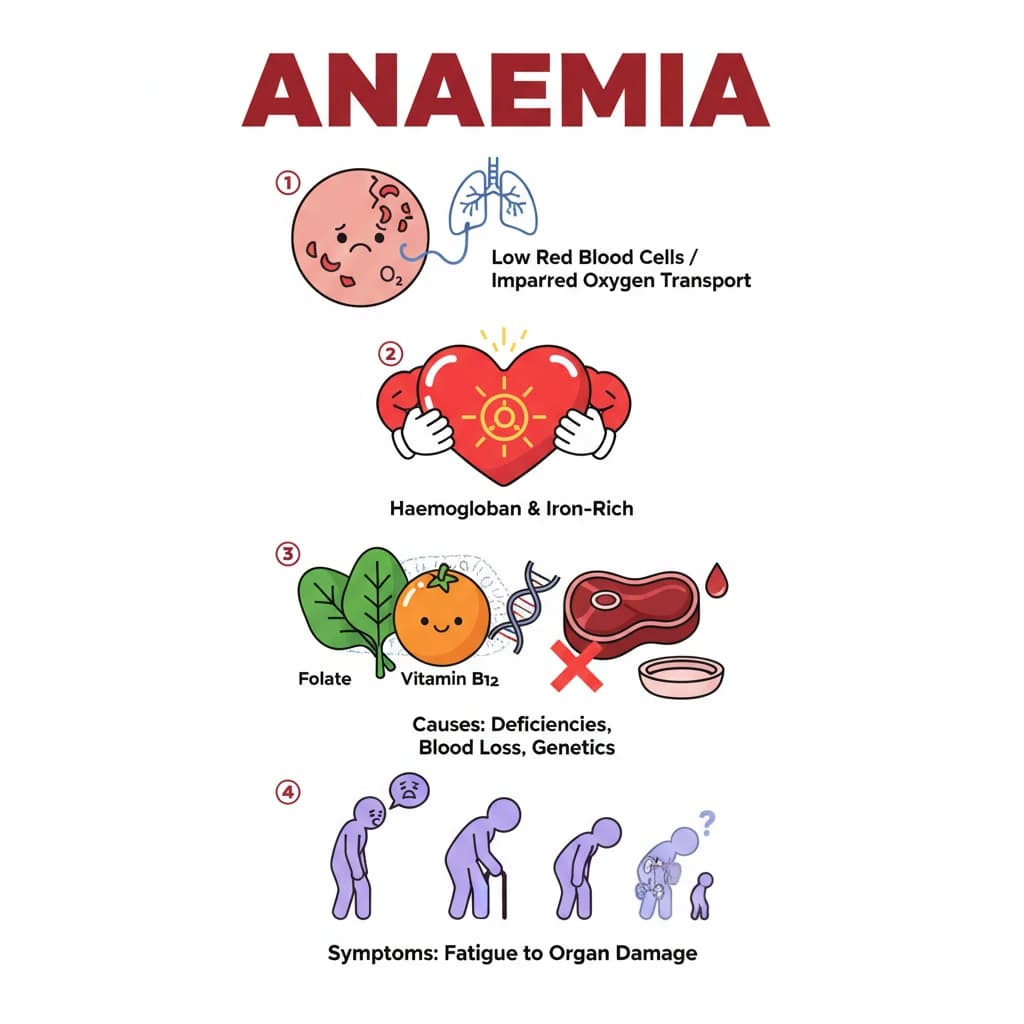
  • •Anaemia is characterized by low red blood cells or haemoglobin, impairing oxygen transport.
  • •Haemoglobin is an iron-rich protein vital for oxygen binding and delivery.
  • •Common causes include iron, Vitamin B12, or folate deficiencies, blood loss, and genetic disorders.
  • •Symptoms range from fatigue and weakness to severe organ damage in chronic cases.
  • •Anaemia is a major public health issue in India, particularly for women and children.
  • •Government initiatives like Anaemia Mukt Bharat aim to reduce its prevalence and impact.

🧠 Memory Techniques
Memory Aid
98% Verified Content

📚 Reference Sources

•World Health Organization (WHO) - Anaemia Fact Sheets
•Ministry of Health & Family Welfare, Government of India - Anaemia Mukt Bharat Guidelines
•National Family Health Survey (NFHS) data
•NCERT Biology Textbooks

Related Topics

Loading related topics...
Explore:Social Issues Topics·All Subjects·Daily Current Affairs·Editorial Analysis·Previous Year Questions·UPSC GPT