Loading page, please wait…
Chipko Movement: Relevance of Gandhian Ecology & Community Empowerment in 2024 - UPSC Social Issues
What is Chipko Movement: Relevance of Gandhian Ecology & Community Empowerment in 2024 in UPSC Social Issues?
Chipko Movement: Relevance of Gandhian Ecology & Community Empowerment in 2024 is a key topic under Social Issues for UPSC Civil Services Examination. Key points include: Chipko Movement embodies Gandhian principles of non-violence and harmony with nature.. It empowered local communities, especially women, in natural resource decision-making.. Inspired major Indian environmental movements like Appiko and Narmada Bachao Andolan.. Understanding this topic is essential for both UPSC Prelims and Mains preparation.
Why is Chipko Movement: Relevance of Gandhian Ecology & Community Empowerment in 2024 important for UPSC exam?
Chipko Movement: Relevance of Gandhian Ecology & Community Empowerment in 2024 is a Medium-level topic in UPSC Social Issues. It is tested in both Prelims (factual MCQs) and Mains (analytical answer writing). Previous year UPSC questions have frequently covered aspects of Chipko Movement: Relevance of Gandhian Ecology & Community Empowerment in 2024, making it essential for comprehensive IAS preparation.
How to prepare Chipko Movement: Relevance of Gandhian Ecology & Community Empowerment in 2024 for UPSC?
To prepare Chipko Movement: Relevance of Gandhian Ecology & Community Empowerment in 2024 for UPSC: (1) Study the comprehensive notes covering all key concepts on Vaidra. (2) Practice previous year questions on this topic. (3) Connect it with current affairs using daily updates. (4) Revise using key takeaways and mind maps available for Social Issues. (5) Write practice answers linking Chipko Movement: Relevance of Gandhian Ecology & Community Empowerment in 2024 to related GS Paper topics.
Key takeaways of Chipko Movement: Relevance of Gandhian Ecology & Community Empowerment in 2024 for UPSC
- Chipko Movement embodies Gandhian principles of non-violence and harmony with nature.
- It empowered local communities, especially women, in natural resource decision-making.
- Inspired major Indian environmental movements like Appiko and Narmada Bachao Andolan.
- Influenced policy changes, leading to stricter anti-deforestation laws and recognition of indigenous rights.
- Its principles of sustainability, community participation, and non-violent resistance are highly relevant for combating climate change and protecting ecosystems in 2024.
Chipko Movement: Relevance of Gandhian Ecology & Community Empowerment in 2024
Medium⏱️ 8 min read
social issues
📖 Introduction
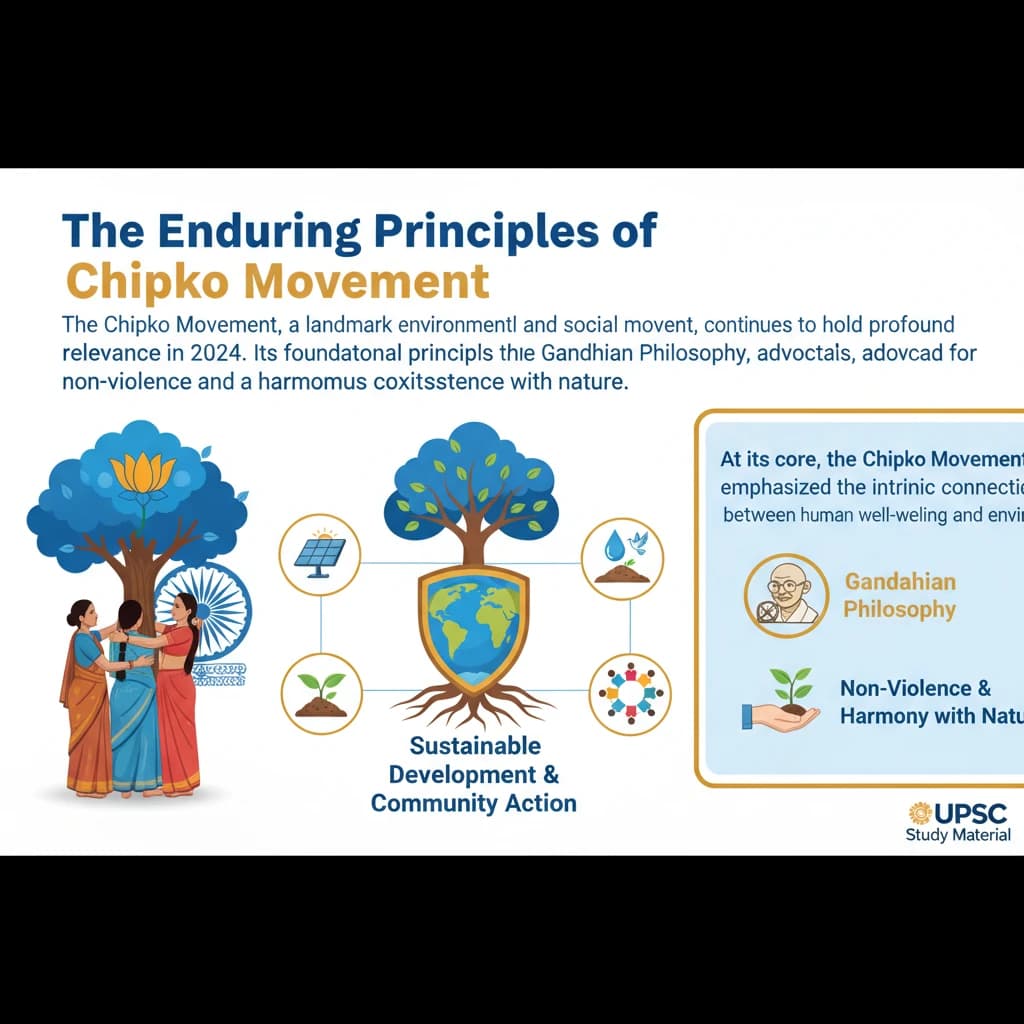
The Enduring Principles of Chipko Movement
The Chipko Movement, a landmark environmental and social movement, continues to hold profound relevance in 2024. Its foundational principles, rooted in Gandhian Philosophy, advocate for non-violence and a harmonious coexistence with nature.
At its core, the Chipko Movement emphasized the intrinsic connection between human well-being and environmental health, promoting a sustainable way of life.
Empowering Local Communities and Participatory Governance
A significant aspect of the Chipko Movement was its focus on empowering local communities. It aimed to provide them with a crucial voice in decision-making processes concerning their natural resources.
The movement actively challenged the exploitative practices of external contractors. It championed a more inclusive and participatory approach to forest management, ensuring that those most affected had a say.
Inspiring Similar Movements Across India
The impact of Chipko resonated widely, inspiring numerous similar movements throughout India. These grassroots efforts adopted its spirit of resistance and community mobilization.
- The Narmada Bachao Andolan, protesting large dam projects, drew parallels in its fight for local rights.
- The Appiko Movement in Karnataka, a direct inspiration, saw villagers hugging trees to prevent felling.
- The Silent Valley Movement, aimed at protecting a biodiversity-rich forest, also mirrored Chipko's environmental ethos.
Global Recognition and Environmental Symbolism
Beyond India's borders, the Chipko Movement garnered international acclaim. It swiftly became a powerful global symbol of resistance against environmental destruction.
The movement's non-violent methods and success in protecting forests resonated with environmentalists worldwide, highlighting the power of collective action.
Influencing Policy and Indigenous Rights
Domestically, the Chipko Movement significantly influenced policy changes in India. It led to the implementation of stricter rules and regulations.
These new regulations were specifically designed to combat illegal deforestation and to uphold the rights of indigenous communities over their traditional forest lands.
The Pivotal Role of Women in Mobilization
The Chipko Movement is perhaps best remembered for the remarkable collective mobilization of women. They spearheaded the cause of preserving forests, often literally embracing trees.
This unprecedented participation not only achieved environmental goals but also brought about a profound change in attitude regarding women's status in society, demonstrating their agency and leadership. This is a crucial point for GS Paper 1 (Social Issues) and GS Paper 5 (Uttarakhand Specific).
An Enduring Source of Inspiration for Collective Action
In 2024, the Chipko Movement continues to serve as an invaluable source of inspiration. It stands as a powerful reminder of the efficacy of collective action in tackling complex environmental challenges.
Its core principles of sustainability, community participation, and nonviolent resistance remain acutely relevant. These are vital in the contemporary fight against climate change and for the holistic protection of our ecosystems.
The movement also inspires modern grassroots-level actions, emphasizing the critical importance of women's participation and the essential inclusion of local communities in environmental planning and conservation efforts.
💡 Key Takeaways
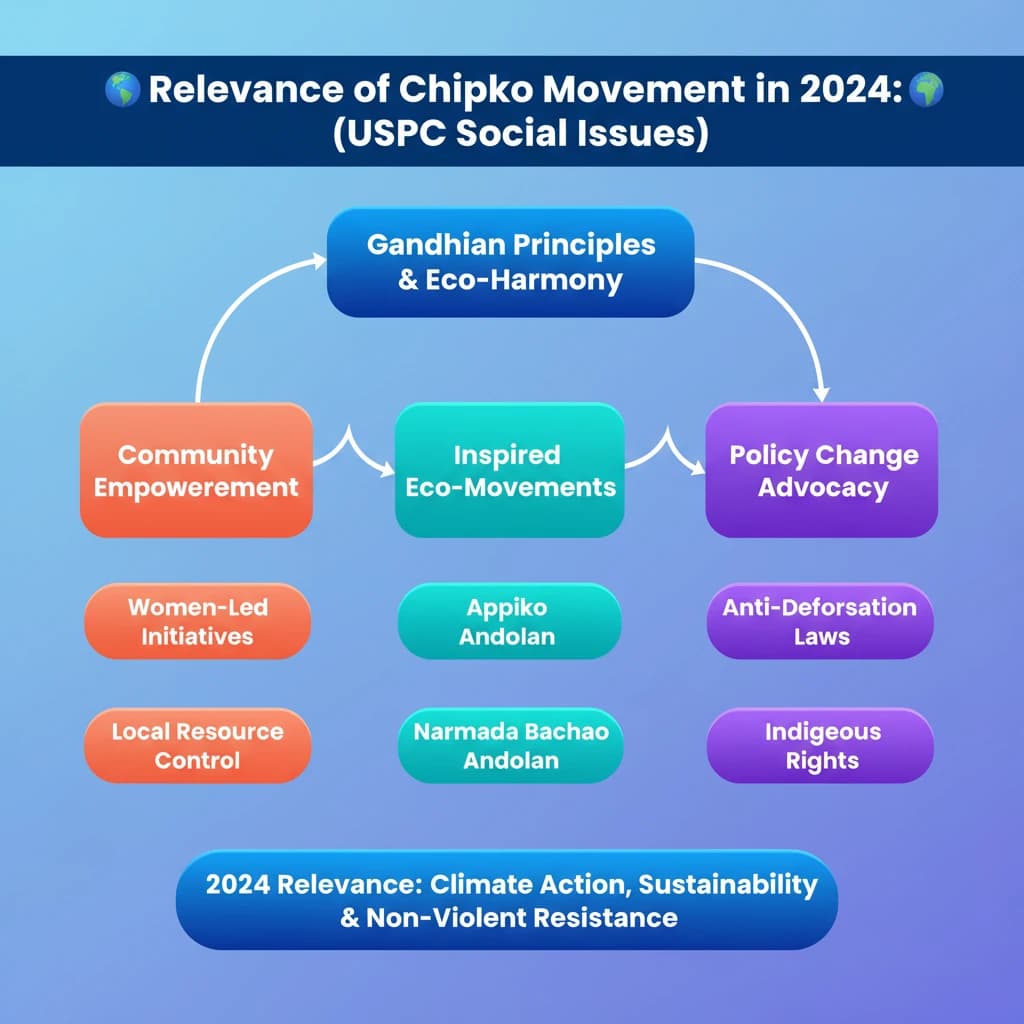
- •Chipko Movement embodies Gandhian principles of non-violence and harmony with nature.
- •It empowered local communities, especially women, in natural resource decision-making.
- •Inspired major Indian environmental movements like Appiko and Narmada Bachao Andolan.
- •Influenced policy changes, leading to stricter anti-deforestation laws and recognition of indigenous rights.
- •Its principles of sustainability, community participation, and non-violent resistance are highly relevant for combating climate change and protecting ecosystems in 2024.
🧠 Memory Techniques

95% Verified Content