Loading page, please wait…
Empowerment Schemes and Programs - UPSC Social Issues
What is Empowerment Schemes and Programs in UPSC Social Issues?
Empowerment Schemes and Programs is a key topic under Social Issues for UPSC Civil Services Examination. Key points include: Government initiatives like Mahila Shakti Kendra, Beti Bachao Beti Padhao, and STEP primarily target women's socio-economic upliftment.. These schemes have significantly contributed to improving women's access to education, health, skills, and economic opportunities.. Despite socio-economic gains, the direct impact of these programs on enhancing women's formal political participation has been limited.. Understanding this topic is essential for both UPSC Prelims and Mains preparation.
Why is Empowerment Schemes and Programs important for UPSC exam?
Empowerment Schemes and Programs is a Medium-level topic in UPSC Social Issues. It is tested in both Prelims (factual MCQs) and Mains (analytical answer writing). Previous year UPSC questions have frequently covered aspects of Empowerment Schemes and Programs, making it essential for comprehensive IAS preparation.
How to prepare Empowerment Schemes and Programs for UPSC?
To prepare Empowerment Schemes and Programs for UPSC: (1) Study the comprehensive notes covering all key concepts on Vaidra. (2) Practice previous year questions on this topic. (3) Connect it with current affairs using daily updates. (4) Revise using key takeaways and mind maps available for Social Issues. (5) Write practice answers linking Empowerment Schemes and Programs to related GS Paper topics.
Key takeaways of Empowerment Schemes and Programs for UPSC
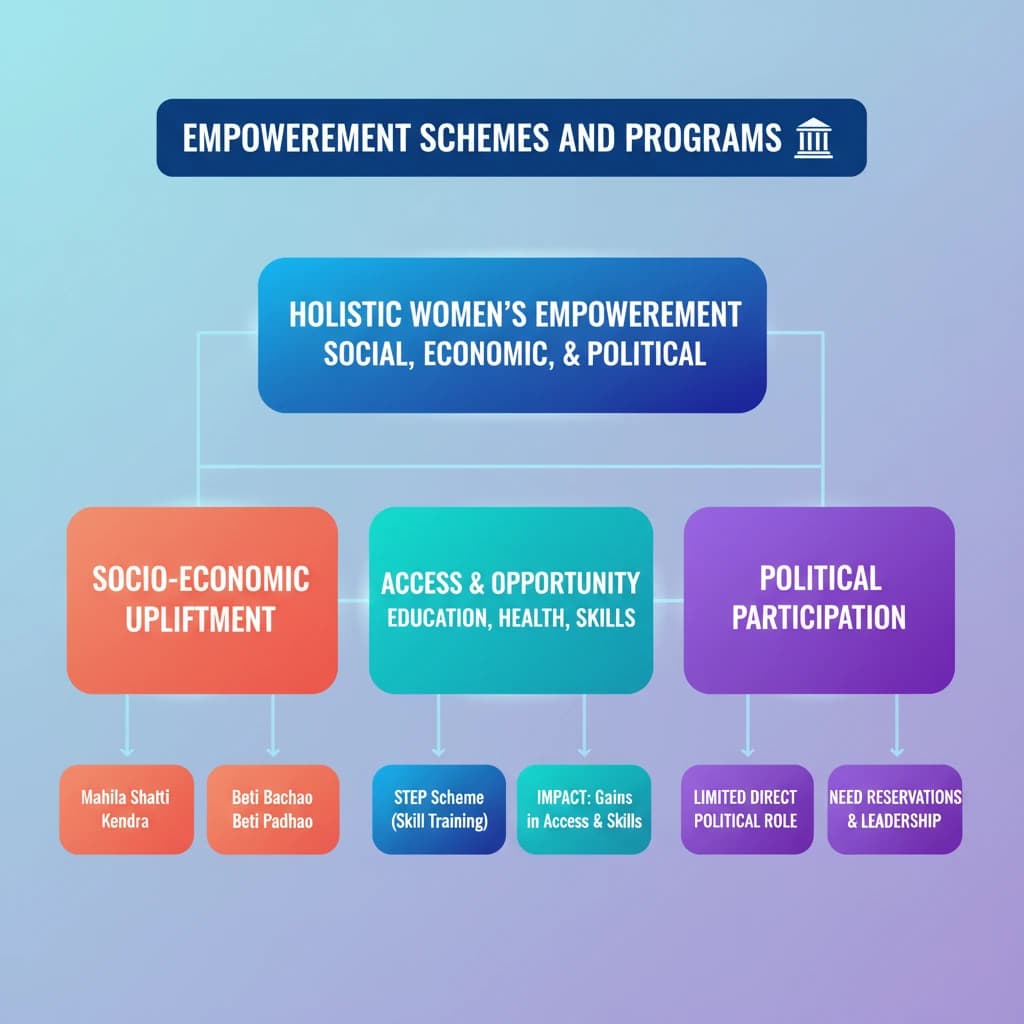
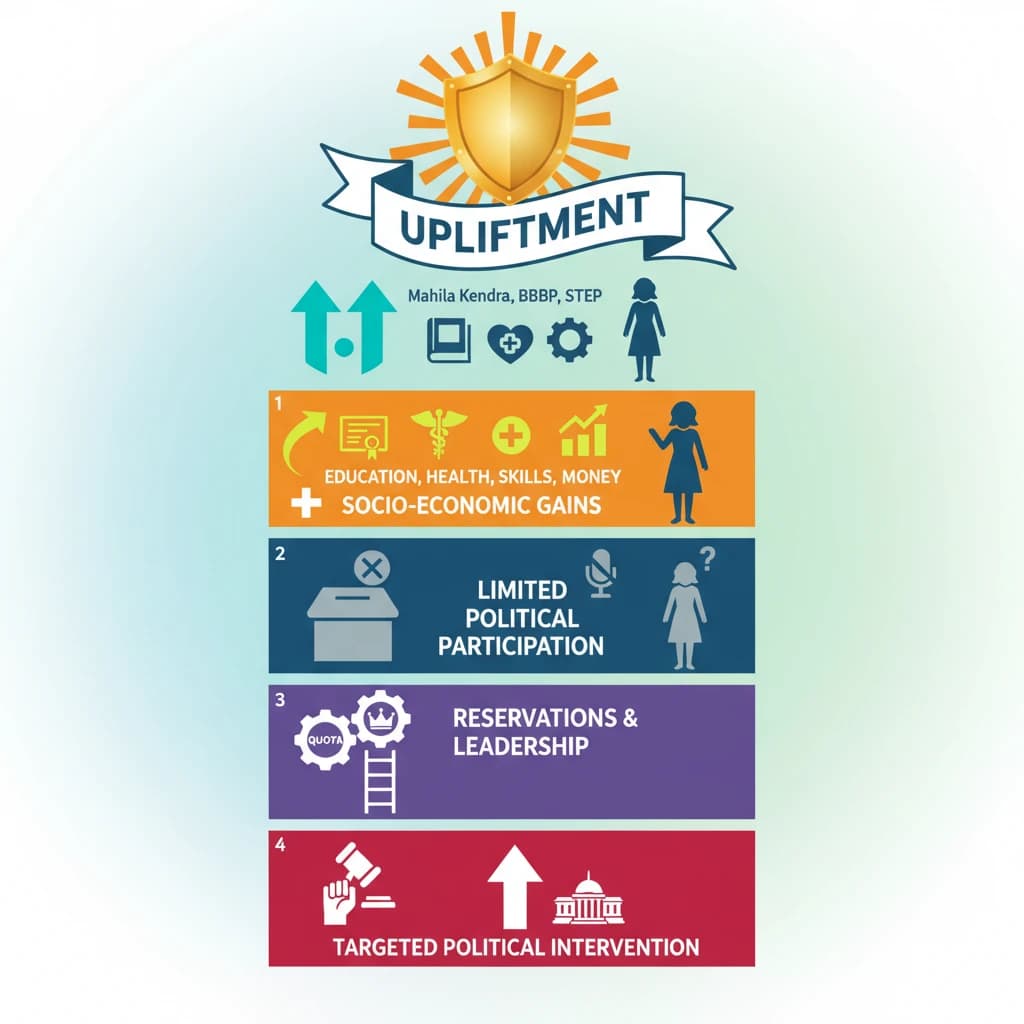
- Government initiatives like Mahila Shakti Kendra, Beti Bachao Beti Padhao, and STEP primarily target women's socio-economic upliftment.
- These schemes have significantly contributed to improving women's access to education, health, skills, and economic opportunities.
- Despite socio-economic gains, the direct impact of these programs on enhancing women's formal political participation has been limited.
- Political empowerment requires targeted interventions beyond socio-economic support, such as reservations and leadership development.
- A holistic approach is needed to ensure women's empowerment across all spheres: social, economic, and political.
Empowerment Schemes and Programs
Medium⏱️ 8 min read
social issues
📖 Introduction
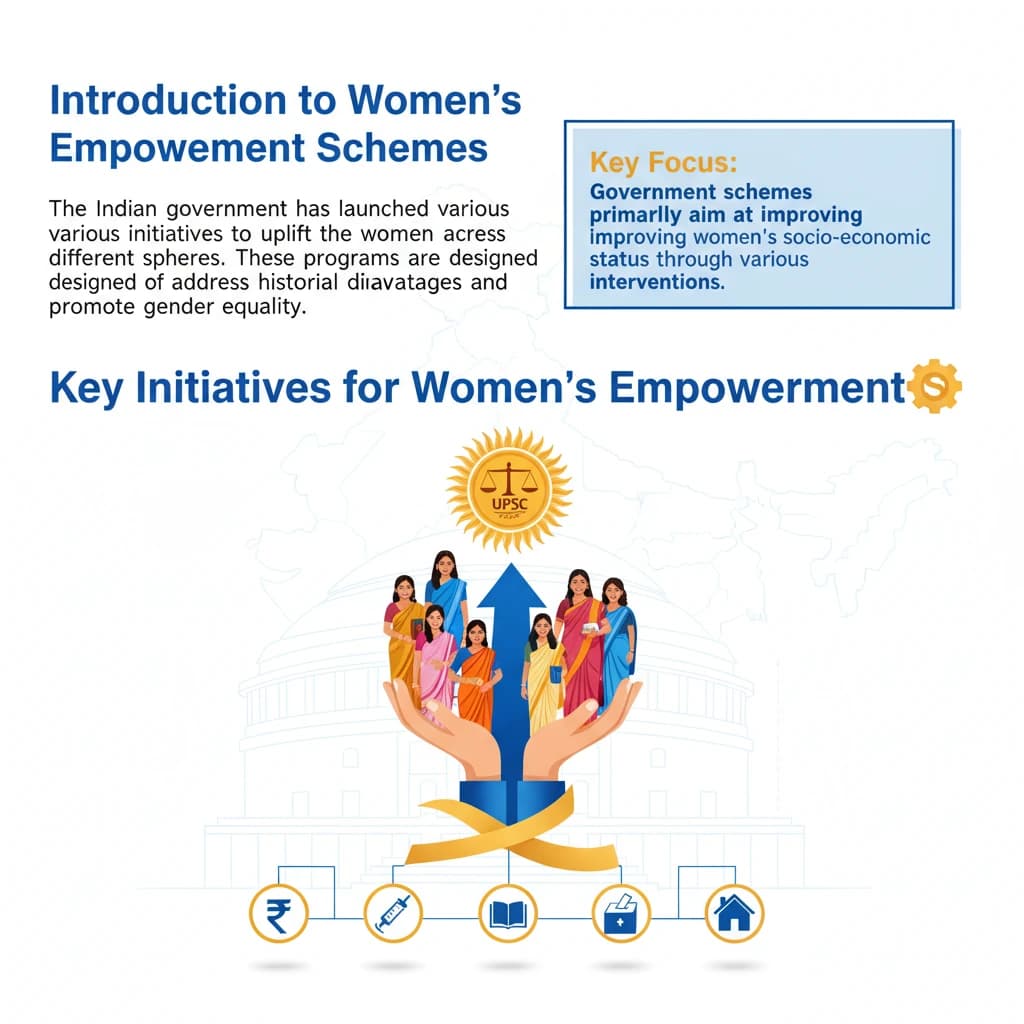
Introduction to Women's Empowerment Schemes
The Indian government has launched various initiatives to uplift the status of women across different spheres. These programs are designed to address historical disadvantages and promote gender equality.
Key Focus: Government schemes primarily aim at improving women's socio-economic status through various interventions.
Key Initiatives for Women's Empowerment
Several prominent schemes have been implemented to foster women's development. These include the Mahila Shakti Kendra (MSK), Beti Bachao Beti Padhao (BBBP), and the Support to Training and Employment Programme for Women (STEP).
Each of these programs targets specific aspects of women's lives, from education and health to skill development and livelihood generation.
Socio-Economic Impact vs. Political Participation
While these initiatives have significantly aimed to improve women's socio-economic status, their direct impact on enhancing political participation has been limited.
Core Challenge: Schemes often focus on economic independence and social welfare, but do not directly translate into increased representation or active involvement in political decision-making bodies.
UPSC Insight: When analyzing empowerment schemes, it's crucial to distinguish between their impact on socio-economic indicators and their influence on political representation. This nuanced understanding is often tested in GS-I (Society) and GS-II (Social Justice).
💡 Key Takeaways
- •Government initiatives like Mahila Shakti Kendra, Beti Bachao Beti Padhao, and STEP primarily target women's socio-economic upliftment.
- •These schemes have significantly contributed to improving women's access to education, health, skills, and economic opportunities.
- •Despite socio-economic gains, the direct impact of these programs on enhancing women's formal political participation has been limited.
- •Political empowerment requires targeted interventions beyond socio-economic support, such as reservations and leadership development.
- •A holistic approach is needed to ensure women's empowerment across all spheres: social, economic, and political.
🧠 Memory Techniques
95% Verified Content
📚 Reference Sources
•NITI Aayog Reports on Women's Empowerment
•Press Information Bureau (PIB) releases on social welfare schemes
•Drishti IAS Study Material on Social Issues