Loading page, please wait…
Eradicating Manual Scavenging - UPSC Social Issues
What is Eradicating Manual Scavenging in UPSC Social Issues?
Eradicating Manual Scavenging is a key topic under Social Issues for UPSC Civil Services Examination. Key points include: Manual scavenging is the inhumane practice of physically cleaning human excreta, violating Articles 17 and 21.. Over 58,000 manual scavengers identified in 2021, with 75% being women, despite many districts being declared 'free'.. The PEMSR Act, 2013, prohibits manual scavenging and mandates rehabilitation through skill development and financial aid.. Understanding this topic is essential for both UPSC Prelims and Mains preparation.
Why is Eradicating Manual Scavenging important for UPSC exam?
Eradicating Manual Scavenging is a Medium-level topic in UPSC Social Issues. It is tested in both Prelims (factual MCQs) and Mains (analytical answer writing). Previous year UPSC questions have frequently covered aspects of Eradicating Manual Scavenging, making it essential for comprehensive IAS preparation.
How to prepare Eradicating Manual Scavenging for UPSC?
To prepare Eradicating Manual Scavenging for UPSC: (1) Study the comprehensive notes covering all key concepts on Vaidra. (2) Practice previous year questions on this topic. (3) Connect it with current affairs using daily updates. (4) Revise using key takeaways and mind maps available for Social Issues. (5) Write practice answers linking Eradicating Manual Scavenging to related GS Paper topics.
Key takeaways of Eradicating Manual Scavenging for UPSC
- Manual scavenging is the inhumane practice of physically cleaning human excreta, violating Articles 17 and 21.
- Over 58,000 manual scavengers identified in 2021, with 75% being women, despite many districts being declared 'free'.
- The PEMSR Act, 2013, prohibits manual scavenging and mandates rehabilitation through skill development and financial aid.
- SC/ST (Prevention of Atrocities) Act, 1989, criminalizes employment of Scheduled Castes in manual scavenging.
- Eradication requires robust legal enforcement, comprehensive rehabilitation, and addressing deep-rooted social stigma.
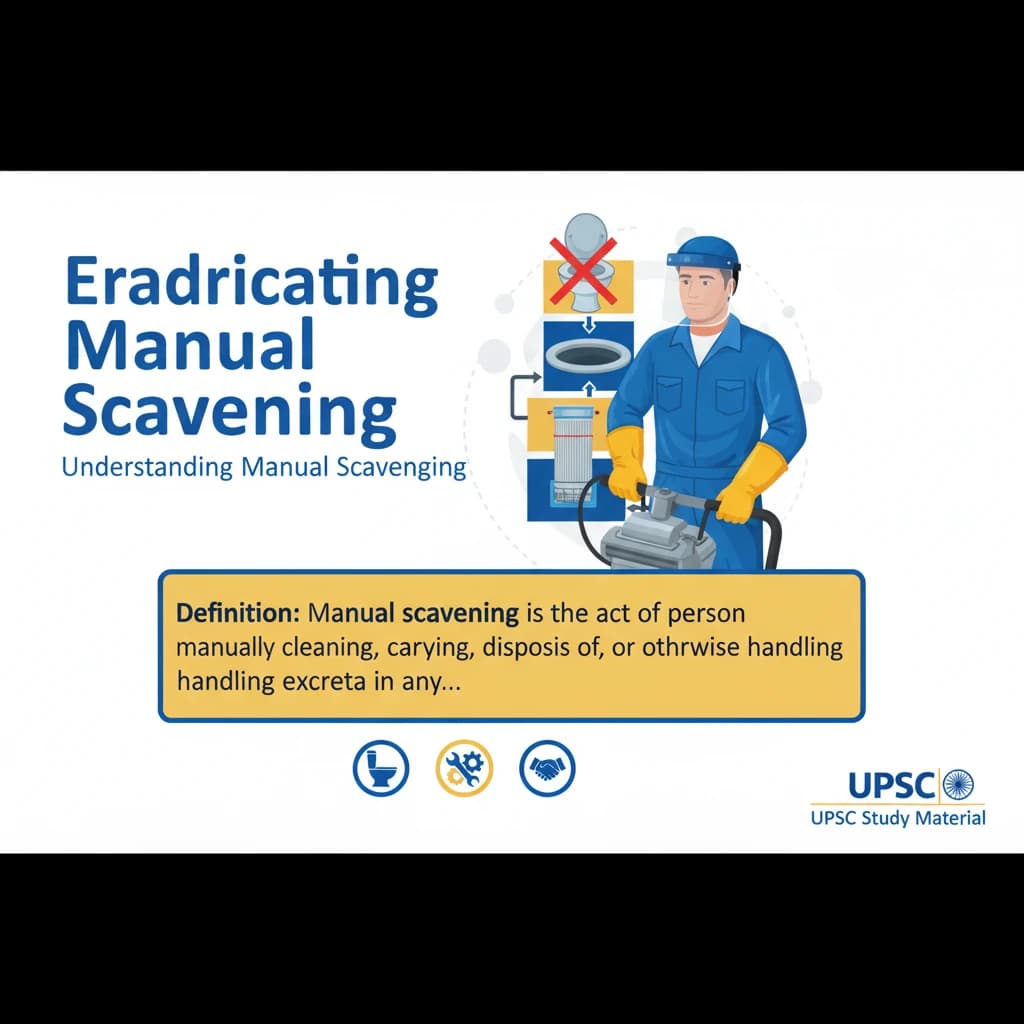
Eradicating Manual Scavenging
Medium⏱️ 8 min read
social issues
📖 Introduction
Understanding Manual Scavenging
Manual scavenging refers to the deeply inhumane practice of physically handling and cleaning human excreta. This often involves direct contact with waste from insanitary toilets, open drains, pits, or even railway tracks.
Definition: Manual scavenging is the act of a person manually cleaning, carrying, disposing of, or otherwise handling human excreta in any manner, whether in an insanitary latrine or open drain or pit or on a railway track or in any other place.
Current Status and Demographics
Despite legal prohibitions, the practice of manual scavenging persists in India. Recent data highlights the continued presence of this issue across the nation.
- In 2021, India officially recorded 58,098 manual scavengers.
- A significant majority, approximately 75%, of these identified manual scavengers were women.
Progress has been made in certain areas, with many districts reporting an end to the practice.
Latest Data (as on 31st July, 2024): Out of 766 districts in India, 732 districts have officially declared themselves manual scavenging-free.
Violation of Fundamental Rights
The practice of manual scavenging is not only a social injustice but also a grave violation of fundamental human rights guaranteed by the Indian Constitution.
It directly contravenes Article 17 of the Constitution, which mandates the abolition of untouchability. The historical association of manual scavenging with specific caste groups underscores this violation.
Furthermore, it infringes upon Article 21, which guarantees the Right to life with dignity. Engaging in manual scavenging strips individuals of their dignity and exposes them to severe health hazards.
Legal Framework Against Manual Scavenging
India has enacted robust legislation to prohibit manual scavenging and facilitate the rehabilitation of those involved in the practice. These laws aim to address both the prohibition and the social welfare aspects.
The Prohibition of Employment as Manual Scavengers and Their Rehabilitation Act, 2013 (PEMSR Act, 2013)
This comprehensive Act serves as the primary legal instrument against manual scavenging. It outlines clear prohibitions and mandates for rehabilitation.
- Prohibition: The Act strictly prohibits the employment of individuals as manual scavengers.
- Infrastructure Mandates: It also prohibits the construction or maintenance of insanitary latrines. It further mandates the demolition or conversion of existing insanitary latrines into sanitary ones.
- Rehabilitation Measures: A crucial aspect of the Act is the provision for the identification and rehabilitation of manual scavengers. This includes offering skill development, providing financial assistance, and facilitating access to alternative employment opportunities.
UPSC Insight: Understand the dual focus of the PEMSR Act, 2013: prohibition (of employment and insanitary latrines) and rehabilitation (skill development, financial aid, alternative jobs). This is a key distinction for Mains answers.
The Scheduled Castes and the Scheduled Tribes (Prevention of Atrocities) Act, 1989 (PoA Act, 1989)
This Act, while broader in scope, also addresses manual scavenging by protecting specific vulnerable communities.
The SC/ST (Prevention of Atrocities) Act, 1989, specifically criminalises the employment of Scheduled Castes in manual scavenging, recognizing the caste-based discrimination inherent in the practice.
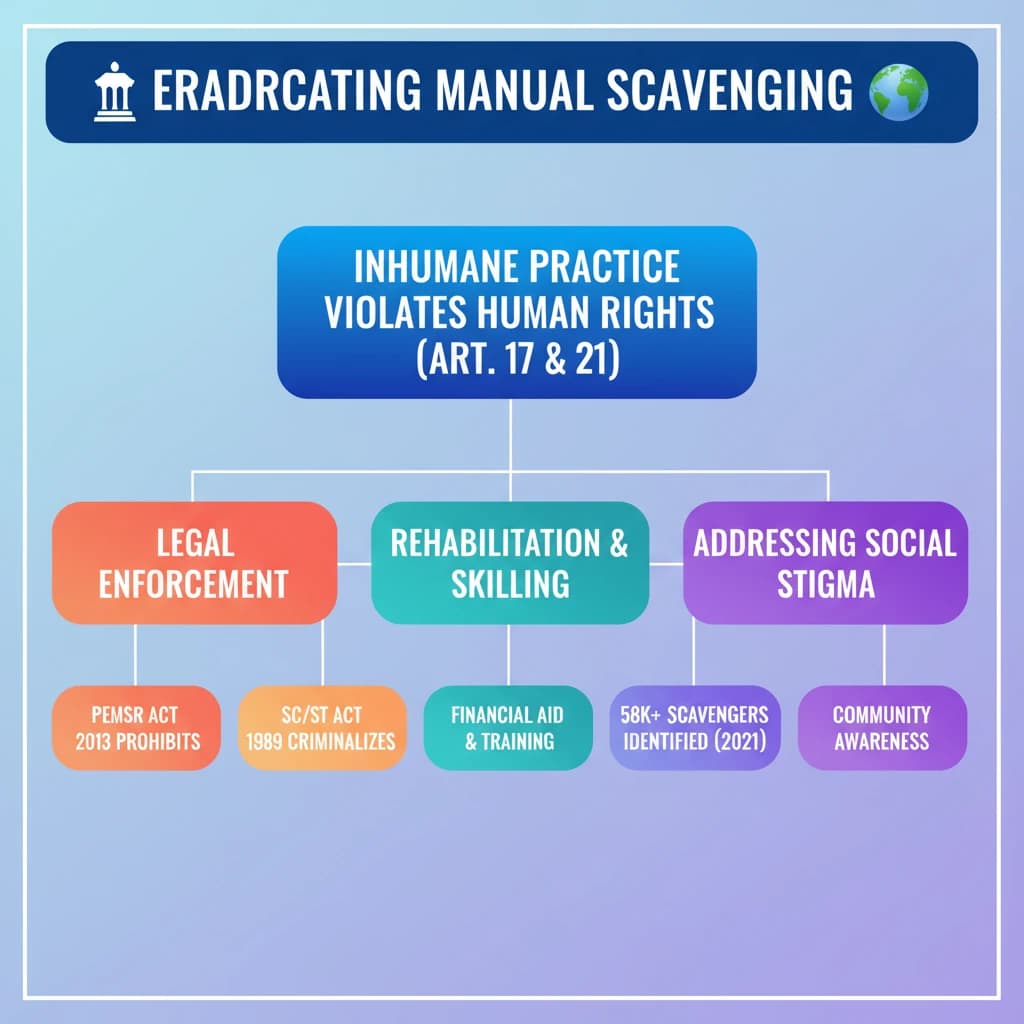
💡 Key Takeaways
- •Manual scavenging is the inhumane practice of physically cleaning human excreta, violating Articles 17 and 21.
- •Over 58,000 manual scavengers identified in 2021, with 75% being women, despite many districts being declared 'free'.
- •The PEMSR Act, 2013, prohibits manual scavenging and mandates rehabilitation through skill development and financial aid.
- •SC/ST (Prevention of Atrocities) Act, 1989, criminalizes employment of Scheduled Castes in manual scavenging.
- •Eradication requires robust legal enforcement, comprehensive rehabilitation, and addressing deep-rooted social stigma.
🧠 Memory Techniques
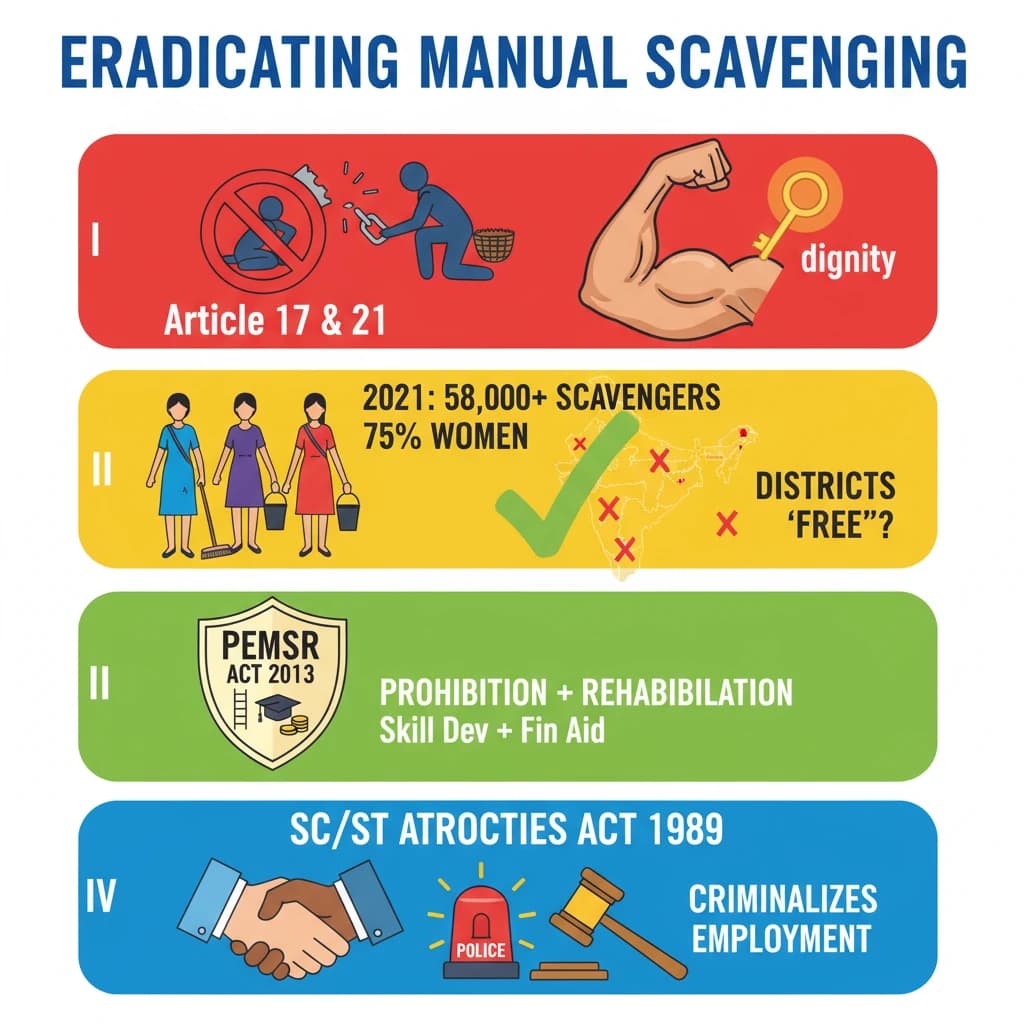
95% Verified Content
📚 Reference Sources
•The Prohibition of Employment as Manual Scavengers and Their Rehabilitation Act, 2013
•The Scheduled Castes and the Scheduled Tribes (Prevention of Atrocities) Act, 1989
•National Human Rights Commission (NHRC) reports and discussions
•Ministry of Social Justice and Empowerment data and initiatives