HIV: Understanding the Virus, its Impact, and Implications - UPSC Social Issues
What is HIV: Understanding the Virus, its Impact, and Implications in UPSC Social Issues?
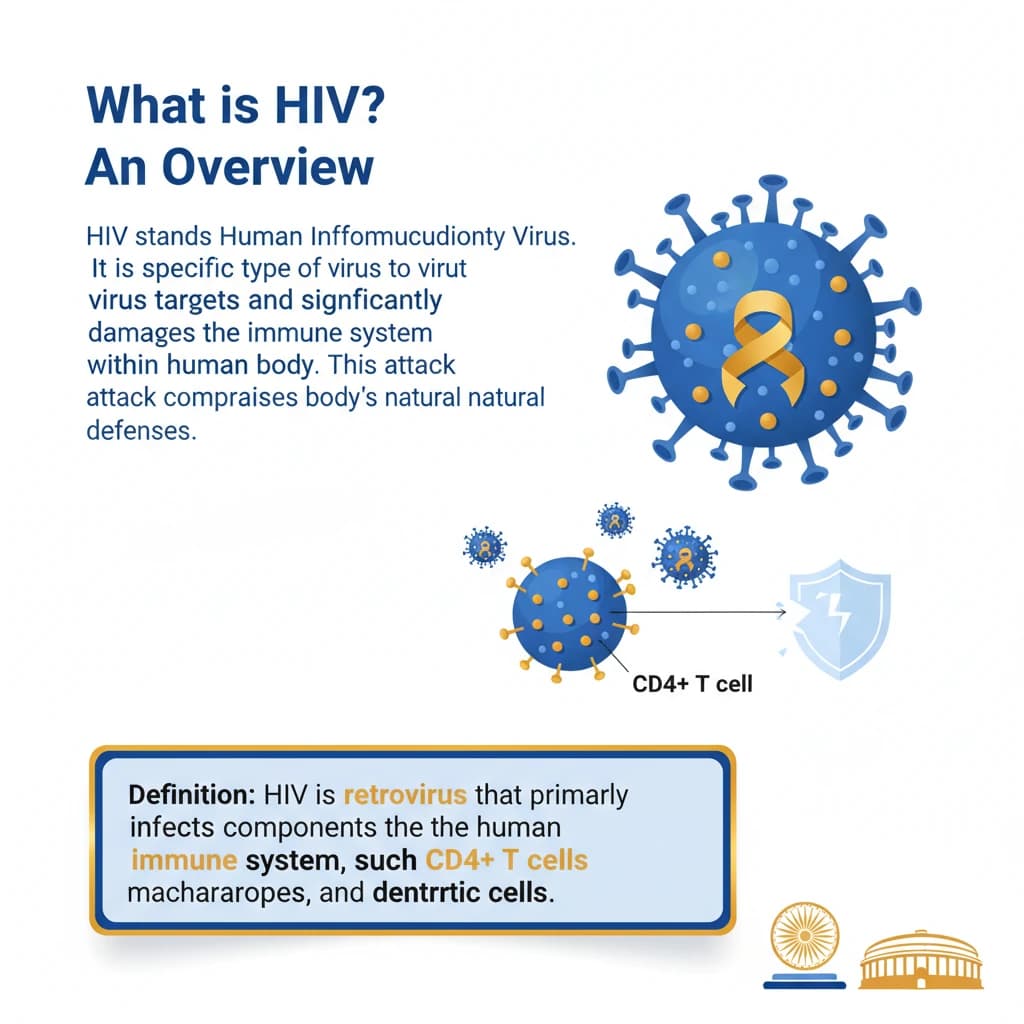
HIV: Understanding the Virus, its Impact, and Implications is a key topic under Social Issues for UPSC Civil Services Examination. Key points include: HIV is the Human Immunodeficiency Virus, attacking the body's immune system.. It primarily targets and destroys CD4 immune cells, a type of White Blood Cell.. Weakened immunity leads to vulnerability to opportunistic infections and cancers.. Understanding this topic is essential for both UPSC Prelims and Mains preparation.
Why is HIV: Understanding the Virus, its Impact, and Implications important for UPSC exam?
HIV: Understanding the Virus, its Impact, and Implications is a Easy-level topic in UPSC Social Issues. It is tested in both Prelims (factual MCQs) and Mains (analytical answer writing). Previous year UPSC questions have frequently covered aspects of HIV: Understanding the Virus, its Impact, and Implications, making it essential for comprehensive IAS preparation.
How to prepare HIV: Understanding the Virus, its Impact, and Implications for UPSC?
To prepare HIV: Understanding the Virus, its Impact, and Implications for UPSC: (1) Study the comprehensive notes covering all key concepts on Vaidra. (2) Practice previous year questions on this topic. (3) Connect it with current affairs using daily updates. (4) Revise using key takeaways and mind maps available for Social Issues. (5) Write practice answers linking HIV: Understanding the Virus, its Impact, and Implications to related GS Paper topics.
Key takeaways of HIV: Understanding the Virus, its Impact, and Implications for UPSC
- HIV is the Human Immunodeficiency Virus, attacking the body's immune system.
- It primarily targets and destroys CD4 immune cells, a type of White Blood Cell.
- Weakened immunity leads to vulnerability to opportunistic infections and cancers.
- AIDS is the advanced stage of HIV infection, characterized by severe immunodeficiency.
- Antiretroviral Therapy (ART) effectively manages HIV, making it a chronic condition and reducing transmission.
HIV: Understanding the Virus, its Impact, and Implications
📖 Introduction
💡 Key Takeaways
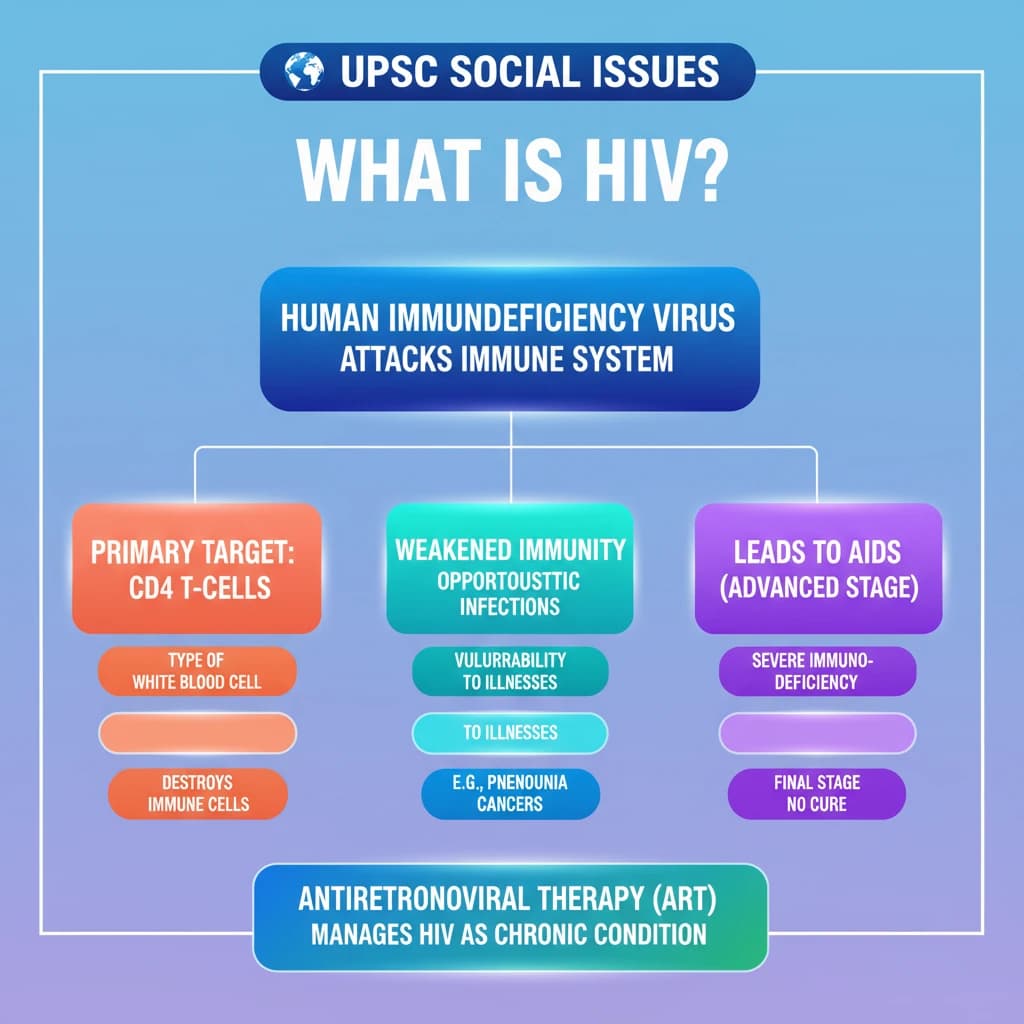
- •HIV is the Human Immunodeficiency Virus, attacking the body's immune system.
- •It primarily targets and destroys CD4 immune cells, a type of White Blood Cell.
- •Weakened immunity leads to vulnerability to opportunistic infections and cancers.
- •AIDS is the advanced stage of HIV infection, characterized by severe immunodeficiency.
- •Antiretroviral Therapy (ART) effectively manages HIV, making it a chronic condition and reducing transmission.
🧠 Memory Techniques
