Loading page, please wait…
Global Burden of Cancer: WHO - UPSC Social Issues
What is Global Burden of Cancer: WHO in UPSC Social Issues?
Global Burden of Cancer: WHO is a key topic under Social Issues for UPSC Civil Services Examination. Key points include: The 2022 WHO IARC report estimated 20 million new cancer cases and 9.7 million deaths globally.. Lung cancer was the most common cancer and the leading cause of cancer death, largely due to persistent tobacco use, especially in Asia.. Female breast cancer ranked second in new cases, highlighting its significant global burden.. Understanding this topic is essential for both UPSC Prelims and Mains preparation.
Why is Global Burden of Cancer: WHO important for UPSC exam?
Global Burden of Cancer: WHO is a Medium-level topic in UPSC Social Issues. It is tested in both Prelims (factual MCQs) and Mains (analytical answer writing). Previous year UPSC questions have frequently covered aspects of Global Burden of Cancer: WHO, making it essential for comprehensive IAS preparation.
How to prepare Global Burden of Cancer: WHO for UPSC?
To prepare Global Burden of Cancer: WHO for UPSC: (1) Study the comprehensive notes covering all key concepts on Vaidra. (2) Practice previous year questions on this topic. (3) Connect it with current affairs using daily updates. (4) Revise using key takeaways and mind maps available for Social Issues. (5) Write practice answers linking Global Burden of Cancer: WHO to related GS Paper topics.
Key takeaways of Global Burden of Cancer: WHO for UPSC
- The 2022 WHO IARC report estimated 20 million new cancer cases and 9.7 million deaths globally.
- Lung cancer was the most common cancer and the leading cause of cancer death, largely due to persistent tobacco use, especially in Asia.
- Female breast cancer ranked second in new cases, highlighting its significant global burden.
- Striking inequities in cancer burden exist, disproportionately affecting underserved populations and correlating with human development levels.
- About 1 in 5 people develop cancer in their lifetime, underscoring its widespread impact.
- The report calls for urgent action to address cancer inequities and strengthen global cancer control strategies.
Global Burden of Cancer: WHO
Medium⏱️ 10 min read
social issues
📖 Introduction
Introduction to the Global Burden of Cancer 2022 Estimates
The World Health Organization (WHO), through its specialized cancer agency, the International Agency for Research on Cancer (IARC), released critical estimates on the Global Burden of Cancer in 2022.
These findings were published just before World Cancer Day, observed annually on February 4th, underscoring the urgency of addressing this global health challenge.
The IARC estimates highlighted a significant and growing burden of cancer worldwide. They also emphasized the disproportionate impact on underserved populations and the pressing need to tackle cancer inequities globally.
Key Highlights of the Global Burden in 2022
The 2022 estimates revealed alarming statistics regarding the prevalence and mortality of cancer across the globe.
- Approximately 20 million new cancer cases were recorded worldwide.
- A staggering 9.7 million deaths were attributed to cancer.
- The number of individuals alive within 5 years of a cancer diagnosis stood at 53.5 million.
- Globally, about 1 in 5 people are expected to develop cancer during their lifetime.
Most Common Cancer Types in 2022
A concentrated number of cancer types accounted for the majority of new cases and deaths in 2022, indicating specific areas of concern for public health interventions.
Ten types of cancer collectively comprised approximately two-thirds of both new cases and deaths globally in 2022.
The most frequently occurring cancers were:
- Lung cancer: Most common, with 2.5 million new cases (12.4% of total).
- Female breast cancer: Second, with 2.3 million cases (11.6%).
- Followed by colorectal cancer, prostate cancer, and stomach cancer.
Leading Causes of Cancer Death in 2022
Understanding the primary causes of cancer-related mortality is crucial for developing targeted prevention and treatment strategies.
- Lung cancer: Leading cause of death, with 1.8 million deaths (18.7% of total cancer deaths).
- Colorectal cancer: Second, with 900,000 deaths (9.3%).
- Followed by liver cancer, breast cancer, and stomach cancer.
The re-emergence of lung cancer as the most common cancer and leading cause of death is largely linked to persistent tobacco use, particularly prevalent in Asia.
Addressing Cancer Inequities
The IARC report highlighted significant disparities in the cancer burden, which are closely correlated with levels of human development across different regions.
These striking inequities mean that certain populations, especially those in underserved areas, bear a disproportionately higher burden of cancer.
UPSC Insight: The concept of cancer inequities is vital for GS-II (Social Justice) and GS-III (Health). Be prepared to discuss how socio-economic factors, access to healthcare, and lifestyle differences contribute to these disparities, especially concerning diseases like breast cancer which showed particular inequities.
💡 Key Takeaways
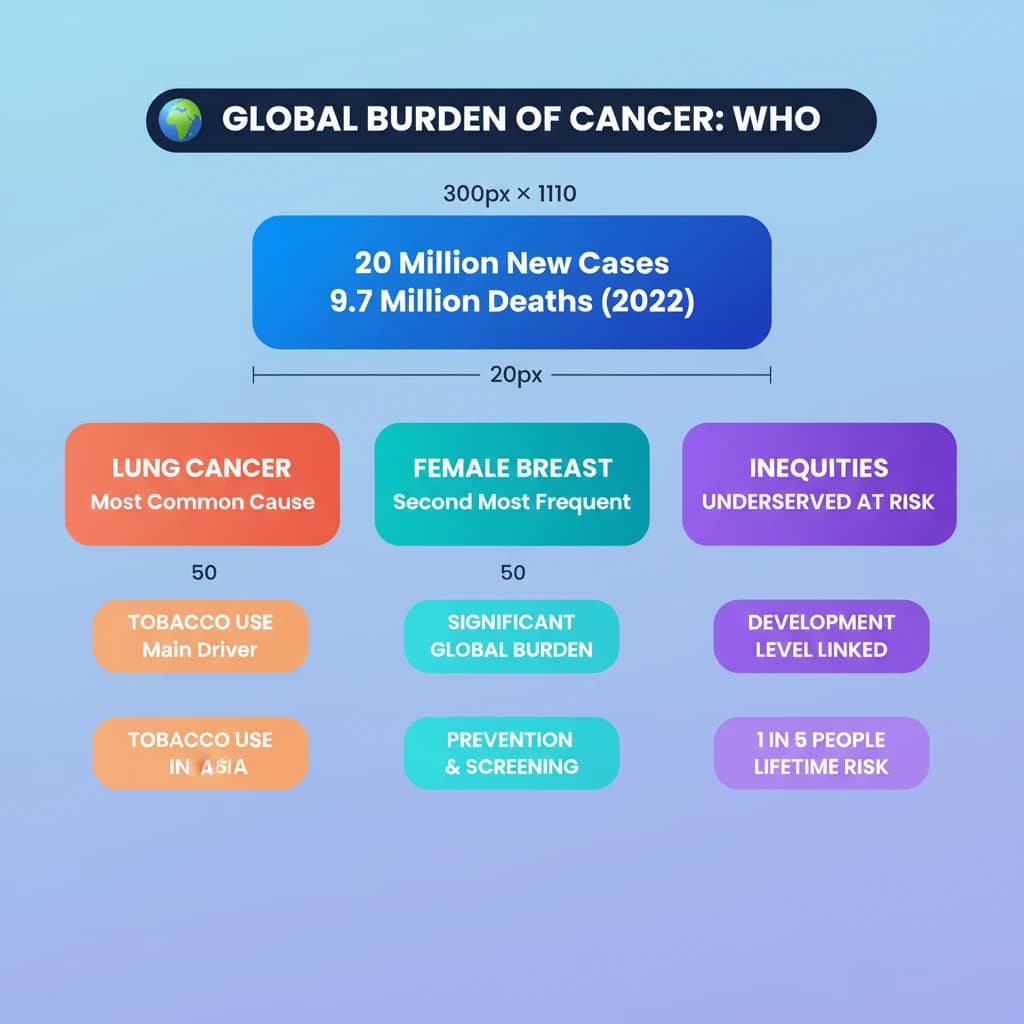
- •The 2022 WHO IARC report estimated 20 million new cancer cases and 9.7 million deaths globally.
- •Lung cancer was the most common cancer and the leading cause of cancer death, largely due to persistent tobacco use, especially in Asia.
- •Female breast cancer ranked second in new cases, highlighting its significant global burden.
- •Striking inequities in cancer burden exist, disproportionately affecting underserved populations and correlating with human development levels.
- •About 1 in 5 people develop cancer in their lifetime, underscoring its widespread impact.
- •The report calls for urgent action to address cancer inequities and strengthen global cancer control strategies.
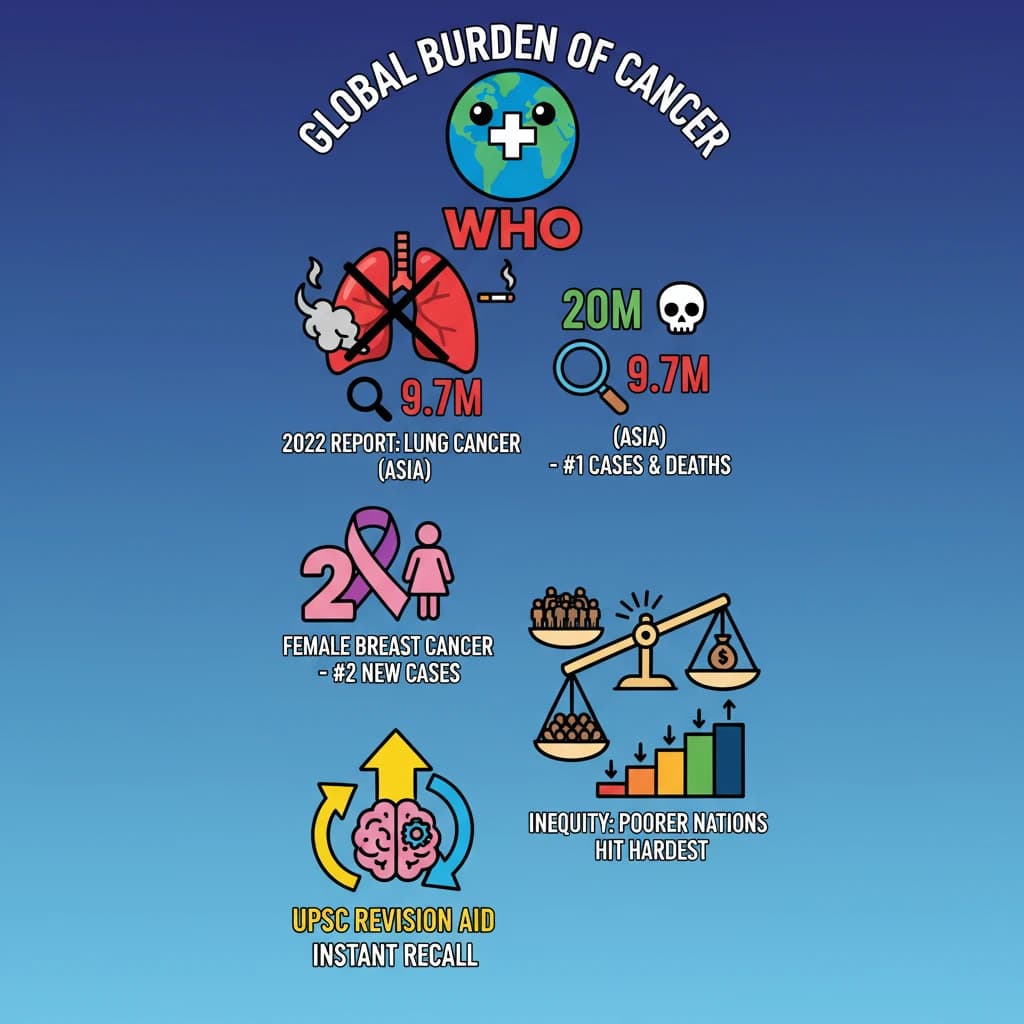
🧠 Memory Techniques
98% Verified Content
📚 Reference Sources
•Drishti IAS Summary (provided source material)