Loading page, please wait…
Global Status on Recognition of Same-Sex Marriage - UPSC Social Issues
What is Global Status on Recognition of Same-Sex Marriage in UPSC Social Issues?
Global Status on Recognition of Same-Sex Marriage is a key topic under Social Issues for UPSC Civil Services Examination. Key points include: Over 30 countries globally have legalized same-sex marriage as of 2023.. The Netherlands was the first country worldwide to legalize same-sex marriage in 2001.. Taiwan holds the distinction of being the first country in Asia to legalize same-sex marriage.. Understanding this topic is essential for both UPSC Prelims and Mains preparation.
Why is Global Status on Recognition of Same-Sex Marriage important for UPSC exam?
Global Status on Recognition of Same-Sex Marriage is a Medium-level topic in UPSC Social Issues. It is tested in both Prelims (factual MCQs) and Mains (analytical answer writing). Previous year UPSC questions have frequently covered aspects of Global Status on Recognition of Same-Sex Marriage, making it essential for comprehensive IAS preparation.
How to prepare Global Status on Recognition of Same-Sex Marriage for UPSC?
To prepare Global Status on Recognition of Same-Sex Marriage for UPSC: (1) Study the comprehensive notes covering all key concepts on Vaidra. (2) Practice previous year questions on this topic. (3) Connect it with current affairs using daily updates. (4) Revise using key takeaways and mind maps available for Social Issues. (5) Write practice answers linking Global Status on Recognition of Same-Sex Marriage to related GS Paper topics.
Key takeaways of Global Status on Recognition of Same-Sex Marriage for UPSC
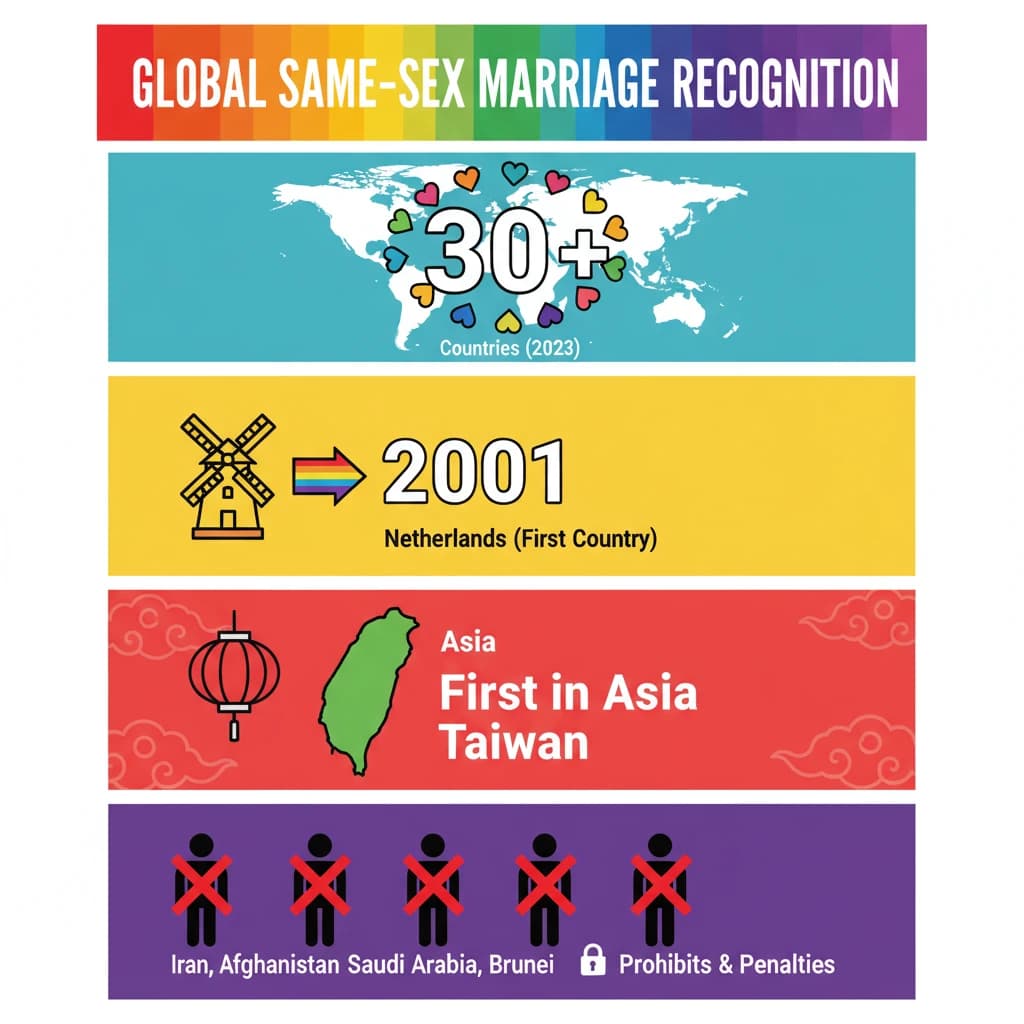
- Over 30 countries globally have legalized same-sex marriage as of 2023.
- The Netherlands was the first country worldwide to legalize same-sex marriage in 2001.
- Taiwan holds the distinction of being the first country in Asia to legalize same-sex marriage.
- Several nations, including Iran, Afghanistan, Saudi Arabia, and Brunei, prohibit same-sex marriage and impose severe penalties.
- The global status reflects a significant divide between nations recognizing and those criminalizing same-sex relationships.
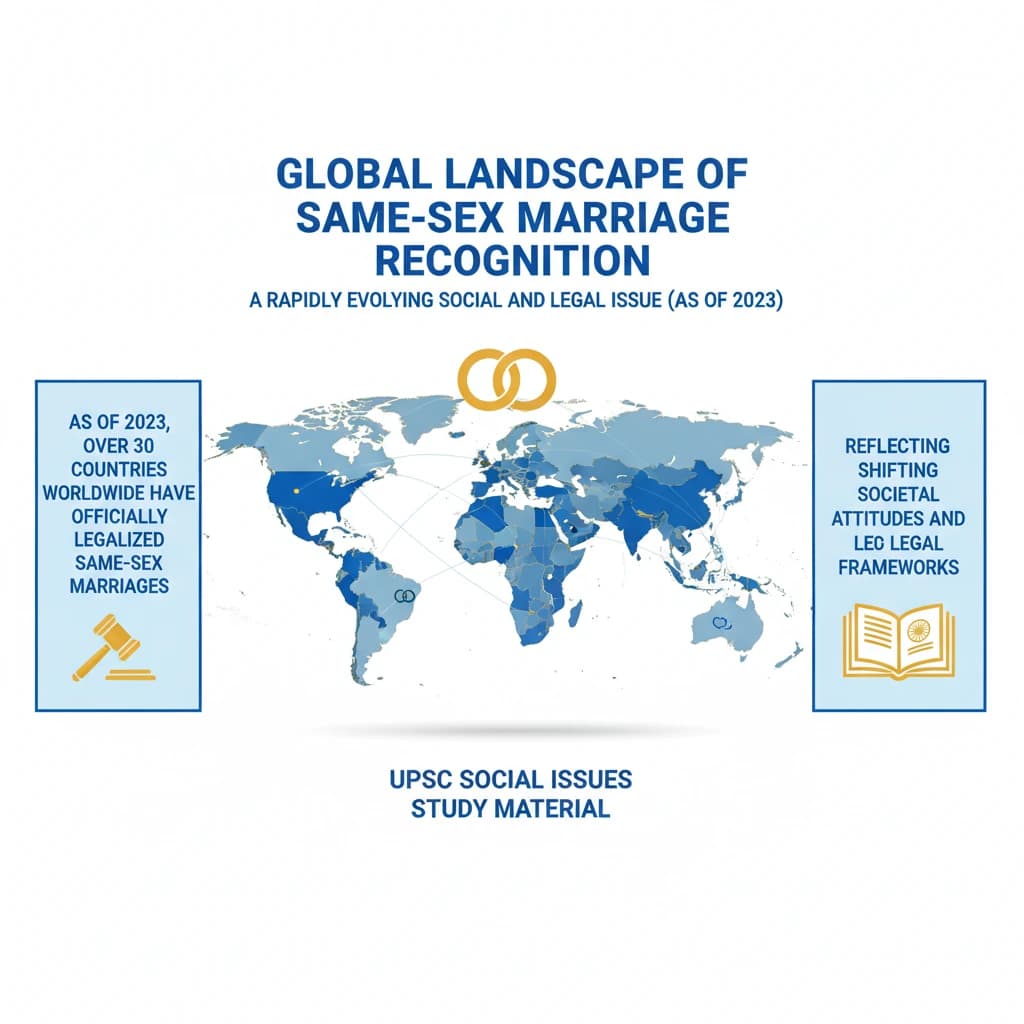
Global Status on Recognition of Same-Sex Marriage
Medium⏱️ 6 min read
social issues
📖 Introduction
Global Landscape of Same-Sex Marriage Recognition
The global recognition of same-sex marriage is a rapidly evolving social and legal issue. As of 2023, a significant number of nations have moved towards legalizing these unions, reflecting shifting societal attitudes and legal frameworks.
As of 2023, over 30 countries worldwide have officially legalized same-sex marriages.
This trend signifies a growing acceptance of LGBTQ+ rights and the principle of equality in marital institutions across various jurisdictions. However, this progress is not uniform globally.
Pioneering Nations in Legalization
The journey towards legalizing same-sex marriage began in the early 21st century with pioneering nations taking the lead. These countries often amended existing civil marriage laws to include same-sex couples.
The Netherlands holds the distinction of being the first country globally to legalize same-sex marriage. This landmark decision occurred in 2001 through an amendment to its civil marriage law.
Following this, other nations in Europe and North America progressively adopted similar legislation, expanding the rights of same-sex couples.
In Asia, Taiwan emerged as the first country to legalize same-sex marriage, marking a significant milestone for LGBTQ+ rights in the continent.
Nations with Prohibitive Stances
Despite the global trend towards recognition, several nations maintain strict prohibitions against same-sex marriage. These prohibitions are often rooted in cultural, religious, or traditional beliefs.
In some countries, the legal framework not only bans same-sex marriages but also imposes severe penalties for engaging in or advocating for such unions. These punishments can range from imprisonment to more extreme measures.
Countries like Iran, Afghanistan, Saudi Arabia, and Brunei are notable examples where same-sex marriages are not only prohibited but can also lead to severe penalties, including the death penalty or corporal punishment. This stark contrast highlights the diverse legal and social landscapes worldwide.
Understanding these divergent global statuses is crucial for comprehending the complex international human rights discourse surrounding LGBTQ+ issues.
💡 Key Takeaways
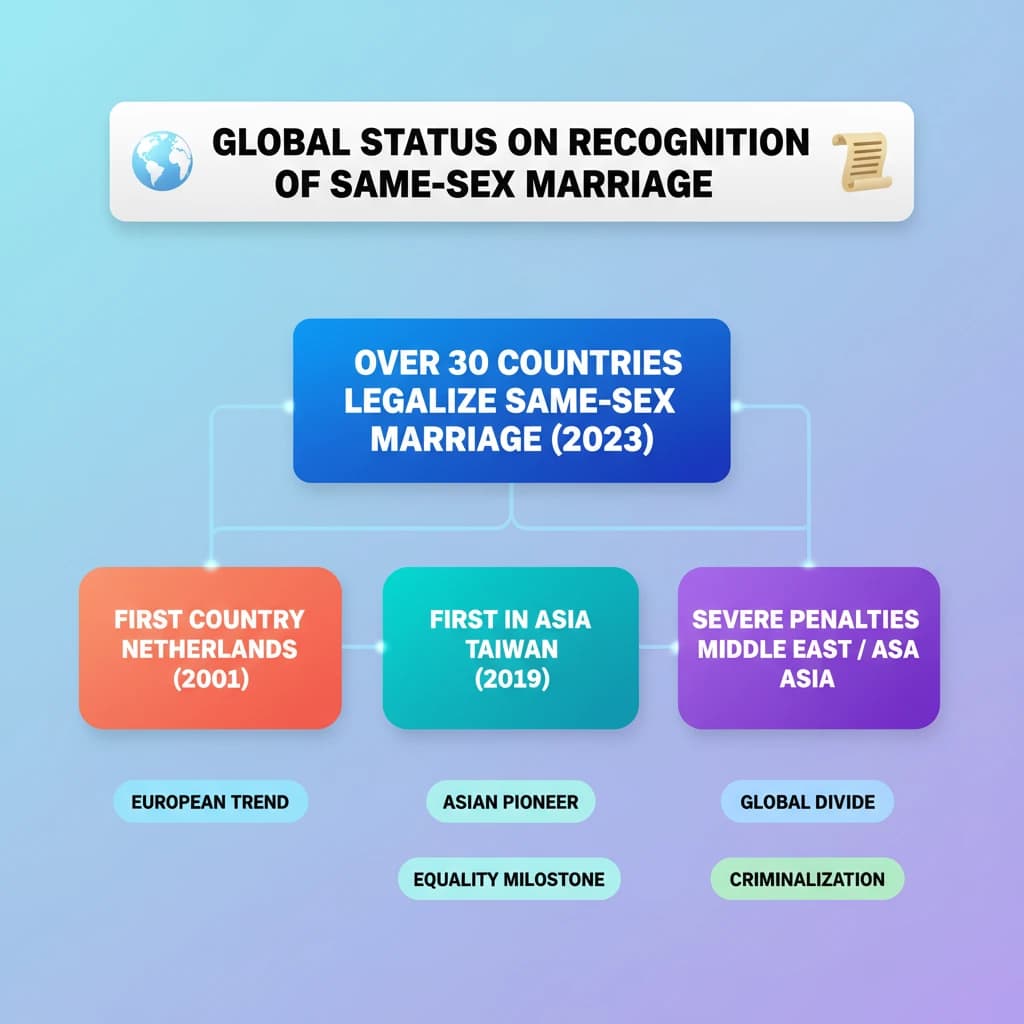
- •Over 30 countries globally have legalized same-sex marriage as of 2023.
- •The Netherlands was the first country worldwide to legalize same-sex marriage in 2001.
- •Taiwan holds the distinction of being the first country in Asia to legalize same-sex marriage.
- •Several nations, including Iran, Afghanistan, Saudi Arabia, and Brunei, prohibit same-sex marriage and impose severe penalties.
- •The global status reflects a significant divide between nations recognizing and those criminalizing same-sex relationships.
🧠 Memory Techniques
95% Verified Content
📚 Reference Sources
•UN Human Rights Office of the High Commissioner (OHCHR) reports on LGBTQ+ rights
•Pew Research Center reports on same-sex marriage