Loading page, please wait…
HIV Transmission: Modes and Mechanisms - UPSC Social Issues
What is HIV Transmission: Modes and Mechanisms in UPSC Social Issues?
HIV Transmission: Modes and Mechanisms is a key topic under Social Issues for UPSC Civil Services Examination. Key points include: HIV is transmitted through specific bodily fluids: blood, semen, vaginal fluids, and breast milk.. Primary transmission routes are unprotected sexual contact, sharing contaminated needles, and mother-to-child.. HIV is NOT spread through casual contact, air, water, or insects.. Understanding this topic is essential for both UPSC Prelims and Mains preparation.
Why is HIV Transmission: Modes and Mechanisms important for UPSC exam?
HIV Transmission: Modes and Mechanisms is a Medium-level topic in UPSC Social Issues. It is tested in both Prelims (factual MCQs) and Mains (analytical answer writing). Previous year UPSC questions have frequently covered aspects of HIV Transmission: Modes and Mechanisms, making it essential for comprehensive IAS preparation.
How to prepare HIV Transmission: Modes and Mechanisms for UPSC?
To prepare HIV Transmission: Modes and Mechanisms for UPSC: (1) Study the comprehensive notes covering all key concepts on Vaidra. (2) Practice previous year questions on this topic. (3) Connect it with current affairs using daily updates. (4) Revise using key takeaways and mind maps available for Social Issues. (5) Write practice answers linking HIV Transmission: Modes and Mechanisms to related GS Paper topics.
Key takeaways of HIV Transmission: Modes and Mechanisms for UPSC
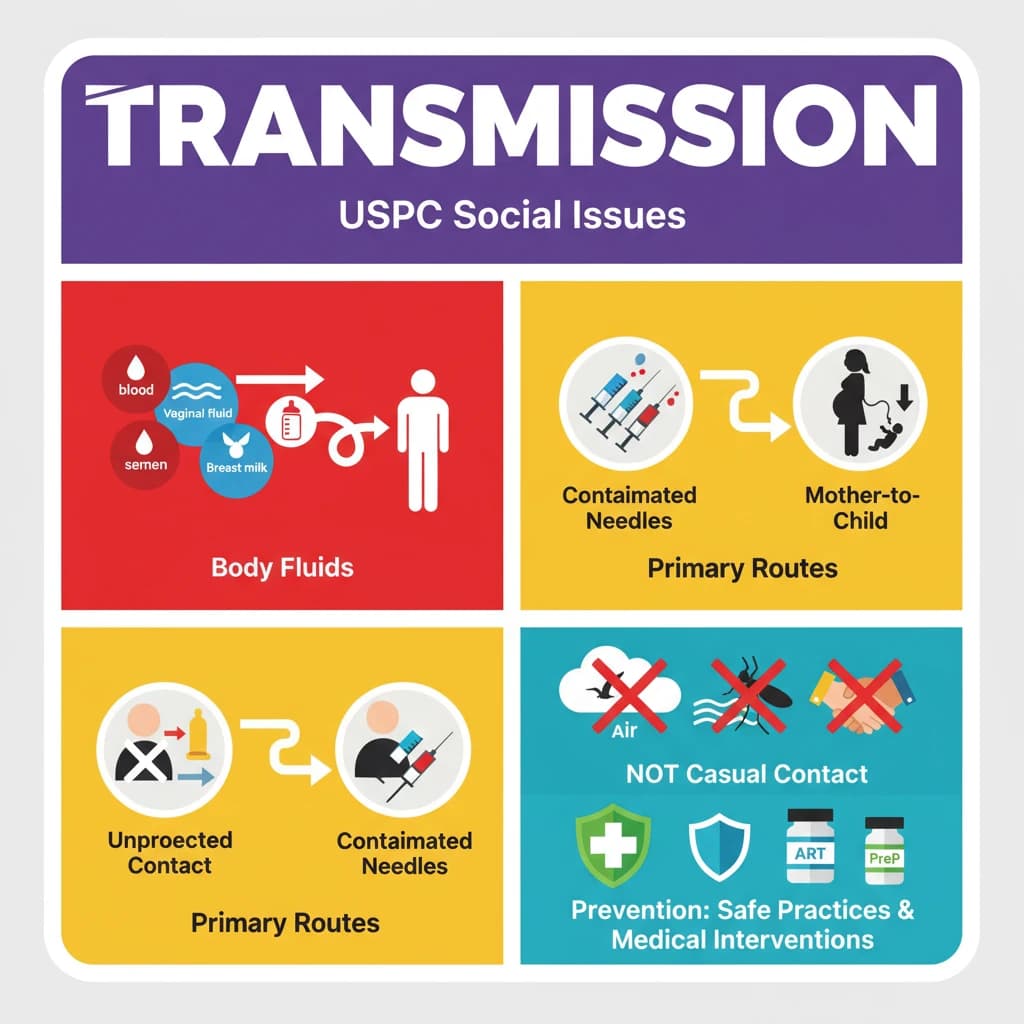
- HIV is transmitted through specific bodily fluids: blood, semen, vaginal fluids, and breast milk.
- Primary transmission routes are unprotected sexual contact, sharing contaminated needles, and mother-to-child.
- HIV is NOT spread through casual contact, air, water, or insects.
- Prevention relies on safe practices, awareness, and medical interventions like ART and PrEP.
- Understanding transmission is critical for effective public health policies and reducing stigma.
- Global efforts aim to end the AIDS epidemic by 2030, emphasizing prevention and access to treatment.
HIV Transmission: Modes and Mechanisms
Medium⏱️ 7 min read
social issues
📖 Introduction
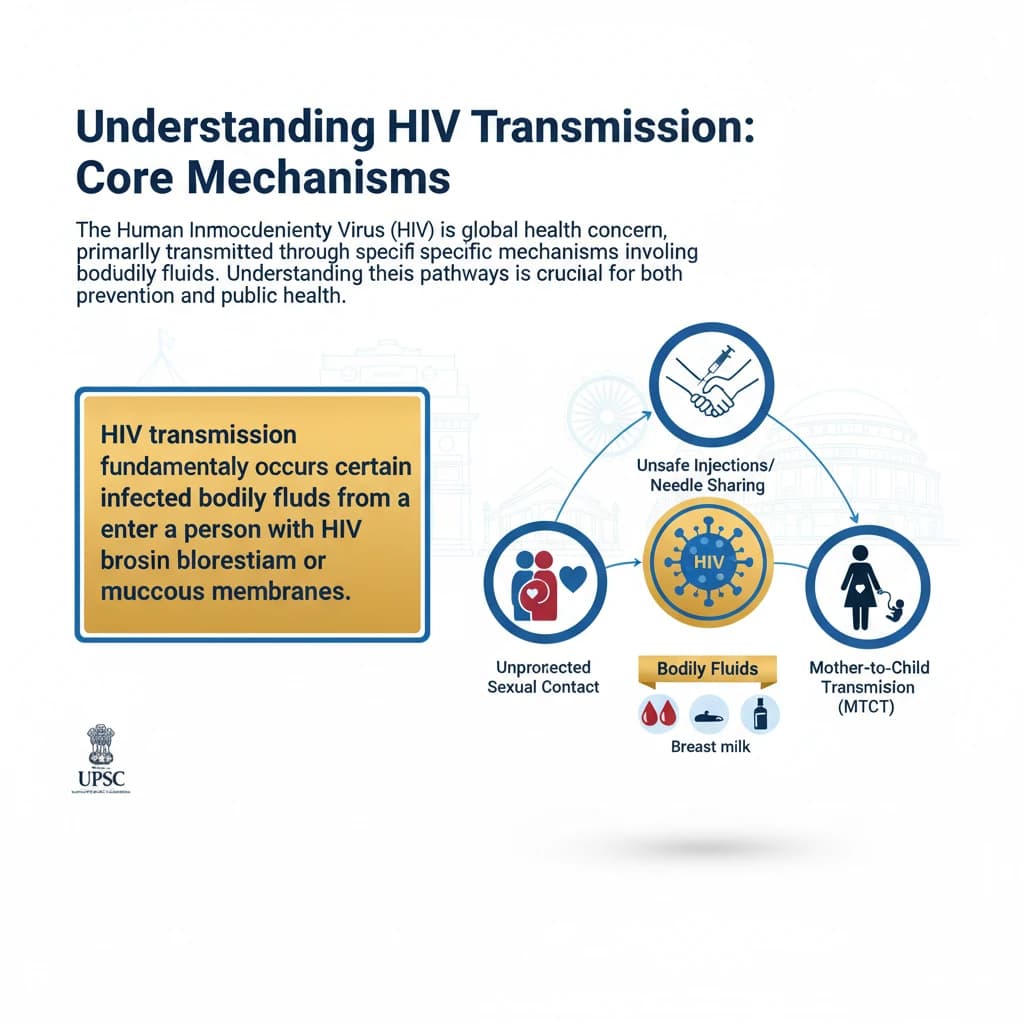
Understanding HIV Transmission: Core Mechanisms
The Human Immunodeficiency Virus (HIV) is a global health concern, primarily transmitted through specific mechanisms involving bodily fluids. Understanding these pathways is crucial for both prevention and public health.
HIV transmission fundamentally occurs when certain infected bodily fluids from a person with HIV enter the bloodstream or mucous membranes of another person.
This process requires a direct exchange of these fluids, not casual contact. The virus cannot survive for long outside the human body, making indirect transmission highly unlikely.
Key Bodily Fluids Involved in Transmission
Transmission of HIV is specifically linked to the exchange of a limited set of bodily fluids. These fluids contain sufficient viral load to cause infection if they enter another person's body.
- Blood: Direct contact with infected blood, such as through shared needles or contaminated blood transfusions.
- Semen (pre-cum, cum): Transmitted during unprotected sexual intercourse.
- Vaginal Fluids: Transmitted during unprotected sexual intercourse.
- Breast Milk: Can be transmitted from an HIV-positive mother to her child during breastfeeding.
It is important to note that fluids like saliva, tears, sweat, and urine do not transmit HIV, as the viral concentration in these fluids is too low.
UPSC Insight: Questions on social issues often test knowledge of public health challenges. Understanding HIV transmission modes is fundamental for discussing prevention strategies, government policies, and addressing social stigma, relevant for GS Paper I (Social Issues) and GS Paper II (Health).
💡 Key Takeaways
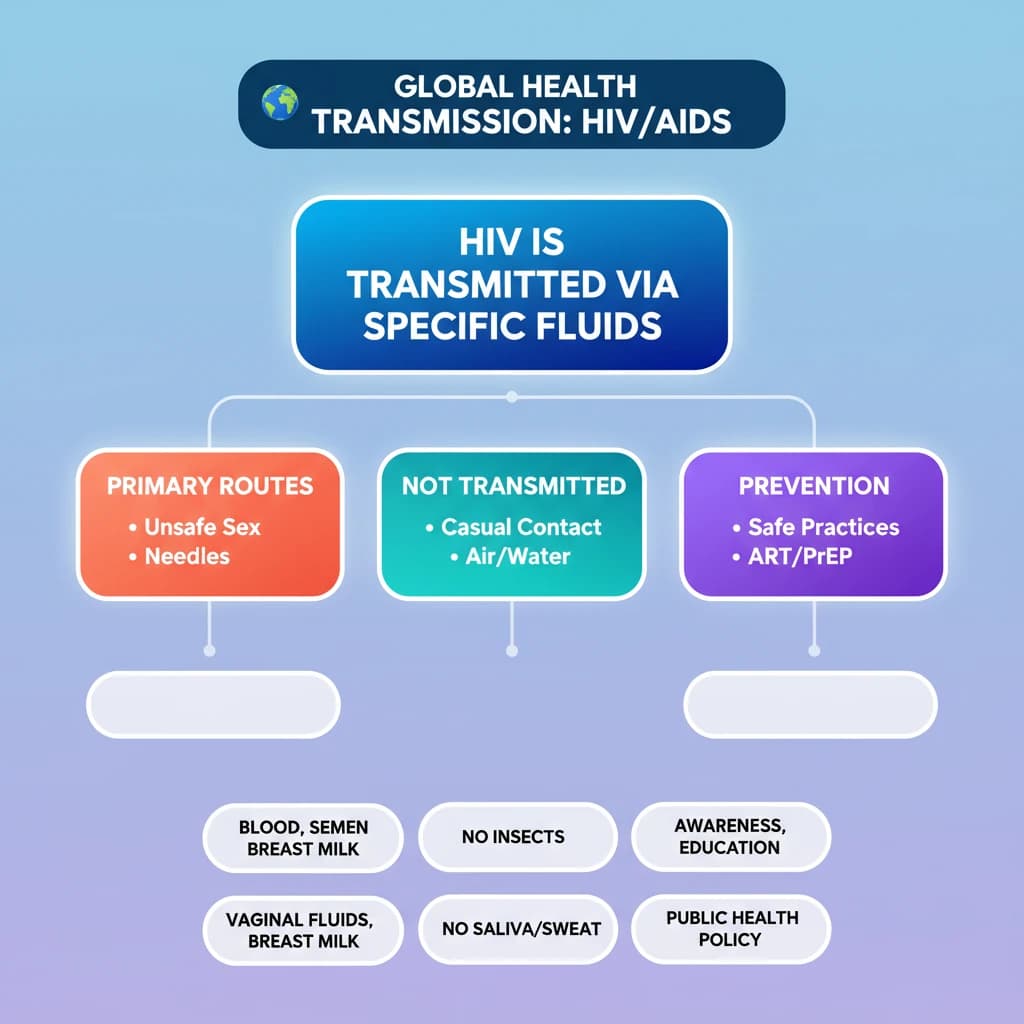
- •HIV is transmitted through specific bodily fluids: blood, semen, vaginal fluids, and breast milk.
- •Primary transmission routes are unprotected sexual contact, sharing contaminated needles, and mother-to-child.
- •HIV is NOT spread through casual contact, air, water, or insects.
- •Prevention relies on safe practices, awareness, and medical interventions like ART and PrEP.
- •Understanding transmission is critical for effective public health policies and reducing stigma.
- •Global efforts aim to end the AIDS epidemic by 2030, emphasizing prevention and access to treatment.
🧠 Memory Techniques
98% Verified Content
📚 Reference Sources
•Joint United Nations Programme on HIV/AIDS (UNAIDS) - Global AIDS Update
•Centers for Disease Control and Prevention (CDC) - HIV Transmission
•NCERT Biology Textbooks - Chapter on Human Health and Diseases