Loading page, please wait…
HIV/AIDS: Severity and Progression to AIDS Stage - UPSC Social Issues
What is HIV/AIDS: Severity and Progression to AIDS Stage in UPSC Social Issues?
HIV/AIDS: Severity and Progression to AIDS Stage is a key topic under Social Issues for UPSC Civil Services Examination. Key points include: Untreated HIV systematically destroys the immune system.. Severe immune suppression leads to the Acquired Immunodeficiency Syndrome (AIDS) stage.. AIDS patients are highly vulnerable to life-threatening opportunistic infections.. Understanding this topic is essential for both UPSC Prelims and Mains preparation.
Why is HIV/AIDS: Severity and Progression to AIDS Stage important for UPSC exam?
HIV/AIDS: Severity and Progression to AIDS Stage is a Medium-level topic in UPSC Social Issues. It is tested in both Prelims (factual MCQs) and Mains (analytical answer writing). Previous year UPSC questions have frequently covered aspects of HIV/AIDS: Severity and Progression to AIDS Stage, making it essential for comprehensive IAS preparation.
How to prepare HIV/AIDS: Severity and Progression to AIDS Stage for UPSC?
To prepare HIV/AIDS: Severity and Progression to AIDS Stage for UPSC: (1) Study the comprehensive notes covering all key concepts on Vaidra. (2) Practice previous year questions on this topic. (3) Connect it with current affairs using daily updates. (4) Revise using key takeaways and mind maps available for Social Issues. (5) Write practice answers linking HIV/AIDS: Severity and Progression to AIDS Stage to related GS Paper topics.
Key takeaways of HIV/AIDS: Severity and Progression to AIDS Stage for UPSC
- Untreated HIV systematically destroys the immune system.
- Severe immune suppression leads to the Acquired Immunodeficiency Syndrome (AIDS) stage.
- AIDS patients are highly vulnerable to life-threatening opportunistic infections.
- Opportunistic infections are the primary cause of death in untreated AIDS.
- Antiretroviral Therapy (ART) is crucial to prevent progression to AIDS and manage the disease effectively.
HIV/AIDS: Severity and Progression to AIDS Stage
Medium⏱️ 7 min read
social issues
📖 Introduction
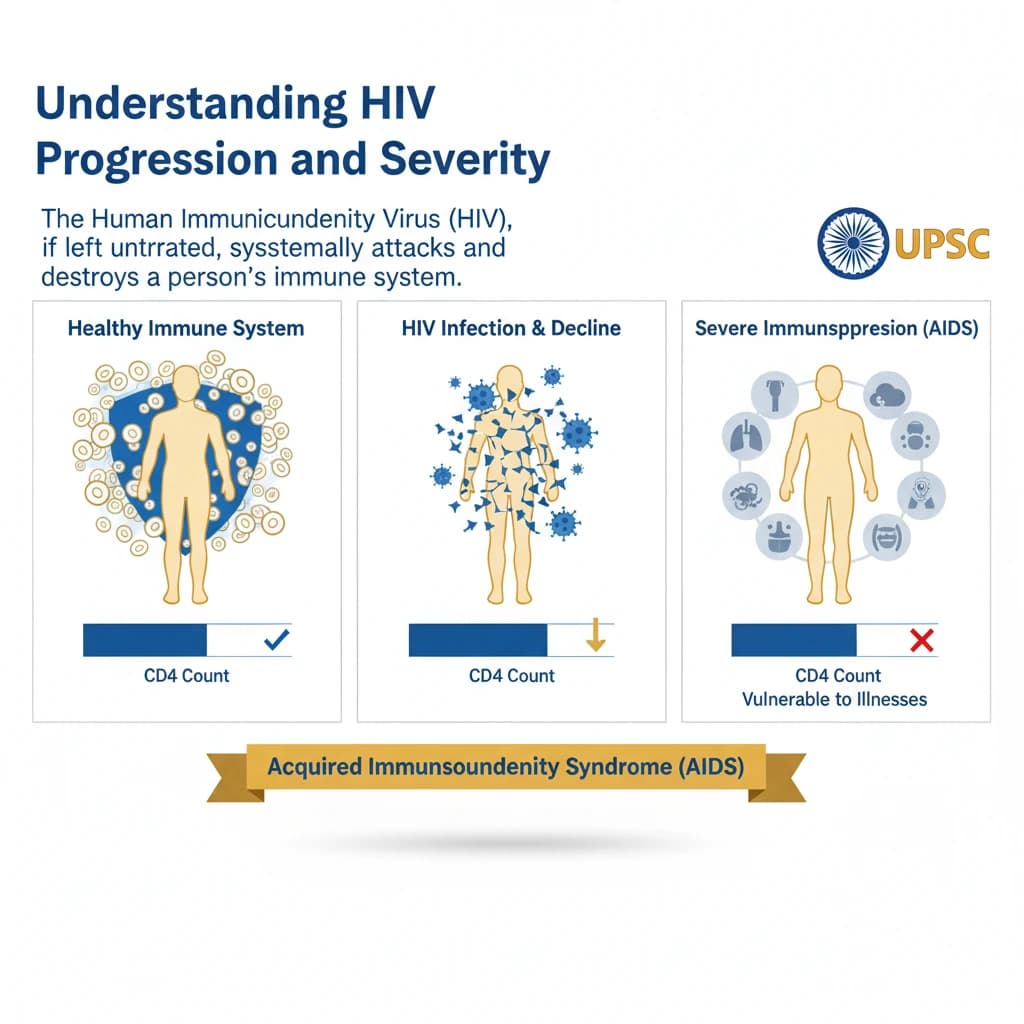
Understanding HIV Progression and Severity
The Human Immunodeficiency Virus (HIV), if left untreated, systematically attacks and destroys a person's immune system. This critical deterioration leaves the body vulnerable to various illnesses.
The progressive damage to the immune system means the body loses its ability to fight off common pathogens, leading to severe health complications.
The Acquired Immunodeficiency Syndrome (AIDS) Stage
When the immune system is severely compromised due to untreated HIV, the individual enters the stage known as Acquired Immunodeficiency Syndrome (AIDS). This is the final, most severe stage of HIV infection.
AIDS Definition: AIDS is a syndrome caused by the HIV virus, characterized by a severely weakened immune system, making the body susceptible to opportunistic infections and certain cancers.
Impact of Opportunistic Infections
In the AIDS stage, individuals become highly susceptible to opportunistic infections. These are infections that typically do not affect people with healthy immune systems but can be life-threatening for those with compromised immunity.
Key Concept: Opportunistic Infections thrive when the body's defenses are down. Examples include certain types of pneumonia, tuberculosis, candidiasis, and various viral infections.
These opportunistic infections are the primary cause of illness and mortality in individuals with untreated AIDS. Without intervention, the progression from HIV to AIDS and subsequent death is almost inevitable.
Preventing Severe Outcomes
Modern medical advancements, particularly Antiretroviral Therapy (ART), have dramatically changed the prognosis for people living with HIV. Early diagnosis and consistent treatment can prevent the progression to AIDS and allow individuals to lead long, healthy lives.
UPSC Insight: Understanding the distinction between HIV infection and the AIDS stage is crucial. Focus on the impact of untreated disease on public health and the significance of treatment access for Mains answers.
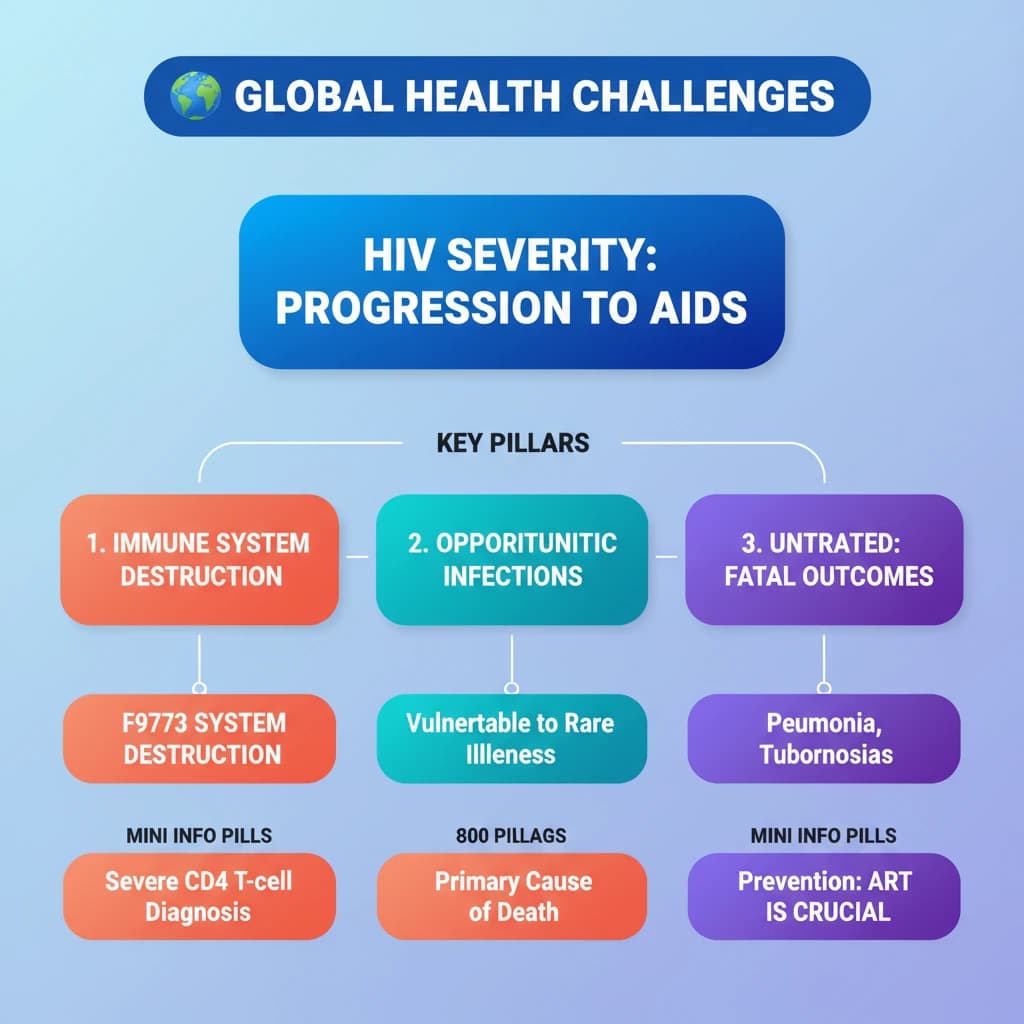
💡 Key Takeaways
- •Untreated HIV systematically destroys the immune system.
- •Severe immune suppression leads to the Acquired Immunodeficiency Syndrome (AIDS) stage.
- •AIDS patients are highly vulnerable to life-threatening opportunistic infections.
- •Opportunistic infections are the primary cause of death in untreated AIDS.
- •Antiretroviral Therapy (ART) is crucial to prevent progression to AIDS and manage the disease effectively.
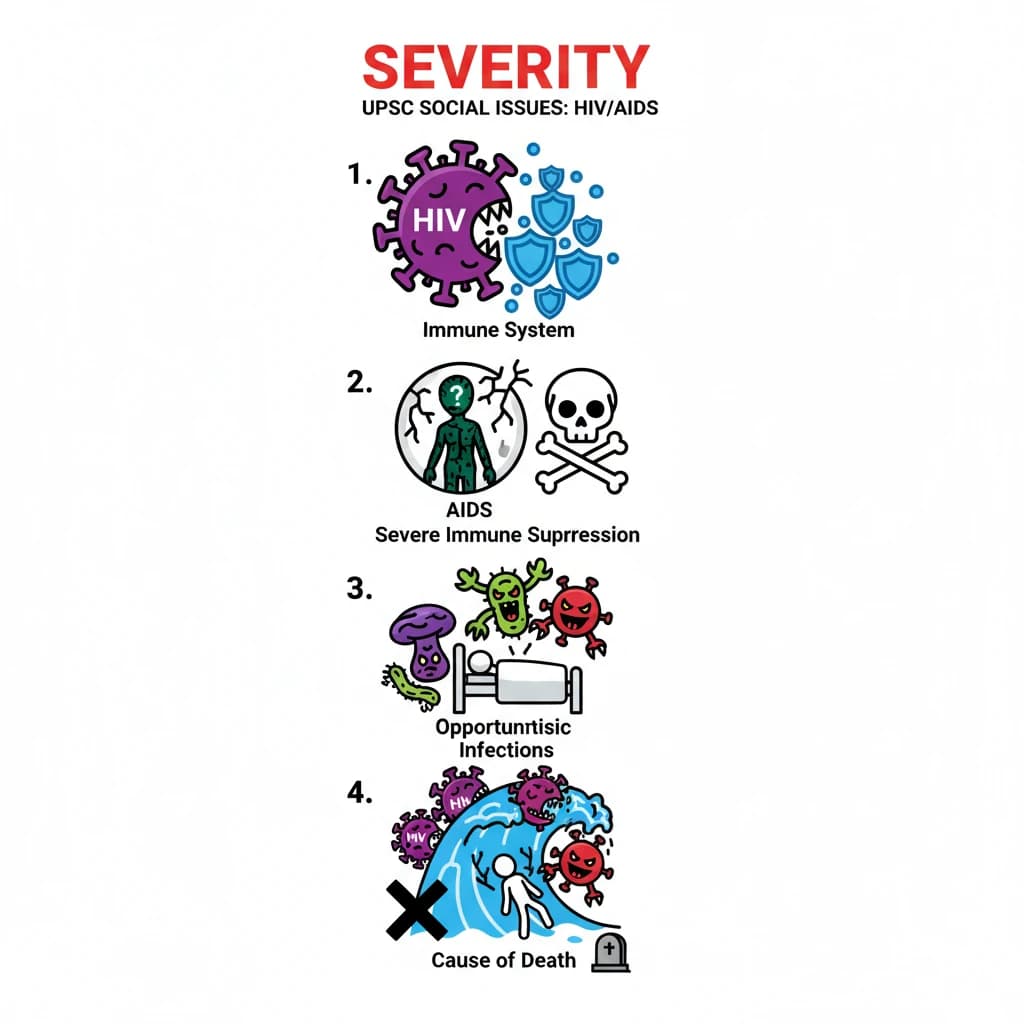
🧠 Memory Techniques
98% Verified Content
📚 Reference Sources
•Joint United Nations Programme on HIV/AIDS (UNAIDS) - Global HIV & AIDS statistics
•U.S. Centers for Disease Control and Prevention (CDC) - About HIV/AIDS
•National AIDS Control Organisation (NACO), India - Annual Reports and Guidelines