Loading page, please wait…
How is India Fighting Against Tobacco? - UPSC Social Issues
What is How is India Fighting Against Tobacco? in UPSC Social Issues?
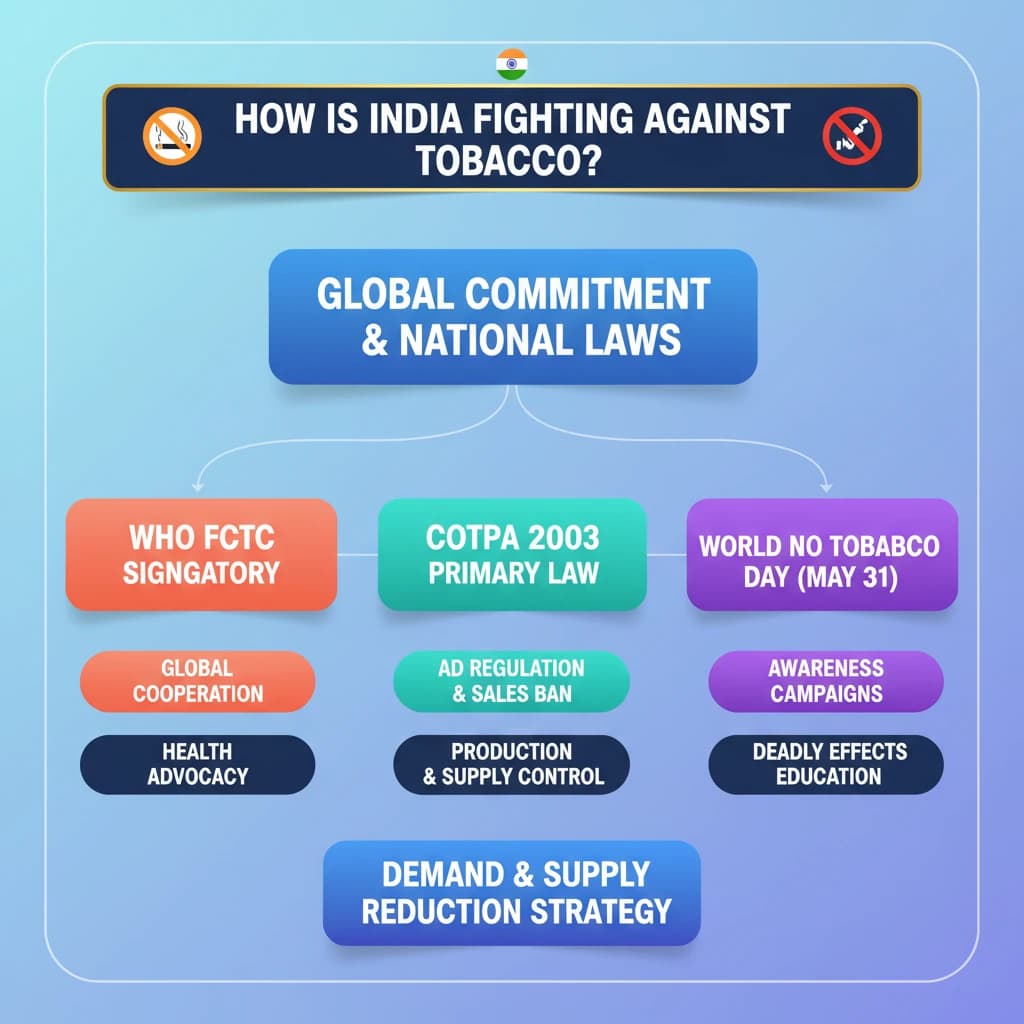
How is India Fighting Against Tobacco? is a key topic under Social Issues for UPSC Civil Services Examination. Key points include: India is a signatory to the WHO FCTC, demonstrating global commitment to tobacco control.. COTPA 2003 is India's primary domestic law regulating tobacco advertisement, trade, production, and distribution.. World No Tobacco Day (May 31st) is observed annually to raise awareness about tobacco's deadly effects.. Understanding this topic is essential for both UPSC Prelims and Mains preparation.
Why is How is India Fighting Against Tobacco? important for UPSC exam?
How is India Fighting Against Tobacco? is a Medium-level topic in UPSC Social Issues. It is tested in both Prelims (factual MCQs) and Mains (analytical answer writing). Previous year UPSC questions have frequently covered aspects of How is India Fighting Against Tobacco?, making it essential for comprehensive IAS preparation.
How to prepare How is India Fighting Against Tobacco? for UPSC?
To prepare How is India Fighting Against Tobacco? for UPSC: (1) Study the comprehensive notes covering all key concepts on Vaidra. (2) Practice previous year questions on this topic. (3) Connect it with current affairs using daily updates. (4) Revise using key takeaways and mind maps available for Social Issues. (5) Write practice answers linking How is India Fighting Against Tobacco? to related GS Paper topics.
Key takeaways of How is India Fighting Against Tobacco? for UPSC
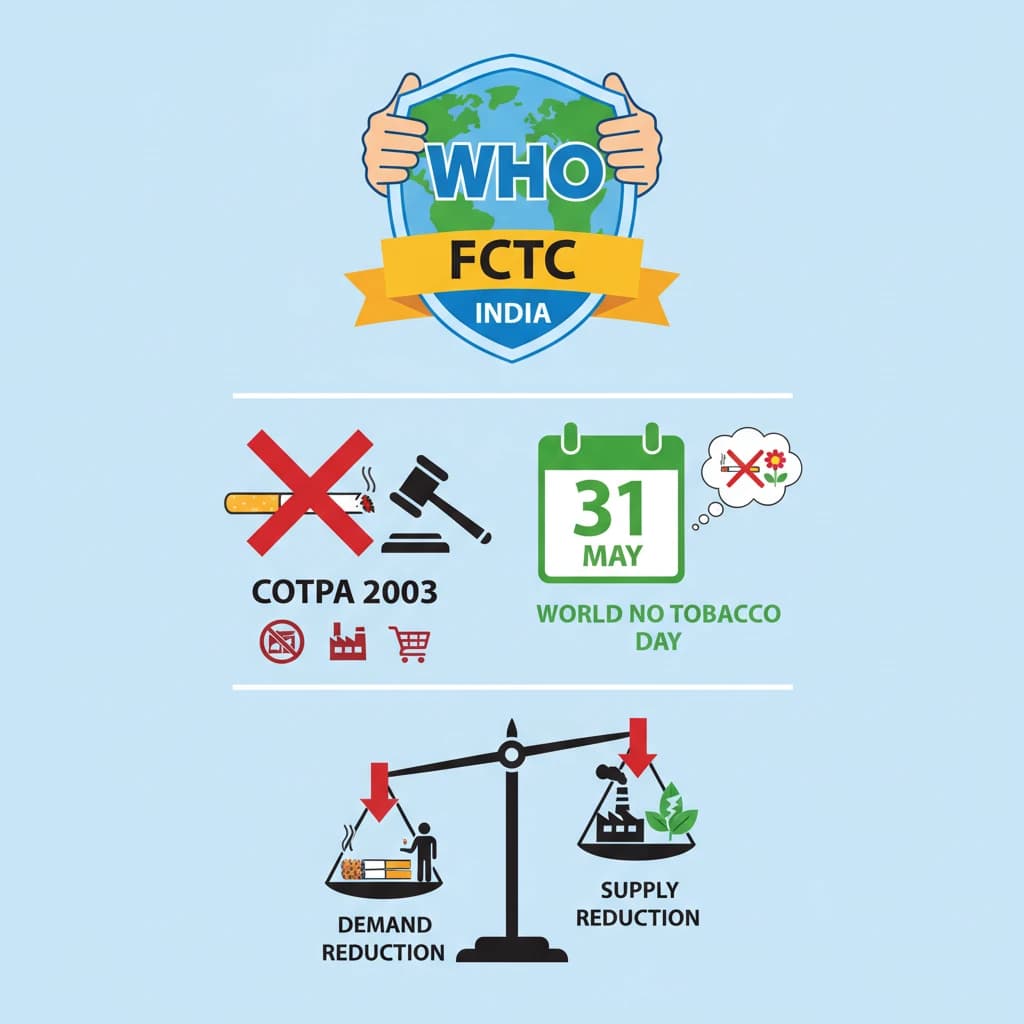
- India is a signatory to the WHO FCTC, demonstrating global commitment to tobacco control.
- COTPA 2003 is India's primary domestic law regulating tobacco advertisement, trade, production, and distribution.
- World No Tobacco Day (May 31st) is observed annually to raise awareness about tobacco's deadly effects.
- India's strategy against tobacco involves both demand and supply reduction measures.
- Effective enforcement of laws and continuous public awareness campaigns are crucial for successful tobacco control.
How is India Fighting Against Tobacco?
Medium⏱️ 8 min read
social issues
📖 Introduction
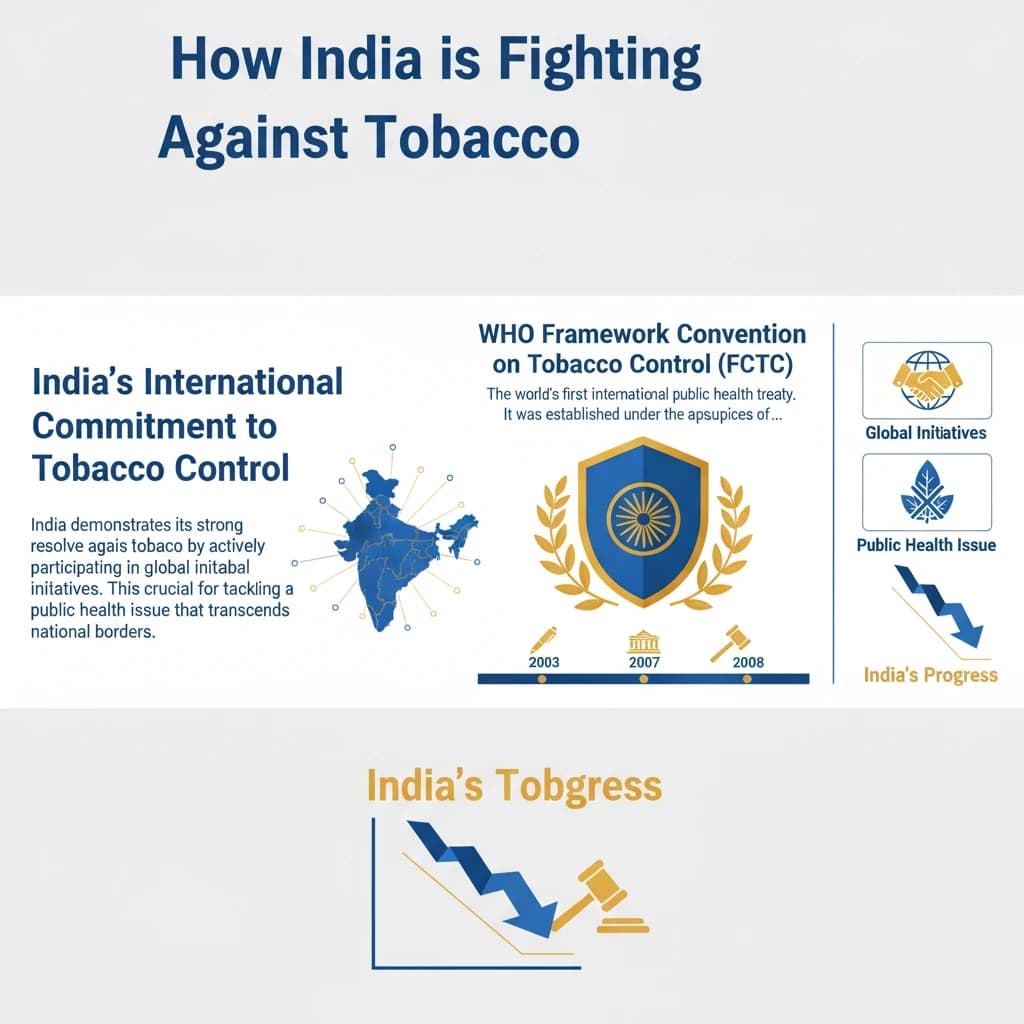
India's International Commitment to Tobacco Control
India demonstrates its strong resolve against tobacco by actively participating in global initiatives. This commitment is crucial for tackling a public health issue that transcends national borders.
WHO Framework Convention on Tobacco Control (FCTC)
The WHO Framework Convention on Tobacco Control (FCTC) is the world's first international public health treaty. It was established under the auspices of the World Health Organization (WHO).
India is one of the 182 signatories to the WHO FCTC. This signifies its dedication to global tobacco control efforts and international cooperation.
The primary goal of the FCTC is to reduce tobacco usage worldwide. It achieves this by guiding countries in developing effective demand and supply reduction strategies.
It also assists nations in formulating robust national tobacco control policies tailored to their specific contexts.
The FCTC provides a comprehensive framework for tobacco control, covering aspects from advertising bans to taxation and protection from passive smoking.
World No Tobacco Day
Every year, May 31st is observed globally as 'World No Tobacco Day'. This day serves as a critical platform to raise awareness about the severe health consequences of tobacco consumption.
The observance of World No Tobacco Day highlights the deadly effects of tobacco, including various cancers, respiratory diseases, and cardiovascular issues.
It encourages individuals to quit tobacco and advocates for effective policies to reduce tobacco use.
National Legislation: The Cigarettes and Other Tobacco Products Act (COTPA)
Domestically, India has robust legal frameworks to combat tobacco. The most significant legislation is the Cigarettes and Other Tobacco Products (Prohibition of Advertisement and Regulation of Trade and Commerce, Production, Supply and Distribution) Act, 2003.
This Act is commonly known as COTPA 2003. It is the principal comprehensive law governing tobacco control in India.
COTPA 2003 addresses various critical aspects of tobacco control. These include the prohibition of advertising, regulation of trade and commerce, and control over production, supply, and distribution of tobacco products.
Understanding COTPA 2003 is vital for Mains answers related to public health and social issues. Be prepared to cite its key provisions.
💡 Key Takeaways
- •India is a signatory to the WHO FCTC, demonstrating global commitment to tobacco control.
- •COTPA 2003 is India's primary domestic law regulating tobacco advertisement, trade, production, and distribution.
- •World No Tobacco Day (May 31st) is observed annually to raise awareness about tobacco's deadly effects.
- •India's strategy against tobacco involves both demand and supply reduction measures.
- •Effective enforcement of laws and continuous public awareness campaigns are crucial for successful tobacco control.
🧠 Memory Techniques
95% Verified Content
📚 Reference Sources
•World Health Organization (WHO) Framework Convention on Tobacco Control (FCTC) Official Website
•Ministry of Health & Family Welfare, Government of India Official Website