Loading page, please wait…
Islander people)” were forcibly removed from their families to assimilate into White culture. - UPSC Social Issues
What is Islander people)” were forcibly removed from their families to assimilate into White culture. in UPSC Social Issues?
Islander people)” were forcibly removed from their families to assimilate into White culture. is a key topic under Social Issues for UPSC Civil Services Examination. Key points include: Assimilation forces cultural conformity, often leading to loss of indigenous identity and distrust.. Integration allows indigenous peoples to maintain their culture while participating in broader society.. Forced assimilation has a dark historical legacy of trauma and cultural erosion.. Understanding this topic is essential for both UPSC Prelims and Mains preparation.
Why is Islander people)” were forcibly removed from their families to assimilate into White culture. important for UPSC exam?
Islander people)” were forcibly removed from their families to assimilate into White culture. is a Medium-level topic in UPSC Social Issues. It is tested in both Prelims (factual MCQs) and Mains (analytical answer writing). Previous year UPSC questions have frequently covered aspects of Islander people)” were forcibly removed from their families to assimilate into White culture., making it essential for comprehensive IAS preparation.
How to prepare Islander people)” were forcibly removed from their families to assimilate into White culture. for UPSC?
To prepare Islander people)” were forcibly removed from their families to assimilate into White culture. for UPSC: (1) Study the comprehensive notes covering all key concepts on Vaidra. (2) Practice previous year questions on this topic. (3) Connect it with current affairs using daily updates. (4) Revise using key takeaways and mind maps available for Social Issues. (5) Write practice answers linking Islander people)” were forcibly removed from their families to assimilate into White culture. to related GS Paper topics.
Key takeaways of Islander people)” were forcibly removed from their families to assimilate into White culture. for UPSC
- Assimilation forces cultural conformity, often leading to loss of indigenous identity and distrust.
- Integration allows indigenous peoples to maintain their culture while participating in broader society.
- Forced assimilation has a dark historical legacy of trauma and cultural erosion.
- Integration models, like co-management, foster trust and ensure indigenous voice in governance.
- Challenges in integration include systemic racism and resistance to power sharing by dominant groups.
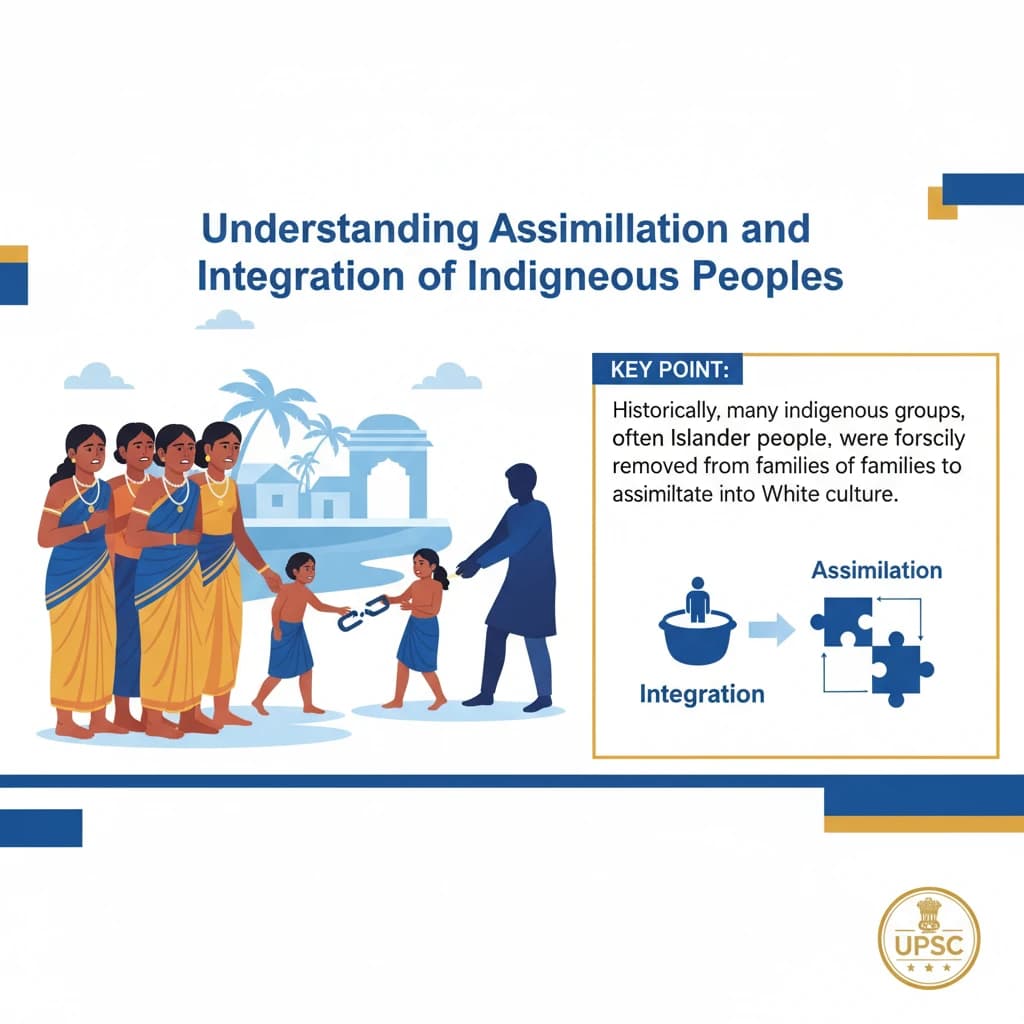
Islander people)” were forcibly removed from their families to assimilate into White culture.
Medium⏱️ 8 min read
social issues
📖 Introduction
Understanding Assimilation and Integration of Indigenous Peoples
The concepts of assimilation and integration are crucial when discussing the relationship between indigenous communities and broader national societies. These approaches dictate how governments interact with and manage diverse cultural groups, particularly those with distinct historical and cultural identities.
Historically, many indigenous groups, often referred to as “Islander people” in some contexts, faced policies of forced assimilation. This involved their removal from families and communities to compel adherence to the dominant culture.
Assimilation: Benefits for Indigenous Peoples
While often coercive, assimilation policies were sometimes framed with perceived benefits. These benefits primarily focused on providing indigenous populations with access to amenities and opportunities available to the dominant society.
- Improved Quality of Life: Access to basic amenities like education, healthcare, and job opportunities was seen as a way to enhance living standards.
- Bridging Gaps: Assimilation was believed to reduce disparities in economic and political representation by incorporating indigenous individuals into the mainstream system.
Assimilation: Challenges and Consequences
Despite the purported benefits, the process of forced assimilation has historically led to severe and lasting negative consequences for indigenous communities, causing profound cultural and social damage.
- Erosion of Identity: Forced assimilation directly attacks indigenous identity, leading to the irreversible loss of language, traditions, and spiritual practices. This significantly weakens cultural heritage.
- Resistance and Alienation: Such policies often provoke strong resistance from indigenous groups. This resistance fosters deep alienation and distrust between indigenous peoples and the government.
- Governance Complications: The resulting distrust complicates governmental efforts to balance cultural preservation with the demands of modern governance and national unity.
Integration: A Respectful Approach
Integration offers an alternative and more respectful approach compared to assimilation. It aims to include indigenous peoples within modern governance structures while actively preserving their distinct cultural identity.
Definition: Integration involves incorporating Indigenous peoples into modern governance while explicitly respecting their cultural identity. It ensures their rights, traditions, and autonomy are preserved within the broader societal framework.
Integration: Benefits of Collaborative Governance
An integrated approach fosters a more equitable and sustainable relationship between indigenous communities and the state, leading to mutual benefits and stronger governance outcomes.
- Voice in Decision-Making: Inclusion in governance provides indigenous peoples with a direct voice in decisions that profoundly affect their communities and ancestral lands.
- Protection of Rights and Resources: Recognition of Indigenous rights through modern governance mechanisms enhances their capacity to protect their lands, traditions, and natural resources.
- Building Trust: Collaborative frameworks and shared decision-making processes are instrumental in fostering trust between Indigenous communities and governmental bodies.
Integration: Persistent Challenges
Even with an integration-focused approach, significant challenges can persist, requiring continuous effort and commitment from all stakeholders to overcome systemic barriers.
- Systemic Inequality: Despite formal inclusion, indigenous communities may continue to face deeply entrenched systemic racism and various forms of inequality within society.
- Resistance to Power Sharing: Governments and powerful industries may show reluctance to cede power or share resources with Indigenous authorities, hindering true collaborative governance.
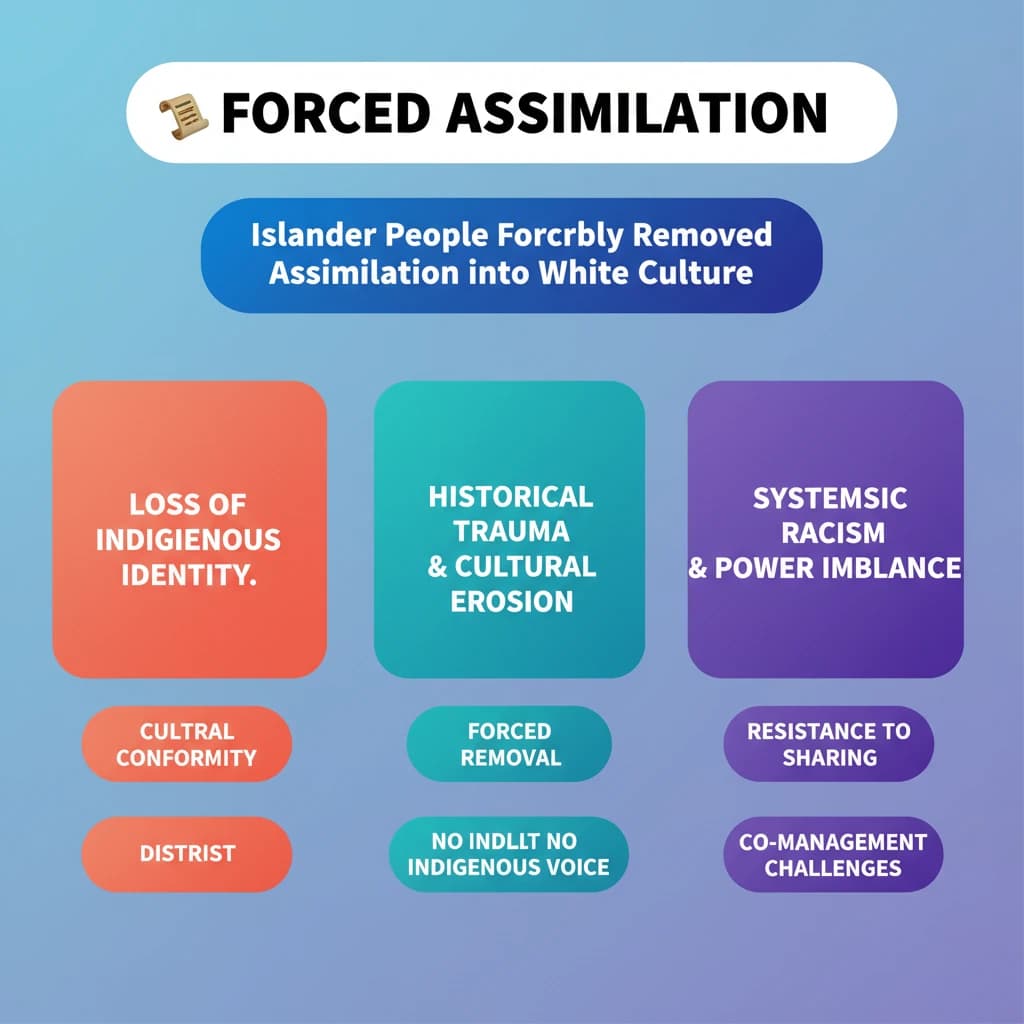
💡 Key Takeaways
- •Assimilation forces cultural conformity, often leading to loss of indigenous identity and distrust.
- •Integration allows indigenous peoples to maintain their culture while participating in broader society.
- •Forced assimilation has a dark historical legacy of trauma and cultural erosion.
- •Integration models, like co-management, foster trust and ensure indigenous voice in governance.
- •Challenges in integration include systemic racism and resistance to power sharing by dominant groups.
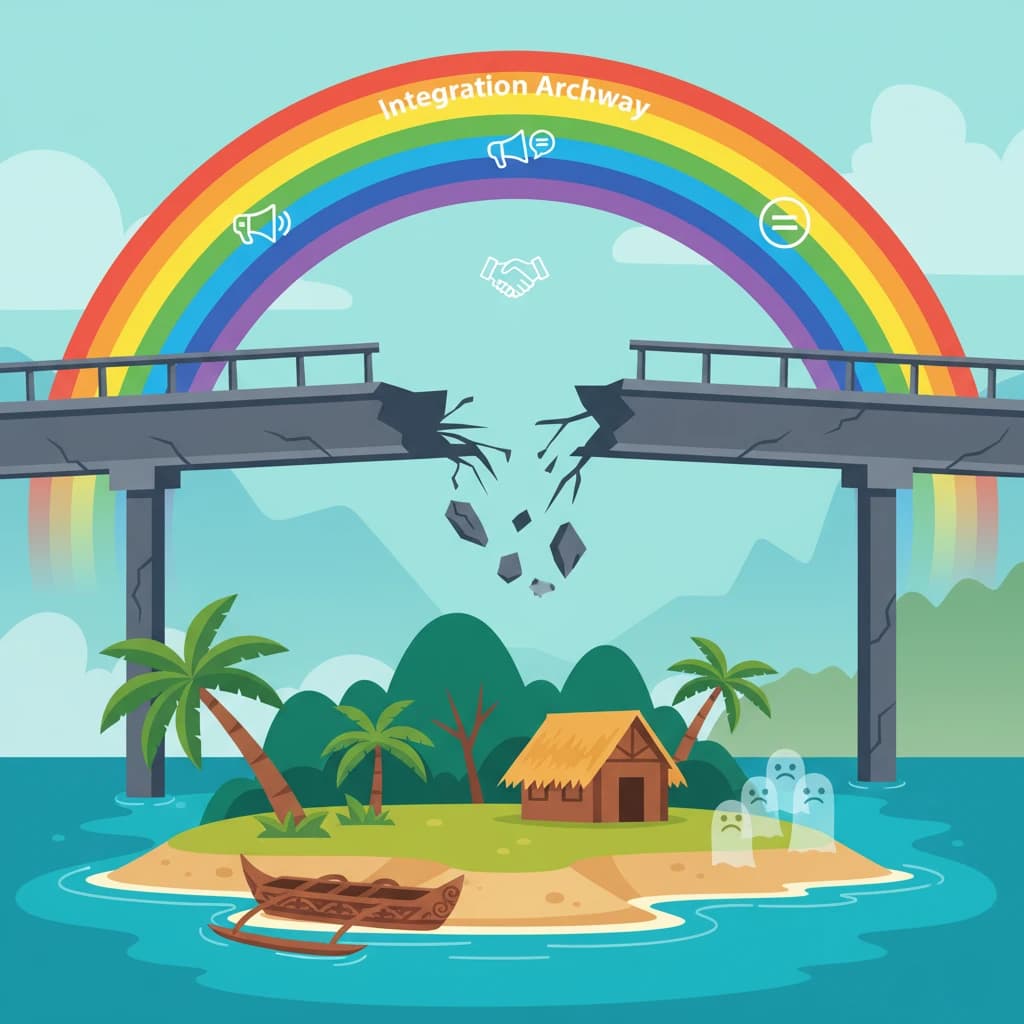
🧠 Memory Techniques
95% Verified Content