Loading page, please wait…
Konda Dora Tribe - UPSC Social Issues
What is Konda Dora Tribe in UPSC Social Issues?
Konda Dora Tribe is a key topic under Social Issues for UPSC Civil Services Examination. Key points include: Konda Dora are a Scheduled Tribe primarily in Odisha and Andhra Pradesh, also known as Bagatha.. They are called 'Lords of the Hill' and claim mythological descent from the Pandavas.. Key social customs include strict lineage exogamy, preference for adult monogamous and cross-cousin marriages, with parallel-cousin marriages prohibited.. Understanding this topic is essential for both UPSC Prelims and Mains preparation.
Why is Konda Dora Tribe important for UPSC exam?
Konda Dora Tribe is a Medium-level topic in UPSC Social Issues. It is tested in both Prelims (factual MCQs) and Mains (analytical answer writing). Previous year UPSC questions have frequently covered aspects of Konda Dora Tribe, making it essential for comprehensive IAS preparation.
How to prepare Konda Dora Tribe for UPSC?
To prepare Konda Dora Tribe for UPSC: (1) Study the comprehensive notes covering all key concepts on Vaidra. (2) Practice previous year questions on this topic. (3) Connect it with current affairs using daily updates. (4) Revise using key takeaways and mind maps available for Social Issues. (5) Write practice answers linking Konda Dora Tribe to related GS Paper topics.
Key takeaways of Konda Dora Tribe for UPSC
- Konda Dora are a Scheduled Tribe primarily in Odisha and Andhra Pradesh, also known as Bagatha.
- They are called 'Lords of the Hill' and claim mythological descent from the Pandavas.
- Key social customs include strict lineage exogamy, preference for adult monogamous and cross-cousin marriages, with parallel-cousin marriages prohibited.
- Traditional governance is via the Kulam Pancheyat (headed by Kula Peda) and inter-village councils.
- Their original language, Kubi/Konda, has largely been replaced by a mix of Telugu and Odia.
- Beliefs include supernaturalism and nature worship through totems and clans.
Konda Dora Tribe
Medium⏱️ 7 min read
social issues
📖 Introduction
Introduction to the Konda Dora Tribe
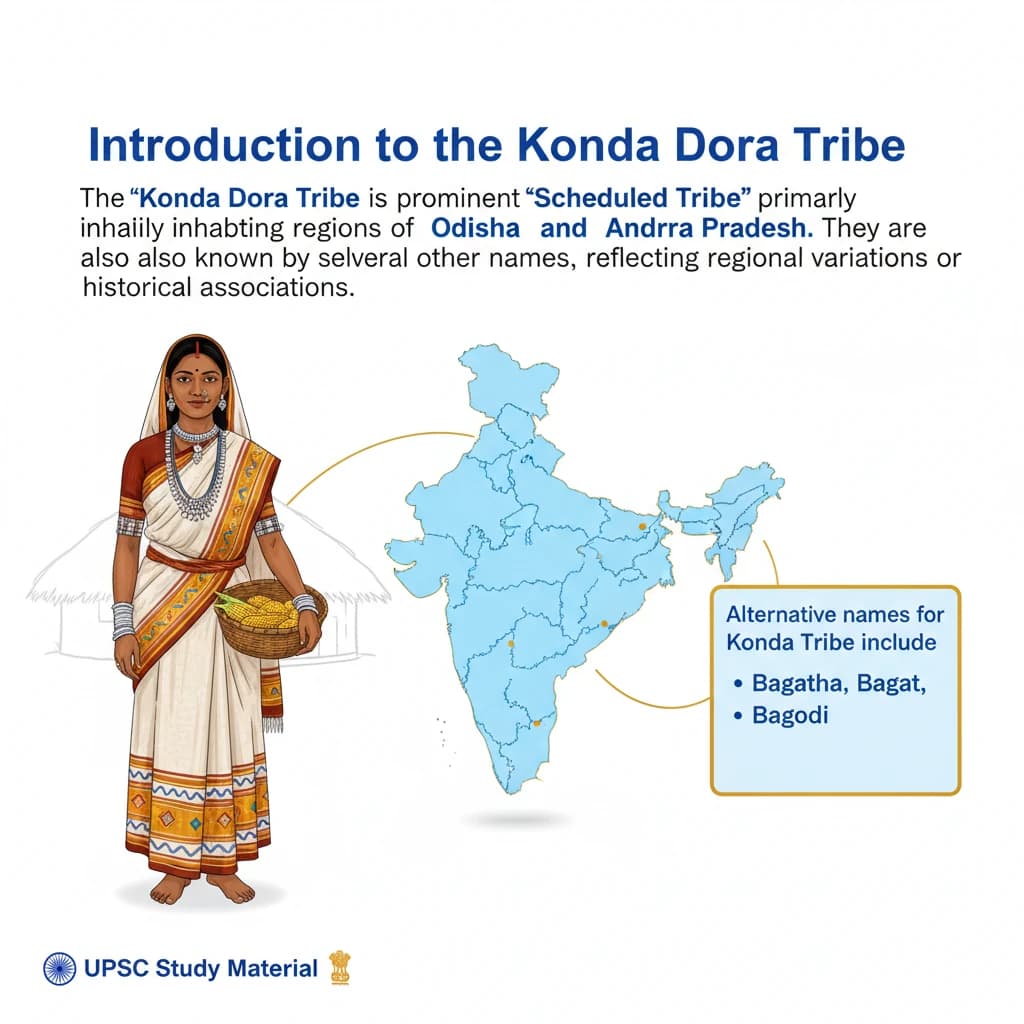
The Konda Dora Tribe is a prominent Scheduled Tribe primarily inhabiting regions of Odisha and Andhra Pradesh. They are also known by several other names, reflecting regional variations or historical associations.
Alternative names for the Konda Dora Tribe include Bagatha, Bagat, Bagodi, Bogad, and Bhakta.
Geographical Distribution and Habitat
This tribal community resides in the picturesque Konda Kamberu ranges of the Eastern Ghats. Their settlements span across southern Odisha and parts of Andhra Pradesh, showcasing a unique adaptation to hilly terrains.
Etymology and Origin Myths
The name ‘Kondadora’ itself is deeply rooted in their environment and social standing. It translates to ‘Lords of the Hill’, derived from the words ‘Konda’ (hill) and ‘Dora’ (lord).
They are also identified as ‘Konda Kapu’, ‘Oja’, ‘Pandava Raju’, and ‘Pandava Dora’. A significant aspect of their identity is the belief that they are direct descendants of the mythological Pandavas from the Mahabharata epic.
Social Structure and Settlement Patterns
Konda Dora settlements typically exhibit a homogeneous character, meaning they are primarily inhabited by members of their own tribe. This contributes to the preservation of their distinct cultural identity.
In multi-ethnic villages, the Konda Dora often live in separate wards. This practice helps them maintain social distance from other communities and reinforces their unique ethnic identity.
Marriage Customs and Practices
Their marriage patterns are guided by strict adherence to lineage exogamy, which mandates marrying outside one's own clan or kinship group. Marriages are typically arranged through negotiation, though elopement is also a recognized form.
The society permits both divorce and remarriage, reflecting a degree of flexibility in their marital customs. While polygyny (multiple wives) and child marriages are not strictly prohibited, they are not the norm.
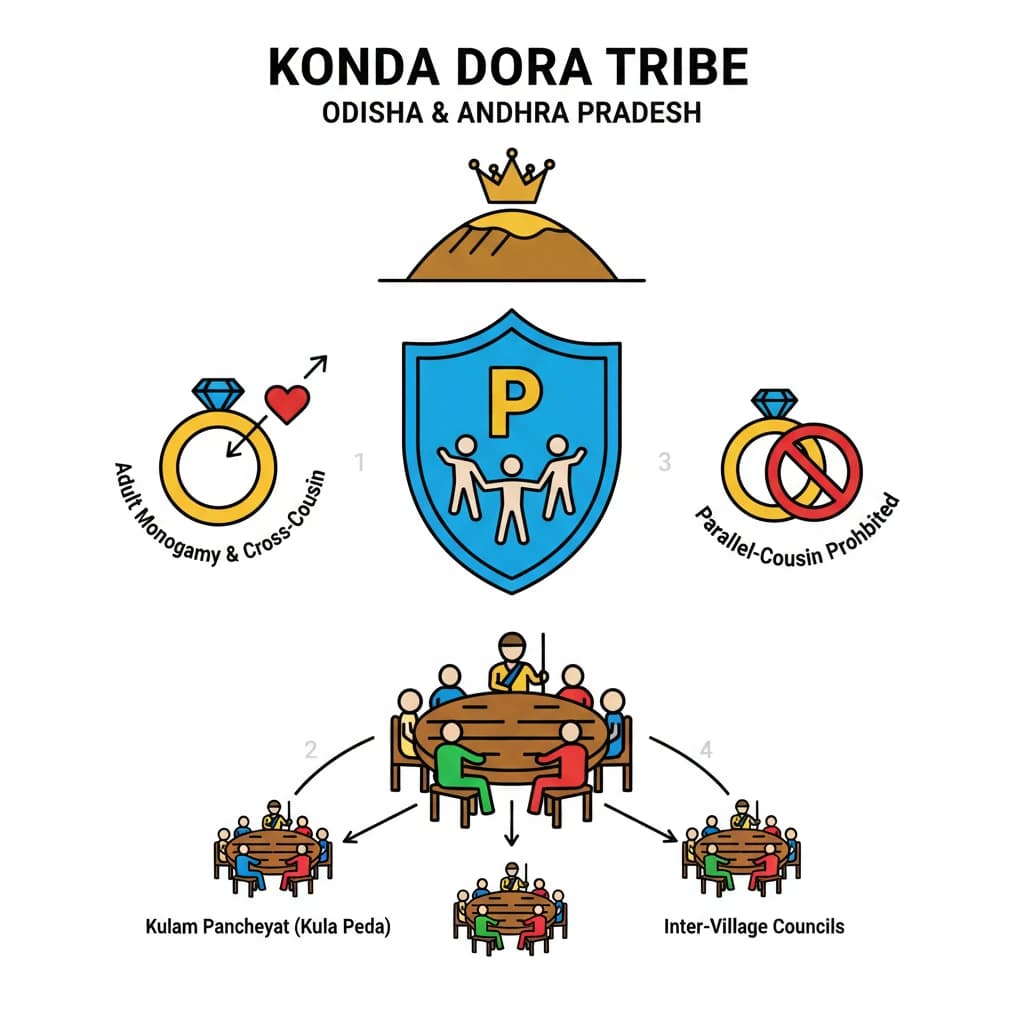
Adult marriage and monogamy are the most commonly practised forms of union among the Konda Dora. A distinctive preference is shown for cross-cousin marriages, while parallel-cousin marriages are strictly forbidden.
Traditional Food Habits
Historically, the staple diet of the Bagathas (a name often associated with Konda Dora) comprised various types of millets. Over time, this traditional food source has largely been replaced by rice, indicating a shift in agricultural practices and dietary preferences.
Belief System and Spirituality
The Konda Dora hold strong beliefs in supernaturalism, encompassing elements like magic, witchcraft, the evil eye, sorcery, luck, ghosts, and shapeless phantoms. Their spiritual practices are deeply connected to nature.
They engage in nature worship, often expressed through the veneration of totems and specific clans. This reverence for natural elements forms a core part of their religious and cultural identity.
Traditional Governance and Dispute Resolution
Their society maintains a well-defined system for governance and dispute resolution. A traditional tribal headman is responsible for settling disputes within families and between different tribal groups.
A village headman plays a crucial role in resolving inter-tribal issues and addressing violations of traditional customs. These leaders ensure social harmony and adherence to established norms.
The Konda Dora have a traditional village council known as Kulam Pancheyat, headed by a Kula Peda, who is assisted by a Pillaliduam. They also possess an inter-village community council, both responsible for customary affairs within their jurisdictions.
Language and Linguistic Evolution
The original language spoken by the Konda Dora was Kubi or Konda. However, this indigenous language has largely been supplanted over time.
Today, their primary language is Telugu, often mixed with elements of Odia. This linguistic shift reflects their interaction with surrounding dominant cultures in Andhra Pradesh and Odisha.
💡 Key Takeaways
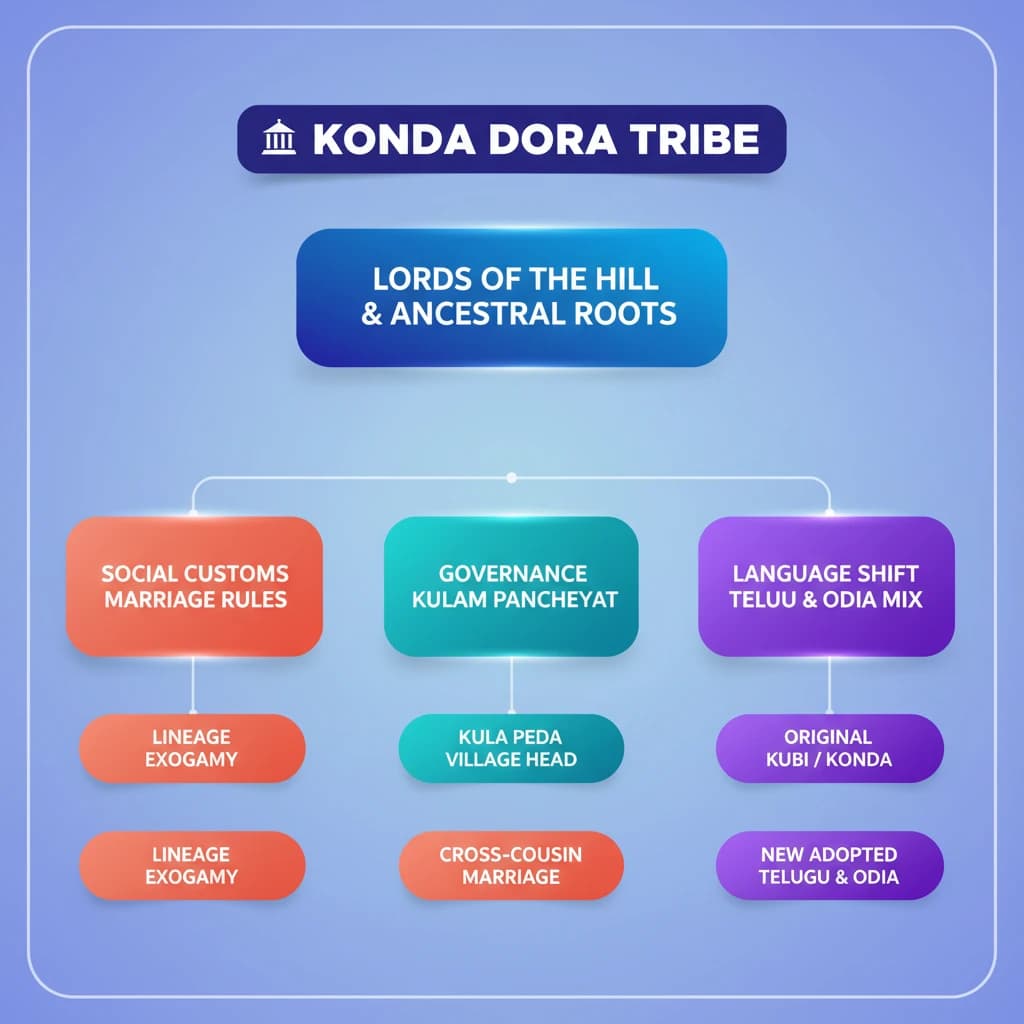
- •Konda Dora are a Scheduled Tribe primarily in Odisha and Andhra Pradesh, also known as Bagatha.
- •They are called 'Lords of the Hill' and claim mythological descent from the Pandavas.
- •Key social customs include strict lineage exogamy, preference for adult monogamous and cross-cousin marriages, with parallel-cousin marriages prohibited.
- •Traditional governance is via the Kulam Pancheyat (headed by Kula Peda) and inter-village councils.
- •Their original language, Kubi/Konda, has largely been replaced by a mix of Telugu and Odia.
- •Beliefs include supernaturalism and nature worship through totems and clans.
🧠 Memory Techniques
95% Verified Content
📚 Reference Sources
•Ministry of Tribal Affairs, Government of India (for general context on Scheduled Tribes)