Loading page, please wait…
Neglected Tropical Diseases (NTDs) - UPSC Social Issues
What is Neglected Tropical Diseases (NTDs) in UPSC Social Issues?
Neglected Tropical Diseases (NTDs) is a key topic under Social Issues for UPSC Civil Services Examination. Key points include: NTDs are diverse conditions caused by various pathogens, disproportionately affecting marginalized communities.. They lead to severe health, social, and economic consequences, trapping communities in poverty.. Over 1 billion people are affected, with 1.6 billion requiring interventions globally.. Understanding this topic is essential for both UPSC Prelims and Mains preparation.
Why is Neglected Tropical Diseases (NTDs) important for UPSC exam?
Neglected Tropical Diseases (NTDs) is a Medium-level topic in UPSC Social Issues. It is tested in both Prelims (factual MCQs) and Mains (analytical answer writing). Previous year UPSC questions have frequently covered aspects of Neglected Tropical Diseases (NTDs), making it essential for comprehensive IAS preparation.
How to prepare Neglected Tropical Diseases (NTDs) for UPSC?
To prepare Neglected Tropical Diseases (NTDs) for UPSC: (1) Study the comprehensive notes covering all key concepts on Vaidra. (2) Practice previous year questions on this topic. (3) Connect it with current affairs using daily updates. (4) Revise using key takeaways and mind maps available for Social Issues. (5) Write practice answers linking Neglected Tropical Diseases (NTDs) to related GS Paper topics.
Key takeaways of Neglected Tropical Diseases (NTDs) for UPSC
- NTDs are diverse conditions caused by various pathogens, disproportionately affecting marginalized communities.
- They lead to severe health, social, and economic consequences, trapping communities in poverty.
- Over 1 billion people are affected, with 1.6 billion requiring interventions globally.
- Examples include Buruli ulcer, Chagas disease, dengue, chikungunya, and lymphatic filariasis.
- Addressing NTDs is crucial for achieving Sustainable Development Goals and promoting health equity.
Neglected Tropical Diseases (NTDs)
Medium⏱️ 7 min read
social issues
📖 Introduction
Understanding Neglected Tropical Diseases (NTDs)
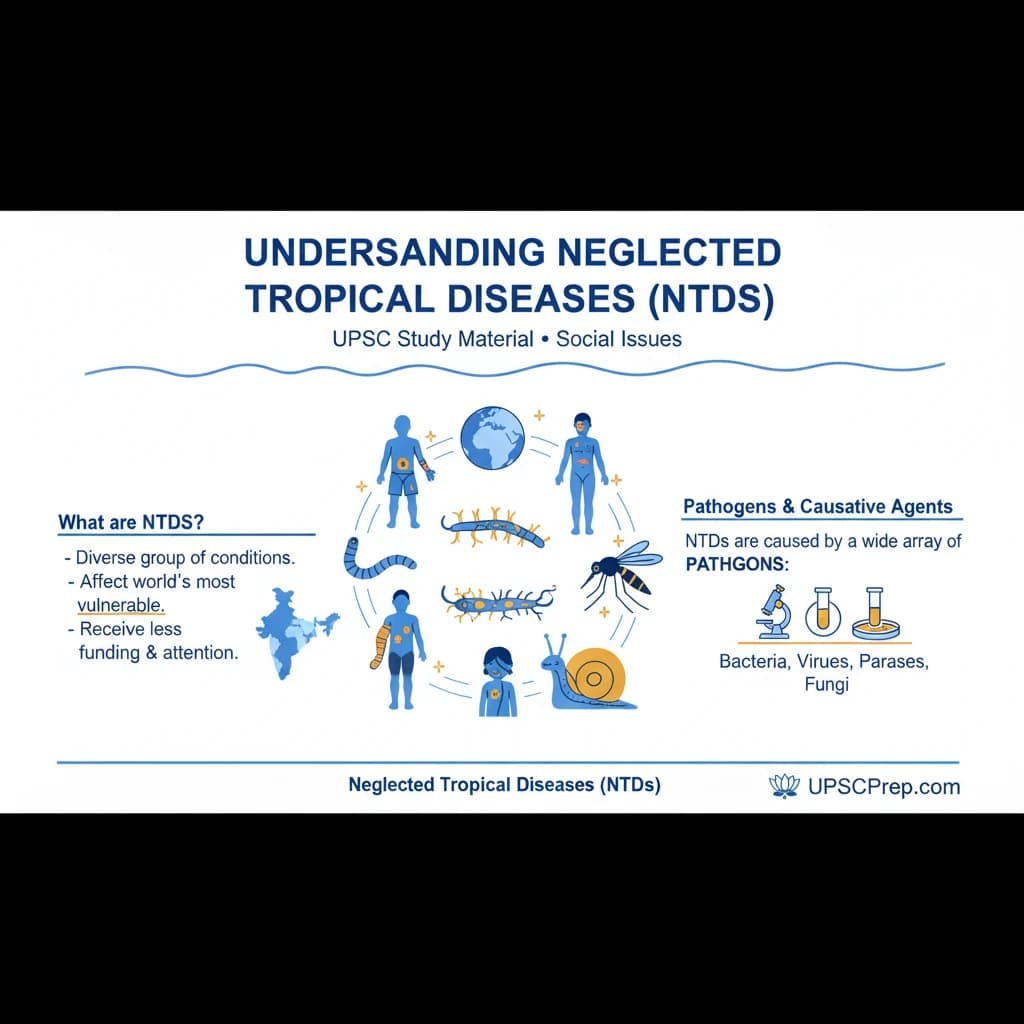
Neglected Tropical Diseases (NTDs) represent a diverse group of conditions that disproportionately affect the world's most vulnerable populations.
These diseases are termed 'neglected' because they generally receive less funding and attention compared to other major global health issues.
Pathogens and Causative Agents
NTDs are caused by a wide array of pathogens, highlighting their varied nature and complex epidemiology.
- Viruses: Such as those causing dengue and chikungunya.
- Bacteria: Responsible for conditions like Buruli ulcer.
- Parasites: Including those causing Chagas disease and lymphatic filariasis.
- Fungi: A less common but significant group of causative agents.
- Toxins: Certain NTDs are linked to toxic exposures.
Socio-Economic and Health Consequences
The impact of NTDs extends far beyond mere physical illness, leading to severe health, social, and economic consequences.
They often result in chronic disability, disfigurement, stigma, and reduced productivity, trapping affected individuals and communities in cycles of poverty.
Global Distribution and Affected Populations
NTDs are predominantly found among marginalized communities in the developing regions of the world.
These regions include significant parts of Africa, Asia, and the Americas, where access to healthcare, sanitation, and clean water is often limited.
The concentration of NTDs in these areas underscores their strong link to poverty and health inequities.
Prevalence and Intervention Needs
The global burden of NTDs is substantial, affecting a significant portion of the world's population.
- It is estimated that more than 1 billion people are currently affected by NTDs.
- A staggering 1.6 billion people require interventions, which include both preventive and curative measures, to combat these diseases.
Key Examples of NTDs
Understanding specific examples helps illustrate the diversity and impact of these conditions.
- Buruli ulcer: A chronic debilitating skin disease caused by bacteria.
- Chagas disease: A parasitic disease transmitted by insects, affecting the heart and digestive system.
- Dengue and Chikungunya: Viral diseases transmitted by mosquitoes, causing fever, joint pain, and other symptoms.
- Lymphatic Filariasis (Elephantiasis): A parasitic disease transmitted by mosquitoes, leading to severe swelling and disfigurement.
For UPSC, remember these examples as they often appear in questions related to public health and global disease burden. Focus on their causative agents and modes of transmission.
💡 Key Takeaways
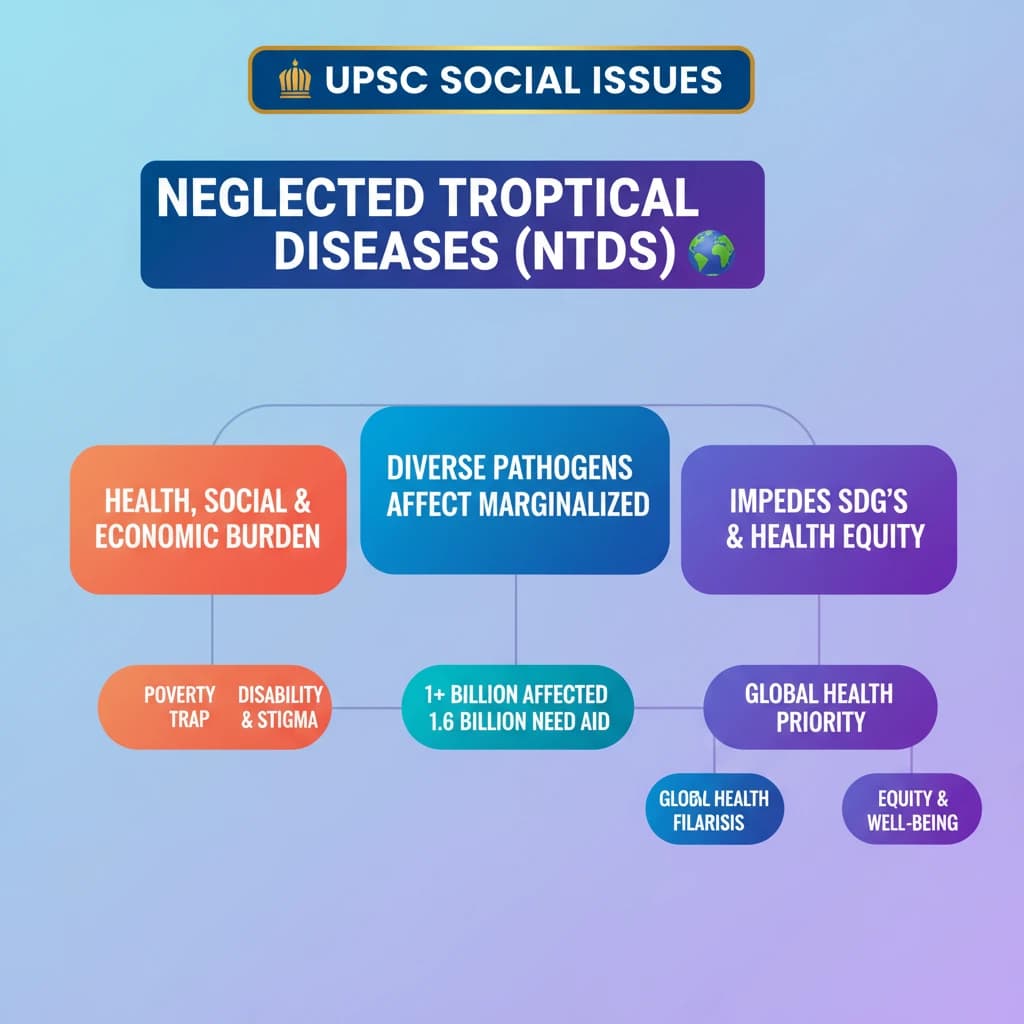
- •NTDs are diverse conditions caused by various pathogens, disproportionately affecting marginalized communities.
- •They lead to severe health, social, and economic consequences, trapping communities in poverty.
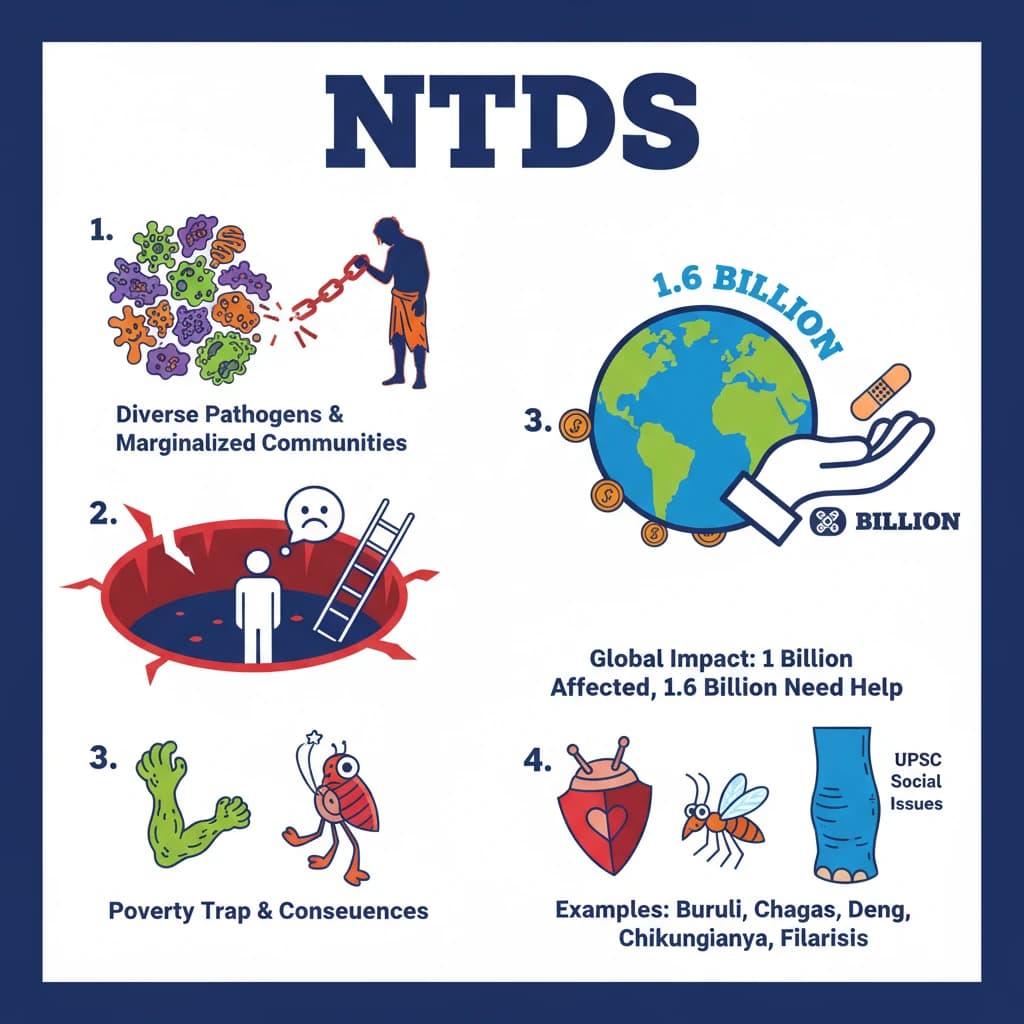
- •Over 1 billion people are affected, with 1.6 billion requiring interventions globally.
- •Examples include Buruli ulcer, Chagas disease, dengue, chikungunya, and lymphatic filariasis.
- •Addressing NTDs is crucial for achieving Sustainable Development Goals and promoting health equity.
🧠 Memory Techniques
95% Verified Content
📚 Reference Sources
•World Health Organization (WHO) - Neglected Tropical Diseases