Loading page, please wait…
Ovarian Cancer Awareness Month - UPSC Social Issues
What is Ovarian Cancer Awareness Month in UPSC Social Issues?
Ovarian Cancer Awareness Month is a key topic under Social Issues for UPSC Civil Services Examination. Key points include: Cervical cancer is predominantly caused by high-risk Human Papillomavirus (HPV) infection.. HPV vaccination and regular screening are highly effective primary and secondary prevention methods for cervical cancer.. India bears a significant global burden of cervical cancer, with high annual cases and deaths.. Understanding this topic is essential for both UPSC Prelims and Mains preparation.
Why is Ovarian Cancer Awareness Month important for UPSC exam?
Ovarian Cancer Awareness Month is a Medium-level topic in UPSC Social Issues. It is tested in both Prelims (factual MCQs) and Mains (analytical answer writing). Previous year UPSC questions have frequently covered aspects of Ovarian Cancer Awareness Month, making it essential for comprehensive IAS preparation.
How to prepare Ovarian Cancer Awareness Month for UPSC?
To prepare Ovarian Cancer Awareness Month for UPSC: (1) Study the comprehensive notes covering all key concepts on Vaidra. (2) Practice previous year questions on this topic. (3) Connect it with current affairs using daily updates. (4) Revise using key takeaways and mind maps available for Social Issues. (5) Write practice answers linking Ovarian Cancer Awareness Month to related GS Paper topics.
Key takeaways of Ovarian Cancer Awareness Month for UPSC
- Cervical cancer is predominantly caused by high-risk Human Papillomavirus (HPV) infection.
- HPV vaccination and regular screening are highly effective primary and secondary prevention methods for cervical cancer.
- India bears a significant global burden of cervical cancer, with high annual cases and deaths.
- HPV types 16 and 18 are responsible for about 70% of all cervical cancer cases globally.
- Ovarian Cancer Awareness Month is observed in September, highlighting the need for awareness for this distinct gynecological cancer.
- Early detection is crucial for successful treatment of cervical cancer, while ovarian cancer often presents late due to subtle symptoms.
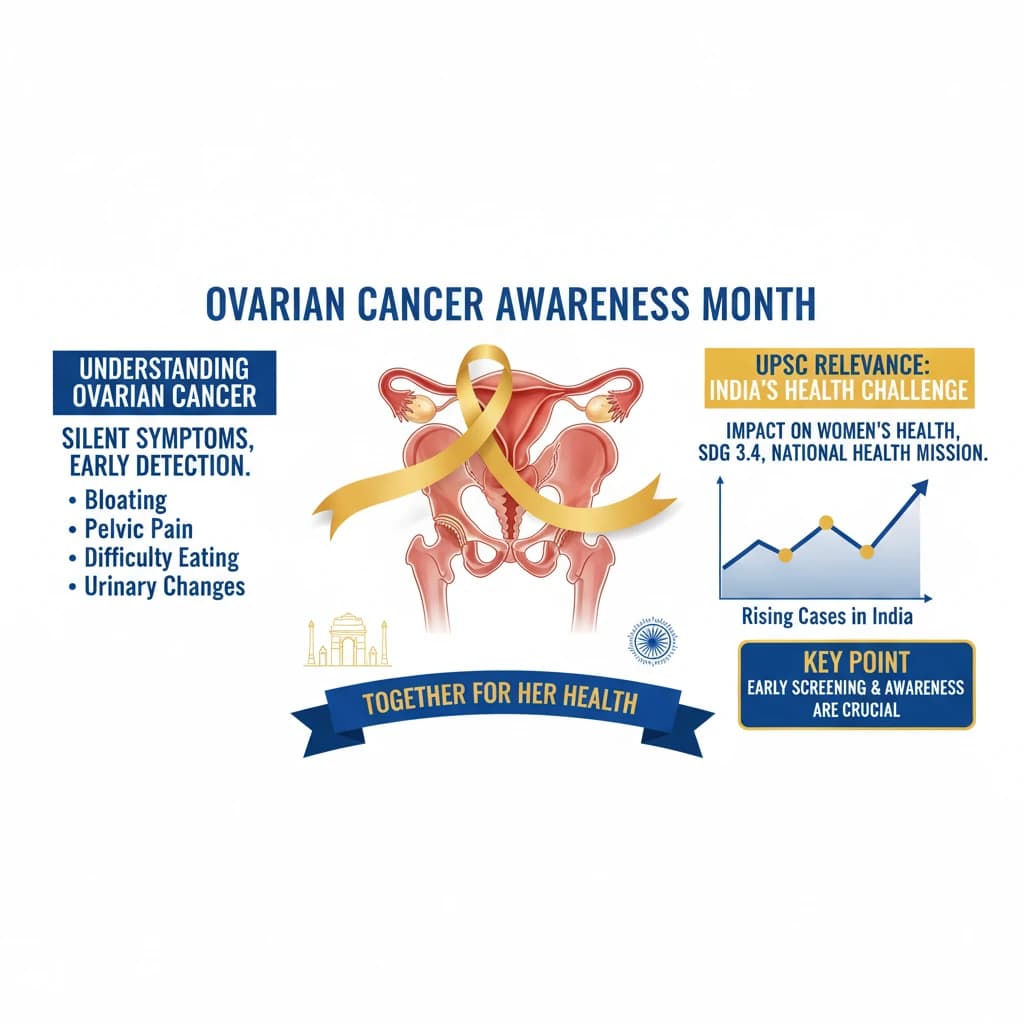
Ovarian Cancer Awareness Month
Medium⏱️ 8 min read
social issues
📖 Introduction
Understanding Cervical Cancer and HPV
Cervical cancer is a significant global health concern. A staggering 99% of almost all cervical cancer cases are directly linked to infection with high-risk Human Papillomavirus (HPV). This virus is extremely common and is primarily transmitted through sexual contact.
Key Concept: The strong causal link between HPV infection and cervical cancer highlights the importance of targeted preventive measures.
Prevention and Treatment of Cervical Cancer
Most cases of cervical cancer are preventable through effective primary and secondary strategies. Primary prevention involves HPV vaccination, which protects against the most common high-risk strains of the virus. Secondary prevention focuses on regular screening to detect and treat precancerous lesions before they develop into invasive cancer.
When diagnosed early and managed effectively, cervical cancer is considered one of the most successfully treatable forms of cancer. Early detection significantly improves patient outcomes and survival rates.
Cervical Cancer Burden in India
India carries a substantial portion of the global burden of cervical cancer. The country accounts for approximately one-fifth of worldwide cases. Annually, India records about 1.25 lakh new cases and tragically, around 75,000 deaths due to cervical cancer.
India's Cervical Cancer Statistics (Annual):
- New Cases: ~1.25 lakh
- Deaths: ~75,000
- Global Burden Share: ~20%
High-Risk HPV Strains
Persistent infections with specific high-risk HPV strains are responsible for nearly 85% of all cervical cancers. Scientists have identified at least 14 HPV types that are classified as oncogenic, meaning they have the potential to cause cancer.
- Among these, HPV types 16 and 18 are considered the most oncogenic.
- These two types alone are responsible for approximately 70% of all cervical cancer cases globally.
Key Oncogenic HPV Types: HPV 16 and HPV 18 are implicated in 70% of global cervical cancer cases.
Ovarian Cancer Awareness Month
While the primary focus of prevention and awareness often highlights cervical cancer due to its strong link with HPV, other gynecological cancers also require significant attention. The American Association for Cancer Research (AACR), the world’s oldest and largest professional organization dedicated to cancer research, has designated September as Ovarian Cancer Awareness Month.
UPSC Insight: Be aware of the distinction between Cervical Cancer (linked to HPV, preventable by vaccine) and Ovarian Cancer (different etiology, often detected late). While the source details cervical cancer, the awareness month is for ovarian cancer. This distinction is crucial for comprehensive understanding in Mains answers.
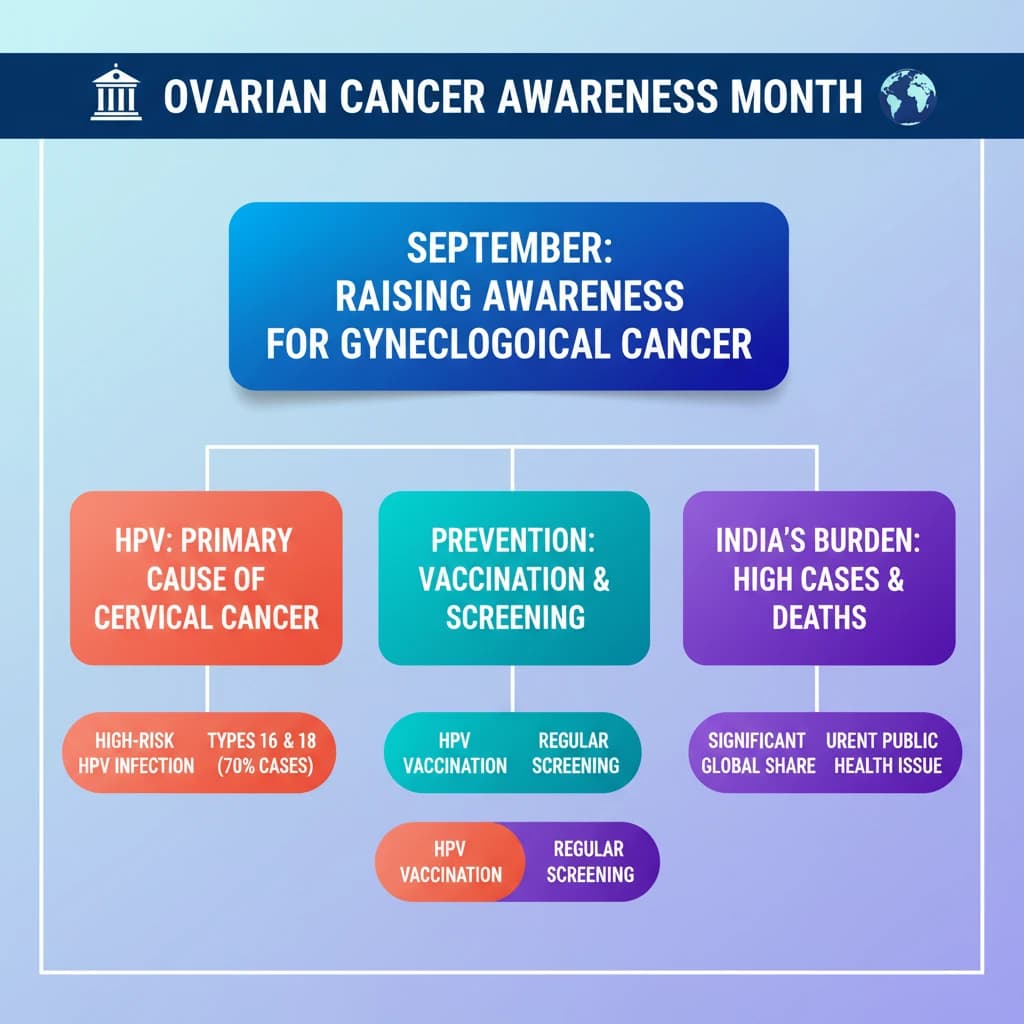
💡 Key Takeaways
- •Cervical cancer is predominantly caused by high-risk Human Papillomavirus (HPV) infection.
- •HPV vaccination and regular screening are highly effective primary and secondary prevention methods for cervical cancer.
- •India bears a significant global burden of cervical cancer, with high annual cases and deaths.
- •HPV types 16 and 18 are responsible for about 70% of all cervical cancer cases globally.
- •Ovarian Cancer Awareness Month is observed in September, highlighting the need for awareness for this distinct gynecological cancer.
- •Early detection is crucial for successful treatment of cervical cancer, while ovarian cancer often presents late due to subtle symptoms.
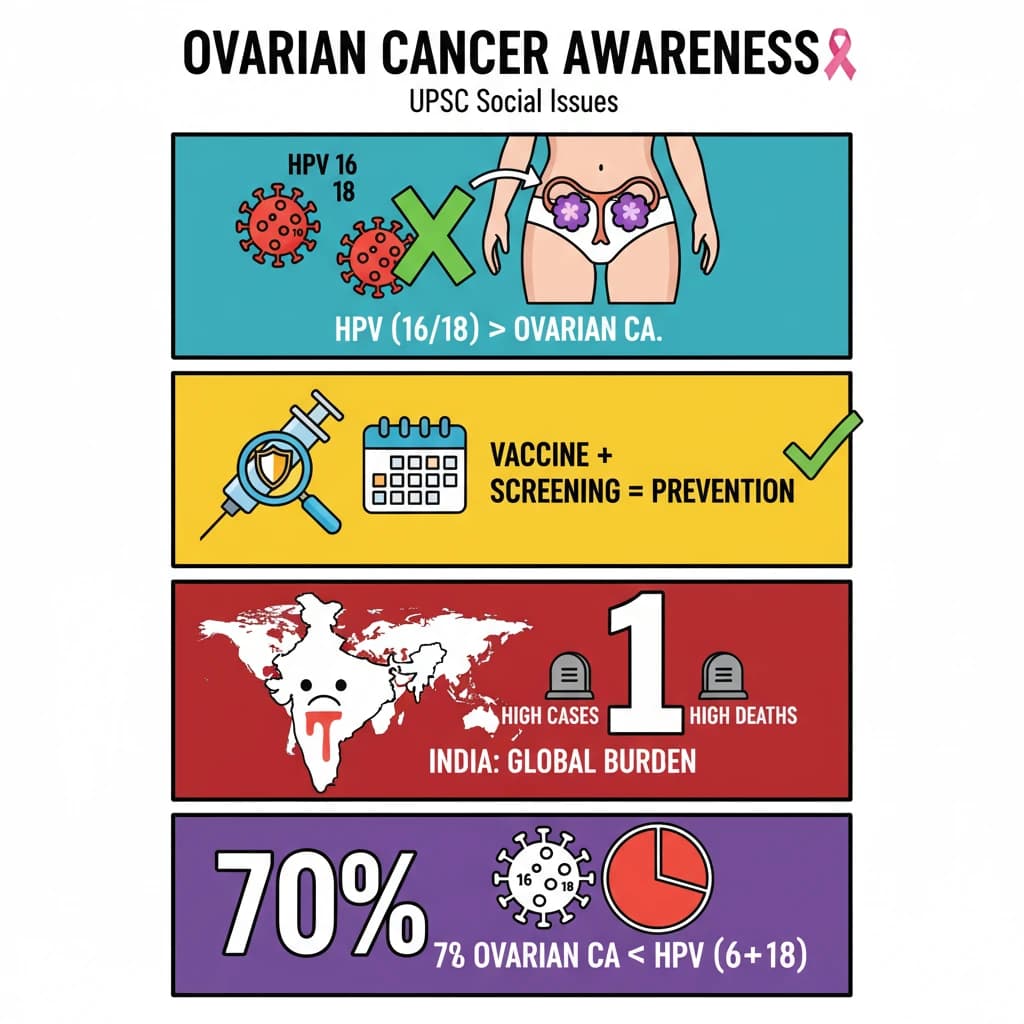
🧠 Memory Techniques
98% Verified Content
📚 Reference Sources
•World Health Organization (WHO) fact sheets on Cervical Cancer and HPV
•American Association for Cancer Research (AACR) official website
•Ministry of Health & Family Welfare, Government of India reports and initiatives