Loading page, please wait…
Post-kala-azar Dermal Leishmaniasis (PKDL) - UPSC Social Issues
What is Post-kala-azar Dermal Leishmaniasis (PKDL) in UPSC Social Issues?
Post-kala-azar Dermal Leishmaniasis (PKDL) is a key topic under Social Issues for UPSC Civil Services Examination. Key points include: PKDL is a skin condition occurring 6 months to a year after kala-azar treatment.. It primarily affects the face, arms, and trunk with rashes.. Prevalent in Sudan and the Indian subcontinent, affecting 5-10% of kala-azar patients.. Understanding this topic is essential for both UPSC Prelims and Mains preparation.
Why is Post-kala-azar Dermal Leishmaniasis (PKDL) important for UPSC exam?
Post-kala-azar Dermal Leishmaniasis (PKDL) is a Medium-level topic in UPSC Social Issues. It is tested in both Prelims (factual MCQs) and Mains (analytical answer writing). Previous year UPSC questions have frequently covered aspects of Post-kala-azar Dermal Leishmaniasis (PKDL), making it essential for comprehensive IAS preparation.
How to prepare Post-kala-azar Dermal Leishmaniasis (PKDL) for UPSC?
To prepare Post-kala-azar Dermal Leishmaniasis (PKDL) for UPSC: (1) Study the comprehensive notes covering all key concepts on Vaidra. (2) Practice previous year questions on this topic. (3) Connect it with current affairs using daily updates. (4) Revise using key takeaways and mind maps available for Social Issues. (5) Write practice answers linking Post-kala-azar Dermal Leishmaniasis (PKDL) to related GS Paper topics.
Key takeaways of Post-kala-azar Dermal Leishmaniasis (PKDL) for UPSC
- PKDL is a skin condition occurring 6 months to a year after kala-azar treatment.
- It primarily affects the face, arms, and trunk with rashes.
- Prevalent in Sudan and the Indian subcontinent, affecting 5-10% of kala-azar patients.
- PKDL patients can act as a reservoir, potentially spreading Leishmania parasites.
- Crucial for kala-azar elimination efforts due to its role in sustained transmission.
Post-kala-azar Dermal Leishmaniasis (PKDL)
Medium⏱️ 7 min read
social issues
📖 Introduction
Understanding Post-kala-azar Dermal Leishmaniasis (PKDL)
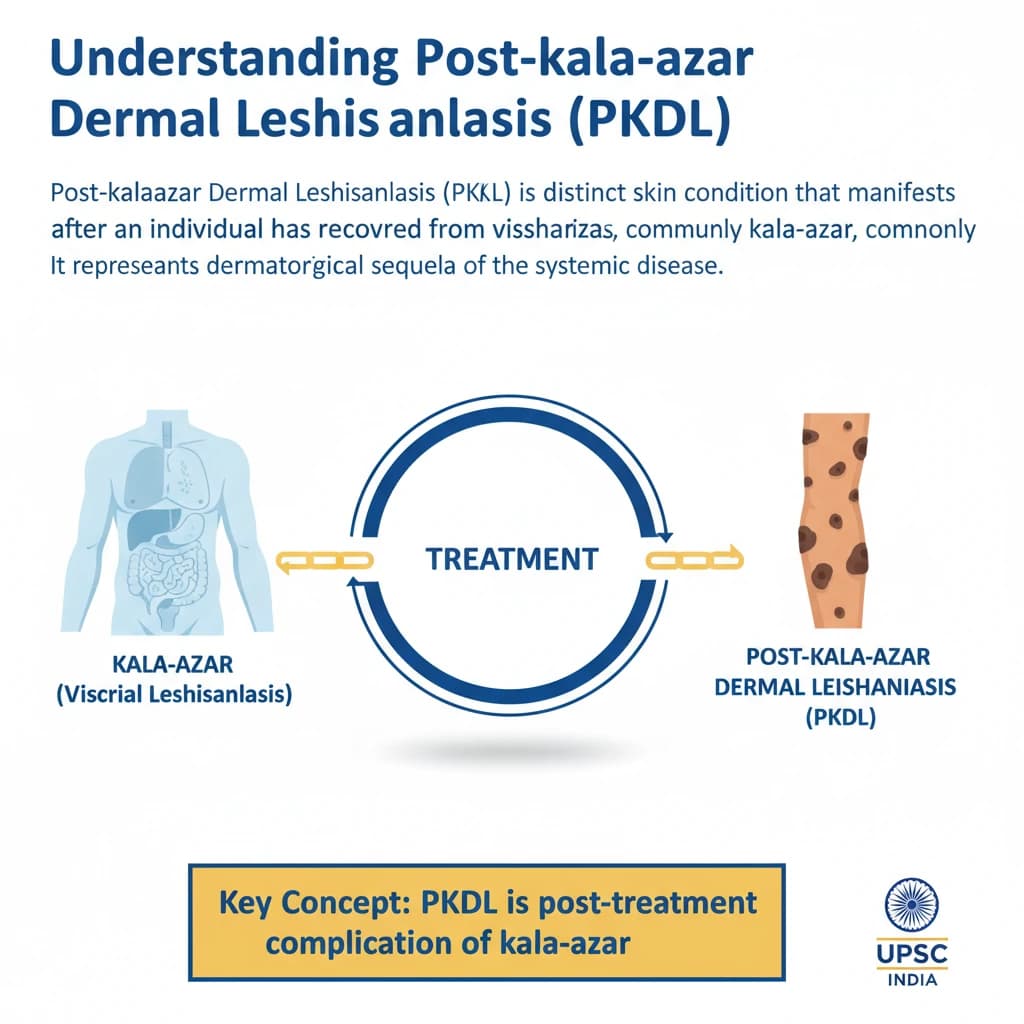
Post-kala-azar Dermal Leishmaniasis (PKDL) is a distinct skin condition that manifests after an individual has recovered from visceral leishmaniasis, commonly known as kala-azar. It represents a dermatological sequela of the systemic disease.
Key Concept: PKDL is a post-treatment complication of kala-azar, characterized by skin lesions.
Clinical Manifestations and Symptoms
The primary characteristic of PKDL is the appearance of various types of rashes on the skin. These lesions can present as macules, papules, nodules, or plaques, and their appearance can vary significantly among patients.
These distinctive rashes typically affect specific areas of the body. The most commonly involved regions include the face, the arms, and the trunk of the body. In some cases, lesions may also appear on other parts.
Geographical Distribution and Prevalence
PKDL is not uniformly distributed globally. It predominantly affects certain geographical regions where kala-azar is endemic. The two major endemic areas are Sudan and the Indian subcontinent.
Prevalence Data: Approximately 5-10% of individuals who have previously suffered from kala-azar eventually develop PKDL. This indicates a significant proportion of treated patients are at risk.
Timing of Onset and Transmission Risk
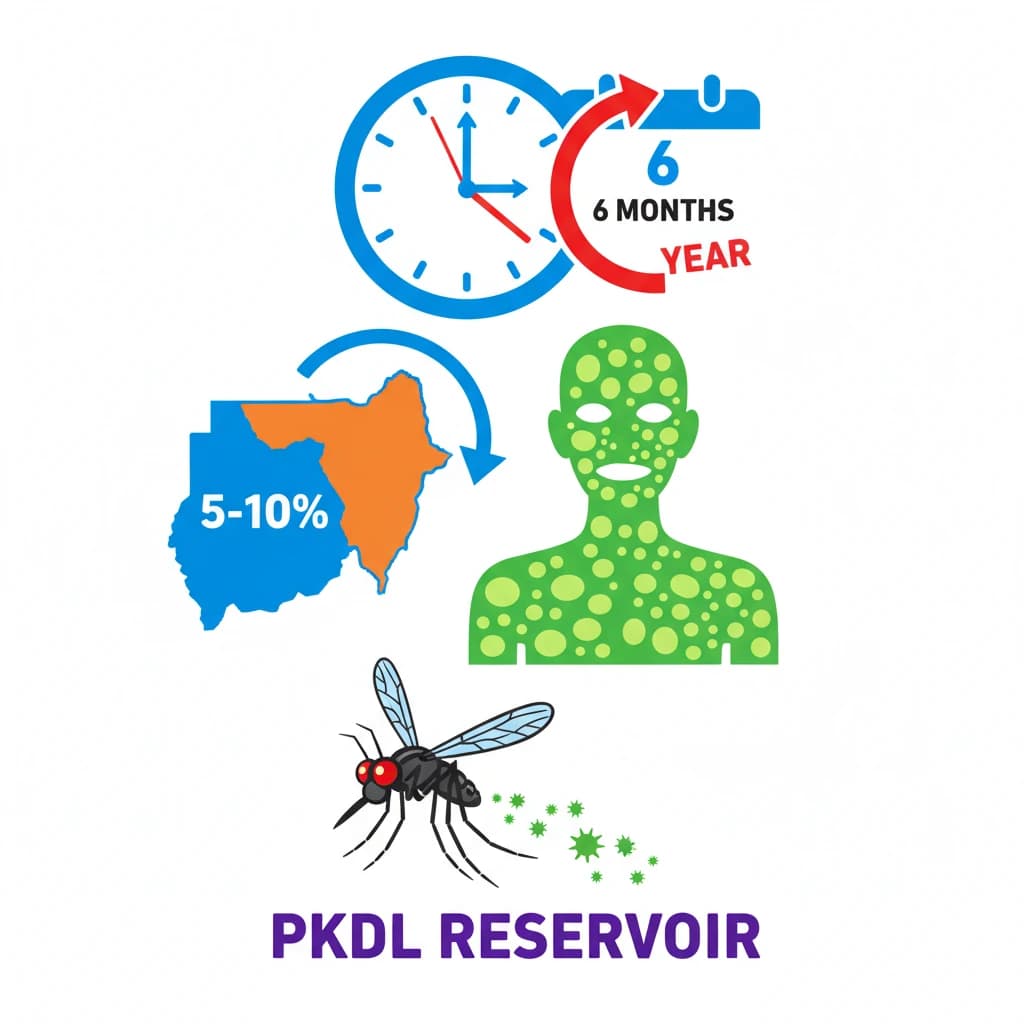
The onset of PKDL is typically delayed following the successful treatment of kala-azar. It may emerge anywhere from 6 months to a year after the completion of kala-azar therapy. This delayed manifestation makes surveillance crucial.
A critical aspect of PKDL is its potential role in the transmission cycle of Leishmania parasites. Individuals with active PKDL lesions can harbor the parasite in their skin, potentially acting as a reservoir for further spread of the disease by sandflies.
UPSC Insight: Understanding PKDL is vital for comprehending the complete epidemiology of kala-azar and challenges in its elimination. Its role as a reservoir makes it a significant public health concern, often asked in GS Paper II (Health).
💡 Key Takeaways
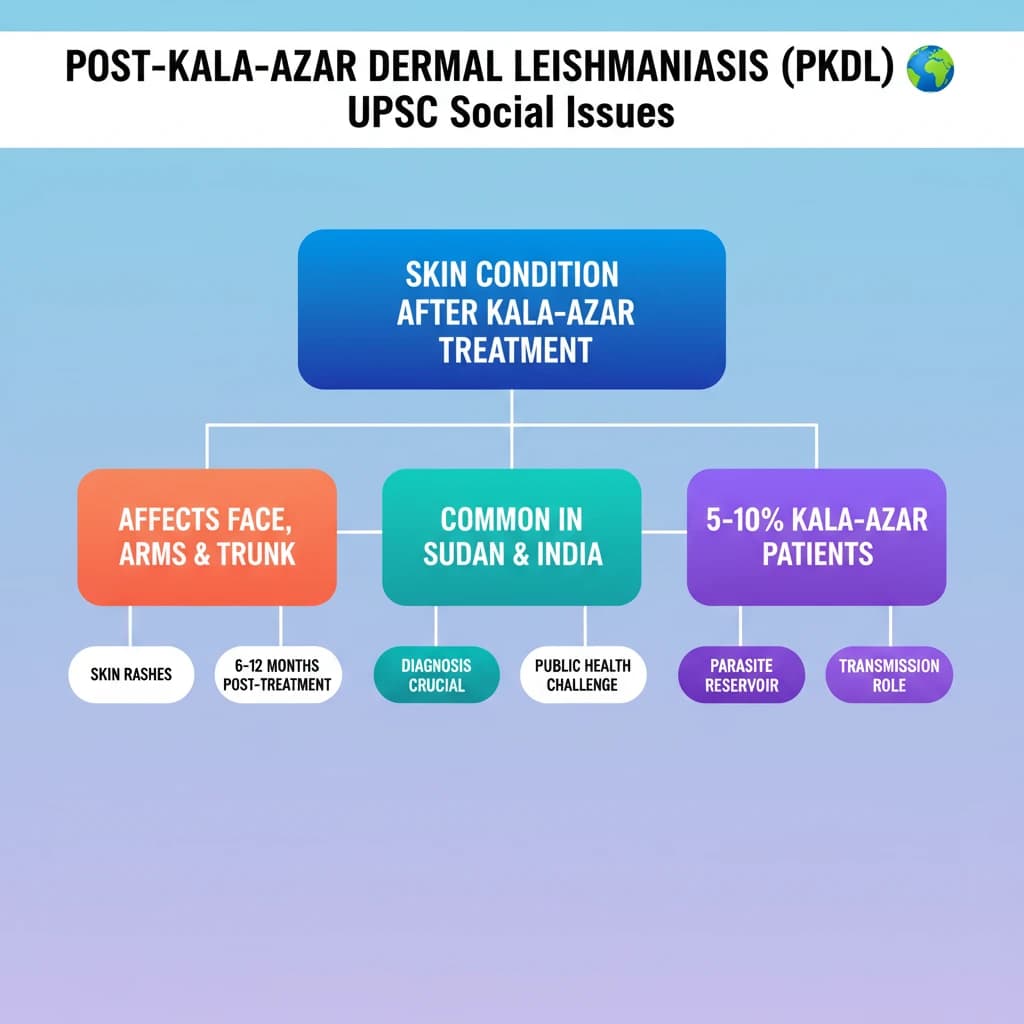
- •PKDL is a skin condition occurring 6 months to a year after kala-azar treatment.
- •It primarily affects the face, arms, and trunk with rashes.
- •Prevalent in Sudan and the Indian subcontinent, affecting 5-10% of kala-azar patients.
- •PKDL patients can act as a reservoir, potentially spreading Leishmania parasites.
- •Crucial for kala-azar elimination efforts due to its role in sustained transmission.
🧠 Memory Techniques
95% Verified Content
📚 Reference Sources
•World Health Organization (WHO) reports on Leishmaniasis
•Indian Council of Medical Research (ICMR) publications