Loading page, please wait…
Property Distribution Laws in India: Heirs and Succession - UPSC Social Issues
What is Property Distribution Laws in India: Heirs and Succession in UPSC Social Issues?
Property Distribution Laws in India: Heirs and Succession is a key topic under Social Issues for UPSC Civil Services Examination. Key points include: Property distribution for Hindus is primarily governed by the Hindu Succession Act, 1956.. Class I heirs (widow, sons, daughters, mother) receive equal shares and have the primary claim.. If no Class I heirs, property goes to Class II heirs, then to agnates, and finally to cognates.. Understanding this topic is essential for both UPSC Prelims and Mains preparation.
Why is Property Distribution Laws in India: Heirs and Succession important for UPSC exam?
Property Distribution Laws in India: Heirs and Succession is a Medium-level topic in UPSC Social Issues. It is tested in both Prelims (factual MCQs) and Mains (analytical answer writing). Previous year UPSC questions have frequently covered aspects of Property Distribution Laws in India: Heirs and Succession, making it essential for comprehensive IAS preparation.
How to prepare Property Distribution Laws in India: Heirs and Succession for UPSC?
To prepare Property Distribution Laws in India: Heirs and Succession for UPSC: (1) Study the comprehensive notes covering all key concepts on Vaidra. (2) Practice previous year questions on this topic. (3) Connect it with current affairs using daily updates. (4) Revise using key takeaways and mind maps available for Social Issues. (5) Write practice answers linking Property Distribution Laws in India: Heirs and Succession to related GS Paper topics.
Key takeaways of Property Distribution Laws in India: Heirs and Succession for UPSC
- Property distribution for Hindus is primarily governed by the Hindu Succession Act, 1956.
- Class I heirs (widow, sons, daughters, mother) receive equal shares and have the primary claim.
- If no Class I heirs, property goes to Class II heirs, then to agnates, and finally to cognates.
- The Hindu Succession (Amendment) Act, 2005, granted daughters equal coparcenary rights in ancestral property.
- Modern laws promote gender equality and women's economic empowerment through equitable property rights.
Property Distribution Laws in India: Heirs and Succession
Medium⏱️ 7 min read
social issues
📖 Introduction
Understanding Property Distribution: The Hindu Succession Act
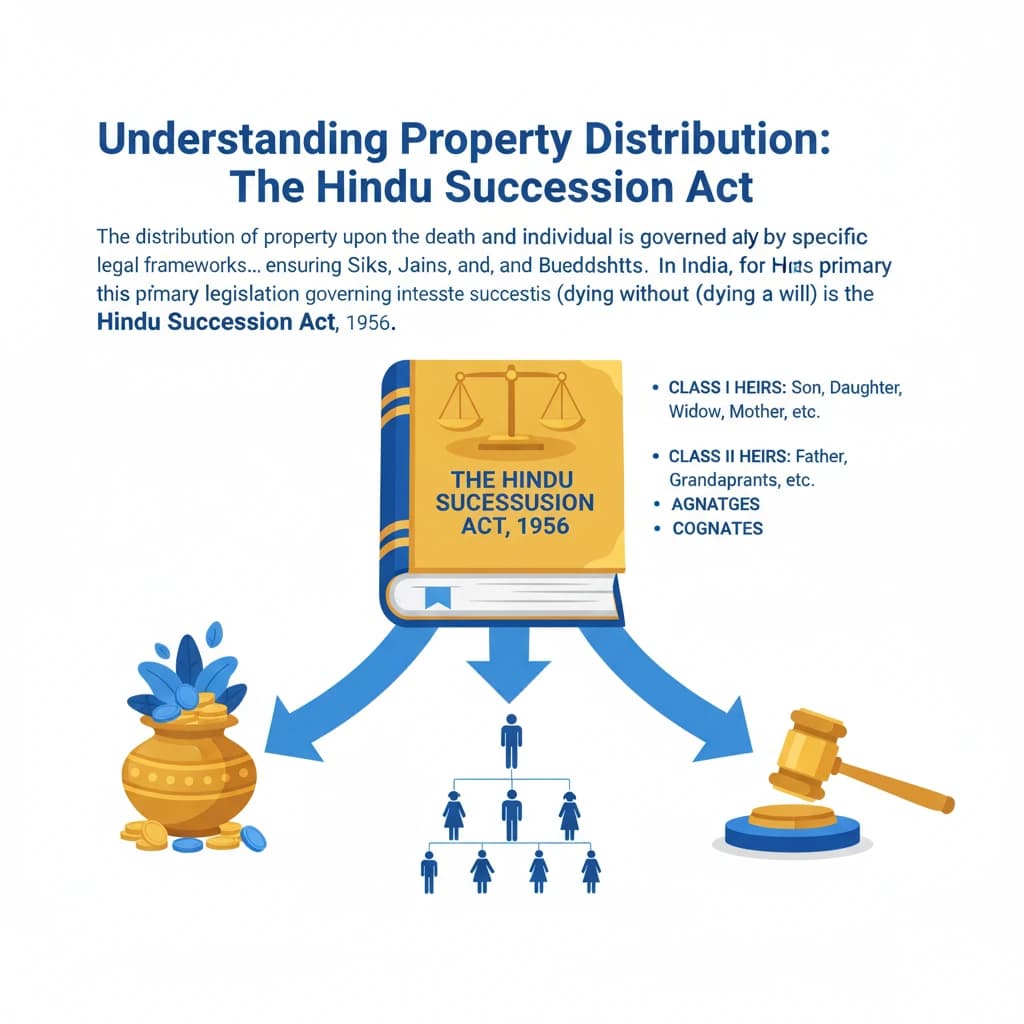
The distribution of property upon the death of an individual is governed by specific legal frameworks, ensuring a structured succession of assets. In India, for Hindus, Sikhs, Jains, and Buddhists, the primary legislation governing intestate succession (dying without a will) is the Hindu Succession Act, 1956.
This Act outlines a clear hierarchy of heirs, ensuring that property devolves systematically. The classification of heirs determines the order and share of inheritance.
Class I Heirs: Primary Beneficiaries
Class I heirs are the foremost beneficiaries who inherit the property of a deceased person who dies intestate. These individuals have the primary and absolute claim to the property, excluding all other categories of heirs.
Key members of Class I heirs include the widow, sons, daughters, and mother of the deceased. Each of these individuals is entitled to an equal share of the deceased's property.
Specifically, a widow is entitled to one share of the property. Similarly, each son, each daughter, and the mother of the deceased also receive an equal share of the property, reflecting principles of equitable distribution.
Class II Heirs: Secondary Succession
If there are no individuals classified as Class I heirs, the property then devolves upon the Class II heirs. The property is divided equally among them if multiple heirs exist within this class.
The presence of even one Class I heir completely excludes all Class II heirs from inheriting the property. This establishes a strict hierarchical order in succession.
Agnates and Cognates: Tertiary Succession Order
In the absence of both Class I and Class II heirs, the property passes to agnates. Agnates are relatives who are connected to the deceased wholly through male lineages, tracing descent from a common male ancestor.
If no agnates exist, the property then devolves upon cognates. Cognates are relatives who are connected to the deceased through female lineages or a combination of male and female lineages.
Understanding the hierarchical order of Class I, Class II heirs, agnates, and cognates is fundamental for questions related to family law, social justice, and women's rights in UPSC Mains GS-I (Social Issues) and GS-II (Polity & Governance).
💡 Key Takeaways
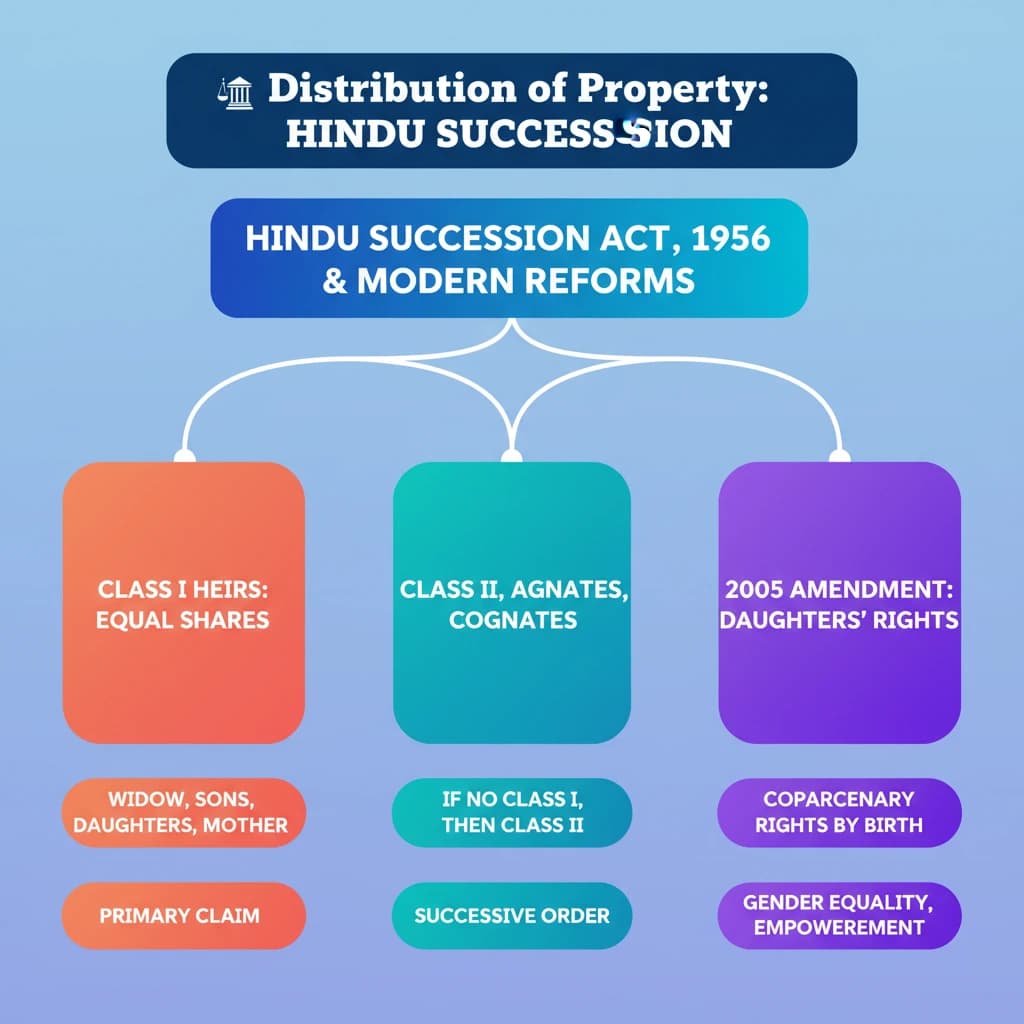
- •Property distribution for Hindus is primarily governed by the Hindu Succession Act, 1956.
- •Class I heirs (widow, sons, daughters, mother) receive equal shares and have the primary claim.
- •If no Class I heirs, property goes to Class II heirs, then to agnates, and finally to cognates.
- •The Hindu Succession (Amendment) Act, 2005, granted daughters equal coparcenary rights in ancestral property.
- •Modern laws promote gender equality and women's economic empowerment through equitable property rights.
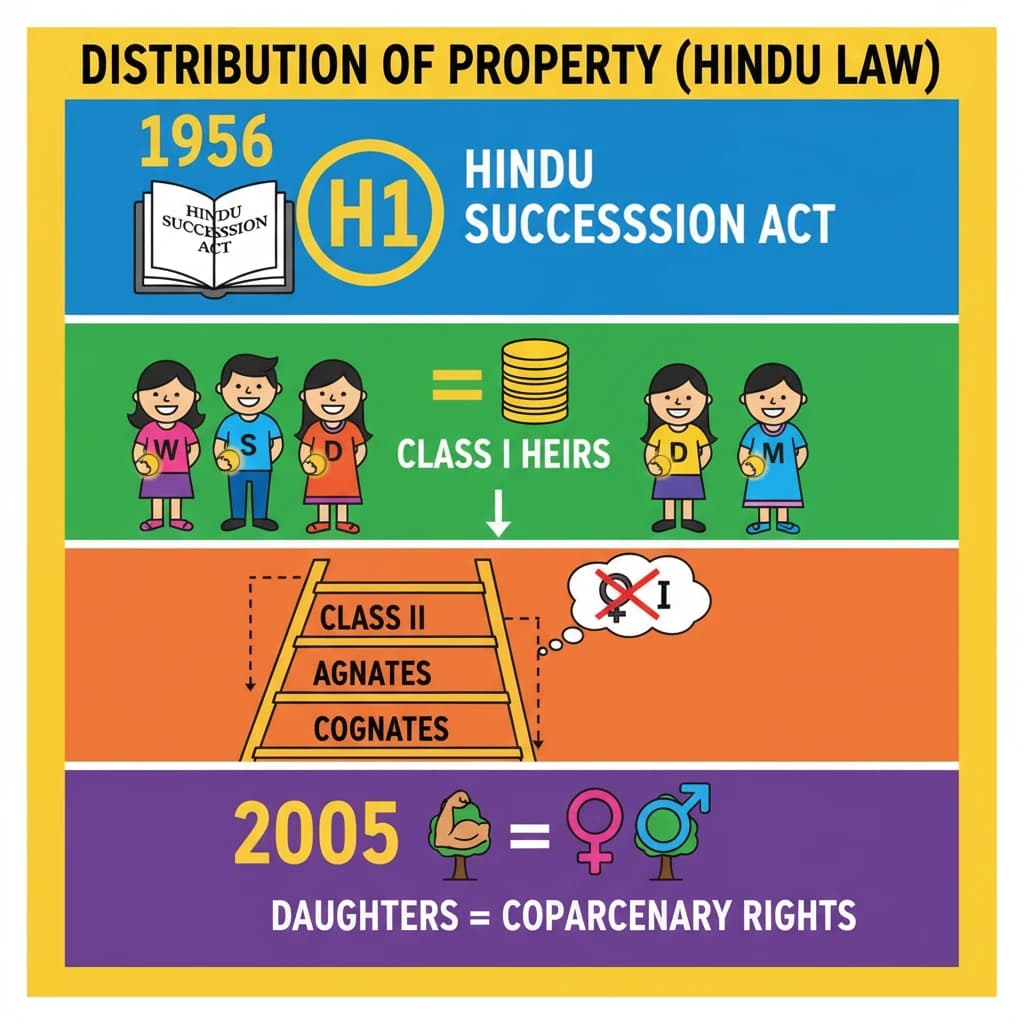
🧠 Memory Techniques
98% Verified Content
📚 Reference Sources
•The Hindu Succession (Amendment) Act, 2005
•Bare Act of Indian Laws
•Legal textbooks on Family Law in India