Loading page, please wait…
Reorganising Denotified Tribes as SC, ST and OBC - UPSC Social Issues
What is Reorganising Denotified Tribes as SC, ST and OBC in UPSC Social Issues?
Reorganising Denotified Tribes as SC, ST and OBC is a key topic under Social Issues for UPSC Civil Services Examination. Key points include: Ethnographic study recommends including 179 DNTs, NTs, SNTs in SC, ST, OBC lists.. The study was conducted by AnSI and TRIs in August 2022.. Recommendations are under review by a NITI Aayog panel.. Understanding this topic is essential for both UPSC Prelims and Mains preparation.
Why is Reorganising Denotified Tribes as SC, ST and OBC important for UPSC exam?
Reorganising Denotified Tribes as SC, ST and OBC is a Medium-level topic in UPSC Social Issues. It is tested in both Prelims (factual MCQs) and Mains (analytical answer writing). Previous year UPSC questions have frequently covered aspects of Reorganising Denotified Tribes as SC, ST and OBC, making it essential for comprehensive IAS preparation.
How to prepare Reorganising Denotified Tribes as SC, ST and OBC for UPSC?
To prepare Reorganising Denotified Tribes as SC, ST and OBC for UPSC: (1) Study the comprehensive notes covering all key concepts on Vaidra. (2) Practice previous year questions on this topic. (3) Connect it with current affairs using daily updates. (4) Revise using key takeaways and mind maps available for Social Issues. (5) Write practice answers linking Reorganising Denotified Tribes as SC, ST and OBC to related GS Paper topics.
Key takeaways of Reorganising Denotified Tribes as SC, ST and OBC for UPSC
- Ethnographic study recommends including 179 DNTs, NTs, SNTs in SC, ST, OBC lists.
- The study was conducted by AnSI and TRIs in August 2022.
- Recommendations are under review by a NITI Aayog panel.
- TRIs are state-level research bodies under the Ministry of Tribal Affairs, focusing on tribal development and culture.
- AnSI is a government-funded organization studying India's cultural, biological, and linguistic diversity.
- The move aims to address historical marginalization and ensure social justice for these communities.
Reorganising Denotified Tribes as SC, ST and OBC
Medium⏱️ 7 min read
social issues
📖 Introduction
Reorganising Denotified Tribes: An Overview
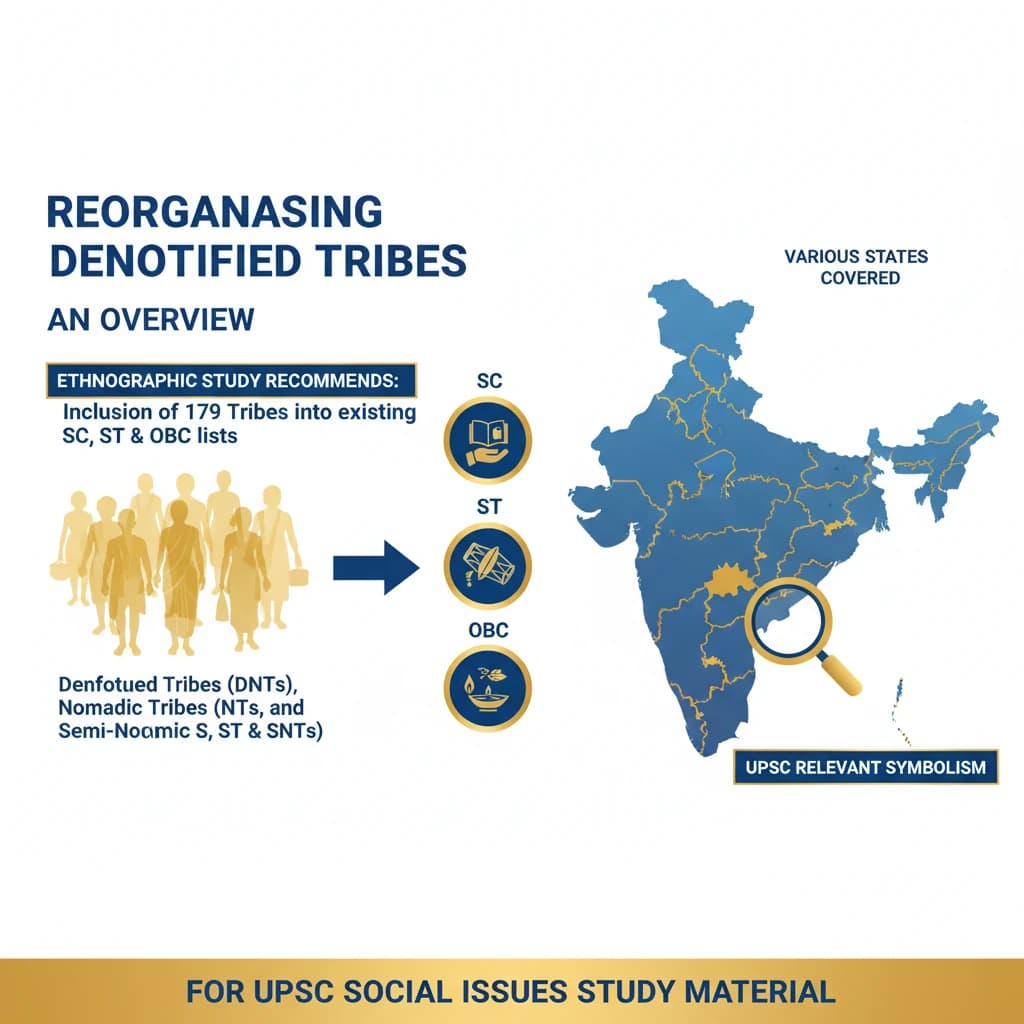
A significant ethnographic study has recommended the inclusion of 179 Denotified Tribes (DNTs), Nomadic Tribes (NTs), and Semi-Nomadic Tribes (SNTs) into the existing Scheduled Caste (SC), Scheduled Tribe (ST), and Other Backward Classes (OBC) lists.
This recommendation covers various states and union territories across India, aiming to provide these historically marginalized communities with appropriate constitutional safeguards and benefits.
The Ethnographic Study and its Status
The comprehensive study was jointly conducted by the Anthropological Survey of India (AnSI) and various Tribal Research Institutes (TRIs).
Study Details:
- Conducted by: Anthropological Survey of India (AnSI) & Tribal Research Institutes (TRIs)
- Recommendation: Inclusion of 179 DNTs, NTs, SNTs
- Target Lists: SC, ST, and OBC lists of states/UTs
- Date of Study: August 2022
- Current Status: Under review by a NITI Aayog panel, awaiting final approval.
Understanding the process of inclusion and the bodies involved (AnSI, TRIs, NITI Aayog) is crucial for UPSC Mains GS-II (Social Justice) and Prelims (factual questions).
Role of Tribal Research Institutes (TRIs)
TRIs are vital research bodies operating at the state level under the administrative control of the Ministry of Tribal Affairs.
Key Facts about TRIs:
- Nature: Research bodies at the state level.
- Parent Ministry: Ministry of Tribal Affairs.
- Number: There are 28 TRIs across India.
Their primary focus extends beyond mere research, playing a multifaceted role in tribal development and cultural preservation.
Primary Focus Areas of TRIs:
- Knowledge and Research: Function as a think tank for formulating effective tribal development strategies.
- Cultural Heritage: Dedicated to the preservation and promotion of rich tribal culture and traditions.
- Evidence-Based Planning: Provide crucial data and insights to state governments, informing tribal development policies and legislations.
- Capacity Building: Work towards enhancing the skills and capabilities of tribal communities and the institutions serving them.
Role of Anthropological Survey of India (AnSI)
The Anthropological Survey of India (AnSI) is a premier government-funded research organization with a long-standing history of studying India's diverse human populations.
Key Facts about AnSI:
- Establishment: Founded in 1945.
- Nature: Government-funded research organization.
- Headquarters: Located in Kolkata, West Bengal.
- Core Study Area: Focuses on the cultural, biological, and linguistic diversity of India.
AnSI's functions are critical for generating comprehensive data on various communities, including tribal groups.
Functions of AnSI:
- Data Management: Collects, preserves, and publishes extensive research data.
- Field Surveys: Conducts detailed field surveys across different regions of India.
- Collaboration: Engages in collaborations with various international research bodies to broaden its scope and impact.
💡 Key Takeaways
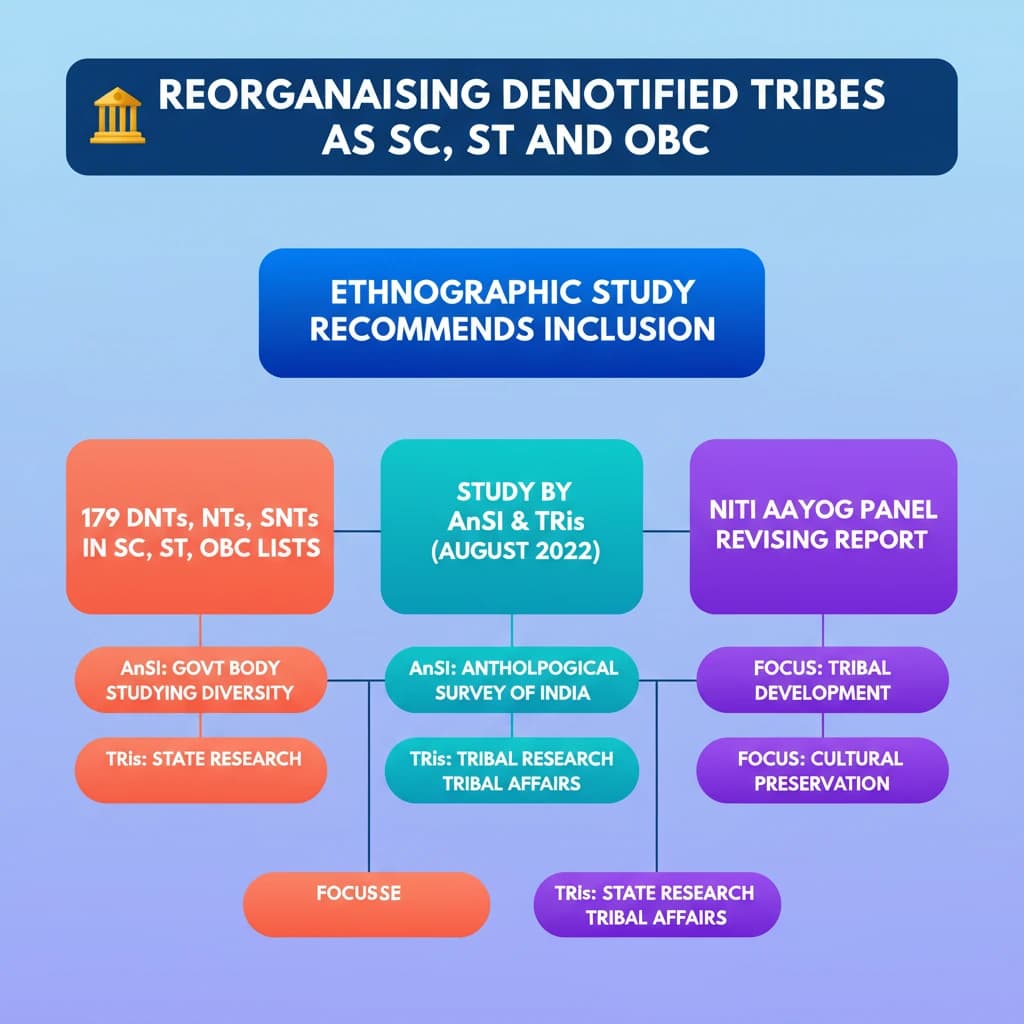
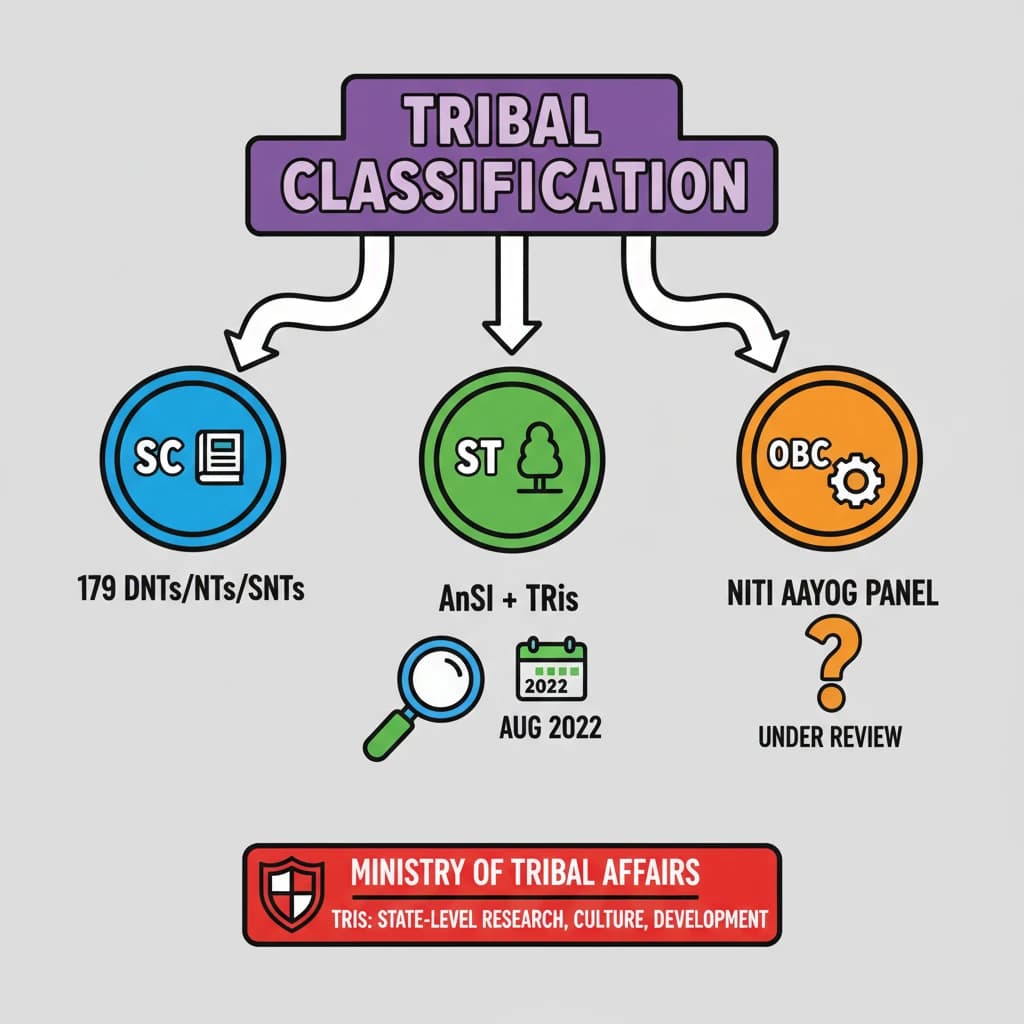
- •Ethnographic study recommends including 179 DNTs, NTs, SNTs in SC, ST, OBC lists.
- •The study was conducted by AnSI and TRIs in August 2022.
- •Recommendations are under review by a NITI Aayog panel.
- •TRIs are state-level research bodies under the Ministry of Tribal Affairs, focusing on tribal development and culture.
- •AnSI is a government-funded organization studying India's cultural, biological, and linguistic diversity.
- •The move aims to address historical marginalization and ensure social justice for these communities.
🧠 Memory Techniques
95% Verified Content
📚 Reference Sources
•Ministry of Tribal Affairs official documents (for TRIs)
•Anthropological Survey of India official website (for AnSI)