Loading page, please wait…
Shompen Cast their First Vote - UPSC Social Issues
What is Shompen Cast their First Vote in UPSC Social Issues?
Shompen Cast their First Vote is a key topic under Social Issues for UPSC Civil Services Examination. Key points include: 7 members of the Shompen tribe, a PVTG, cast their first vote in the 2024 Lok Sabha elections.. Shompen are highly isolated, semi-nomadic hunter-gatherers in Great Nicobar Islands.. Their population was 229 (2011 Census); they have a unique language and patriarchal social structure.. Understanding this topic is essential for both UPSC Prelims and Mains preparation.
Why is Shompen Cast their First Vote important for UPSC exam?
Shompen Cast their First Vote is a Medium-level topic in UPSC Social Issues. It is tested in both Prelims (factual MCQs) and Mains (analytical answer writing). Previous year UPSC questions have frequently covered aspects of Shompen Cast their First Vote, making it essential for comprehensive IAS preparation.
How to prepare Shompen Cast their First Vote for UPSC?
To prepare Shompen Cast their First Vote for UPSC: (1) Study the comprehensive notes covering all key concepts on Vaidra. (2) Practice previous year questions on this topic. (3) Connect it with current affairs using daily updates. (4) Revise using key takeaways and mind maps available for Social Issues. (5) Write practice answers linking Shompen Cast their First Vote to related GS Paper topics.
Key takeaways of Shompen Cast their First Vote for UPSC
- 7 members of the Shompen tribe, a PVTG, cast their first vote in the 2024 Lok Sabha elections.
- Shompen are highly isolated, semi-nomadic hunter-gatherers in Great Nicobar Islands.
- Their population was 229 (2011 Census); they have a unique language and patriarchal social structure.
- Five PVTGs reside in Andaman: Great Andamanese, Jarwas, Onges, Shompens, North Sentinelese.
- PVTGs were initially called Primitive Tribal Groups (PTGs) by the Dhebar Commission (1973), renamed in 2006.
Shompen Cast their First Vote
Medium⏱️ 6 min read
social issues
📖 Introduction
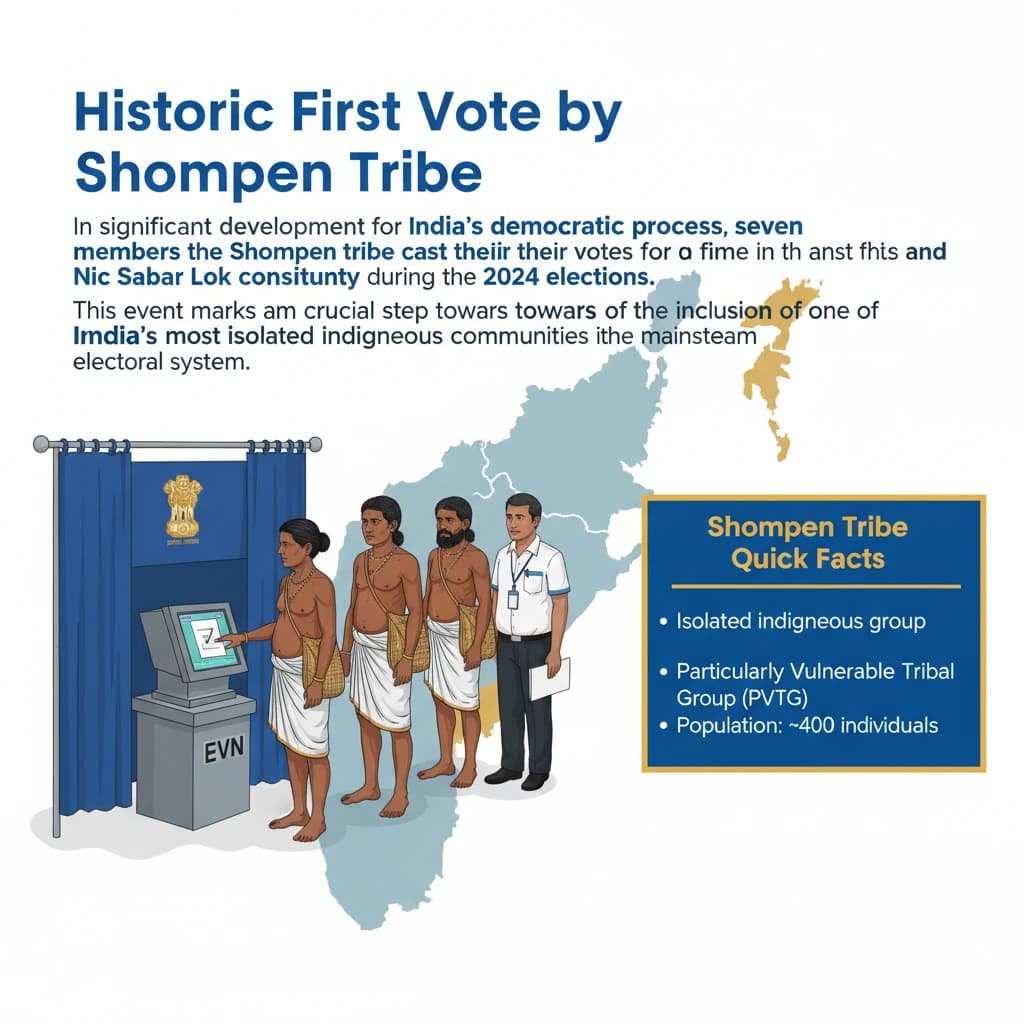
Historic First Vote by Shompen Tribe
In a significant development for India's democratic process, seven members of the Shompen tribe cast their votes for the first time in the Andaman and Nicobar Lok Sabha constituency during the 2024 elections.
This event marks a crucial step towards the inclusion of one of India's most isolated indigenous communities into the mainstream electoral system.
Event: First-ever voting by Shompen tribe members.
Location: Great Nicobar Islands, Andaman and Nicobar Lok Sabha constituency.
Year: 2024.
Number of Voters: 7 Shompen individuals.
Who are the Shompen?
The Shompen are recognized as one of the Particularly Vulnerable Tribal Groups (PVTGs) in India. They inhabit the remote Great Nicobar Islands, maintaining a traditional way of life.
They are primarily a semi-nomadic hunter-gatherer community, known for their deep connection to the forest and its resources. Their high degree of isolation has preserved their unique cultural identity.
Population: Estimated 229 individuals as per the 2011 Census data.
Lifestyle: Highly isolated, semi-nomadic hunter-gatherers.
Location: Great Nicobar Islands.
Unique Language and Social Structure
The Shompen tribe possesses a distinctive and unique language. This language consists of various dialects, which are often understood only within specific family bands or groups.
Their social structure is predominantly patriarchal. The eldest male member typically holds authority and oversees family affairs, guiding decisions and traditions.
While monogamy is a common practice within the tribe, polygamy is also permissible under their traditional customs, reflecting a flexible social framework.
Particularly Vulnerable Tribal Groups (PVTGs) in Andaman and Nicobar
The Andaman archipelago is home to five distinct PVTGs. These groups represent some of the most ancient and vulnerable communities in India, facing unique challenges.
- Great Andamanese
- Jarwas
- Onges
- Shompens
- North Sentinelese
Origin of PVTG term: Initially termed Primitive Tribal Groups (PTGs) by the Dhebar Commission in 1973.
Renaming: The Government of India officially renamed them Particularly Vulnerable Tribal Groups (PVTGs) in 2006, to better reflect their heightened vulnerability and specific needs.
Understanding the characteristics and challenges of PVTGs, especially those in the Andaman and Nicobar Islands, is crucial for UPSC Mains GS Paper I (Indian Society) and GS Paper II (Governance, Social Justice). Questions often focus on their conservation, integration, and protection of rights.
💡 Key Takeaways
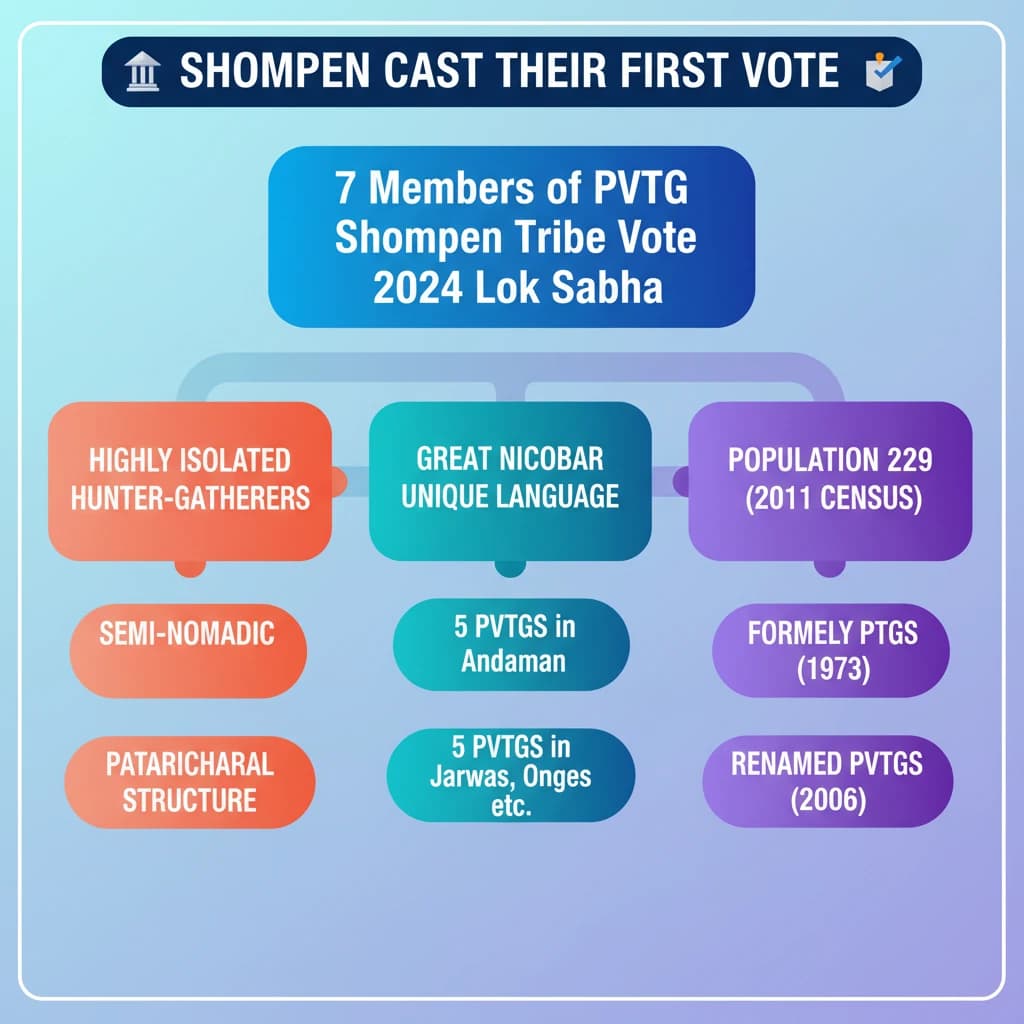
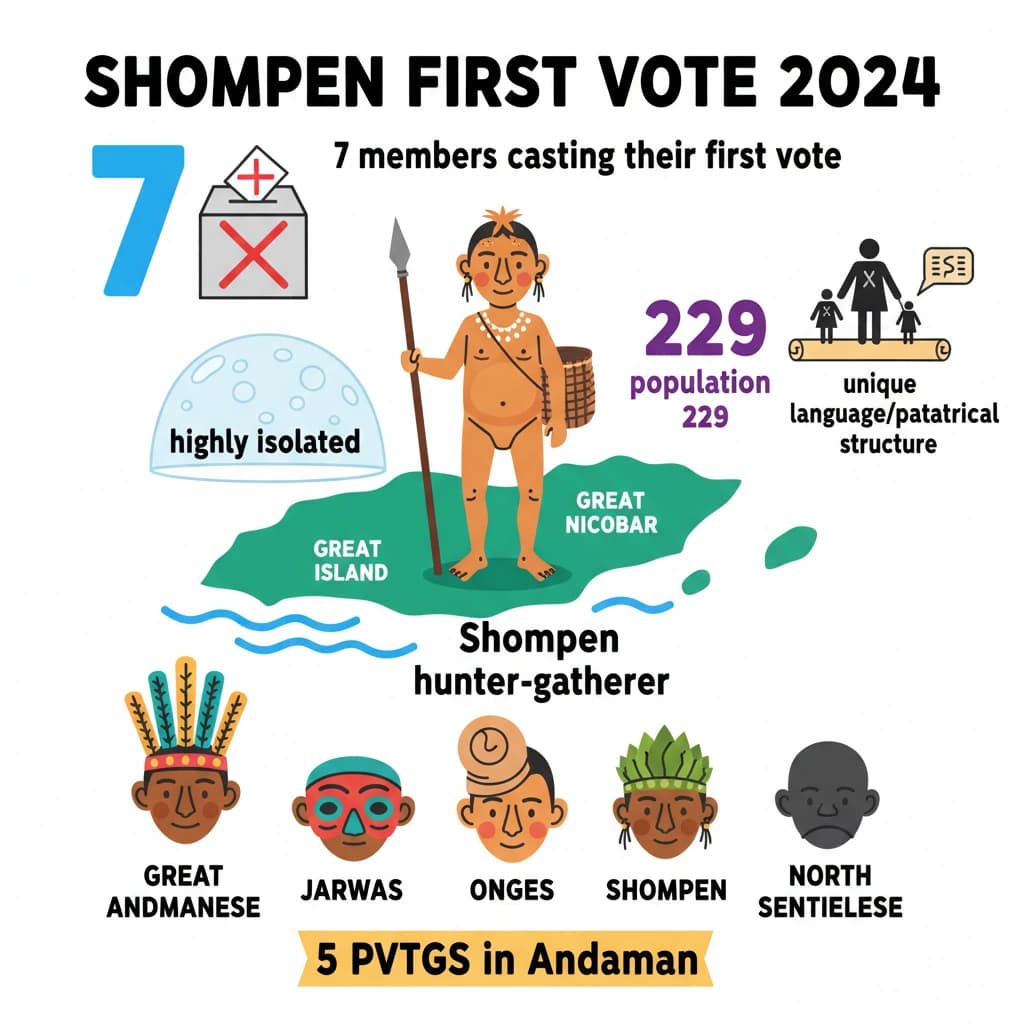
- •7 members of the Shompen tribe, a PVTG, cast their first vote in the 2024 Lok Sabha elections.
- •Shompen are highly isolated, semi-nomadic hunter-gatherers in Great Nicobar Islands.
- •Their population was 229 (2011 Census); they have a unique language and patriarchal social structure.
- •Five PVTGs reside in Andaman: Great Andamanese, Jarwas, Onges, Shompens, North Sentinelese.
- •PVTGs were initially called Primitive Tribal Groups (PTGs) by the Dhebar Commission (1973), renamed in 2006.
🧠 Memory Techniques
98% Verified Content
📚 Reference Sources
•Government of India Census Data (2011)
•Reports on Dhebar Commission (1973)
•Election Commission of India reports (2024 Lok Sabha Elections)