Loading page, please wait…
Strengthening Accessibility Measures in India - UPSC Social Issues
What is Strengthening Accessibility Measures in India in UPSC Social Issues?
Strengthening Accessibility Measures in India is a key topic under Social Issues for UPSC Civil Services Examination. Key points include: Supreme Court invalidated Rule 15 of RPwD Rules, 2017, in Rajive Raturi v. Union of India, 2024.. Rule 15 was discretionary, contradicting the mandatory accessibility provisions of RPwD Act, 2016.. SC mandated new, binding accessibility guidelines within 6 months, focusing on universal design, comprehensive inclusion, assistive tech, and consultation.. Understanding this topic is essential for both UPSC Prelims and Mains preparation.
Why is Strengthening Accessibility Measures in India important for UPSC exam?
Strengthening Accessibility Measures in India is a Medium-level topic in UPSC Social Issues. It is tested in both Prelims (factual MCQs) and Mains (analytical answer writing). Previous year UPSC questions have frequently covered aspects of Strengthening Accessibility Measures in India, making it essential for comprehensive IAS preparation.
How to prepare Strengthening Accessibility Measures in India for UPSC?
To prepare Strengthening Accessibility Measures in India for UPSC: (1) Study the comprehensive notes covering all key concepts on Vaidra. (2) Practice previous year questions on this topic. (3) Connect it with current affairs using daily updates. (4) Revise using key takeaways and mind maps available for Social Issues. (5) Write practice answers linking Strengthening Accessibility Measures in India to related GS Paper topics.
Key takeaways of Strengthening Accessibility Measures in India for UPSC
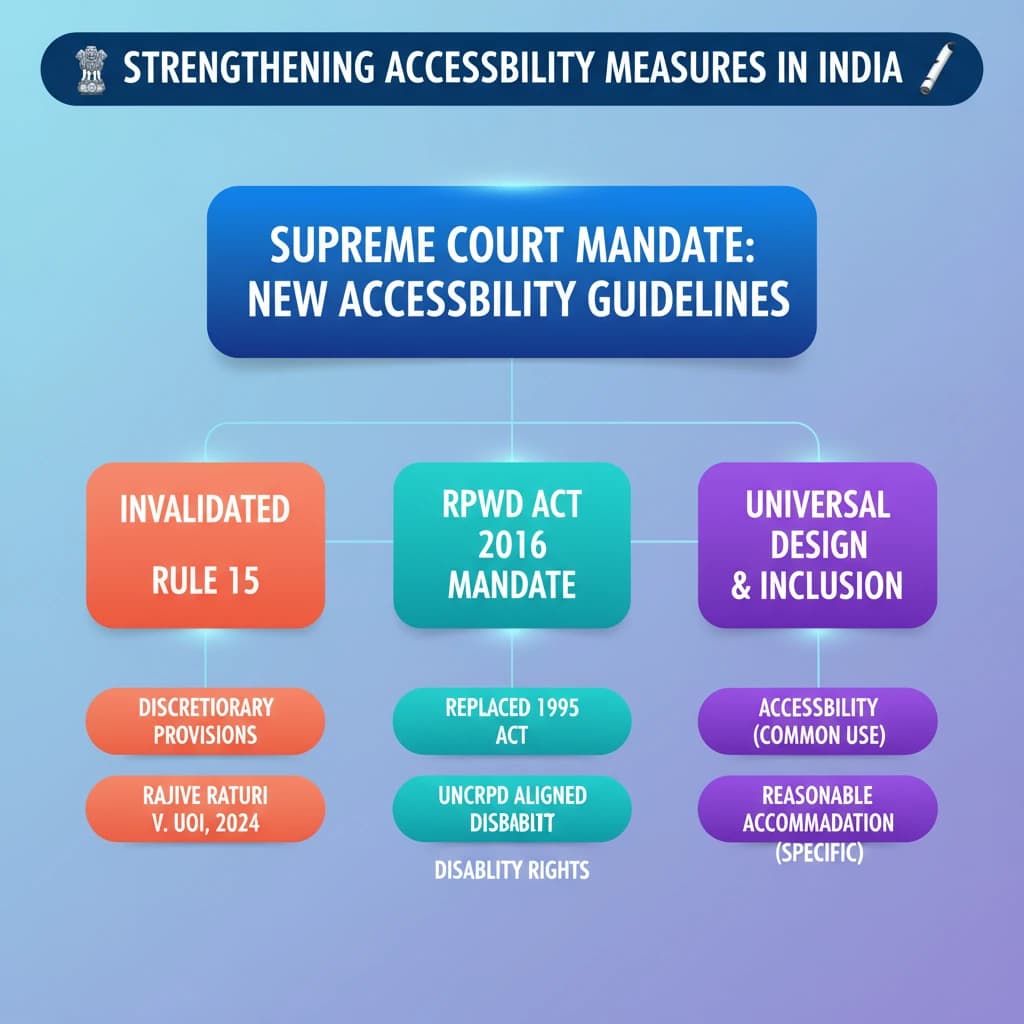
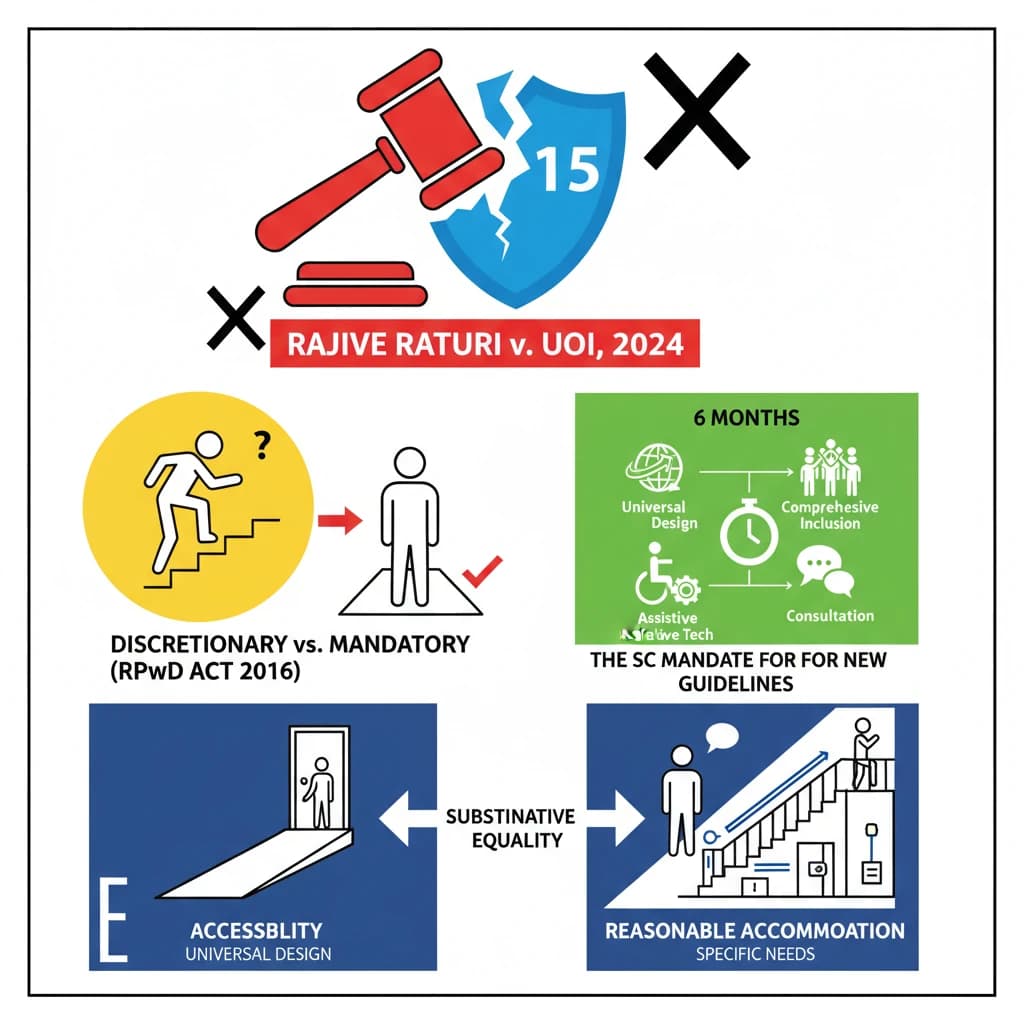
- Supreme Court invalidated Rule 15 of RPwD Rules, 2017, in Rajive Raturi v. Union of India, 2024.
- Rule 15 was discretionary, contradicting the mandatory accessibility provisions of RPwD Act, 2016.
- SC mandated new, binding accessibility guidelines within 6 months, focusing on universal design, comprehensive inclusion, assistive tech, and consultation.
- Distinction made between 'accessibility' (universal design) and 'reasonable accommodation' (specific needs), both vital for substantive equality.
- RPwD Act, 2016, replaced the 1995 Act, aligning with UNCRPD and expanding disability categories and rights.
- The ruling strengthens the 'Accessible India Campaign' and promotes a rights-based approach to disability inclusion.
Strengthening Accessibility Measures in India
Medium⏱️ 15 min read
social issues
📖 Introduction
Introduction to Accessibility Measures in India
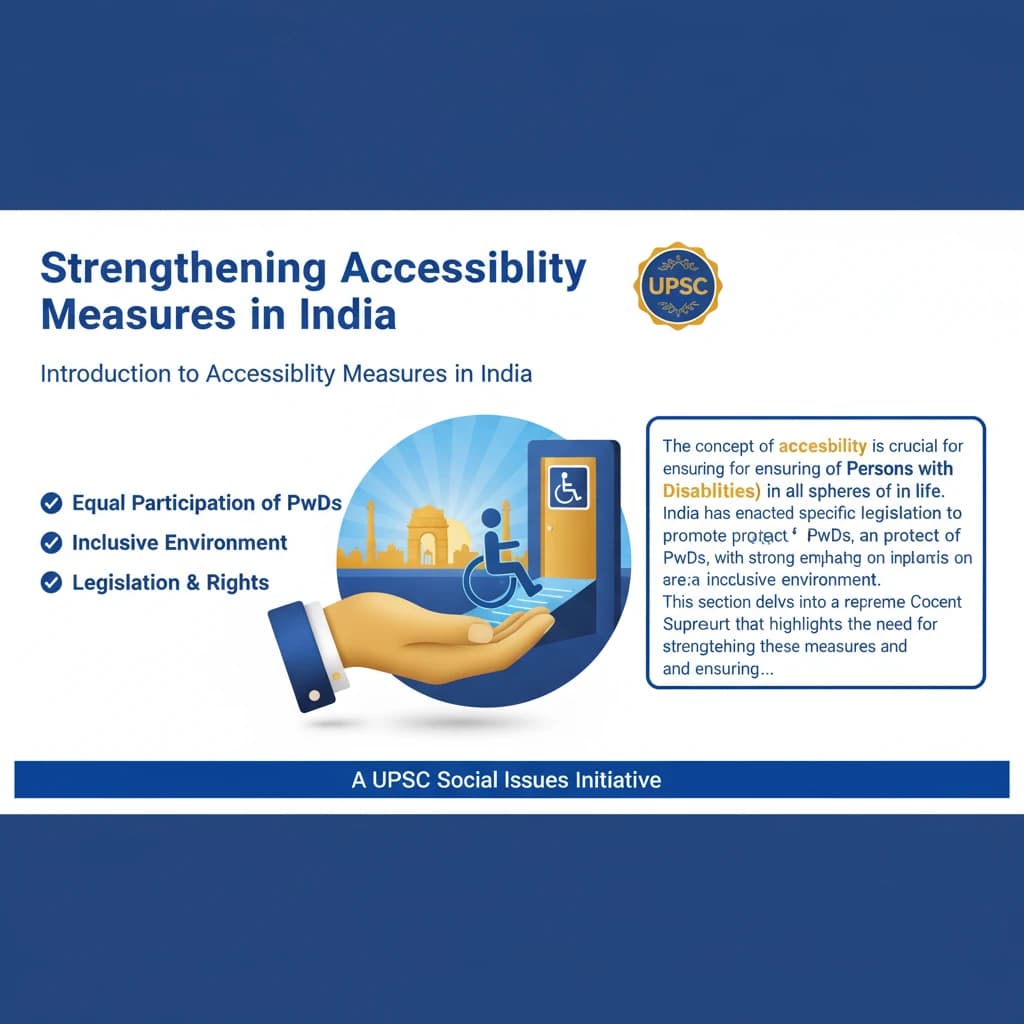
The concept of accessibility is crucial for ensuring the equal participation of Persons with Disabilities (PwDs) in all spheres of life. India has enacted specific legislation to promote and protect the rights of PwDs, with a strong emphasis on creating an inclusive environment.
This section delves into a recent Supreme Court ruling that highlights the need for strengthening these measures and ensuring their mandatory implementation across the country.
The Rajive Raturi v. Union of India Case, 2024
In a significant judgment, the Supreme Court of India in the case of Rajive Raturi v. Union of India, 2024, addressed critical issues concerning accessibility for Persons with Disabilities.
The Court found a fundamental inconsistency between Rule 15 of the Rights of Persons with Disabilities (RPwD) Rules, 2017, and the overarching objectives of the Rights of Persons with Disabilities Act, 2016.
Case Highlight: The Supreme Court observed that while the RPwD Act, 2016 mandates the government to ensure accessibility, Rule 15 adopted a discretionary approach, leading to a conflict with the statutory provisions.
Why SC Invalidated Rule 15 of RPwD Rules, 2017?
Rule 15 of the RPwD Rules, 2017, was designed to establish a framework for accessibility guidelines across various government departments. It granted statutory authority to guidelines issued by ministries, but its implementation proved problematic.
Core Issue: The Supreme Court held that Rule 15 contradicted the mandatory provisions of the RPwD Act (Sections 40, 44, 45, 46, and 89) because it allowed ministries to create accessibility guidelines without a binding obligation, making compliance optional rather than compulsory.
Key Observations by the Supreme Court
The Supreme Court made several crucial observations that led to the invalidation of Rule 15 and provided direction for future action.
- Discretionary Nature: The Court highlighted that the discretionary nature of Rule 15 undermined the mandatory spirit of the RPwD Act. This approach allowed for varied interpretations and inconsistent application of accessibility standards.
- Compliance and Social Audits: The RPwD Act explicitly requires regular social audits to ensure that government schemes do not adversely affect persons with disabilities. However, the lack of standardized and mandatory guidelines under the RPwD Rules led to inconsistencies in how these audits were conducted.
- Accessibility vs. Reasonable Accommodation: The SC ruling drew a clear distinction between accessibility and reasonable accommodation. Accessibility ensures a universal design approach for all, while reasonable accommodation addresses specific individual needs. Both are vital for achieving substantive equality under constitutional principles.
Need for New Mandatory Guidelines
Recognizing these deficiencies, the Supreme Court issued a directive to the government to formulate new, mandatory accessibility guidelines within a strict timeframe of six months.
UPSC Insight: This ruling is significant for GS Paper II (Social Justice), emphasizing judicial activism in upholding fundamental rights and ensuring effective implementation of social welfare legislation. Understanding the distinction between accessibility and reasonable accommodation is key.
These new guidelines must be centered around four core principles to ensure comprehensive inclusion:
- Universal Design for All: Ensuring that environments, products, and services are usable by all people, to the greatest extent possible, without the need for adaptation or specialized design.
- Comprehensive Inclusion of Various Disabilities: Addressing the diverse needs of individuals with different types of disabilities, including physical, sensory, and intellectual impairments.
- Integration of Assistive Technologies: Promoting the use of modern solutions like screen readers and accessible digital platforms to enhance participation in the digital world.
- Ongoing Consultation with Persons with Disabilities: Emphasizing continuous engagement with PwDs and their organizations to ensure that guidelines are practical, relevant, and responsive to their lived experiences.
The Rights of Persons with Disabilities Act, 2016 (RPwD Act)
The Rights of Persons with Disabilities (RPwD) Act, 2016, is a landmark legislation in India.
About the Act: The RPwD Act, 2016, protects people with disabilities from discrimination and promotes their equal rights and opportunities. It replaced the earlier Persons with Disabilities (Equal Opportunities, Protection of Rights and Full Participation) Act, 1995, aligning Indian law with the United Nations Convention on the Rights of Persons with Disabilities (UNCRPD).
💡 Key Takeaways
- •Supreme Court invalidated Rule 15 of RPwD Rules, 2017, in Rajive Raturi v. Union of India, 2024.
- •Rule 15 was discretionary, contradicting the mandatory accessibility provisions of RPwD Act, 2016.
- •SC mandated new, binding accessibility guidelines within 6 months, focusing on universal design, comprehensive inclusion, assistive tech, and consultation.
- •Distinction made between 'accessibility' (universal design) and 'reasonable accommodation' (specific needs), both vital for substantive equality.
- •RPwD Act, 2016, replaced the 1995 Act, aligning with UNCRPD and expanding disability categories and rights.
- •The ruling strengthens the 'Accessible India Campaign' and promotes a rights-based approach to disability inclusion.
🧠 Memory Techniques
95% Verified Content
📚 Reference Sources
•Supreme Court Judgment: Rajive Raturi v. Union of India, 2024 (as cited)
•The Rights of Persons with Disabilities Act, 2016
•The Rights of Persons with Disabilities Rules, 2017
•United Nations Convention on the Rights of Persons with Disabilities (UNCRPD)
•Accessible India Campaign (Sugamya Bharat Abhiyan) documentation